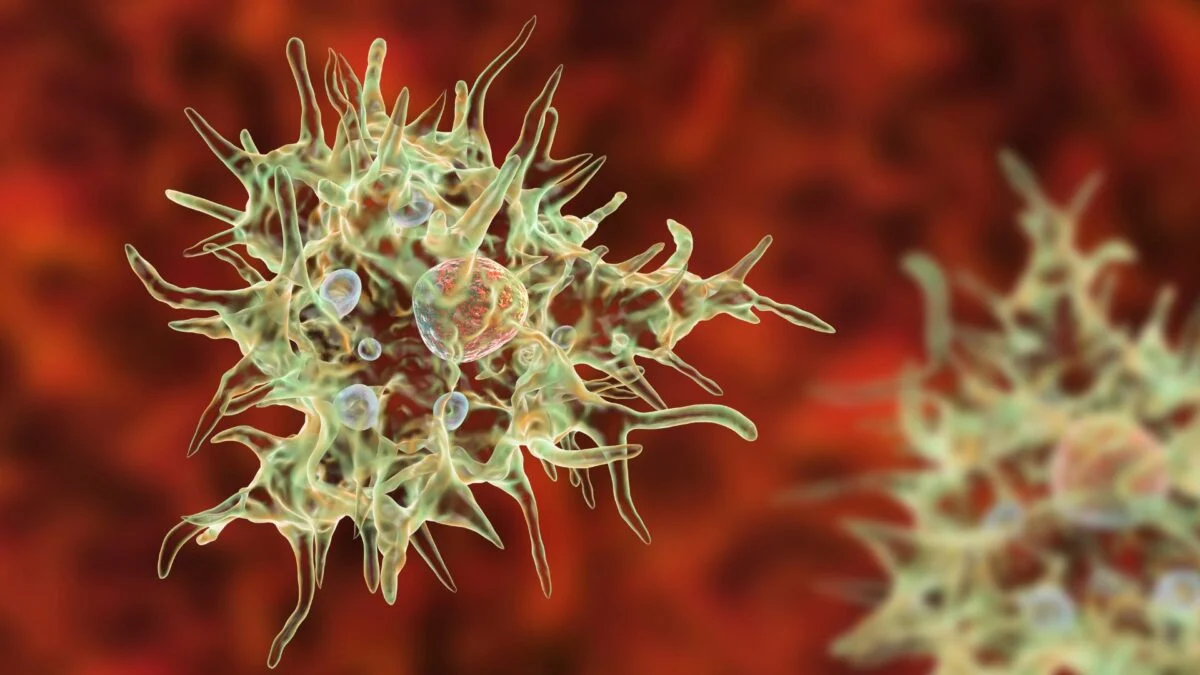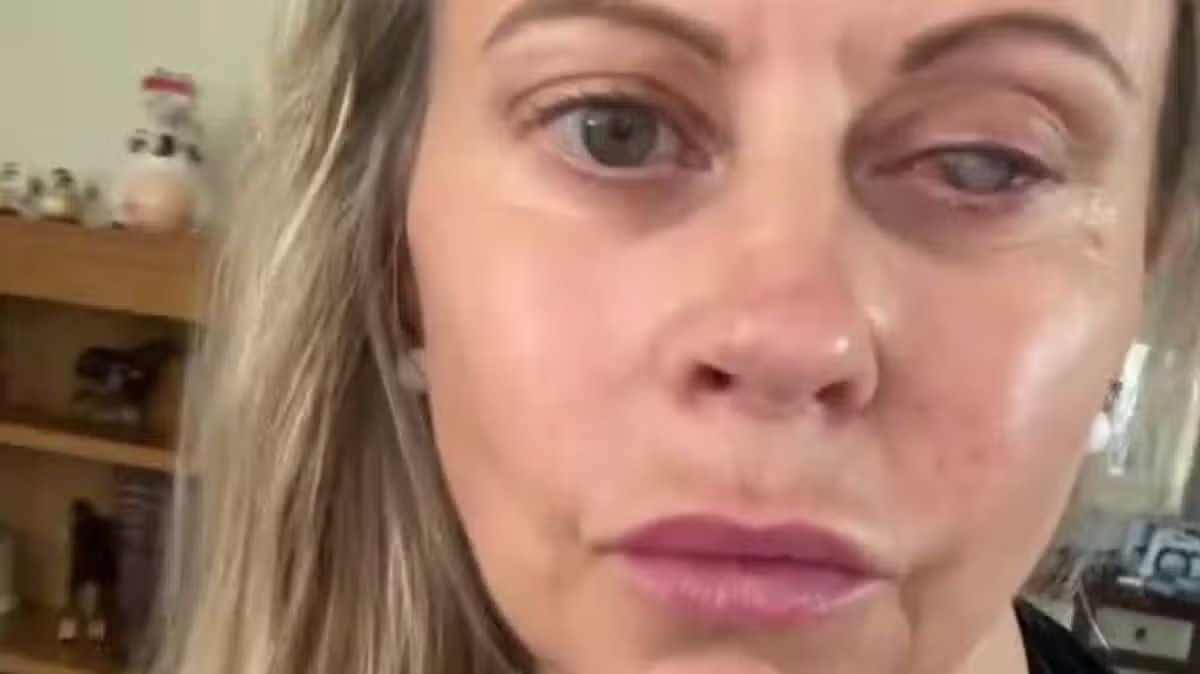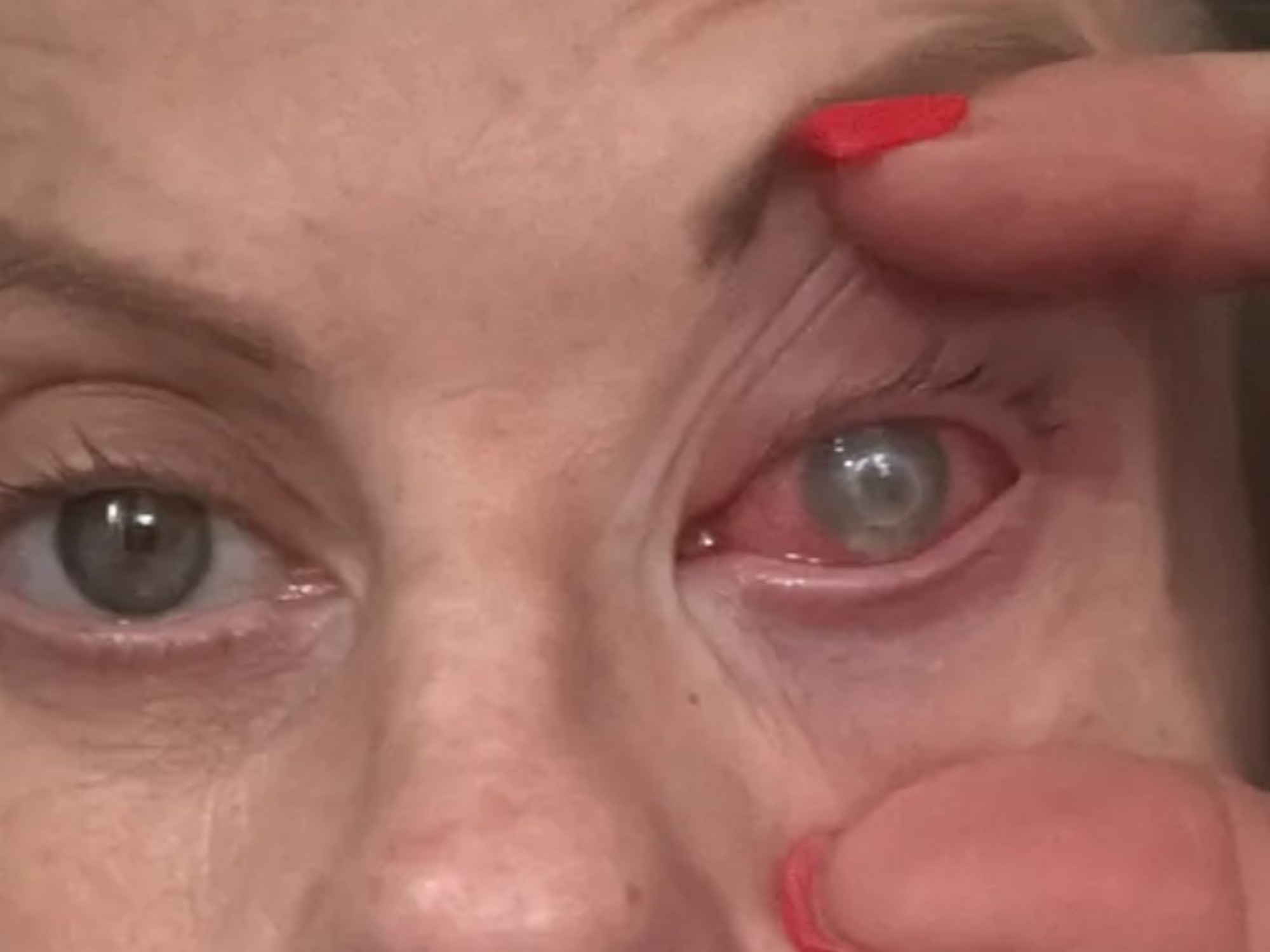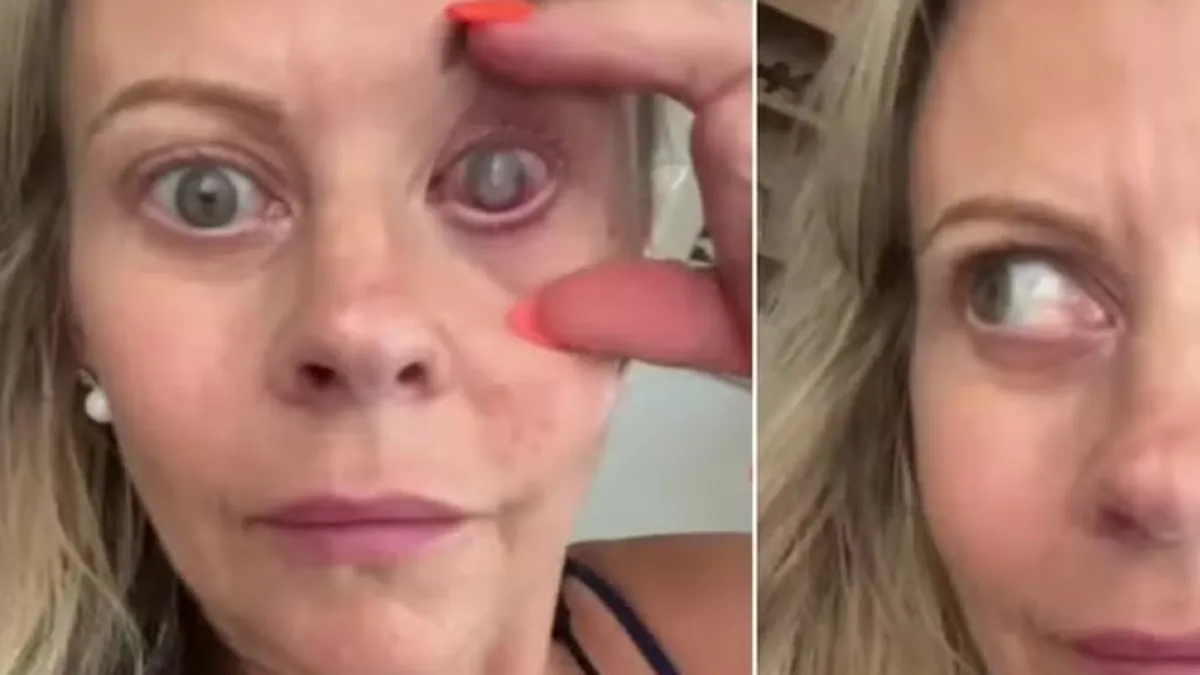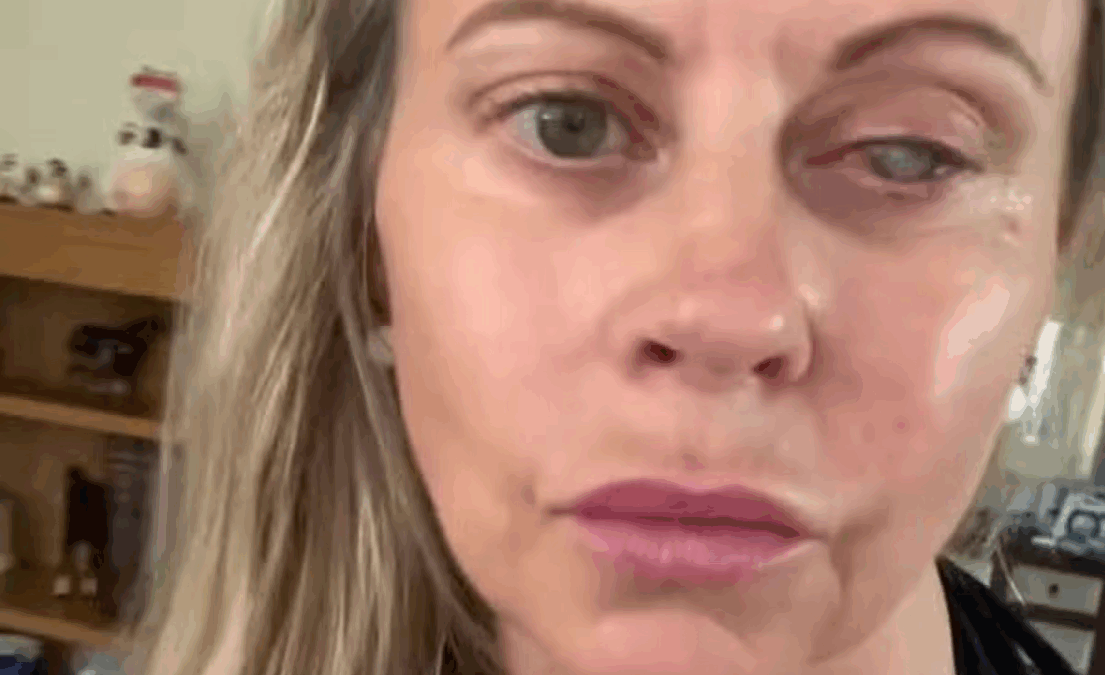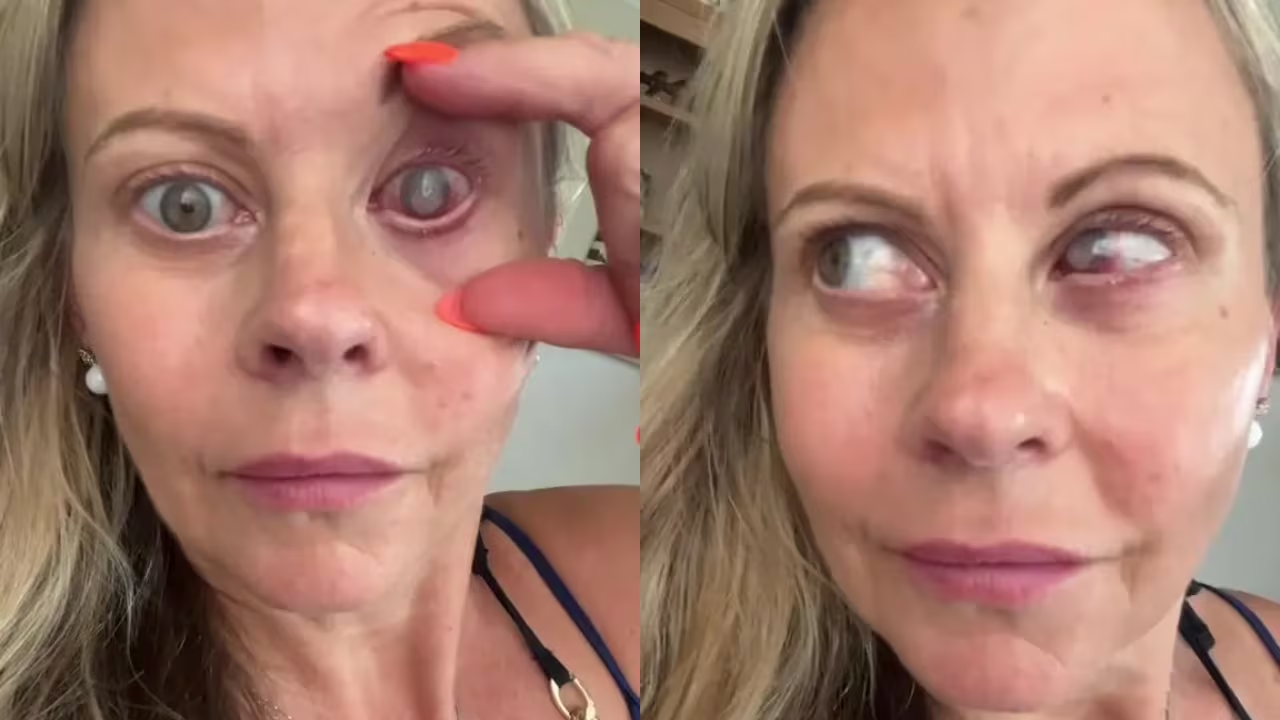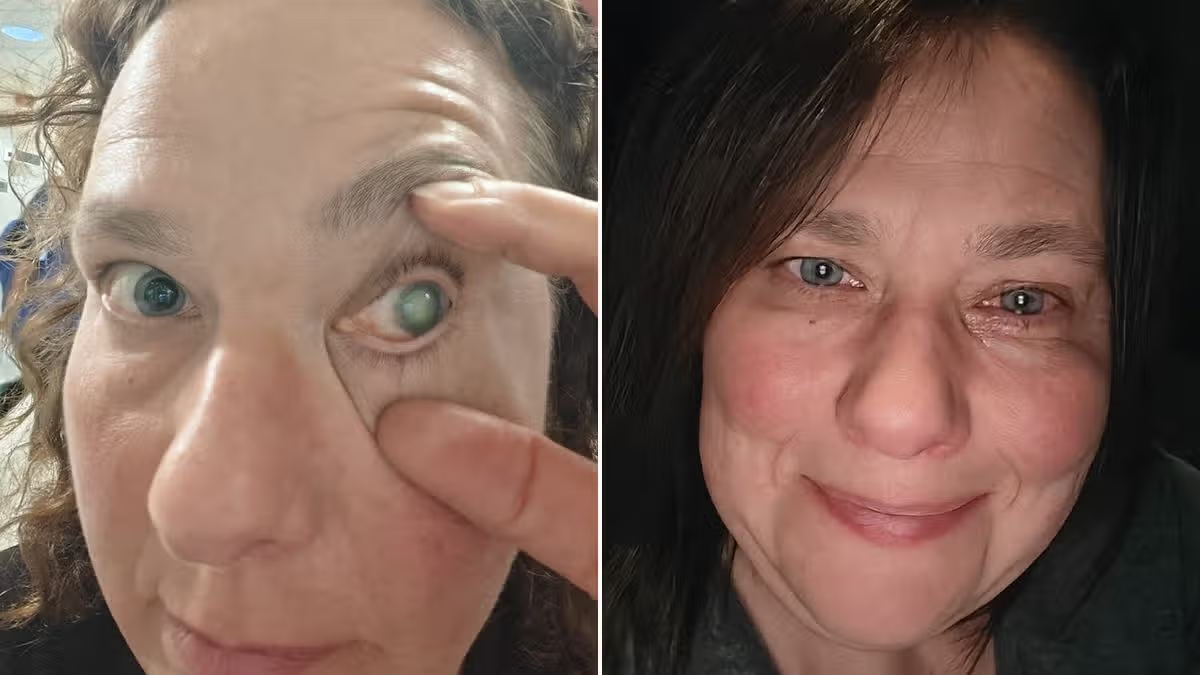
EXCLUSIVE: A contact lens wearer who routinely wore lenses all day has revealed how a rare eye infection has left her facing the loss of her eye, while another tells how delayed diagnosis almost cost him his sight13:59, 20 Jul 2026Updated 13:59, 20 Jul 2026A woman who wore her contact lenses from morning until night has revealed how an eye infection has robbed her of her sight and left her with no choice but to have her eye removed.Claire Buxton, 46, woke up with what felt like "a grain of sand" trapped in her eye, but dismissed the irritation as nothing more than conjunctivitis. But within weeks, her vision had deteriorated dramatically and she was eventually diagnosed with Acanthamoeba keratitis (AK) – a rare but potentially sight-threatening infection linked to contact lens wear.Specialists were initially divided over whether she should undergo a risky corneal transplant or have her eye removed and replaced with a prosthetic. Now, one year on, she has made the difficult decision to have it removed after her consultant found she had a slim chance of regaining her vision."I was still offered a transplant as an option, but the risks involved seemed to outweigh the benefits. I can have my eye removed and a hand-painted prosthesis to match my other eye. It'll mean no more pain, no more worrying about dust or water getting in my eye," she said.The rare infection can be triggered when microscopic parasites become trapped beneath contact lenses after exposure to water, soil or dust. According to the NHS's Moorfields Eye Hospital website, around two in 100,000 contact lens wearers per year in the UK are diagnosed with Acanthamoeba keratitis, making it extremely rare.The infection is caused by a microscopic organism usually found in bodies of water as well as domestic tap water, swimming pools, hot tubs, soil and air. While some patients can recover in three to six months, more complicated cases often result in surgery and permanent sight loss."I wore contact lenses all the time," said Claire, from the Midlands. "I alternated between daily lenses and two-week lenses, but I wore them all day every day - I'd put them in first thing in the morning and take them out at night."I'd occasionally showered in them in the past, although not around the time I got this. It can only take a single incident to introduce the parasite into your eye."When you wear contact lenses they can cause tiny micro-abrasions on the surface of your eye. If the parasite gets trapped underneath the lens, it can get inside."Claire believes she may have picked up the infection after playing field hockey on a water-based artificial grass pitch the day before her symptoms began. "I think I was splashed in the eye or rubbed my face after touching the pitch," she said. "That was the only thing I'd done differently."Initially, the redness and discomfort seemed harmless. "I woke up with the feeling that something was stuck in my eye. It was a little bit red and annoying, but because I wear contact lenses, I didn't think anything of it."As the days went on it became more red and weepy. I thought it was conjunctivitis and went to pharmacies for treatment, but it just kept getting worse."By the time she was referred to an eye unit, bright daylight had become unbearable. Unfortunately, Claire was initially misdiagnosed and prescribed steroid eye drops – something experts say can worsen infections because they suppress the body's immune response."The steroids made it feel better for the first few days," she said. "But when I went back they said the eye looked much worse."Following further testing, including a corneal scrape, Claire was diagnosed with Acanthamoeba keratitis and immediately began an intensive treatment regimen involving three different anti-parasitic eye drops every hour, alongside antibiotics, lubricants and months of oral steroids.The infection has left her vision fluctuating between being able to read a few lines on an eye chart and seeing only light. Despite everything, Claire continued working from home as a senior business improvement manager, adapting her home with blackout blinds and screen protectors. She also refused to give up hockey, wearing protective equipment to shield her remaining healthy eye."I've tried to keep life as normal as possible," she said. "I'm extremely independent and I didn't want this condition to define me."Despite hopes that she could have a chance of receiving complex reconstructive surgery and a corneal transplant to improve her sight, specialists say she will likely never regain vision and her eye will need to be removed.Claire's experience echoes that of 26-year-old Charlie Shields, from Chiswick, west London, whose diagnosis came only after weeks of escalating pain and repeated misdiagnoses.Charlie first noticed his eye becoming red after work before developing extreme light sensitivity and agonising pain. Doctors initially diagnosed inflammation and later ocular herpes, prescribing steroid drops that unknowingly allowed the parasite to spread deeper into his cornea.It wasn't until a corneal specialist reluctantly agreed to rule out Acanthamoeba keratitis that specialised imaging confirmed the diagnosis."They told me not to Google it," Charlie recalled. "Then they said I had to stop everything I was taking and start putting disinfectant eye drops in every hour, day and night."The steroids I'd been using had actually fed the parasites and made them burrow deeper into my eye."For two weeks, sustainability operator Charlie had to wake every hour throughout the night to administer the painful drops, leaving him virtually sleepless. "The drops burn your eye and your skin," he said. "I've now had more than 5,000 eye drops."The infection forced him to stop working for months and move out of his rented flat while recovering. His vision remains permanently affected, with sight in one eye resembling "looking through frosted glass".Unlike Claire, Charlie rarely wore contact lenses and says he had no obvious risk factors. "I'd never even heard of this disease," he said. "I wasn't wearing lenses in the shower or swimming, and I only wore them occasionally."I was as careful as the next person, but now I realise people don't understand how serious this infection can be."Early symptoms of Acanthamoeba keratitis can include persistent redness, pain that seems disproportionate to the appearance of the eye, blurred vision, excessive watering and extreme sensitivity to light.While the infection remains rare, specialists warn that prompt diagnosis is crucial, as delays can lead to permanent sight loss or the need for corneal transplantation.Article continues belowClaire said: "I still wear a contact lens in my good eye because I need it for hockey, but I'm so much more careful now."I'm processing the loss of hope, grieving the trauma and the restrictive life and pain I've had to endure over the last 18 months. I'm glad to be able to put it behind me and move on."
'Contact lenses caused parasite to eat my eye - now I need it removed'
EXCLUSIVE: A contact lens wearer who routinely wore lenses all day has revealed how a rare eye infection has left her facing the loss of her eye, while another tells how delayed diagnosis almost cost him his sight
1,129 words~5 min read