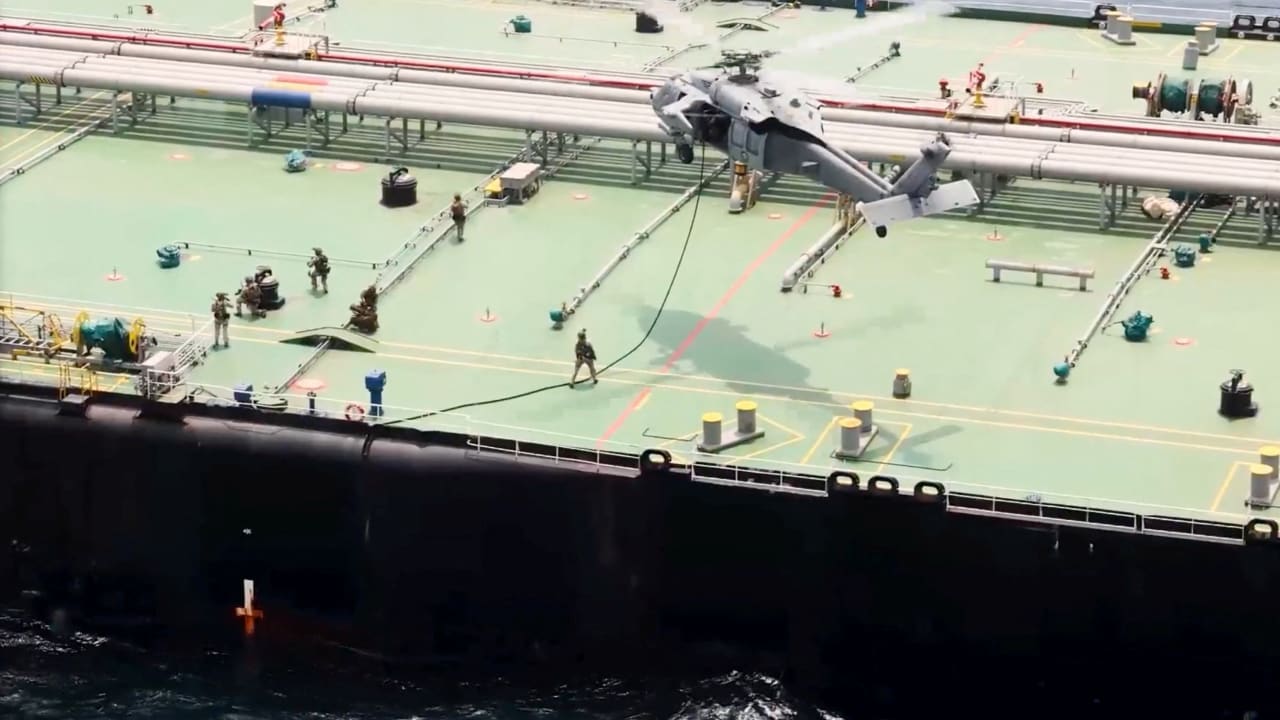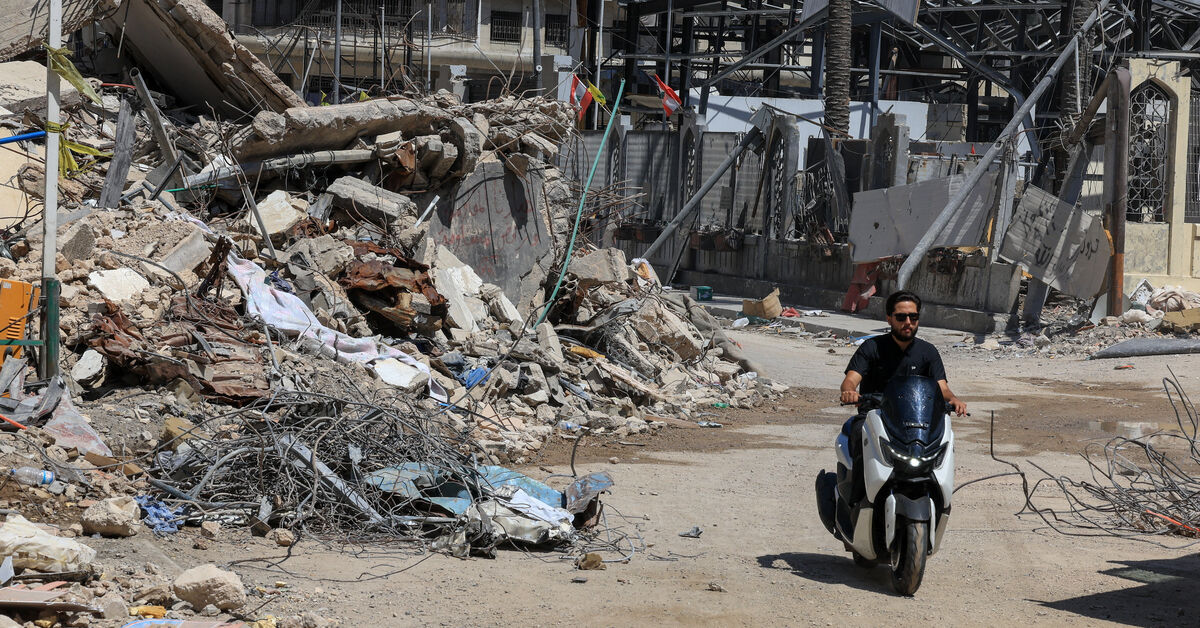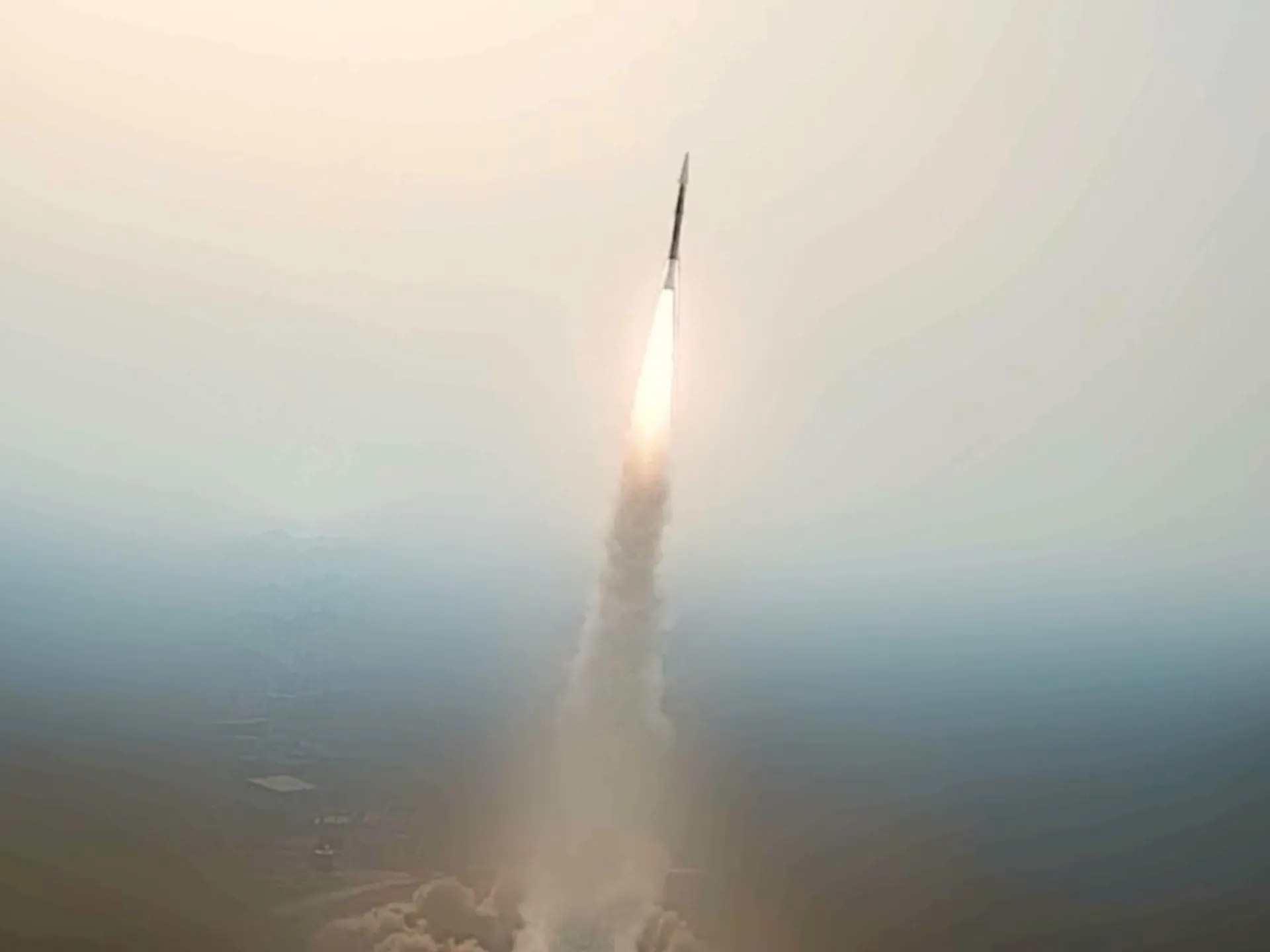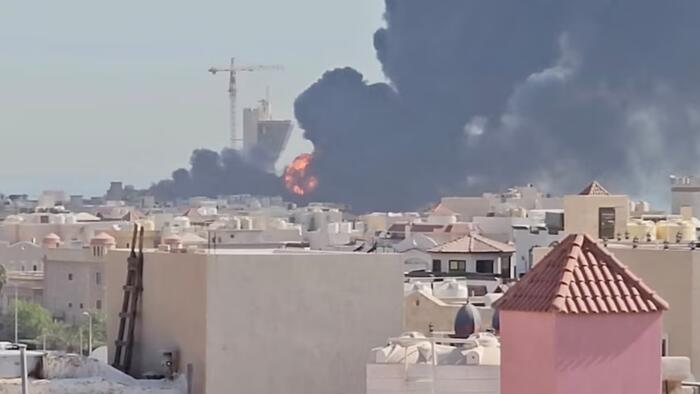
The US military is bombing Iran for what is now the ninth straight day of renewed fighting, in a campaign which has expanded to include both civic and military infrastructure, also as Iranian retaliatory attacks keep up the pressure on the Gulf states, and have reached into Jordan, which deadly effect on an American base there.Iranian authorities have said at least 50 people were killed and more than 500 after the return to war in the last three weeks. State media has reported that eight were killed in a single bridge strike on Friday.American deaths have become evident as well, with US soldiers confirmed killed in a Saturday CENTCOM announcement. The Pentagon said Sunday a third US servicemember was killed in northern Iraq Sunday, in what's being described as an accidental death during a "controlled detonation" of a downed Iranian attack drone.Smoke rises near the oil facility in Mangaf, Kuwait.The US has identified that Lieutenant Tyler James Feehan, 25, of Ewa Beach, Hawaii, and Private Isabella Gonzales, 19, of Carrollton, Texas, were killed in the Jordan attacks Friday. They were there as part of the ongoing 'counter-ISIS' mission, the Pentagon further indicated.Despite what has been several days of running escalation, Iran has it has received mediation proposals to restart negotiations with the United States, according to Foreign Ministry spokesperson Esmaeil Baghaei on Monday. Baghaei told state media that the country will continue to defend itself resolutely."I emphasize once again that the diplomatic apparatus continues to pursue its tasks jointly and in line with the defenders of the homeland in the armed forces. The proposals submitted through mediators have been communicated to us and have been received," the spokesman said. This as a new ceasefire proposal is said to be in the works, with the headline resulting in a drop in oil prices:MEDIATORS PROPOSE 10-DAY CEASEFIRE BETWEEN IRAN, US: REUTERSAccording to more details of the fresh push for regional ceasefire via The Wall Street Journal:Mediators were working to push the U.S. and Iran into a new ceasefire Monday, fearful the two foes could settle into a pattern where they keep conflict below the level of all-out war but disrupt regional economies indefinitely and run the risk of a miscalculation that escalates the fighting.The efforts come after the U.S. carried out a ninth straight night of attacks, Iran retaliated against Arab allies including Kuwait and Bahrain, and another vessel in the Strait of Hormuz was hit by a projectile that started a fire and led the crew to abandon ship.Qatar has floated the idea of a 10-day ceasefire and an end to restrictions on shipping in the strategic waterway, mediators said. It wasn’t clear whether either side was ready to accept a new halt to the fighting after the preliminary peace deal they signed in mid-June collapsed earlier this month, they said. Joachim Klement, head of strategy at Panmure Liberum, has newly commented that investors "still think the US and Iran will go back to the negotiation table," and stipulated that "Only once the US is no longer willing to negotiate do we expect markets to price higher oil prices for longer."However, statements out of Iran do not suggest de-escalation, with President Masoud Pezeshkian having said Monday his country is engaged in a "full-scale war" with the US and that Iranians must be ready accept the repercussions of the conflict."The reality is that today the Islamic Republic of Iran is engaged in a full-scale war. We must be realistic and accept the natural consequences of this resistance," Pezeshkian said.A few days ago, the Qataris submitted a proposal to regulate the Strait of Hormuz.
Mediators Float 10-Day Ceasefire As Pezeshkian Tells Citizens Iran Engaged In 'Full-Scale War'
Tehran says 'open' to diplomacy but would continue self-defense...
1,534 words~7 min read