A vulnerability in OpenSSL could allow attackers to cause a server’s memory to be exhausted before any security handshake, Okta’s red team discovered.
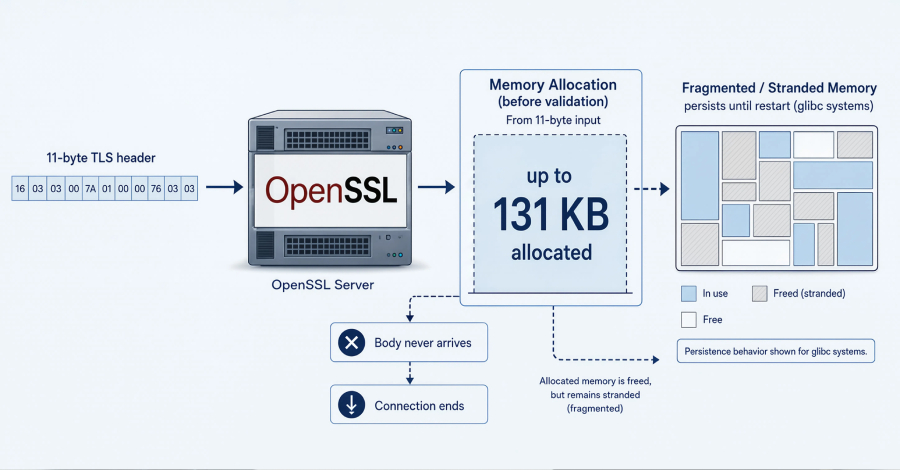
Referred to as HollowByte, the denial-of-service (DoS) bug could be triggered via a malicious payload of only 11 bytes that declares a larger incoming message body to trigger a buffer pre-allocation that is not immediately freed.
HollowByte existed because older OpenSSL iterations pre-allocated receive buffer sizes based on the incoming message body length declared in the handshake message’s 4-byte header.
The pre-allocation occurred before any data arrived, and an attacker could send an 11-byte payload to trigger an unvalidated buffer allocation of up to 131 KB.
“The worker thread then blocks, waiting indefinitely for data that will never arrive,” Okta explains.