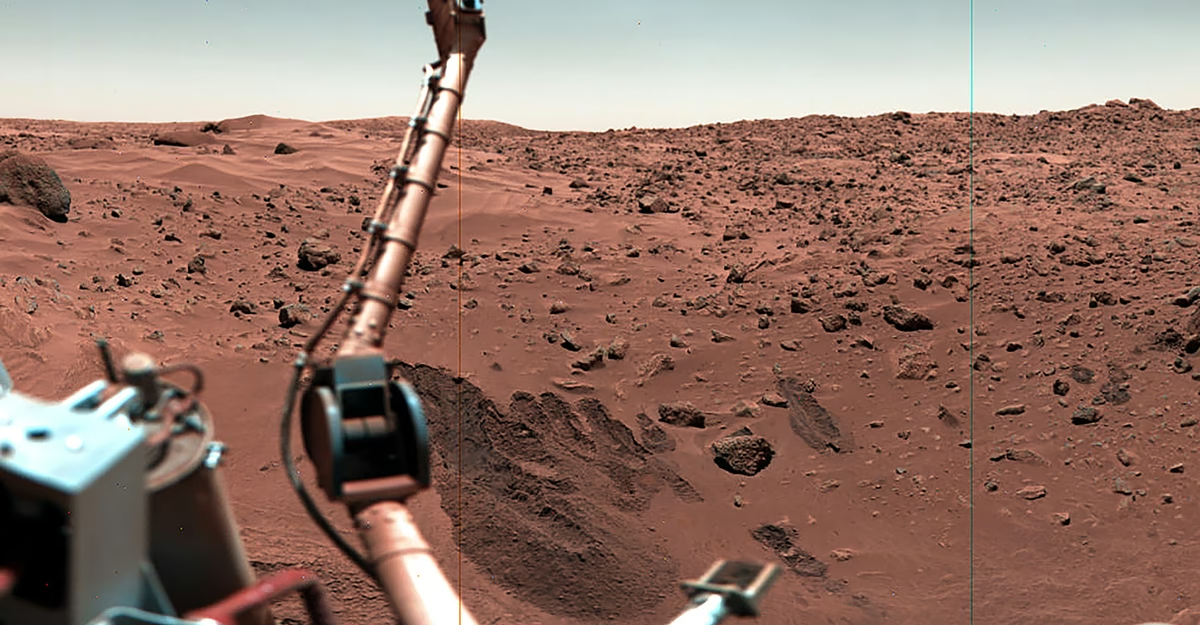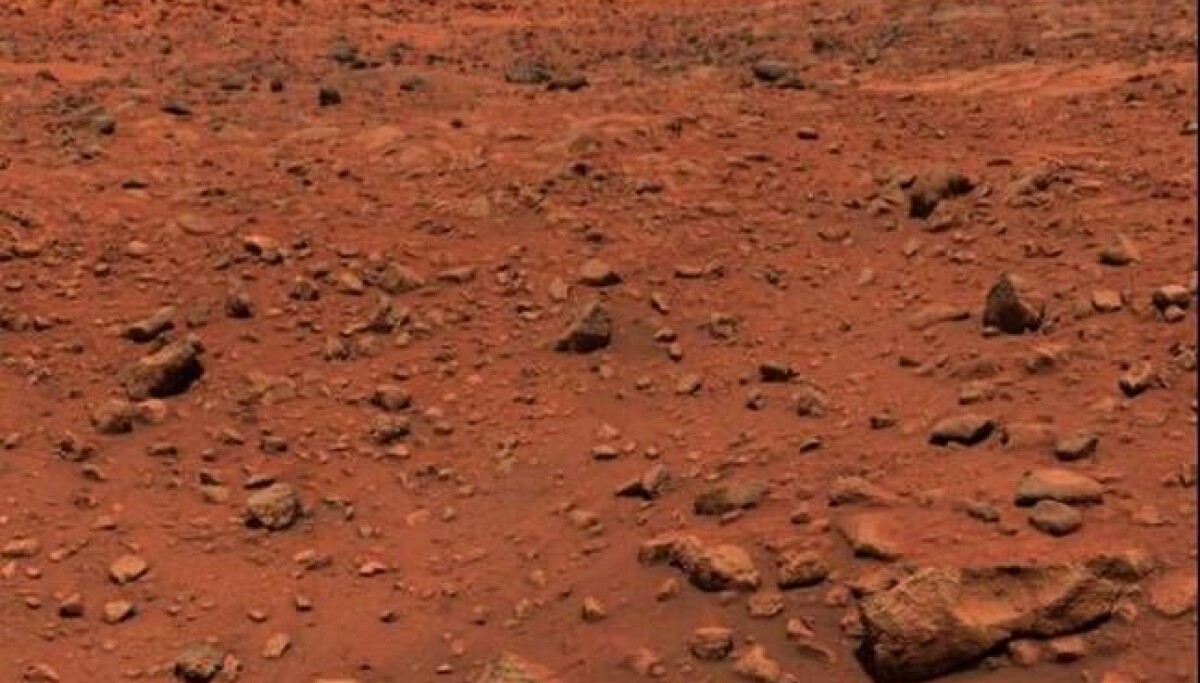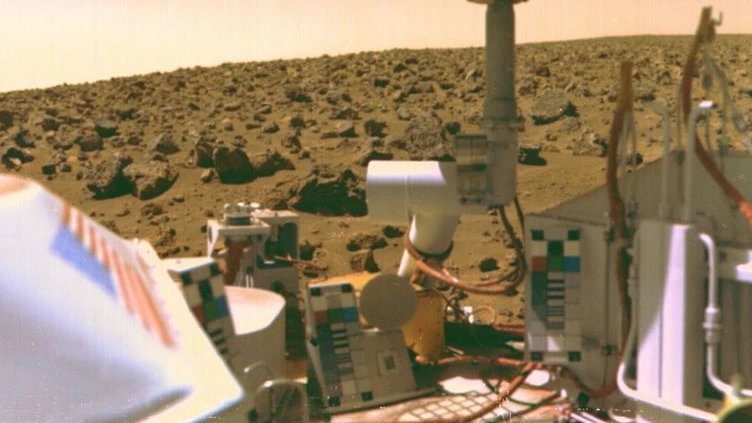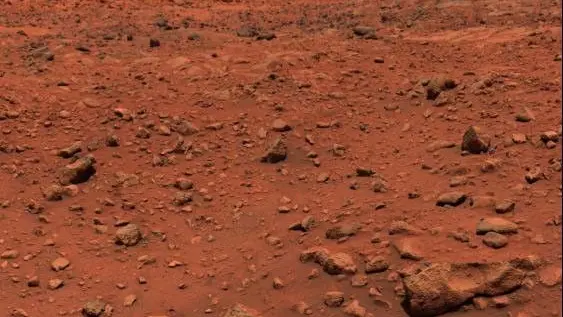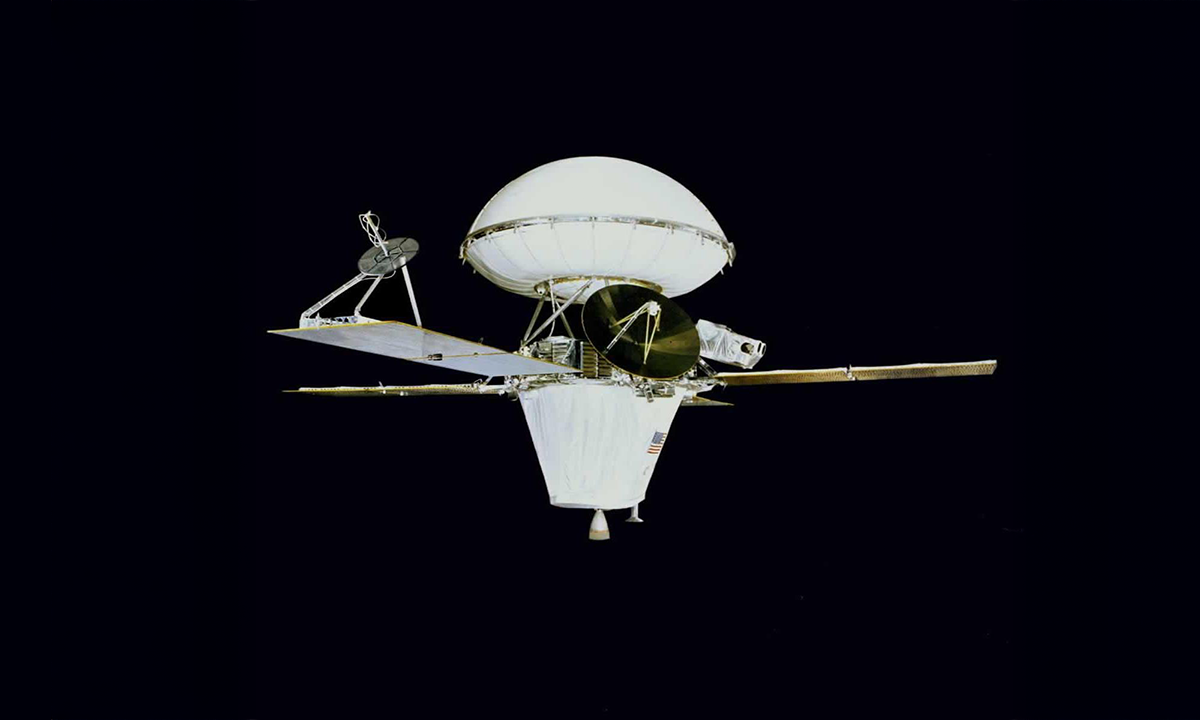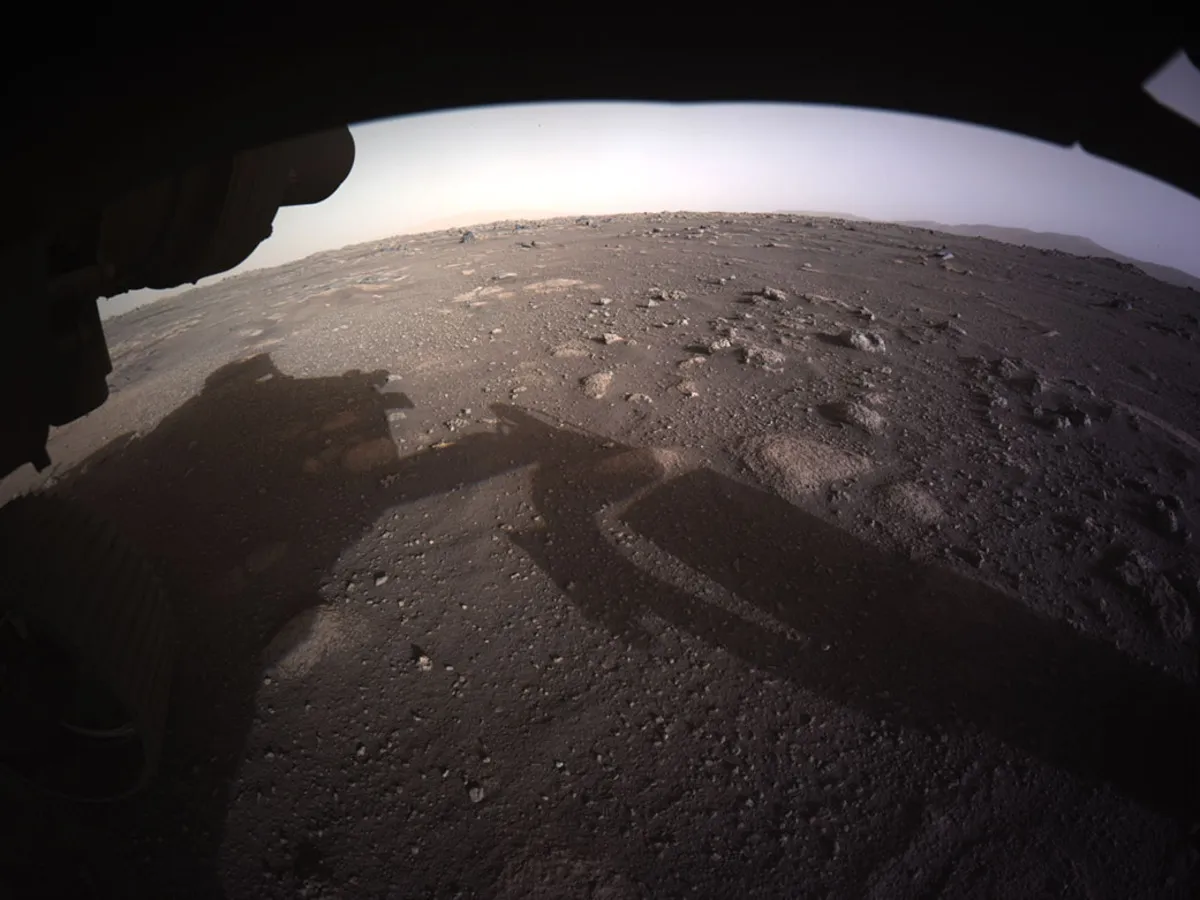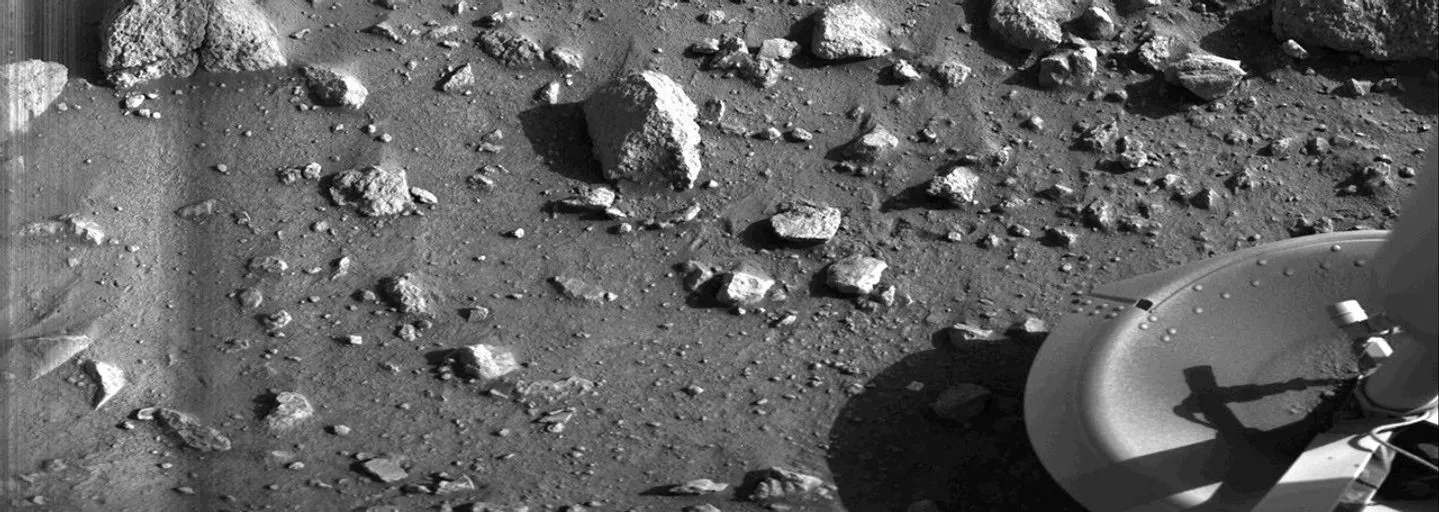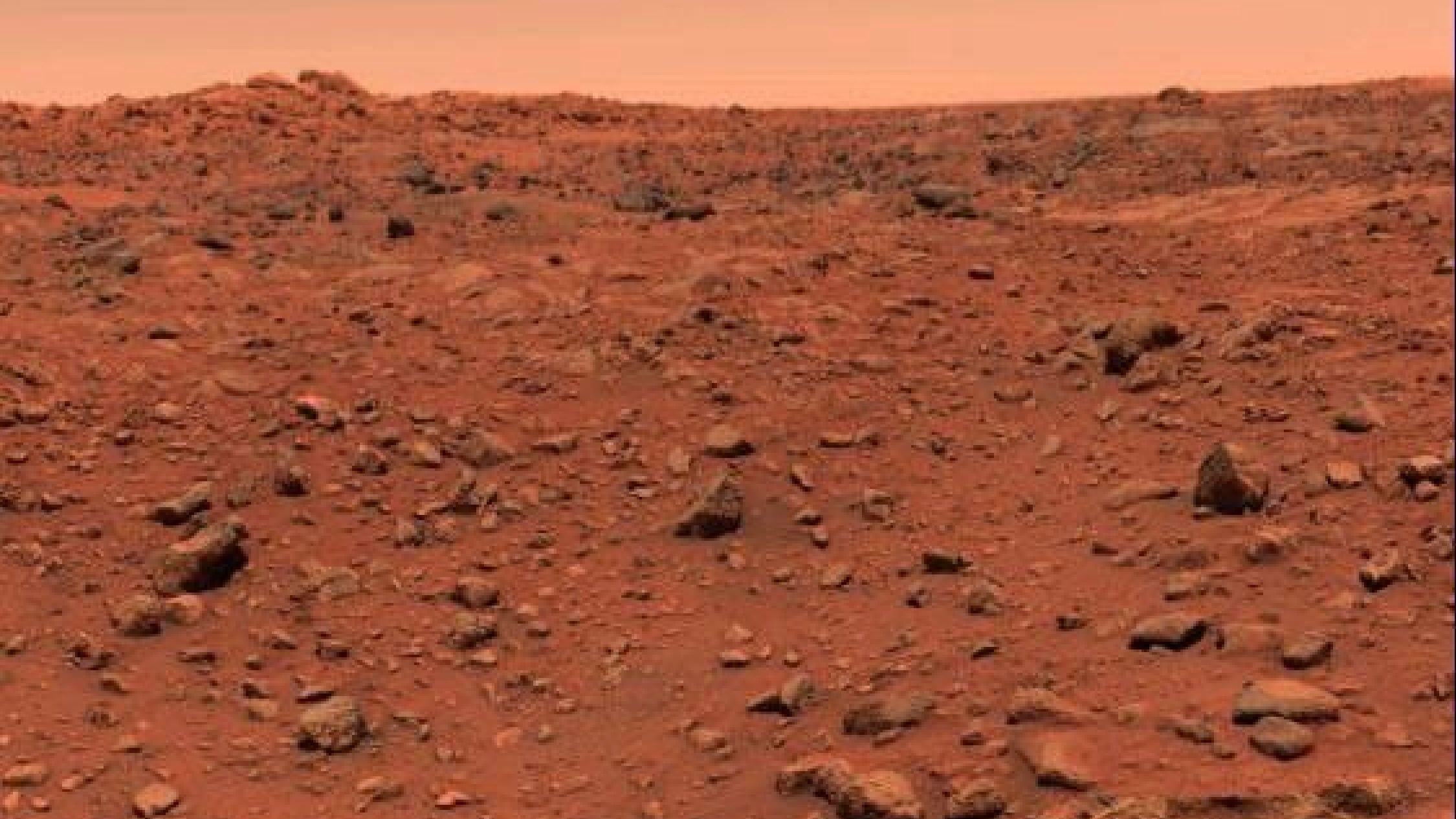
NASA's Viking 2 on the surface of Mars.
(Image credit: NASA)
In looking back and commemorating the 50th anniversary of the Viking missions to Mars, one is struck by the bold and audacious undertaking.Twin spacecraft missions — each consisting of a lander and an orbiter — made their way to Mars and into the history books. The Viking 1 lander planted its legs on the terrain of Chryse Planitia 50 years ago today, on July 20, 1976, while its Viking 2 counterpart touched down at Utopia Planitia on Sept. 3 of that year.Among their duties, the dual landers scooped up the first soil samples of Mars and deposited those precious collectibles into onboard, specialized equipment. Viking scientists had designed that gear to help answer an intriguing question: Is there life on Mars?
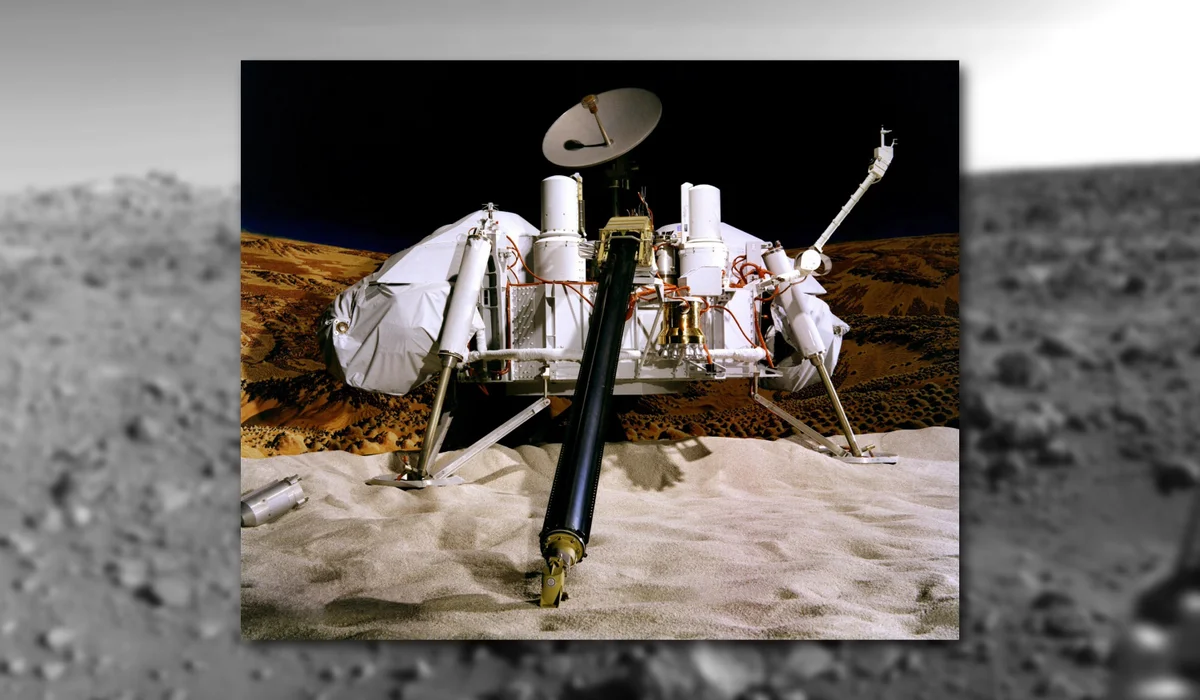
A model of NASA's Viking 1 lander here on Earth. On July 20, 1976, the spacecraft touched down on the surface of Mars. (Image credit: NASA)One of Viking's instruments was a GCMS, a combination of a gas chromatograph (GC) and a mass spectrometer (MS). A positive GCMS detection could confirm the possibility that organics needed for the origin of life as we know it were present.After interpreting all the data and information gleaned from ingested Martian soil, most scientists at the time concluded that Viking relayed a "no life on Mars" result.But is it possible that the two robots actually radioed back a very clear comeback: "Can you repeat the question?"Different techniquesBen Clark was a member of the Viking science team, and the instrument he designed made the first-ever measurements of the chemical composition of Mars soil. He is now a senior research scientist at the Space Science Institute in Boulder, Colorado."There were three life-detection experiments, each using different techniques to probe whether they could stimulate biological activity in the soil by adding various selected nutrients," Clark told Space.com. "Two were generally negative in their findings, but a third experiment had an expected strong response when it added nutrient."Indeed, astrobiologist/inventor Gilbert Levin remained convinced that his Viking microbial detection instrument, called the Labeled Release experiment, did find living microorganisms in the soil of Mars. He held tight to that view until he passed in July 2021 at the age of 97.Skeptical scientistsClark recalled that many members of the scientific community were skeptical when geochemists pointed out that certain minerals can cause a similar response."Furthermore, when a second amount of nutrient was added, there was no additional response," Clark said. "Did the organisms die between experiments?"Because of these responses, and especially because no organic molecules could be detected, most biologists concluded there was no life in the dirt that Viking tested. "However, there is also the question of whether the best nutrients were used in the Viking tests," Clark noted.Microbiologists who study the small organisms that live in Earth soil, Clark added, know that some species are extremely adept at using sulfate as an energy source, by combining it with organics or with hydrogen gas."Unfortunately, none of the Viking life-detection experiments added hydrogen gas to their chambers," Clark said."Ironically, the instrument which searched for organics in the soil, the GCMS, used hydrogen gas in its analytical technique," he added. "Thus, there was a tank full of hydrogen gas located just centimeters away from the life-detection experiment package, but no connection between it and the GCMS where it was located."