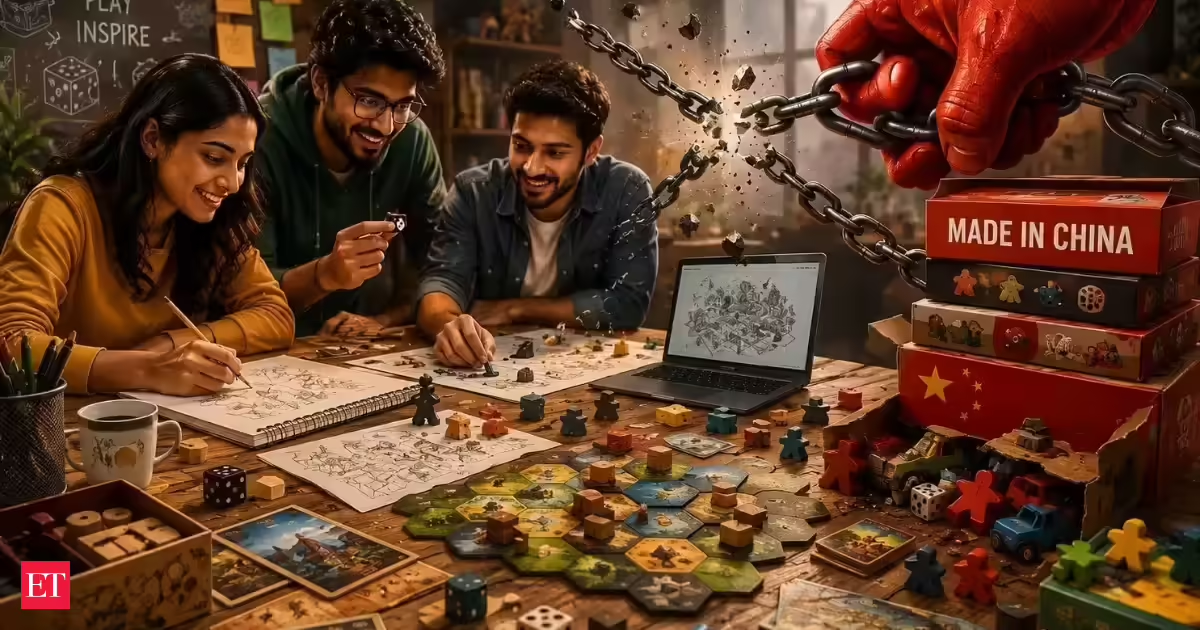
A few years ago, phrases such as "Indian video game" or "Latvian game" did not inspire much confidence. Fairly or not, the association was often of mobile clutter. Think low-budget titles cranking out ads or regional knockoffs of whatever happened to be popular in the West.
The largely unspoken assumption was that serious creative work took place in a handful of countries, including Japan, the United States, and Canada, while everyone else was either catching up or not really trying. However, over the past few years, developers from countries that barely registered on the global gaming map have produced work that is becoming increasingly hard to ignore.
From visual novels, to handcrafted action RPGs drawing on mythologies that rarely get big-budget treatment, to titles that have landed GOTY nominations and sold in the tens of millions worldwide (numbers that would have seemed absurd to predict even ten years ago.)
What's driving this is harder to pin down to a single trend. Whether it's better tooling, more accessible distribution, growing local industries, and players actively seeking out something different... clearly all of it has compounded. The momentum shows no sign of slowing.
For much of its modern history, China's gaming industry relied on a few familiar formulas: free-to-play mobile games, online titles built around microtransactions, and products designed primarily for domestic audiences, often without translations for international players. The idea that a Chinese studio might challenge the likes of FromSoftware or Santa Monica Studio on their own terms once would have normally sounded like a stretch.