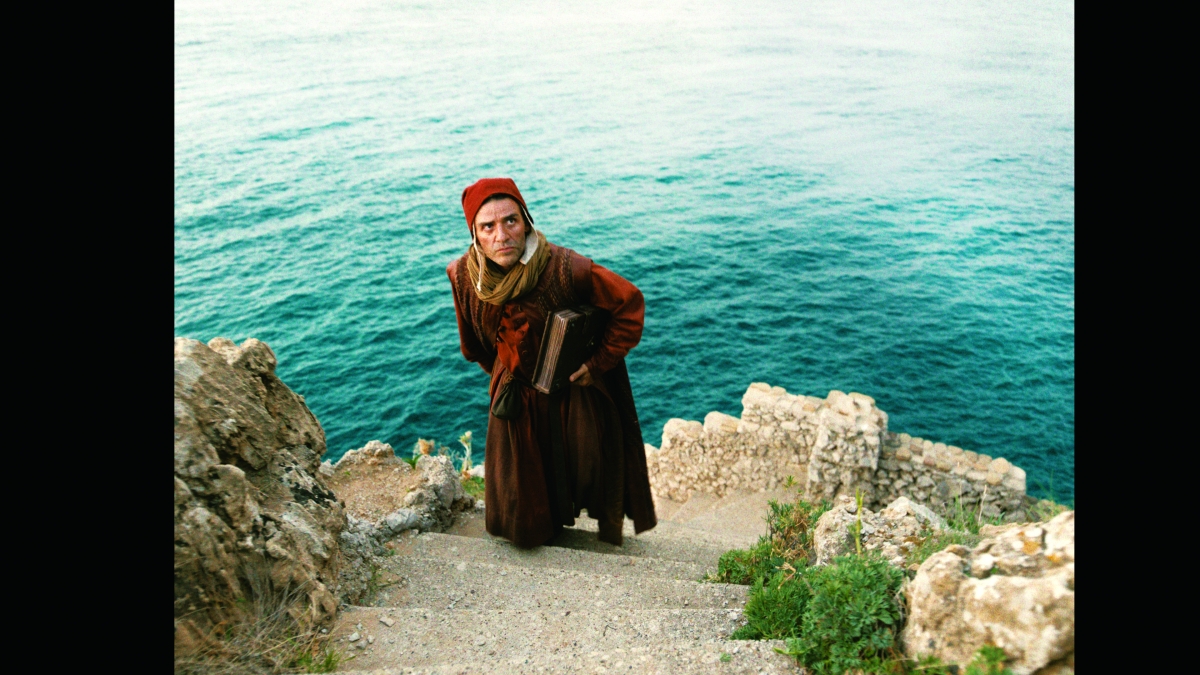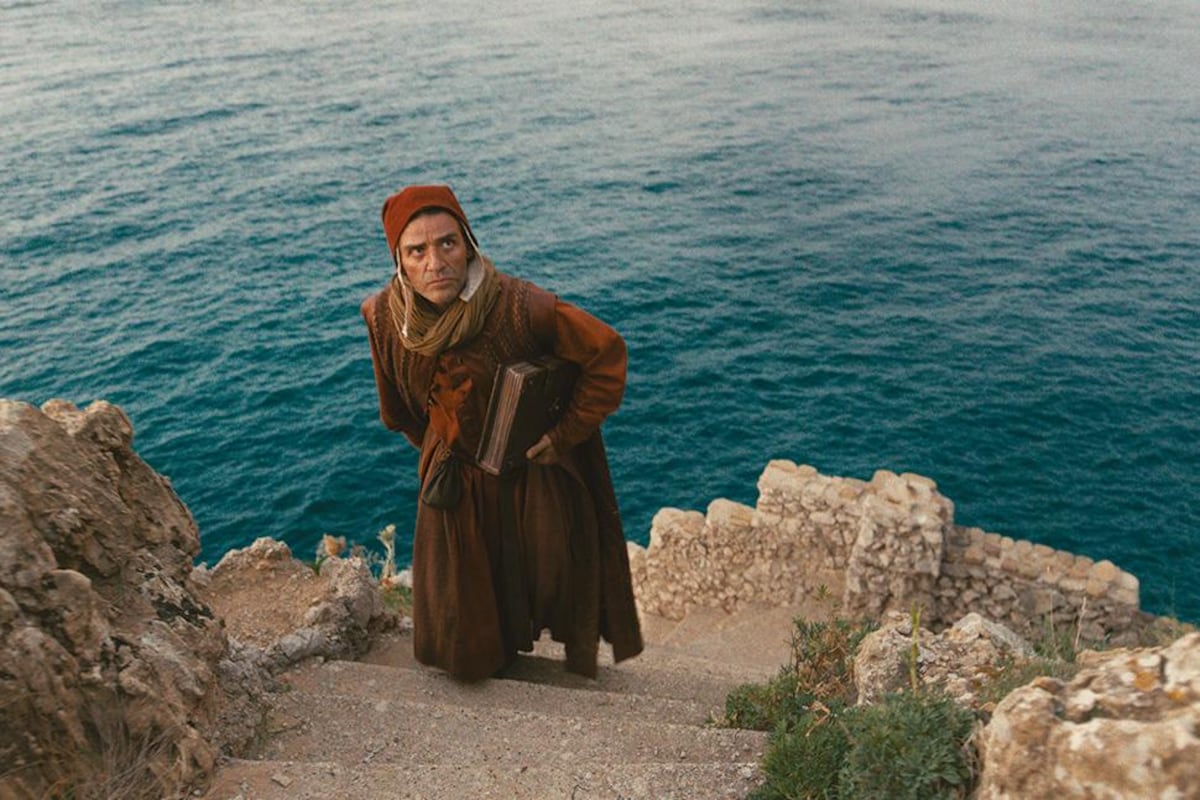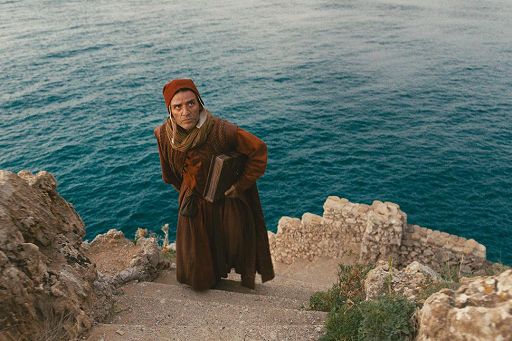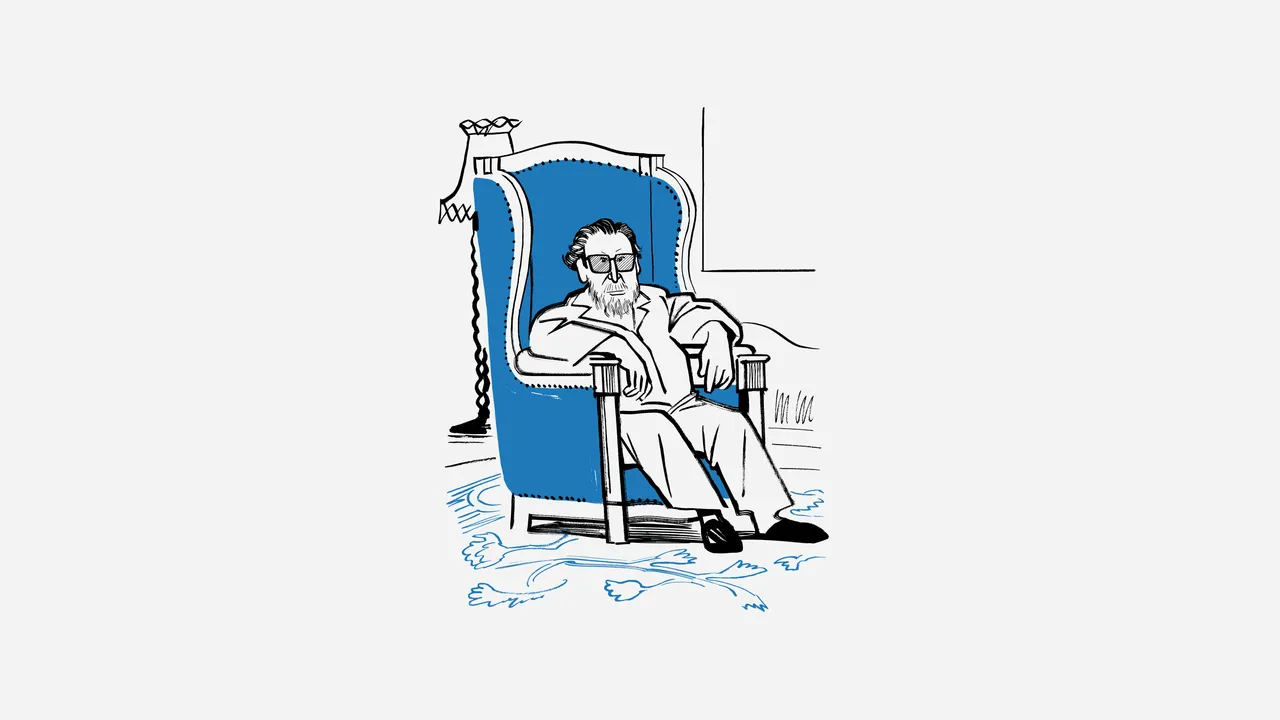
Julian Schnabel took his first trip to Italy fifty years ago. “When I was in college, I was looking at these art-history books, and I thought, You can’t tell a damn thing about these things unless you go there and stand in front of them,” he said recently. So, he went there and stood in front of them: Giotto’s frescoes in the Cappella degli Scrovegni, Piero della Francesca’s paintings in Arezzo, some Duccio, some Caravaggio. He liked the art, and he liked the Italians. “In the United States, everybody knows Abraham Lincoln,” he said. “In Italy, everybody knows Caravaggio.” He stayed. He sold some paintings. That was 1976. Italy has often been on his mind. This year, Netflix released his film “In the Hand of Dante” (as in Alighieri), and Pace is hosting an exhibition of his paintings of Italy’s umbrella-pine trees.Schnabel was in his studio inside Palazzo Chupi, his pink Venetian-style building in the West Village. He wore slippers and paint-splattered coveralls, unbuttoned, with chest hair poofing out. A work crew was about to pack up his paintings to send to the gallery. “Want to start with this one?” a worker asked.“No, I’m standing here because I want to start with that one,” Schnabel said. Of the paintings, he said, “I was living in Rome, near the Villa Borghese, and they’ve got these trees there. I was down in Sicily, shooting in Trapani and San Vito Lo Capo. We shot in Tarquinia. We shot in Bracciano, Venice, Verona, Padua. The whole thing is called ‘Italy Through Its Trees.’ ”He’d painted on broken plates or on old maps. He pointed to a plate painting on the floor. “I painted this in my outdoor studio in Montauk,” he said. “I painted flat, which is unusual. For example—Michael, give me a brush on a stick.” Michael, an assistant, gave him a brush on a stick. “You see those round marks? That’s me going like this.” He jabbed, as a janitor with a broom might jab at a drunk. The color of the sky through the branches was remarkable.As the workers packed, Schnabel reviewed photographs from a newly opened exhibition. Another assistant handed him the catalogue, balling up its plastic wrapping stamped with promotional copy. “You just scrunch that up?” Schnabel said. “Give that to me, please.” He unscrunched and read, “ ‘Julian Schnabel has been exploring ways of painting for the last five decades. From his initial wax paintings and plate paintings to his most recent works, he’s contributed to the shaping of the ever-open vocabulary of mark making. . . .’ ” He concluded and said, “Anyway, it’s a pity to throw that away.”Cartoon by Edward SteedSchnabel wanted lunch, so he headed upstairs to his apartment. Palazzo Chupi has twelve stories and a pool. Schnabel constructed it, atop an old perfume factory, in 2007. To help finance it, he sold a Picasso. Being pink, tall, and a palazzo (a critic described it as an “exploded Malibu Barbie house”), it was controversial. Schnabel sold some units—Richard Gere bought one—and kept some. He gave a tour on the way up. In a bedroom: “My first plate painting, from 1978.” In a room with two grand pianos, a Pilates machine, and a taxidermied bear: “Andy Warhol painting of me.” In a foyer with a sculpture: “Sculpture.”In the kitchen, Schnabel sat in a big wooden chair with cherubs carved into the arms. He ate a tuna-fish sandwich with oat milk. “I learned Italian watching Italian movies,” he explained. “ ‘L’Ultima Donna,’ by Marco Ferreri, where Gérard Depardieu cuts his dick off with an electric knife. I saw Bertolucci’s ‘Atto Due,’ the second part of ‘Novecento,’ in Paris, in Italian, with French subtitles. I didn’t speak French or Italian. I became very good friends with Bernardo Bertolucci over the years. When I met Bernardo, I hummed the soundtrack of ‘Novecento’ to him, and he just melted.”
Il Paradiso Italiano di Julian Schnabel
At his pink palazzo, in the West Village, the artist packs up paintings for a Pace exhibit and discusses his new movie, about Dante—produced by, and guest-starring, Martin Scorsese.
650 words~3 min read