For decades, archaeologists believed that while early humans had learned to control naturally occurring fires more than a million years ago, they only mastered the ability to create fire much later.
A remarkable discovery in southeast England is now challenging that timeline.
Tiny fragments of iron pyrite, found alongside heat-damaged stone tools and ancient hearth remains, suggest that early humans may have been deliberately making fire around 400,000 years ago, roughly 350,000 years earlier than previously confirmed.
If the findings hold up, they represent one of the most significant breakthroughs in understanding the technological and cognitive evolution of our ancestors, revealing that the ability to spark flames may have emerged far earlier than anyone imagined.
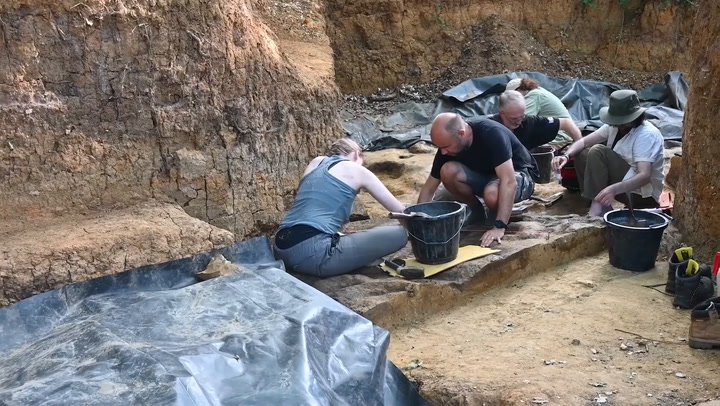
How 400,000-year-old rock fragments could rewrite the history of fire-makingAccording to Department Britain, Europe and Prehistory, British Museum, the discovery comes from the archaeological site of Barnham in Suffolk, southeast England, where researchers excavated a buried landscape dating back approximately 400,000 years.