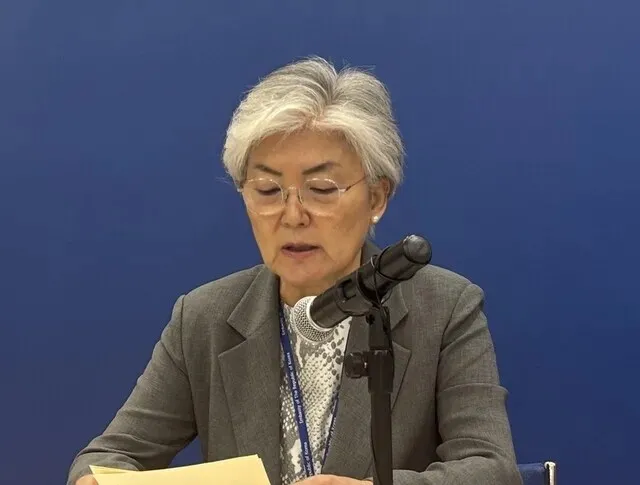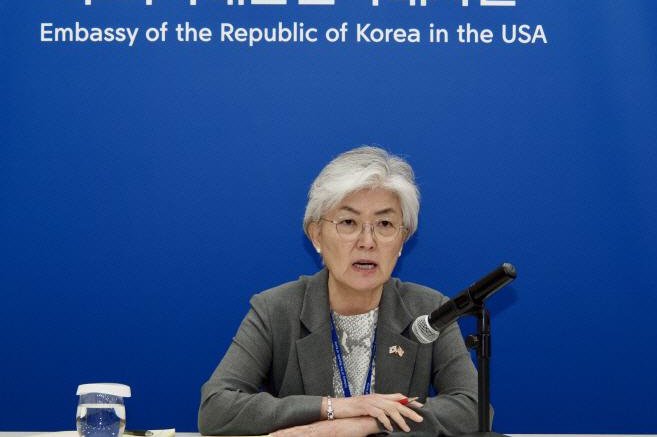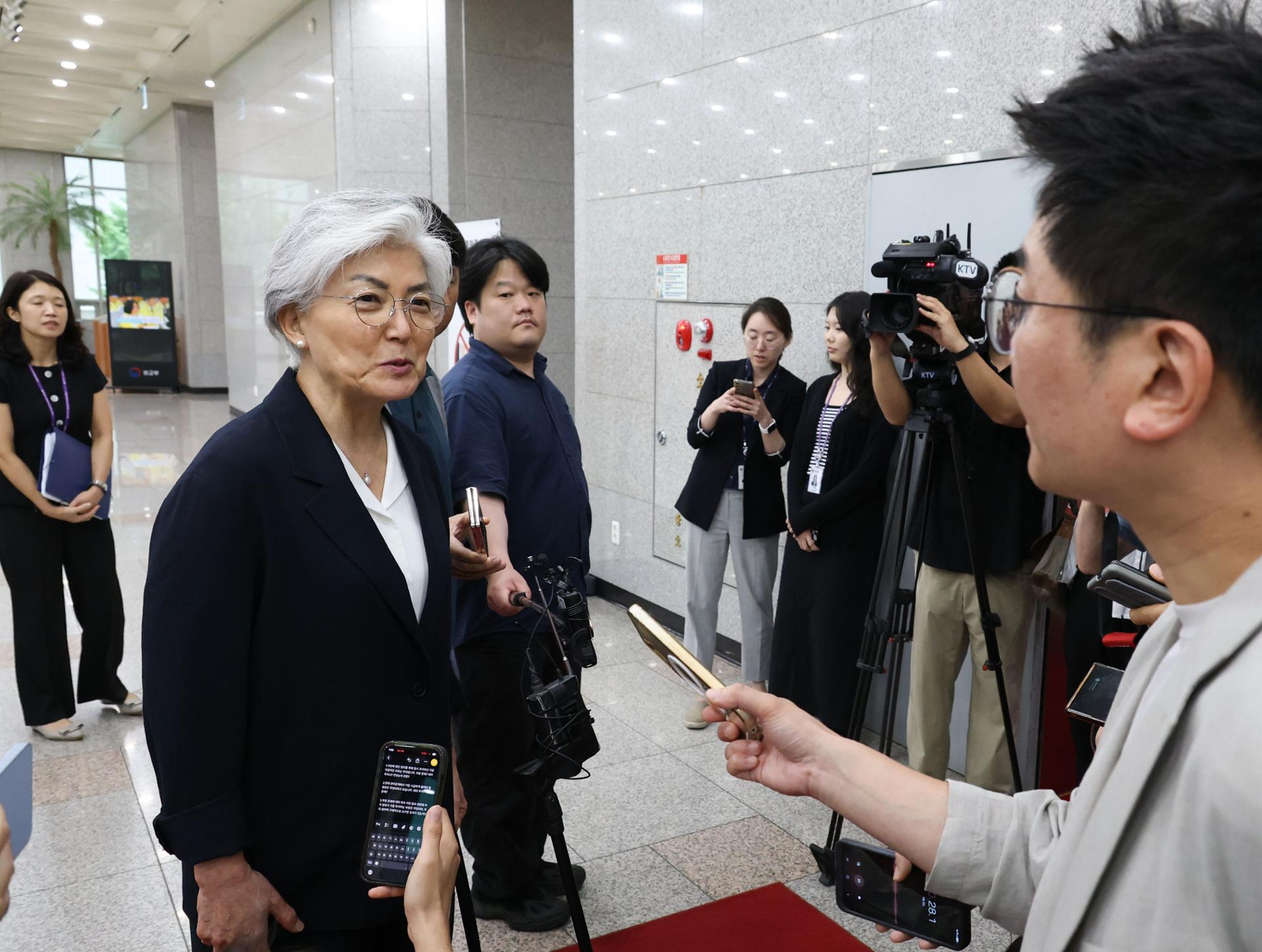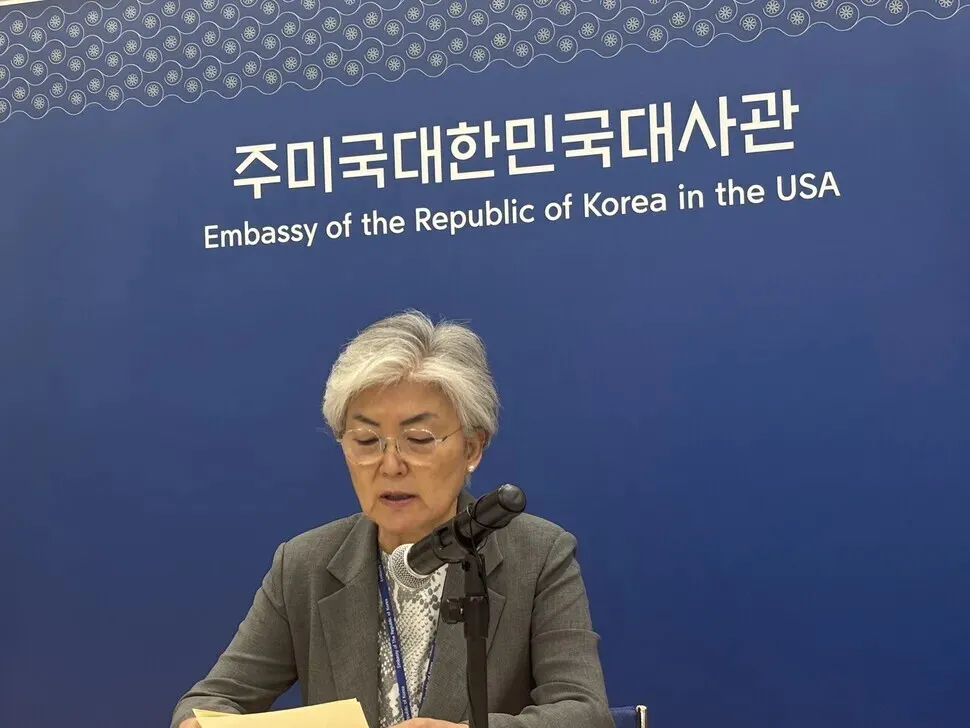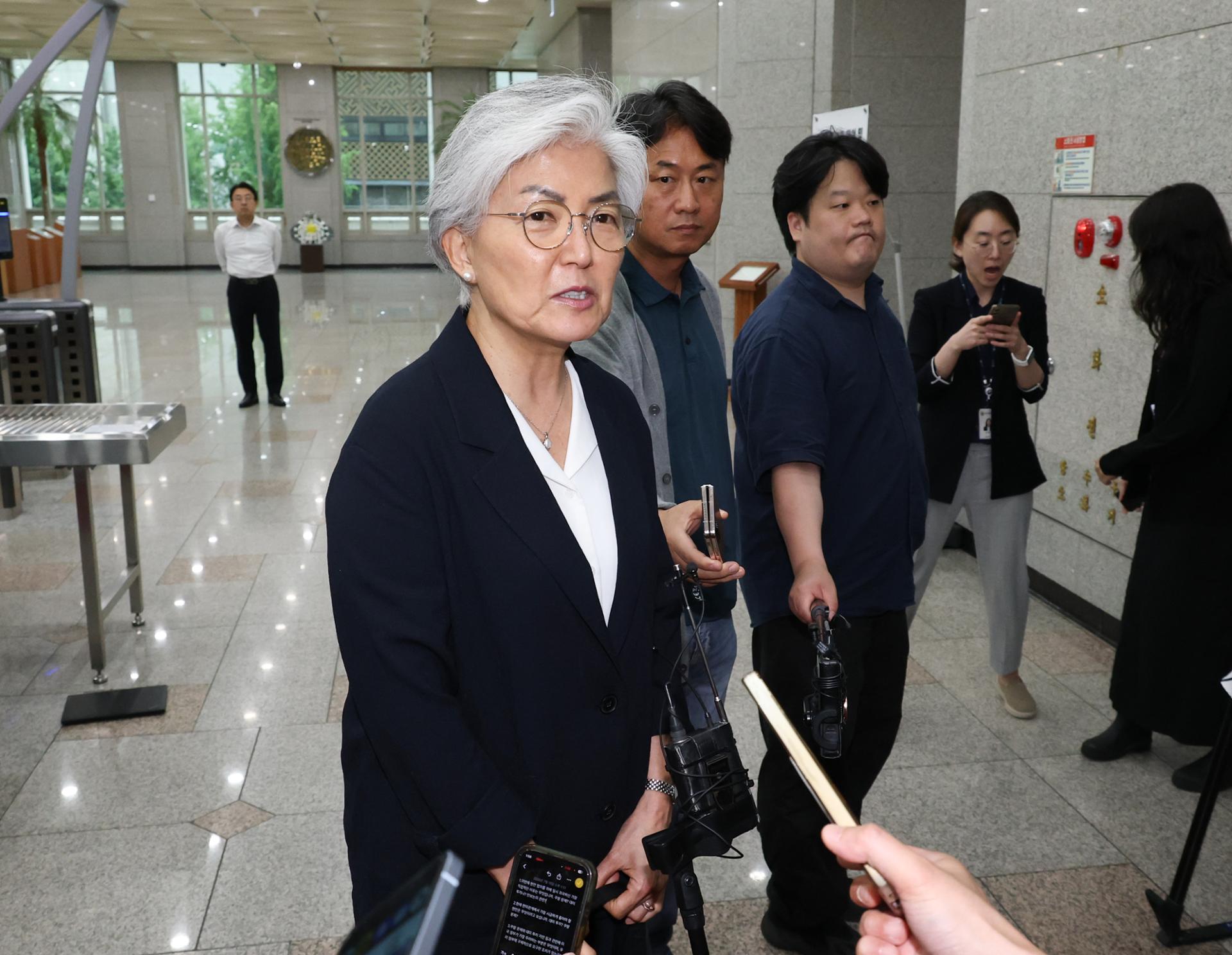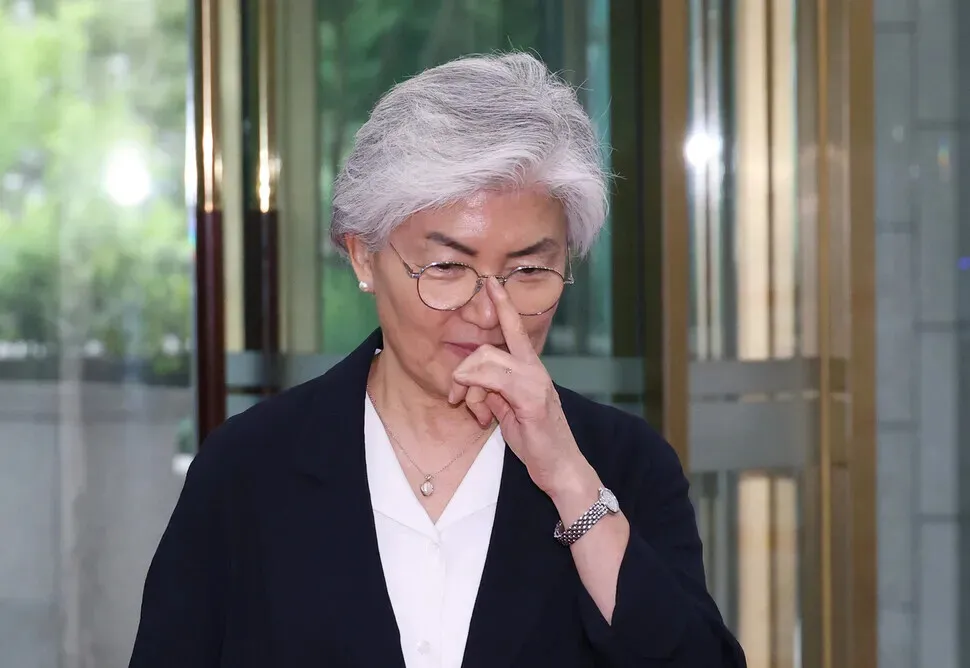
South Korean Ambassador to the US Kang Kyung-wha returned to the US on Sunday after a brief five-day visit to Korea. All eyes were fixed on her sudden return to Korea, which took place amidst a barrage of complaints from Washington concerning issues that the two sides are failing to see eye-to-eye on, such as regulation of Coupang following its massive customer data leak last year. As the Coupang incident is a problem directly connected to Korea’s judicial sovereignty, rushing to a conclusion could set a dangerous precedent of bowing to the shameless lobbying of US companies emboldened by the Donald Trump administration. Given the necessity of cooperating with the US today, Korea must respond with flexibility yet confidently, ensuring that its principles are not compromised in the process. After arriving in Korea on Wednesday, Kang met with Foreign Minister Cho Hyun and attended a National Security Council standing committee meeting on bilateral trade and security agendas with the US on Thursday. Regarding the Coupang issue, Kang commented that it was ”lasting longer than expected.” “Naturally, those stationed in Washington, DC, and those at Korea’s Foreign Ministry headquarters are experiencing this conflict differently, so I have come to hear the opinions of those in Korea and to relay my first-hand experiences,” she said, indirectly revealing that the purpose of her visit to Korea was to brief the Blue House and the Foreign Ministry on developments in the US surrounding this issue and to devise a response. However, as President Lee Jae Myung noted on Thursday, while some companies believe that they are being “targeted” by certain measures that are in fact “in line with the law and established policies,” the government appears determined to continue pursuing responses consistent with its principles. Last year, Korea engaged in grueling tariff negotiations with the Trump administration, which is deeply invested in its own interests and champions extreme “America First” policies. The result of that was the bilateral joint fact sheet adopted following a summit in the fall. In return for investing US$350 billion in the US, the fact sheet includes terms stipulating the early return of wartime operational control (OPCON) to Korea, as well as permission to pursue uranium enrichment and the development of nuclear-powered submarines. However, the agreements have faced obstacles during the implementation process due to delays in the enactment of Korean legislation to support strategic investment in the US and unexpected variables such as the conflict surrounding Coupang. Kim Yong-beom, the Blue House director of national policy, said Sunday that Trade Minister Kim Jung-kwan would soon pay a visit to the US, noting that Seoul was “preparing to finalize the first US investment project within the next two or three months.” The US is also actively requesting that Korea provide help with warship construction. We need to accelerate the implementation speed of the investment we have promised and actively develop businesses for bilateral cooperation, such as shipbuilding. Conflict between countries can only be resolved if we confidently approach issues head-on, in a principled and straightforward manner.
[Editorial] For Korea’s disputes with the US, the only way out is through
Seoul must be principled yet flexible in its response to US complaints over bilateral issues
506 words~2 min read