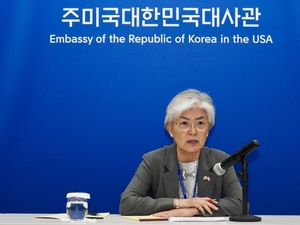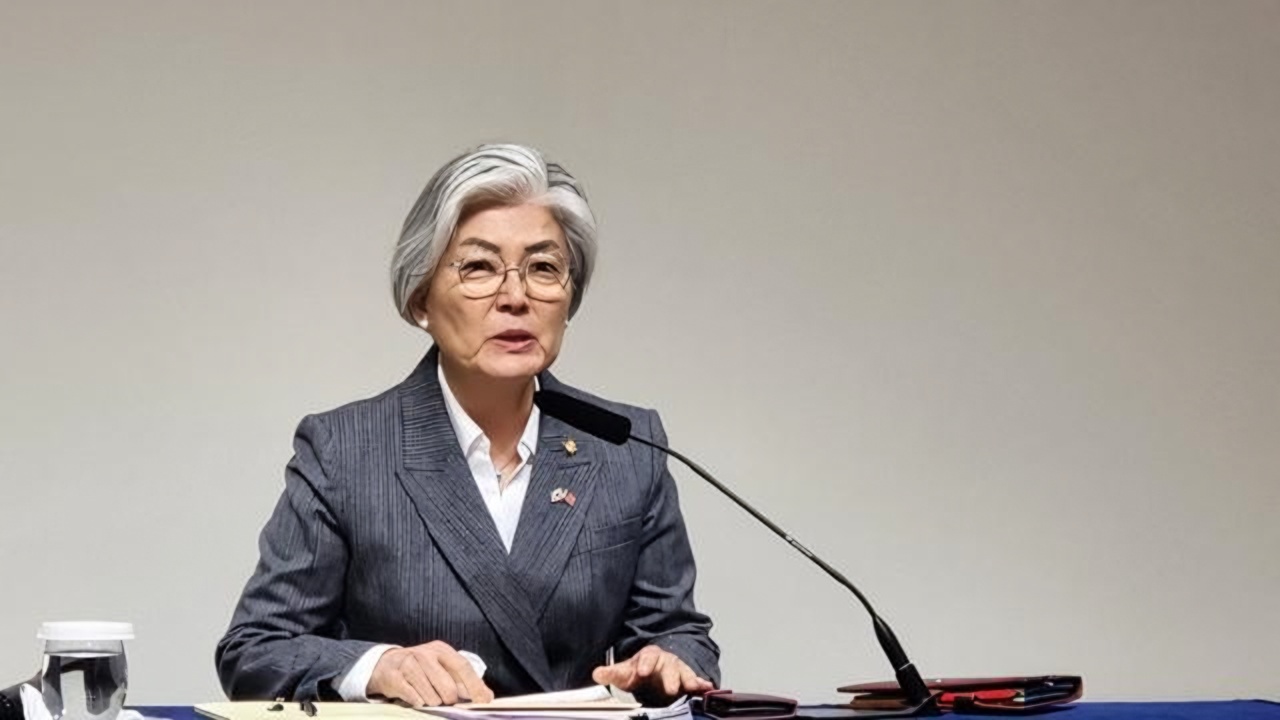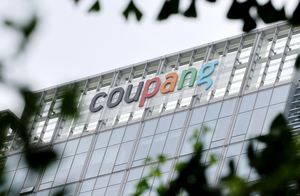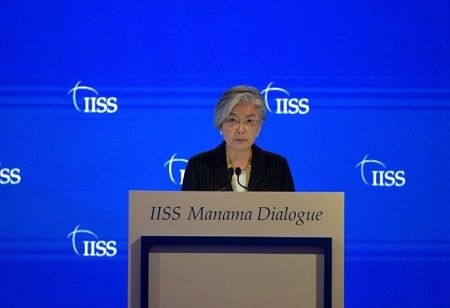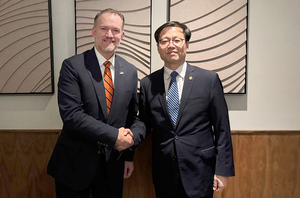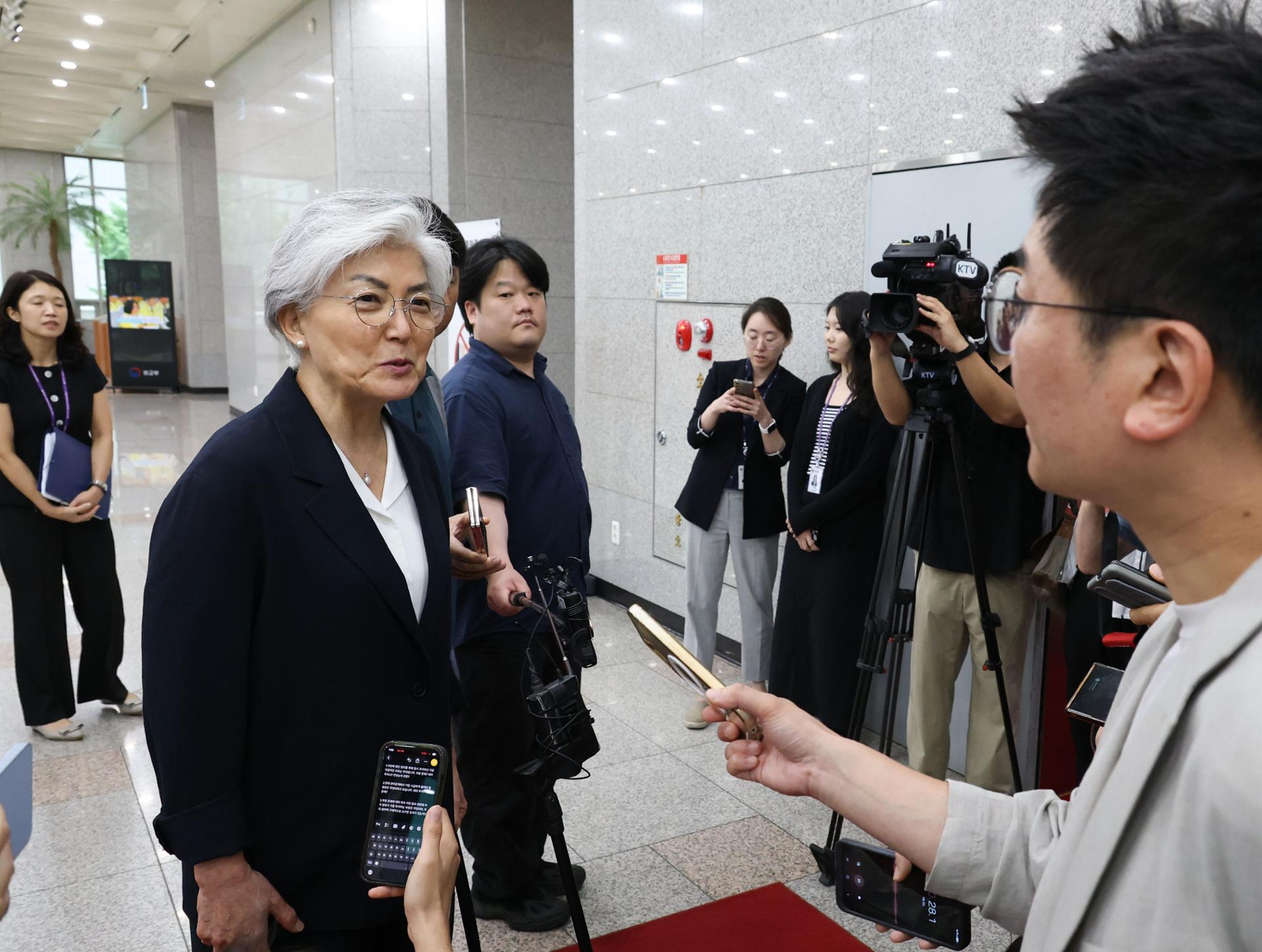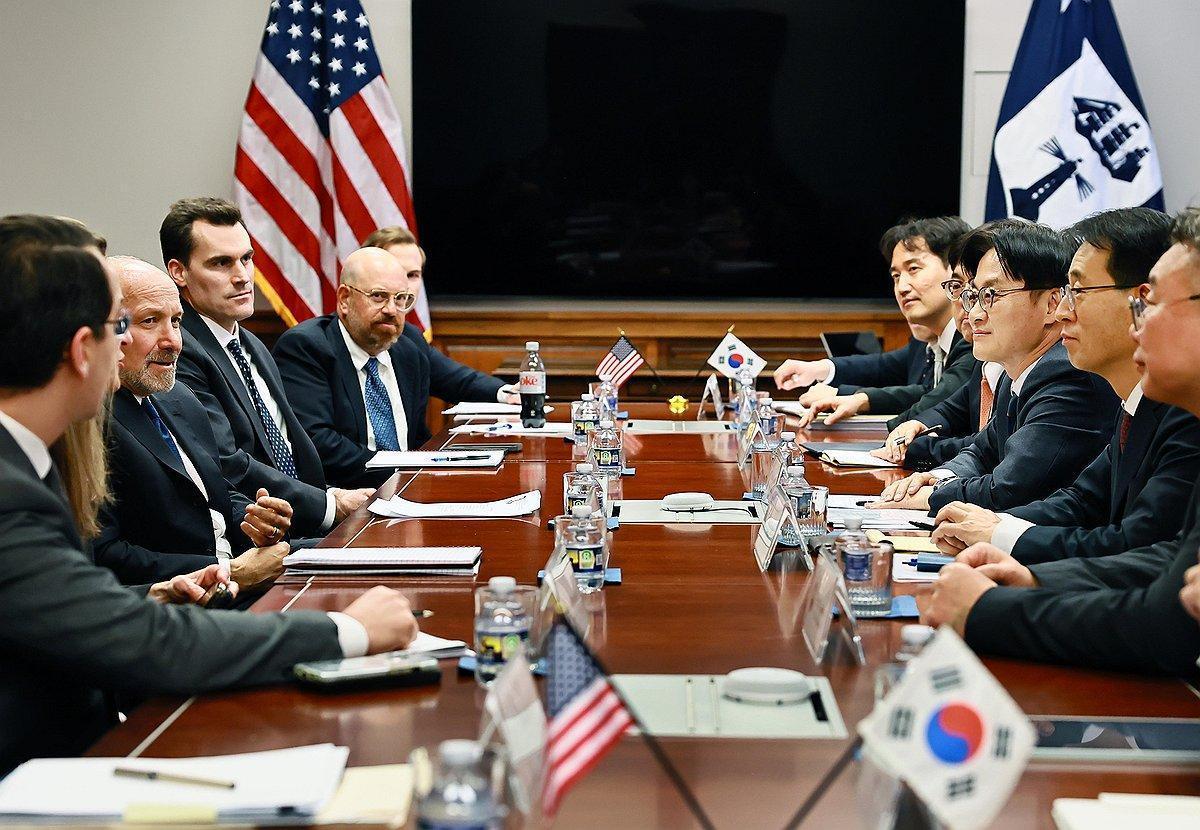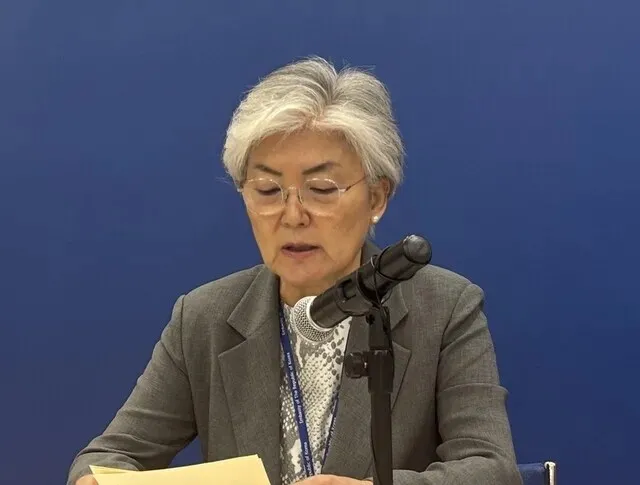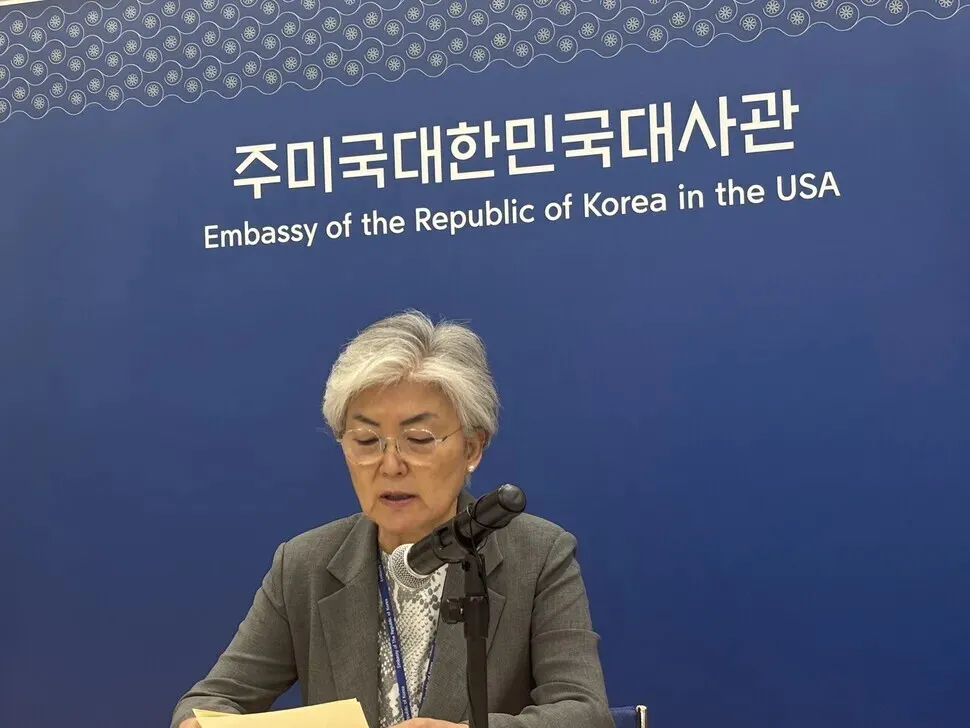
South Korea’s top envoy to the US on Wednesday appeared to push back against the possibility of additional tariffs by the Donald Trump administration, saying that Washington has repeatedly expressed its intention to abide by the bilateral tariff agreement. Regarding recent criticism of Seoul’s regulation of the e-commerce giant Coupang by some US lawmakers, the ambassador said that there is a consensus that the two sides should manage the situation in a stable manner so as not to strain Korea-US relations. Ambassador Kang Kyung-wha addressed the issues while speaking with Korean correspondents at the Korean Embassy in Washington that day. “We are emphasizing how the balance of interests between Korea and the US must be maintained in accordance with the existing tariff agreement between the two countries,” Kang told reporters, vowing to “closely monitor the US’ new tariff measures and consult closely with the US at all levels to minimize any negative impact.” Addressing recent scrutiny from some US lawmakers over Seoul’s regulatory treatment of Coupang, Kang said that the embassy would “continue to clearly and consistently explain our government’s position through ongoing consultations with the US.” Last week, the US House Judiciary Committee released a report claiming that the Korean government was discriminating against Coupang, which is based in the US but does most of its business in South Korea. Seoul plans to canvass the opinions of various agencies, including the Korea Fair Trade Commission, the Personal Information Protection Commission, and the Ministry of Employment and Labor, and submit a rebuttal to the US Congress. The government maintains that the Coupang case is fundamentally a matter of enforcing domestic laws against a company operating in Korea, and that relevant regulations are being applied without discrimination based on the country the company is based in. Senior diplomats are said to have been in contact with the US National Security Council and other agencies, reaching a shared understanding on managing the issue to prevent it from affecting the broader Korea-US relationship. Kang also shared that bilateral cooperation on nuclear energy and nuclear-powered submarines has also entered an important implementation phase. “The visit of Allison Hooker, the undersecretary of state for political affairs, has served as an opportunity for us to establish a communication system to swiftly implement the agreements reached between the leaders in the nuclear power and nuclear submarine sectors and produce tangible results. Discussions are currently underway to coordinate the schedule for the next round of consultations,” she said. The two countries are also continuing cooperation in the shipbuilding sector. “We are engaging in continued discussions to achieve tangible results based on the Korea-US joint fact sheet and the White House’s Maritime Action Plan, as well as being motivated by the signing of the memorandum of understanding to advance bilateral shipbuilding cooperation in May,” Kang said. The US is reportedly exploring potential areas of cooperation, such as issuing requests for information to Korean shipbuilders regarding their capabilities in building naval vessels. “Despite expectations from some regarding the possibility of the resumption of US-North Korea dialogue, there has been no concrete progress,” Kang stated in regard to North Korea. “The government is closely monitoring whether North Korea will attend the ASEAN-related foreign ministers’ meetings at the end of this month, and contemplating what that may convey.” “Korea and the US will continue to maintain close communication so that they can create the conditions for inter-Korean and US-North Korea dialogue while retaining their respective roles as peacemaker and pacemaker,” said the ambassador. By Kim Won-chul, Washington correspondent
Korea’s top envoy in US says Washington has affirmed commitment to tariff deal
Ambassador Kang Kyung-wha addressed numerous issues in the bilateral relationship while speaking with Korean correspondents in Washington
586 words~3 min read