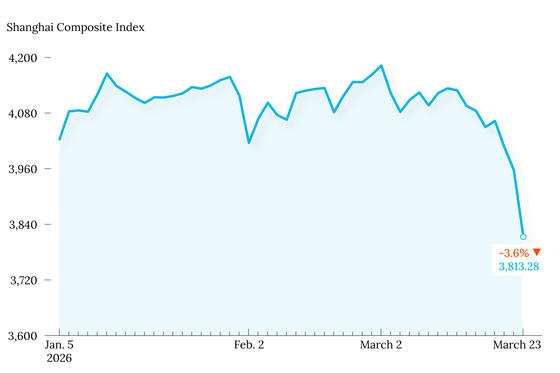
China’s quantitative hedge funds just had a week they would rather forget. A global selloff in chip and AI-related stocks cascaded into domestic markets, and the funds built to profit from systematic patterns found themselves on the wrong side of a rapid, painful reversal.
The numbers behind the pain
Zhejiang High-Flyer Asset Management, one of China’s most prominent quant shops, saw one of its funds drop 15.7% in the week ending July 17, 2026. The firm manages more than 70 billion yuan in assets, roughly equivalent to $10 billion, so a weekly loss of that magnitude is not a rounding error.
High-Flyer is led by Liang Wenfeng, a figure who has become something of a symbol for China’s ambitions at the intersection of artificial intelligence and finance. The fund in question was targeting outperformance against the CSI 1000 Index, a benchmark weighted toward smaller-cap Chinese companies.
That smaller-cap tilt turned out to be the problem. Funds employing momentum factors and strategies tied to smaller-cap indices were hit hardest, as the AI sector rotation unwound positions that had become deeply crowded over the prior months.