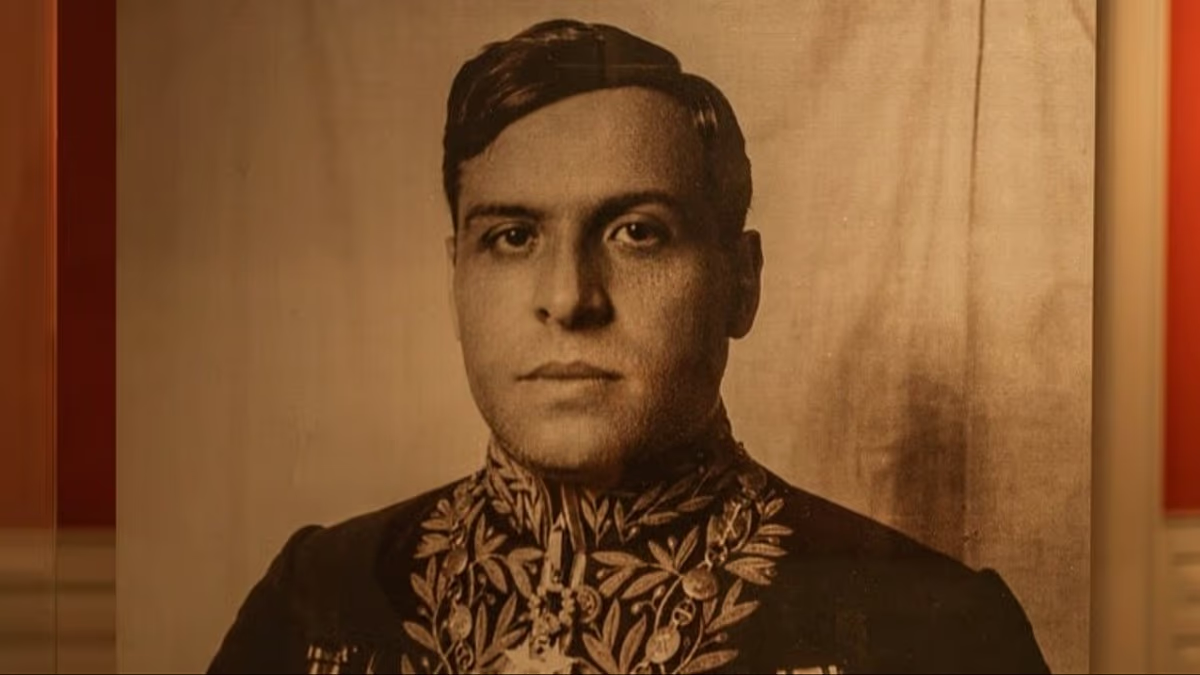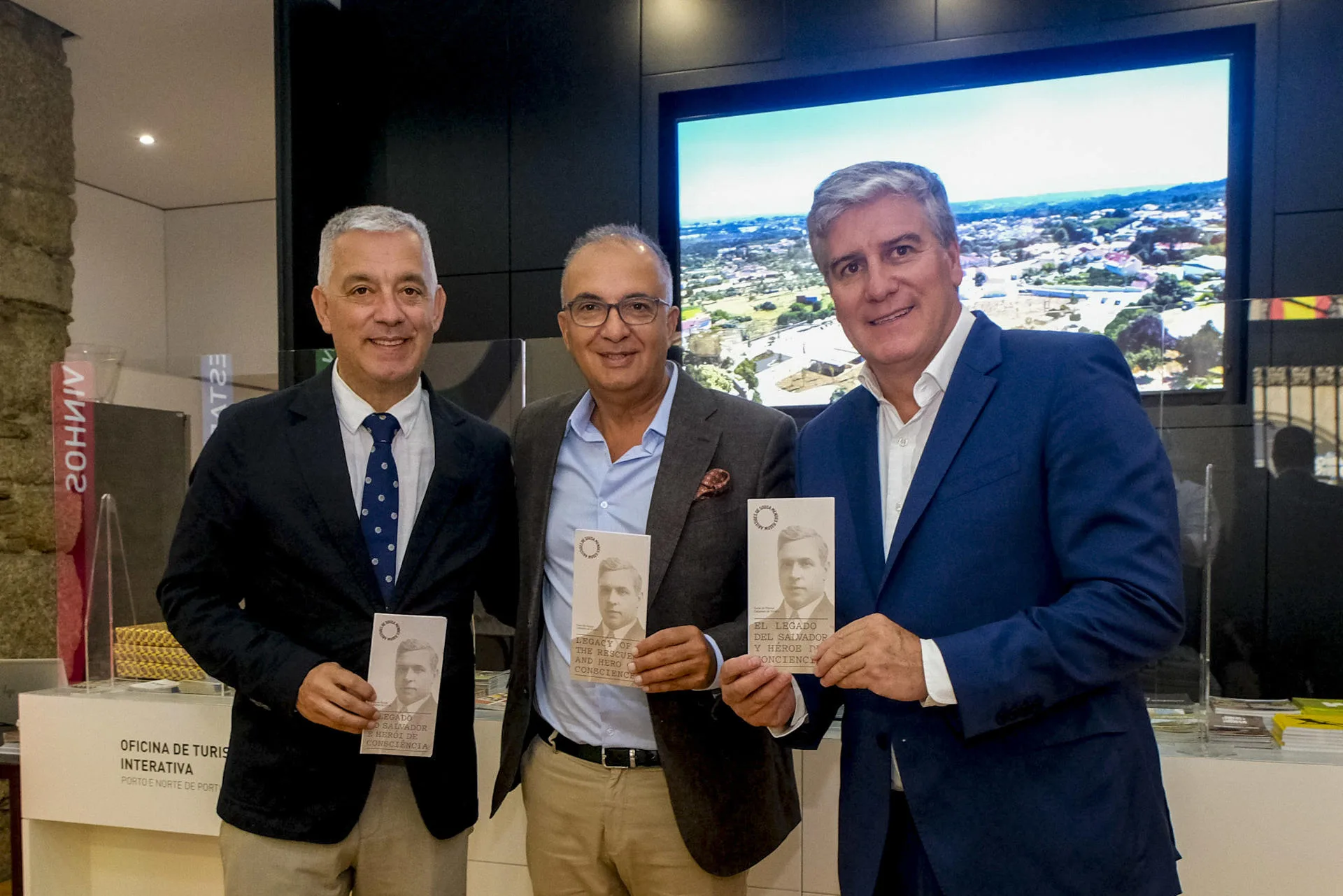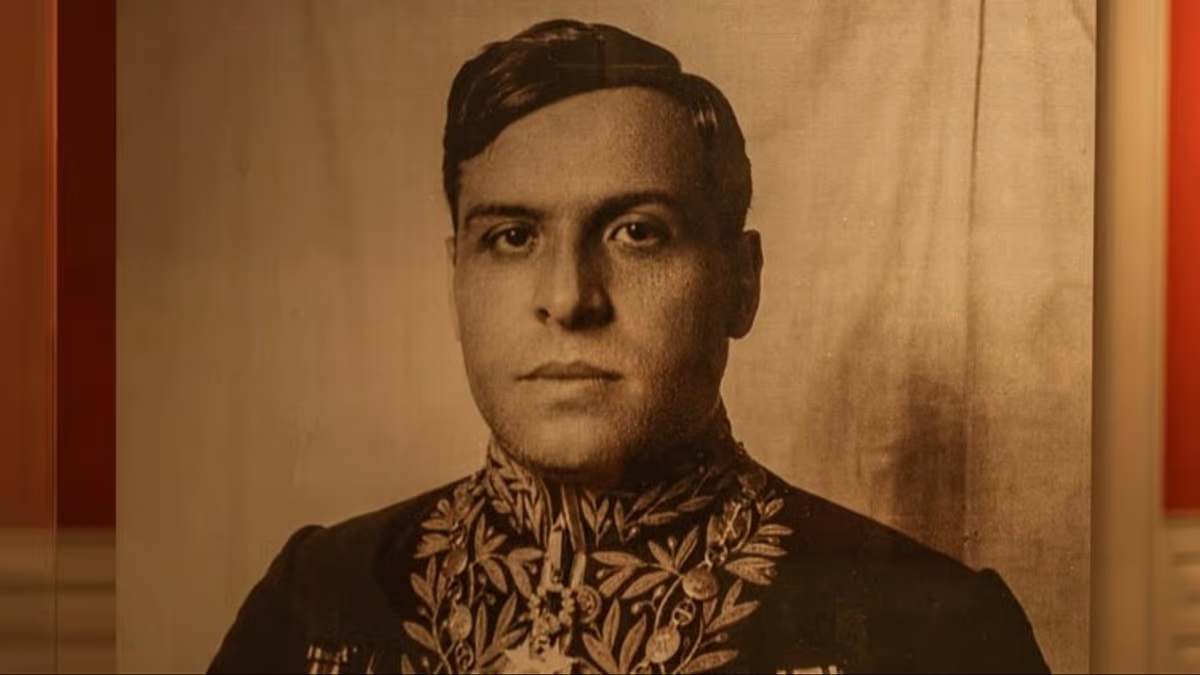
He was "someone who changed the course of history during the darkest episode in humankind's past". That is how Luís Medeiros, a curator at the Aristides de Sousa Mendes Museum, recalls for Euronews the man he describes as "one of the greatest figures in the country's cultural history", for the role he played in saving tens of thousands of lives during the Holocaust.
Aristides de Sousa Mendes, a Portuguese diplomat born on 19 July 1885, is a name that cannot be ignored whenever the period of the Second World War is discussed, a conflict fought between 1939 and 1945 that resulted in the deaths of around 40 million civilians.
Many of these victims, in fact, perished in concentration and extermination camps set up by the Nazi regime, driven by expansionist ambitions underpinned, among other things, by a supposed "supremacy of the Aryan race".
This ideology led Jews, as well as people from other minorities, to be persecuted for years by the authorities of the Third Reich. According to the United Nations (source in Portuguese), approximately six million Jews and half a million Roma and Sinti were killed across Europe in the context of the Holocaust.
As Luís Medeiros, one of the staff at the museum founded in Portugal two years ago to "preserve the memory, courage and legacy of Aristides de Sousa Mendes", points out, the diplomat is still remembered today for having been "responsible for one of the largest individual rescue operations of Holocaust refugees", an act that saved roughly 30,000 lives.