Get the latest news and updates from Dawn
The Punjab government has recently approved a pilot project for the Lahore, Gujranwala, and Gujrat divisions, with an allocation of Rs730 million under the Annual Development Programme. The project’s core intervention is the construction of groundwater recharge boreholes on farmers’ fields under a costsharing arrangement.
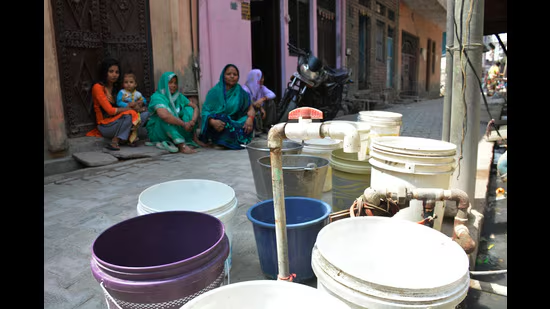
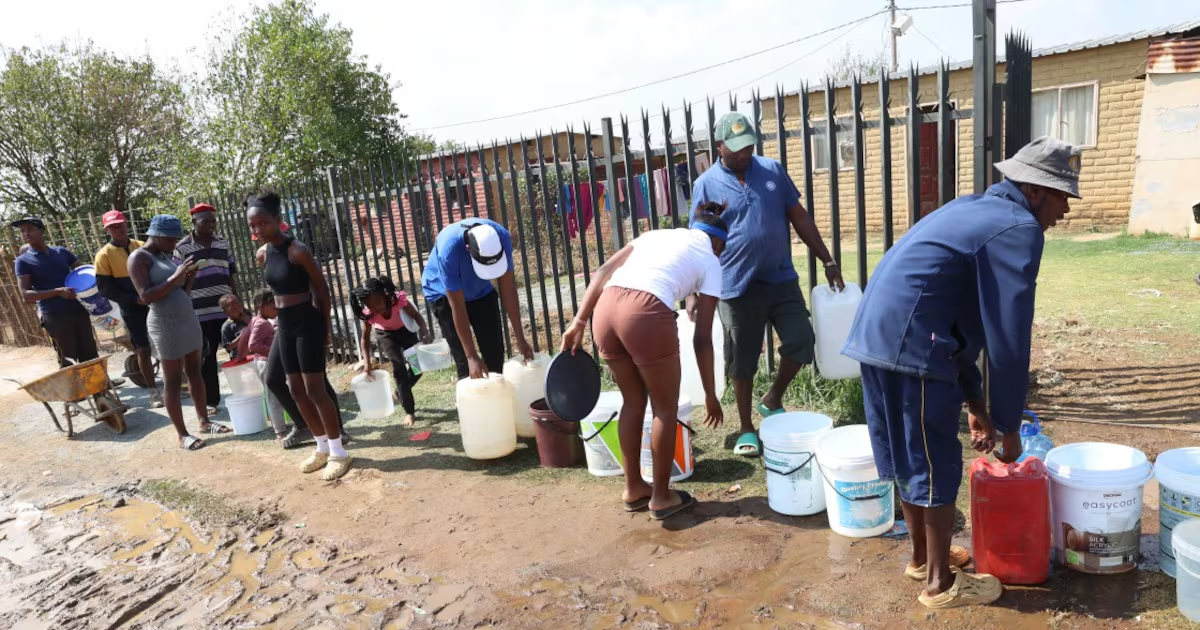
This project has been widely welcomed by farmers, unlike many headline- grabbing initiatives that rarely address the structural constraints facing Punjab’s agriculture sector. The project is expected to address two structural challenges that threaten the long-term sustainability of Punjab’s agriculture: the increasingly inadequate drainage of excess rainwater from cultivated lands; and the rapid depletion of groundwater.
Although these two challenges appear distinct, they are closely interlinked.
Until a few years ago, a network of natural waterways carried rainwater from agricultural fields to drains, rivers, and ultimately the sea. Over time, however, this natural drainage system has been severely disrupted by illegal encroachments on waterways, unplanned urban and rural expansion, poorly designed highways and rural roads lacking adequate culverts, inadequate maintenance and desilting of drains, and the large-scale excavation of agricultural land by the construction industry and thousands of brick kilns in search of fill material and clay. Much of this damage is now irreversible, making it unrealistic to restore these natural waterways to their original condition.