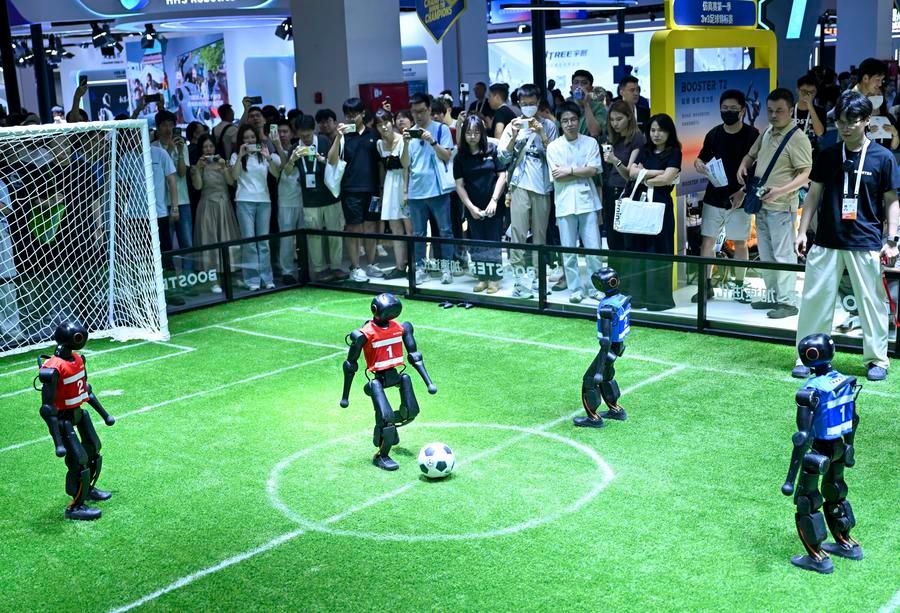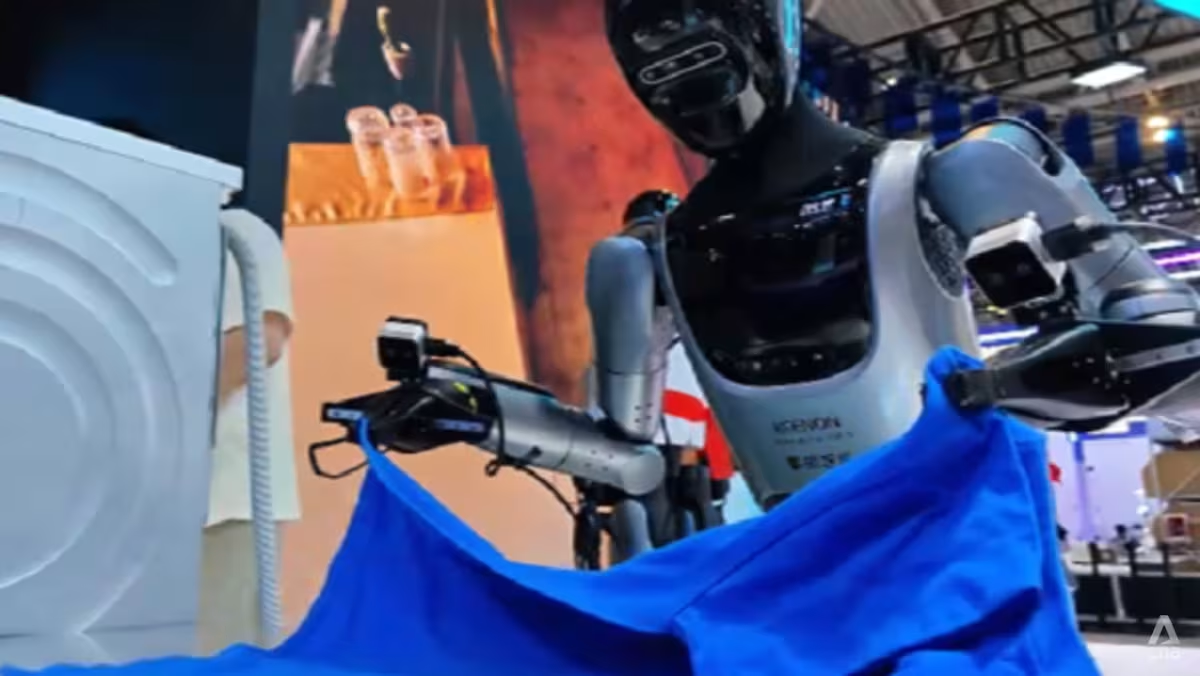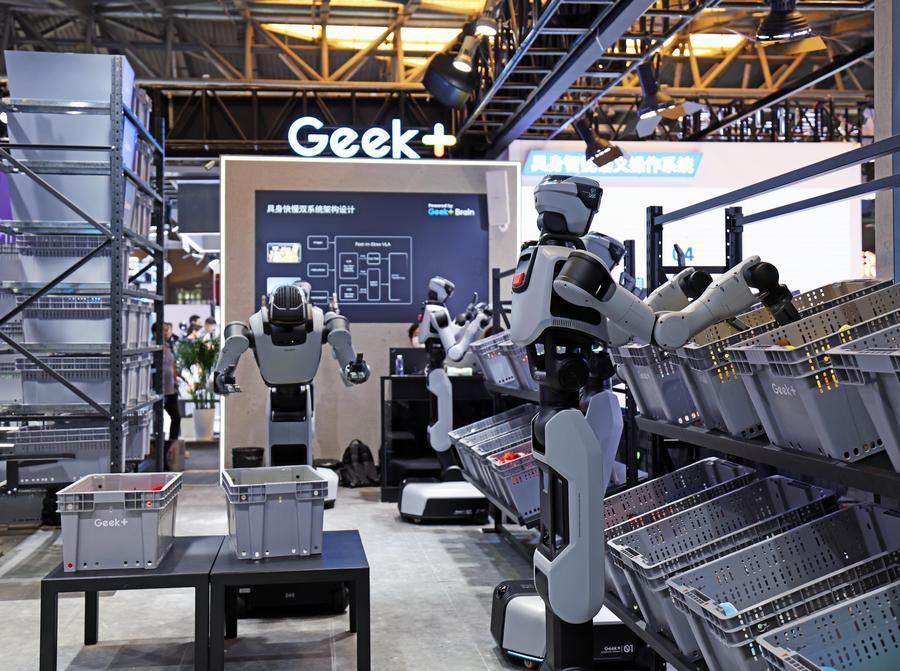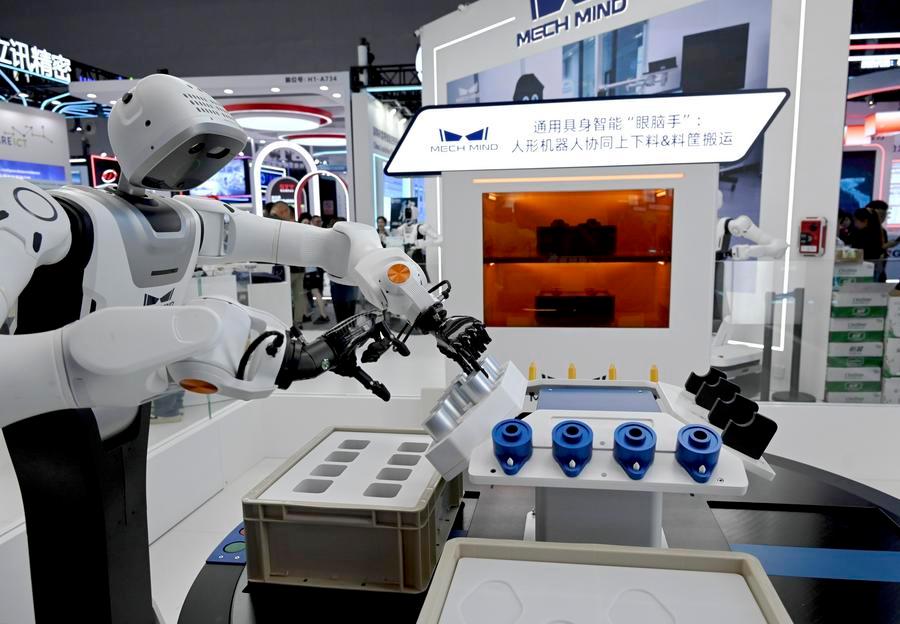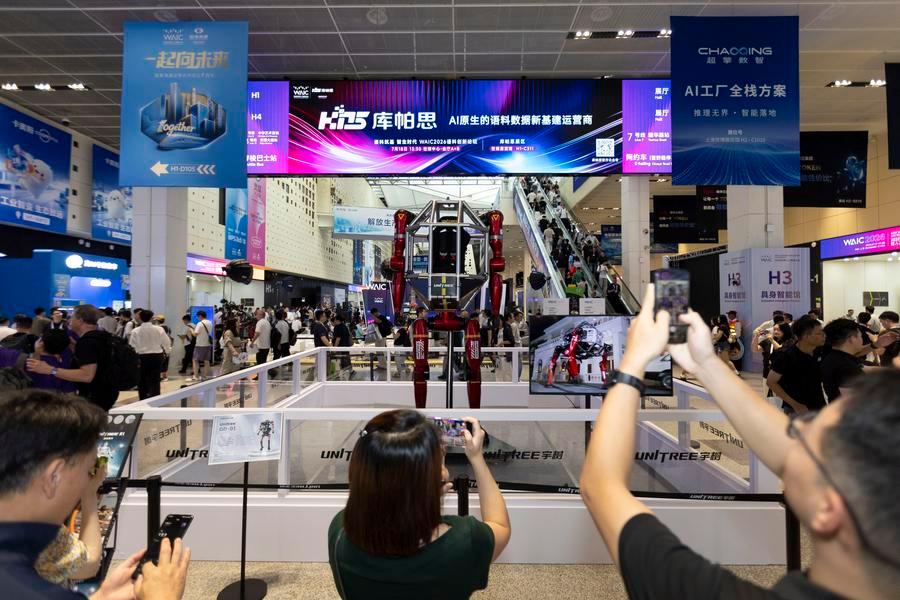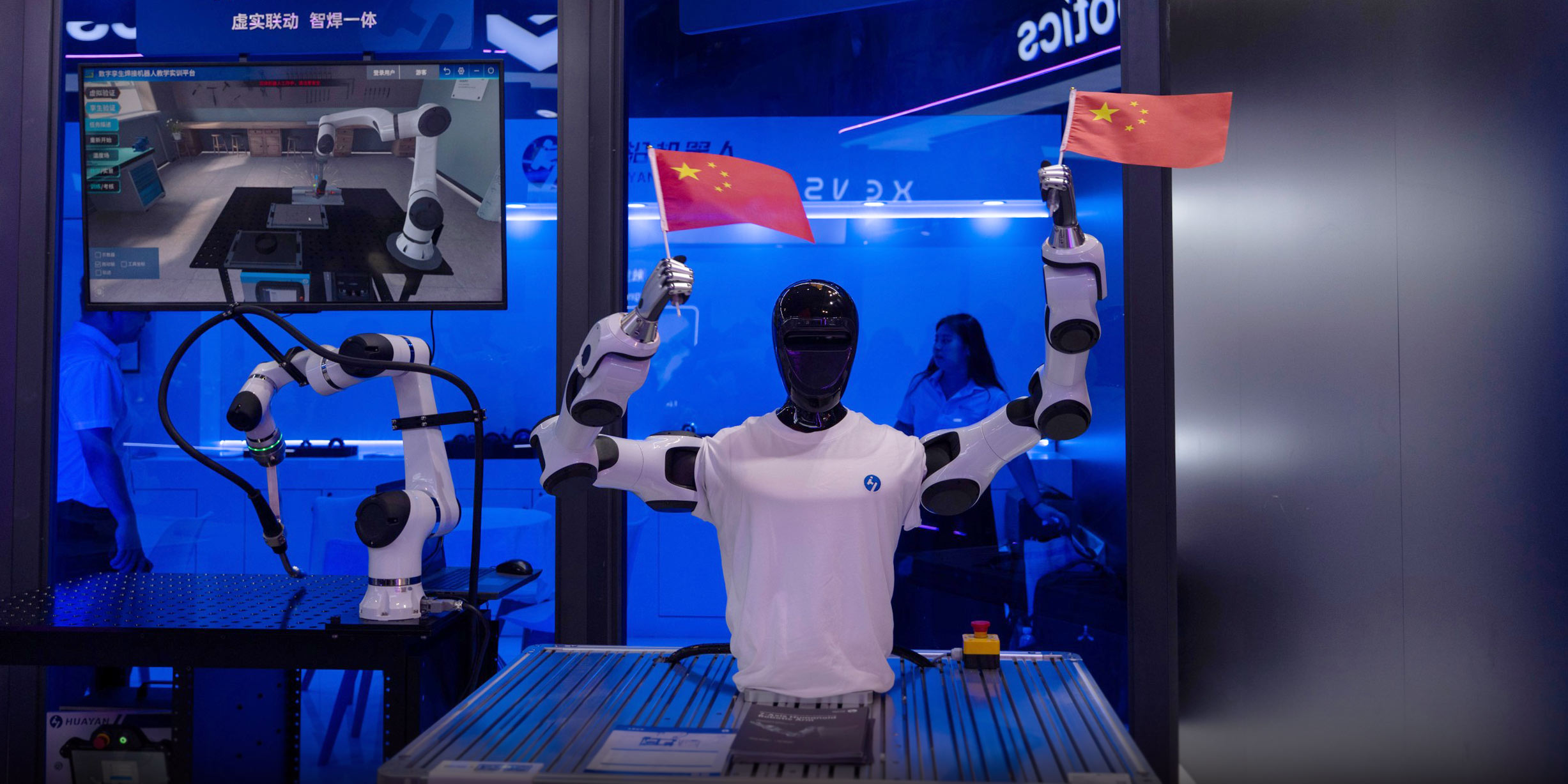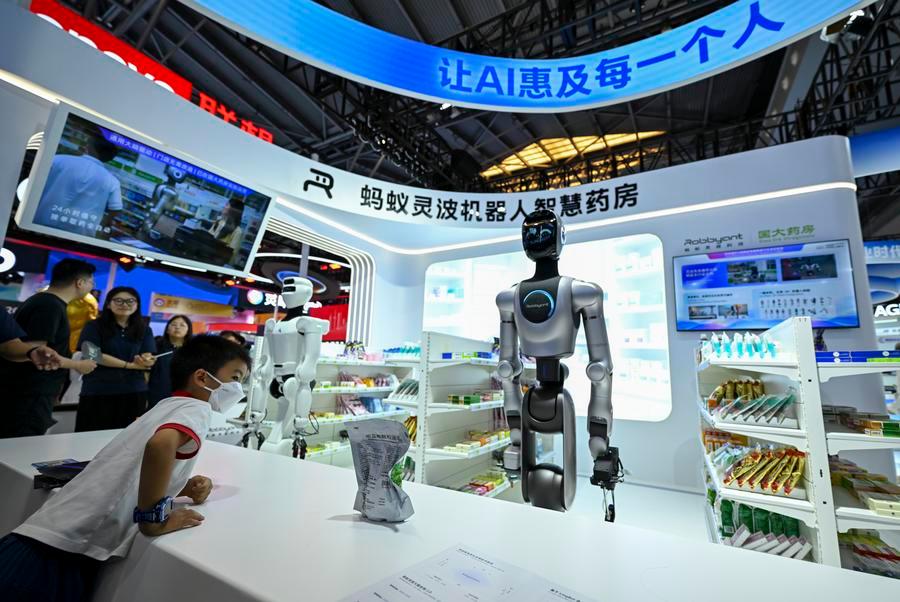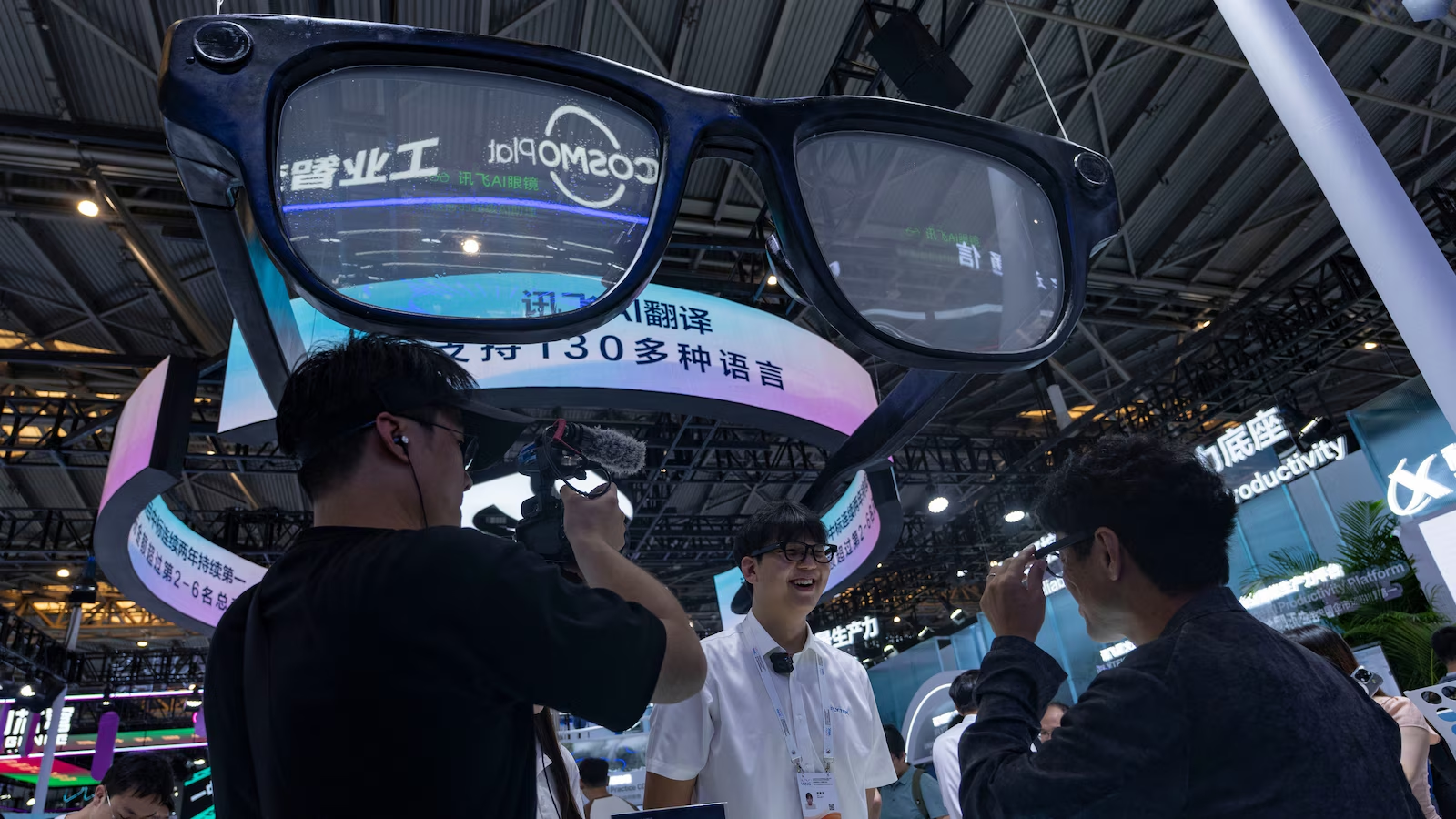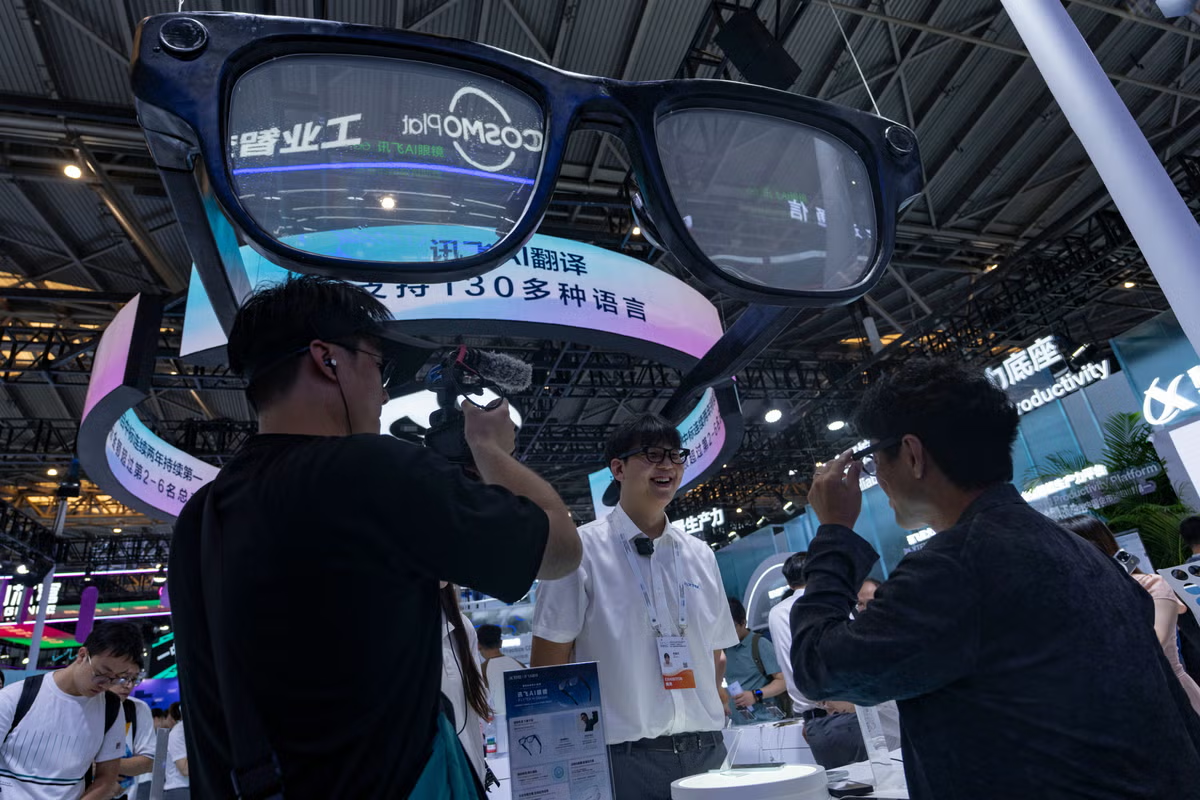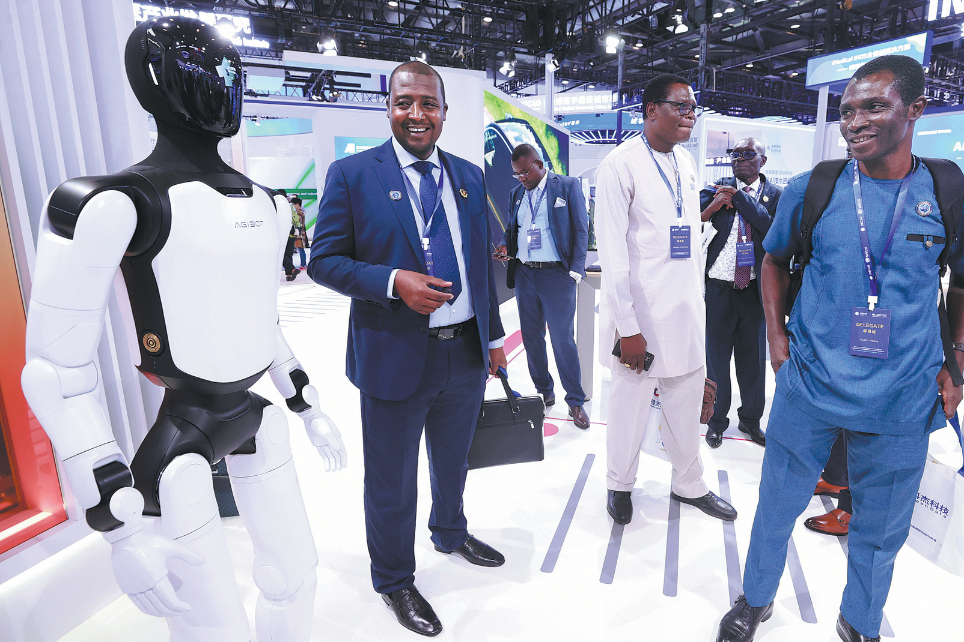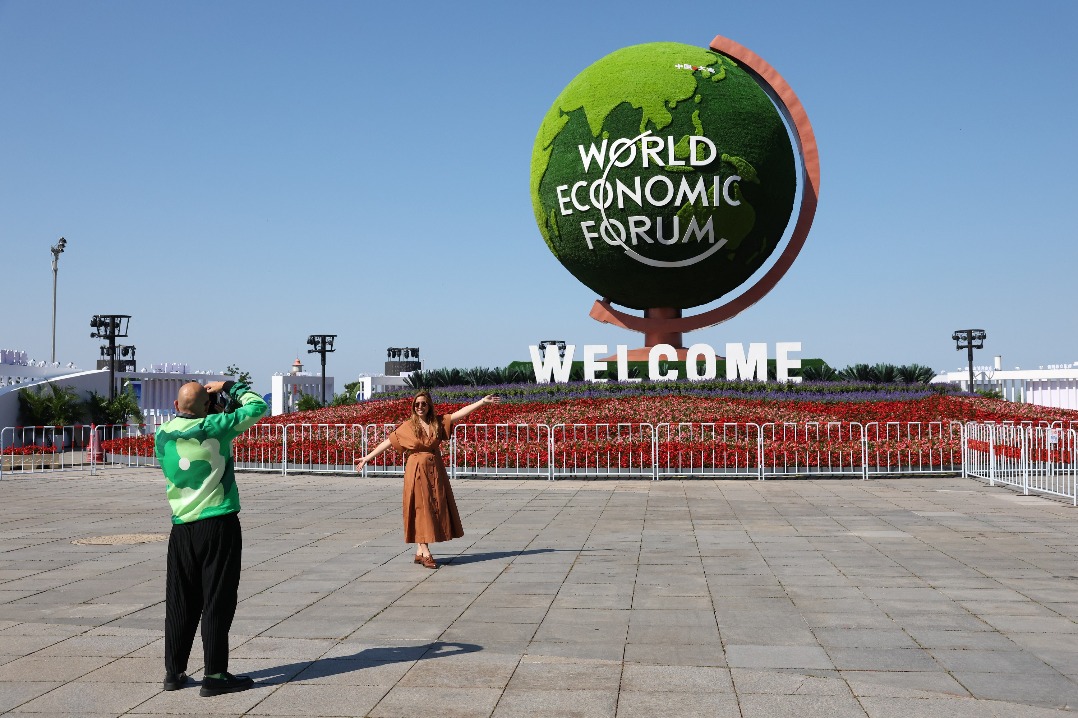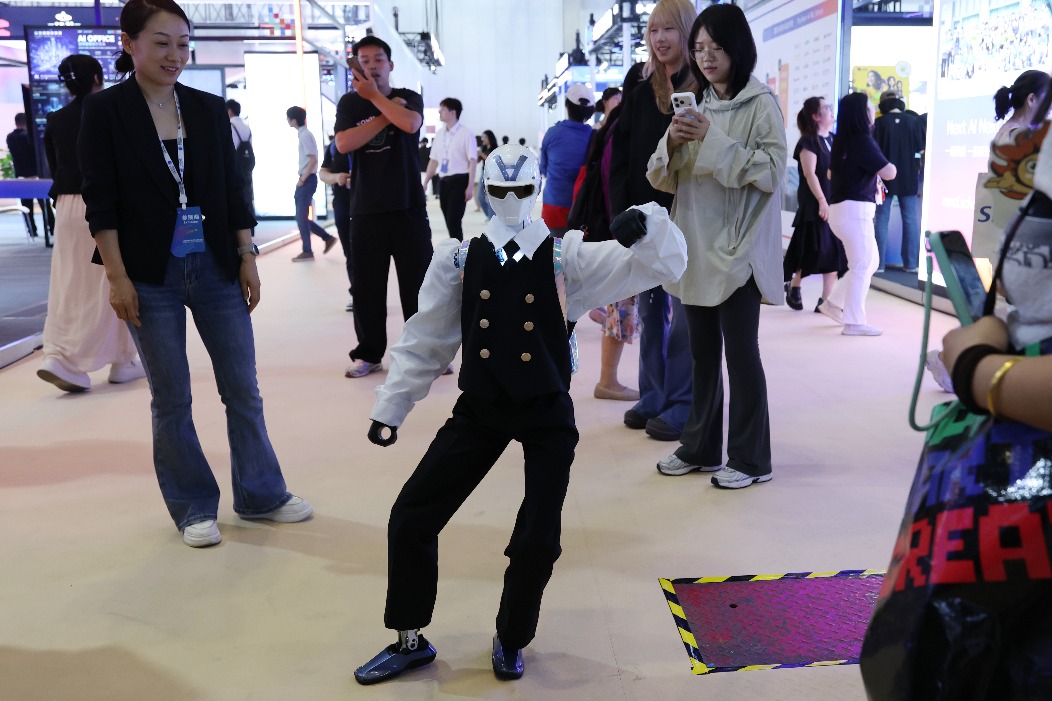
At the 2026 Global Digital Economy Conference in Beijing earlier this month, new technologies moved closer to real life, with robots, AI agents and digital tools showing how innovation is beginning to really serve people in factories, hospitals, logistics and daily services.
The new technologies and products launch show was one of the busiest parts of the conference. More than 60 companies presented over 80 innovations, most of which are global or national firsts.
For me, the most memorable scene was a robotic guide dog leading a person forward.
Unlike an ordinary quadruped robot, the robot, called Tutu, has a handle on its back that allows visually impaired users to hold on to it. Supported by digital map provider Amap's self-developed embodied navigation model, massive traffic data and machine vision, Tutu is designed to make complex route decisions: when it sees a pothole ahead, it can decide whether to step over it or go around; when it hears a user's instruction, it can understand the intention and take the next step.
The moment was small, but it captured a larger message from this year's conference: advanced digital technologies such as artificial intelligence are increasingly being tested as a tool that can work, guide, deliver, diagnose, weld, farm and serve.