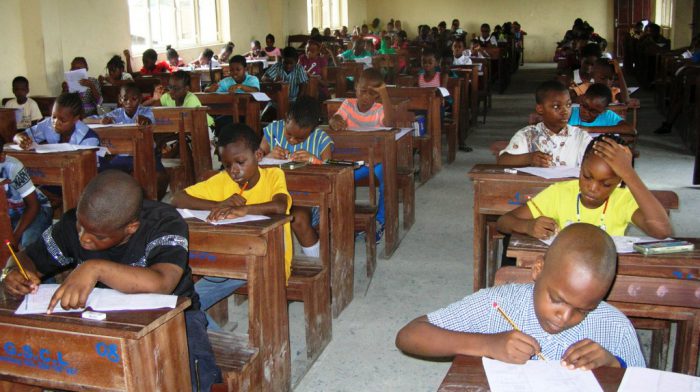
From one policy flip-flop to another, the Federal Government of Nigeria has scrapped the 6-3-3-4 system of education, which it introduced with fanfare over four decades ago. In its place is now a linear 12-year schooling from primary to the end of secondary education. Under the old arrangement, six years were for primary schooling, three years for junior secondary school, another three years for senior secondary schooling, and a minimum of four years of university education.
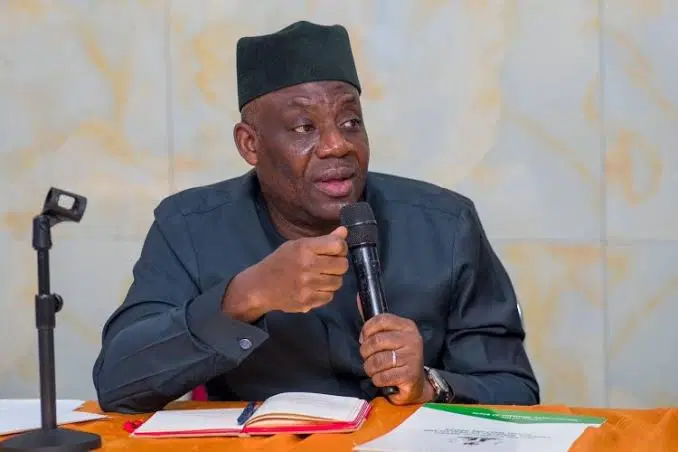
The Minister of Education, Tunji Alausa, on 1 July, said the transition from JSS 3 to SSS 1 presented a quagmire to the country. “We have 20 million dropouts from primary school to Junior Secondary School. Where are the students? We found out that we have 80,000 public primaries and about 15,000 Junior Secondary schools. That is a ratio of one-to-eight,” he stated.
Education is a public asset, whose overhaul – when it becomes imperative – requires a broad and rigorous debate in the best interest of society. But the Nigerian government failed to do so; just as it recently did in the restructuring of the National Youth Service Corps (NYSC) scheme, which sparked strong public criticism. Education is still on the Concurrent Legislative List in the 1999 Constitution, as amended, depicting the shared responsibility of the federal and state governments for it. Besides, the private sector is heavily involved in all its levels.