Prime Minister Christopher Luxon says Resource Management Act reforms will make building infrastructure easier, faster and more affordable.But opposition parties warn the changes could make the system more unworkable, and dilute environmental protections.The select committee reports also pointed to an independent report finding the regulatory relief scheme it sets up could cots up to about $2b.The reports detail 142 pages of changes to the government's proposed reforms to the Resource Management Act which includes a "regulatory relief" scheme that would see landowners compensated by councils for changes that affect them.This included the removal of a clause requiring that use and development of the environment must be kept "within environmental limits".Changes agreed by Cabinet would also mean existing agreements between councils and iwi - known as Mana Whakahono ā Rohe agreements - would be scrapped and replaced with "new narrowly scoped iwi participation agreements".RMA Reform Minister Chris Bishop pointed to independent analysis showing that by 2050, the changes were expected to increase GDP annually by 0.56 percent.RMA Reform Minister Chris Bishop. (File photo)RNZ / Calvin Samuel"A cost benefit analysis estimates $13.3 billion in savings over 30 years through reduced administrative and compliance costs."He said the removal of the existing iwi agreements had been because of the government's concern about the growing number of agreements, with the legislation previously allowing for existing agreements to continue but preventing new ones."Eight [agreements] existed when the Bills were introduced late last year. Since then, several dozen more have been agreed or initiated," he said."Instead, councils will have the option of entering into new narrowly scoped iwi participation agreements to record how iwi authorities will participate in statutory planning processes and processes required to give effect to Treaty settlement redress. Clear guardrails will be included in the legislation to prevent scope creep."Changes to the purpose and goals of the legislation would "give stronger recognition to people's enjoyment of their land and the importance of food and fibre production", he said.Labour in its minority report raised a number of concerns, saying the party supported the legislation - which somewhat resembled the bills it passed in the last Parliament - through its first reading in the hope that improvements could be made."Unfortunately, almost all policy decisions made during the select committee process have made the bills even more unpalatable and unworkable," the party said."The bills are an embarrassment-National could have worked with us to amend Labour's legislation but instead they chose to start again with something full of campaign slogans that will end up costing all New Zealanders and the environment."The Greens raised similar concerns, particularly over what they said was the dismantling of environmental protections.Regulatory reliefThe regulatory relief scheme would see councils paying out to landowners where their property wasThe reports show a ministry-commissioned report by consultancy Martin Jenkins puts the cost of that scheme at between $7 million and $1.99 billion - the huge range reflecting "that local authorities may take a range of approaches".Labour said councils had told the committee the regulatory relief scheme would be expensive and they were "unlikely to be able to afford the cost of compensation, particularly in light of other government work that will further restrict councils' ability to raise funds," referring to the proposed rates cap of between 2-4 percent a year."Ratepayers would have to pay landowners for protecting something that is not their land - that is, biodiversity," Labour said.The party said this was likely to result in a cottage industry of valuersThe Greens said they opposed the regulatory relief regime "in its entirety"."We were deeply concerned that despite the only report the committee received on the matter outlining the novelty, uncertainty and potential for crippling costs to local councils and ratepayers of up to two billion dollars, that the committee proceeded to retain regulatory relief."Green Party environment spokesperson Lan Pham singled out the regulatory relief framework as particularly irresponsible."This is not only going to cause a chilling effect in terms of councils simply not being able to meet these costs and therefore unable to protect things that matter to the community like biodiversity, but the costs could actually be much greater."Green Party environment spokesperson Lan Pham. (File photo)RNZ / Nate McKinnonEnvironmental protectionsLabour's previous legislation aimed to set system-wide bottom limits for the degradation of the environment - for things like air pollution or water quality - based on scientific assessment.The party said that although the legislation looked to retain that approach, the methods used would rely on national standards which "must not determine an ecosystem health limit itself"."This does not make much sense and presumably comes from a desire to appease lobbyists who do not want nationally applied limits - yet they will likely get them through all the methodologies and minimum acceptable levels."They also raised concern about the removal of the environmental limit clause."The Natural Environment Bill's goal of 'no net loss' of indigenous biodiversity is unworkable and lacks ambition. There is no definition of or baseline for measuring 'no net loss'," the party said of the replacement.The Greens said this was dismantling the environmental protections under the current system.They said the Minister now had discretion over whether developments needed to be within environmental limits or not, and another clause requiring caution when the science was uncertain had also been removed."The ecosystem health limits do not even have to be set at a level that would 'prevent significant or irreversible harm', in the way that human health limits must be," the party said.The Greens also raised concern about timeframes for achieving interim limits had been shortened to five years, that Freshwater Farm plans were set to become self-certified, and mechanisms to address the overallocation of freshwater had been scrapped.Pham said the changes to environmental limits were "beyond a joke"."For the government to insist this is going to be an enduring framework, it's absolutely laughable," she said."They've not only removed the environmental limit thing, but they've also put in place essentially a shout-out to their favourite lobby groups - you know, big agriculture and aquaculture - and they've inserted them in the goals instead."This is an outrage and it certainly has no standing for a decent future for the country."Conflicting goals and ministerial overridesLabour and the Greens both pointed to the legislation being split into two bills, saying the overarching goals and purpose of them appeared to be at odds in some places.Labour said there had been "no cogent explanation" for the separation."We suspect the reason is an attempt to end the 'integrated management' approach of the RMA. This is both dangerous and foolish. Our environment exists everywhere; including urban environments."The party - which also had its reforms split into two - said its approach did not affect integrated management and had been split to ensure the spatial plans in their legislation could work with different infrastructure development approaches."These two replacement bills will result in a lot of duplication and cause unnecessary uncertainty and inefficiency."Labour pointed to the "funnel" approach taken under the new version which would see lower-level planning overruled by higher-level planning, with national directions from the ministers able to override council plans, for example."When goals conflict with each other, the Minister will determine how the conflict is resolved - this is in effect the Minister establishing a hierarchy. This is a lot of power and leaves no wiggle room should a poor decision be made at the top of the funnel."The Greens echoed the concerns of the Parliamentary Commissioner for the Environment, saying the powers granted to ministers had the potential for "endless church following every change of government", and with Te Rūnanga o Toa Rangatira which said the new system would be top heavy and centralise decision making.Iwi, Treaty changesLabour said the bills' removal of a clause guaranteeing Māori culture and traditions within their ancestral lands, water, sites, wāhi tapu and other taonga was to be recognised and provided for would degrade Māori rights."There will be Treaty Settlement litigation around these changes that downgrade mana whenua participation because these settlements were reliant on the general settings of the RMA."The party - whose response came before the government announced its plans to remove Mana Whakahono ā Rohe agreements - noted feedback that those agreements "assist with the timeliness and efficiency of the resource management system, so it is not in anyone's interests to remove them".The Greens' report said Treaty obligations and the rights and interests of Māori had been "weakened and narrowed", pointing to the Waikato River Authority's comments to the select committee that the bills would be "eviscerating" Crown-Māori relationships.The party said a proposed two-year timeframe - during which the bills would be enacted and post-settlement iwi organisations would need to agree on how their Treaty redress could have "the same or equivalent" effect was "a retrograde insult to iwi and hapū.Bishop said the bills had retained an approach to provide for Māori interests "through a system goal and iwi participation in national instruments and plan-making rather than relying on broad, open-ended Treaty provisions."He said the committee had made "helpful recommendations to clarify the obligations related to upholding Treaty settlements, which the Government has committed to do. We intend to provide further specificity regarding some settlements through an Amendment Paper".
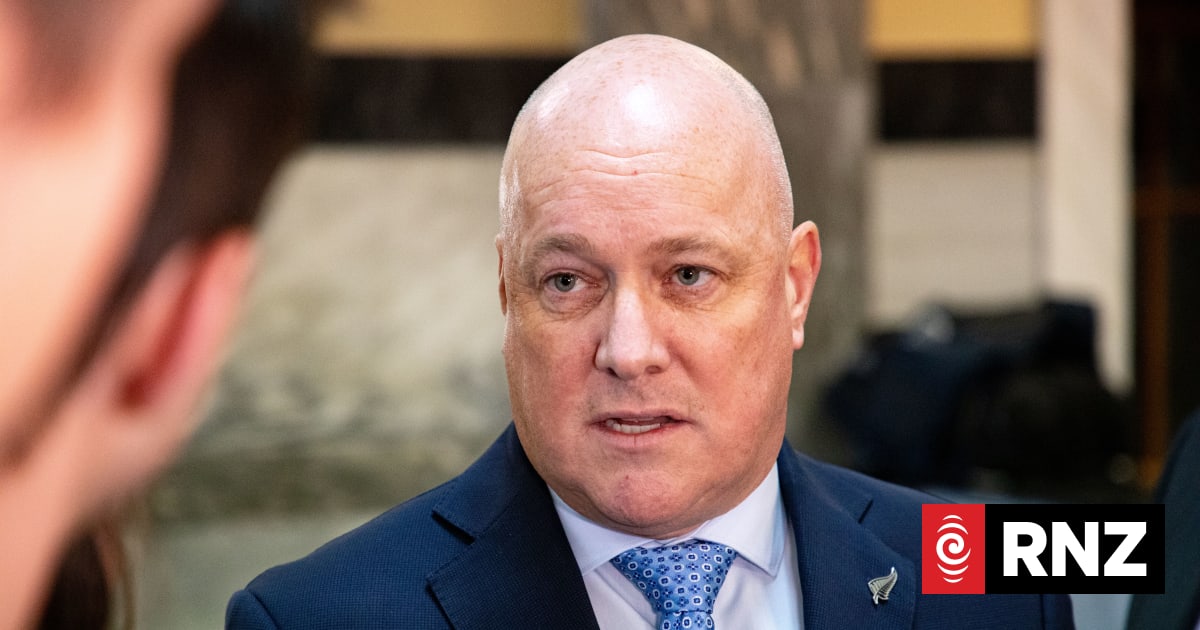
Prime Minister Christopher Luxon speaks on Resource Management Act reforms
Prime Minister Christopher Luxon says Resource Management Act reforms will make building infrastructure easier, faster and more affordable.
1,527 words~7 min read