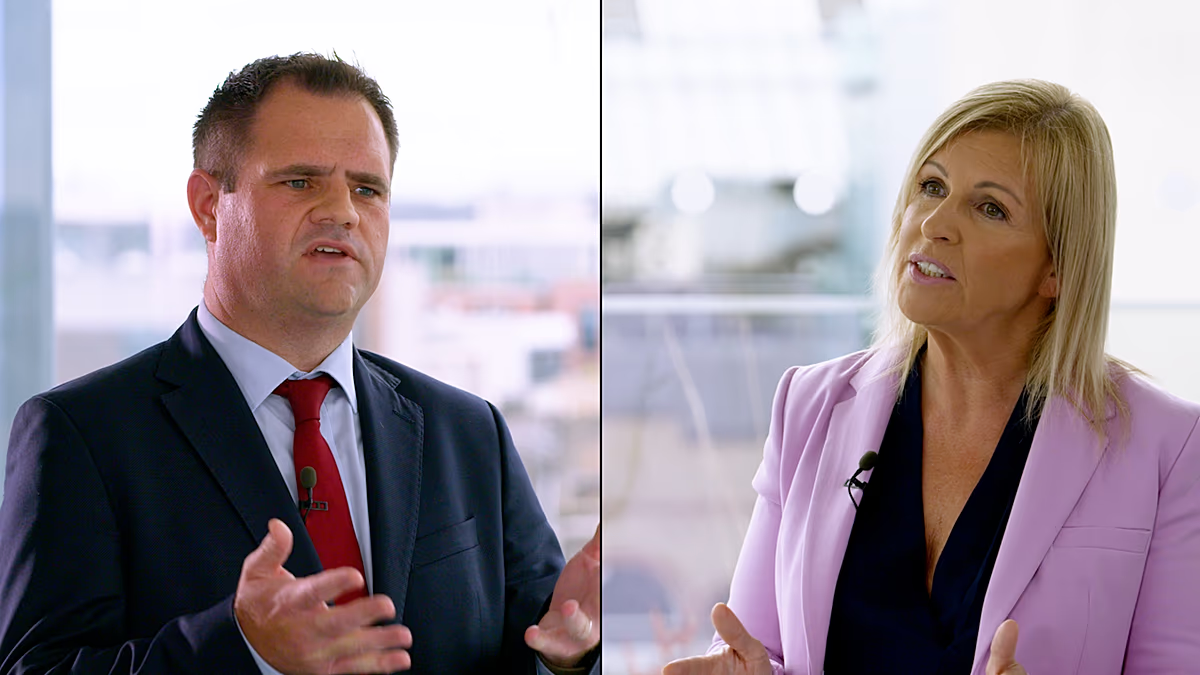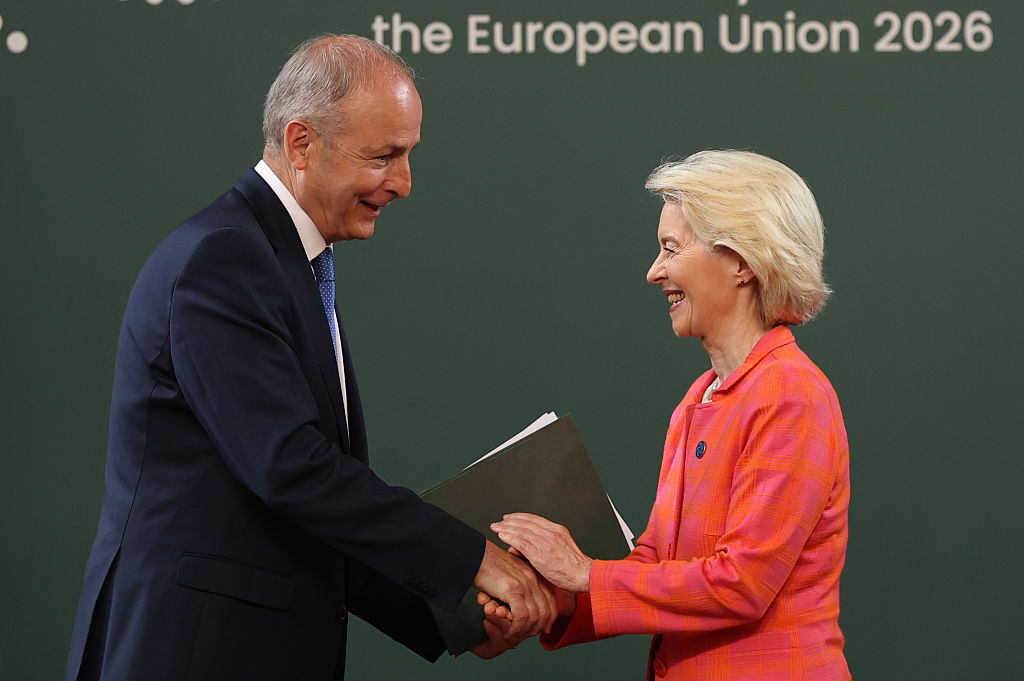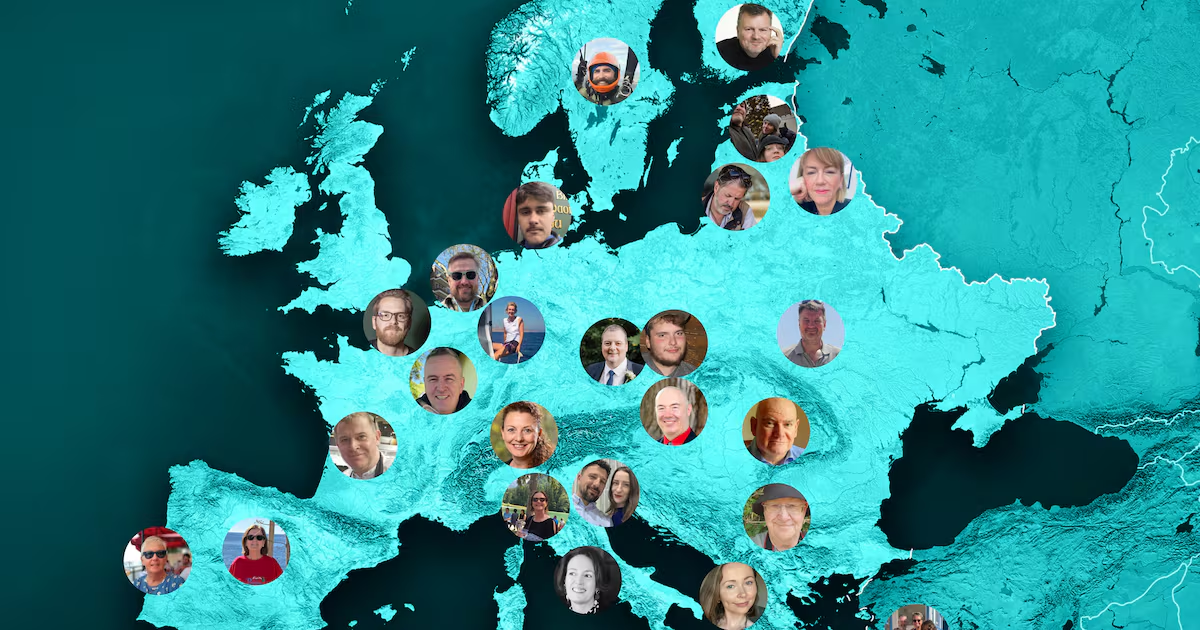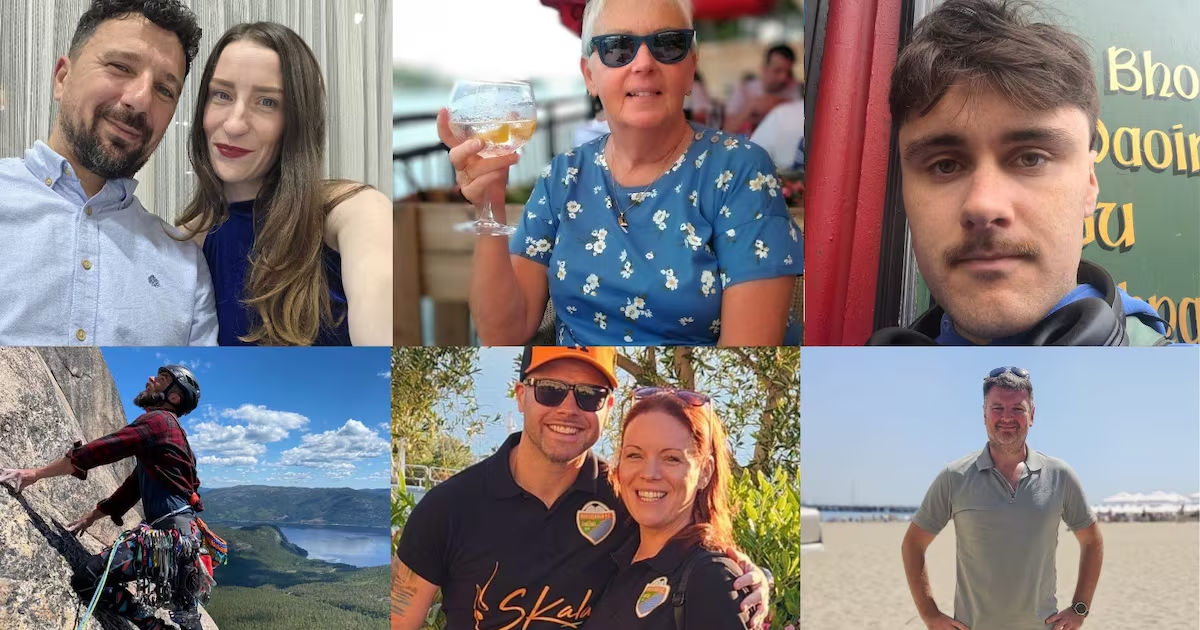
Ciarán Ó Ceallaigh joined a team of just a handful of Irish-language translators when he moved to Brussels in 2009. The Kilkenny man had worked as a teacher and freelance translator before landing a job with the Council of the European Union, made up of government ministers from each EU country. It was an opportunity he could hardly have imagined during his last stint in the city as a student in the summer of 1996, serving EU officials in the Wild Geese pub. Irish had become an official EU language in 2007, but a staffing shortage had led to a derogation that limited how much material was translated. Ó Ceallaigh and his colleagues worked then within the same unit as English-language translators, under the same management. Gradually things began to change. A dedicated Irish unit was established and given its own separate offices. Irish was confirmed as a full official and working language of the EU in 2022, prompting a significant increase in Irish linguists across all European institutions. Today, Ó Ceallaigh is part of a team of 34, working every day through a high volume of complex legal and policy documents.Brussels now has one of the highest concentrations of daily Irish speakers outside of Ireland, between those working through Irish as EU translators, interpreters, lawyer-linguists, proofreaders and linguistic assistants, and those using it socially with friends or at Irish social gatherings. A Brussels branch of Conradh na Gaeilge, formed in 2023, hosts events across the city where Irish emigrants and their friends can practice the language. Dubliner Brian Mitchell, an interpreter with the European Commission in Brussels The community has also developed its own cultural calendar. Ó Ceallaigh is on the organising committee for Éigse na Bruiséile, an Irish-language festival featuring music, drama and literature. Irish rappers and language activists Kneecap will carry the momentum to an even bigger stage in November, when they play the city’s Forest National arena in their first headline Belgian show.The growing Irish community in Brussels is among the many stories explored in a new multimedia exhibition at Epic: The Irish Emigration Museum in Dublin. Common Ground: Ireland and the EU, open until the end of 2026, documents both the impact of EU membership on Ireland and the influence of Irish voices in European institutions. A short film shown as part of the exhibition includes interviews with Ó Ceallaigh and several others working in the Belgian capital, highlighting the diverse career paths open to Irish people in the city.Irish emigrants have, of course, long been attracted to Europe: James Joyce to Trieste, Eileen Grey to Paris, Kate O’Brien to Bilbao – not to mention the countless Irish soldiers and merchants who scattered themselves across the Continent over centuries. Whereas earlier generations were often left to forge their own paths, Ireland’s EU membership has provided thousands of Irish with a direct route into the highest levels of European government and policymaking.The pull toward Europe began for some through Erasmus, the EU student exchange programme. More than 16 million people have taken part in Erasmus since it launched in 1987, and the connections made have often proved lasting. One study suggests that around a quarter of Erasmus alumni found their life partner during their time abroad.Among those featured in this exhibition are Pascal and Siobhan Bonnichon, who met in 1987 when Pascal arrived in Sligo with one of the first Erasmus groups to come to Ireland. Siobhan later followed him to France, but the couple eventually settled back in Siobhan’s home county of Leitrim and opened their own business. Their two adult children are among the more than a million babies thought to have been born to couples who met through the programme.Ireland’s population looks the way it does today in large part because of the EU. The right of EU nationals to live and work across all member states has drawn people here from almost every corner of Europe. Many have moved from eastern Europe, particularly since the enlargement of the EU in 2004 – a milestone marked by a ceremony in Dublin that coincided with Ireland’s sixth EU presidency. The most recent census recorded 93,680 Polish, 31,177 Lithuanian and 18,300 Latvian citizens as resident in Ireland. Luxembourg men’s gaelic football team, 2025 winners of the Pan-European Gaelic Football Championships The exhibition also spotlights the cultural influence of the many Irish who have moved in the other direction. The oldest GAA club on the European mainland is Gaelic Sports Club Luxembourg, founded in 1978 in response to the increase in Irish arrivals after Ireland entered the EU. In 1999 it joined four other clubs to form the GAA’s European County Board. That body has since grown into a network of more than 100 clubs across 24 countries, catering to more than 5,000 players.GAA has become particularly popular in France, where 34 clubs now count more than 1,000 players between them. Brittany alone is home to 14 clubs and Gaelic games have even been incorporated into the PE curriculum in schools there. Just as striking, though, is how far the sport has moved beyond the Irish diaspora. Almost 88 per cent of GAA France’s members were born outside of Ireland, with 26 different national origins registered among players in 2023.When Ireland first joined what was then known as the European Economic Community in 1973, it was among the poorest and most underdeveloped countries in western Europe. One in four people worked in agriculture, and food and live animals accounted for 41 per cent of exports. Accession was not universally welcomed: some argued it would undermine Irish neutrality and sovereignty, a view reflected in a republican leaflet from the 1972 membership referendum.Then-taoiseach Jack Lynch signs the EEC accession treaty for Ireland in Brussels, in January 1972. Photograph: European Union Yet the EU’s positive impact on the Irish economy is hard to deny. The European single market, established in 1993, gives Irish businesses direct access to more than 450 million consumers and has helped attract international firms to Ireland.EU funding has modernised public infrastructure and provided vital support for sectors such as farming and higher education. The Aran Islands Energy Co-Op, or Comharchumann Fuinnimh Oileáin Árann Teo, is featured as an example of how communities are using EU support to drive their own green transition. The three Galway islands are among the small islands receiving investment to cut their reliance on fossil fuels, and hundreds of homes there have now been retrofitted.Often overlooked is the impact the EU has had on Northern Ireland. The EU played an important facilitating role in the peace process, with European Council meetings, for example, allowing Irish and British leaders to meet on neutral ground. European funding has also helped to support integrated schools in the North, while nearly €1.6 billion was channelled into cross-community projects and economic regeneration between 1995 and 2020 through the Peace programmes, which continue today as Peace Plus. The exhibition highlights the European vision of the late John Hume – an MEP for Northern Ireland from 1979 until 2004 – reminding visitors of the ideals at the heart of the EU’s creation. In a speech accepting the 1998 Nobel Peace Prize, Hume recalled walking across the bridge to Kehl, Germany, on his first visit to Strasbourg in 1979. “If I had stood on this bridge 30 years ago after the end of World War Two, when 25 million people lay dead across our Continent for the second time in this century, and if I had said: ‘Don’t worry. In 30 years’ time we will all be together in a new Europe, our conflicts and wars will be ended and we will be working together in our common interests’, I would have been sent to a psychiatrist. “But it has happened and it is now clear that the European Union is the best example in the history of the world of conflict resolution and it is the duty of everyone, particularly those who live in areas of conflict to study how it was done and to apply its principles to their own conflict resolution.”Common Ground: Ireland and the EU, supported by the Department of Foreign Affairs and Trade, is open now at Epic: The Irish Emigration Museum
French hurlers and Eurobabies: Dublin exhibition traces Irish connections to EU
Stories of migrants, GAA players and translators illuminate Ireland’s evolving relationship with Europe
1,368 words~6 min read