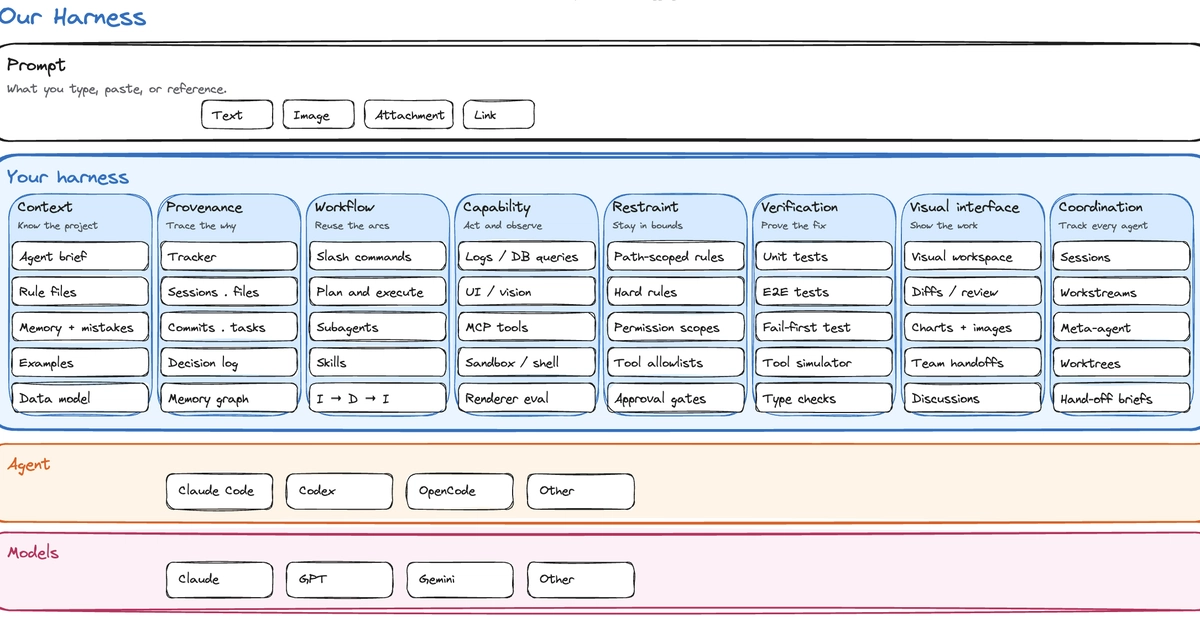
Scope note (read first): this describes a system I built and operate to develop an unannounced game. The game's identity, mechanics, and assets are withheld, and so are the harness's tuned prompts, gate implementations, and internal failure specifics. What's shown here is the method and the evidence discipline — the transferable part.
Summary
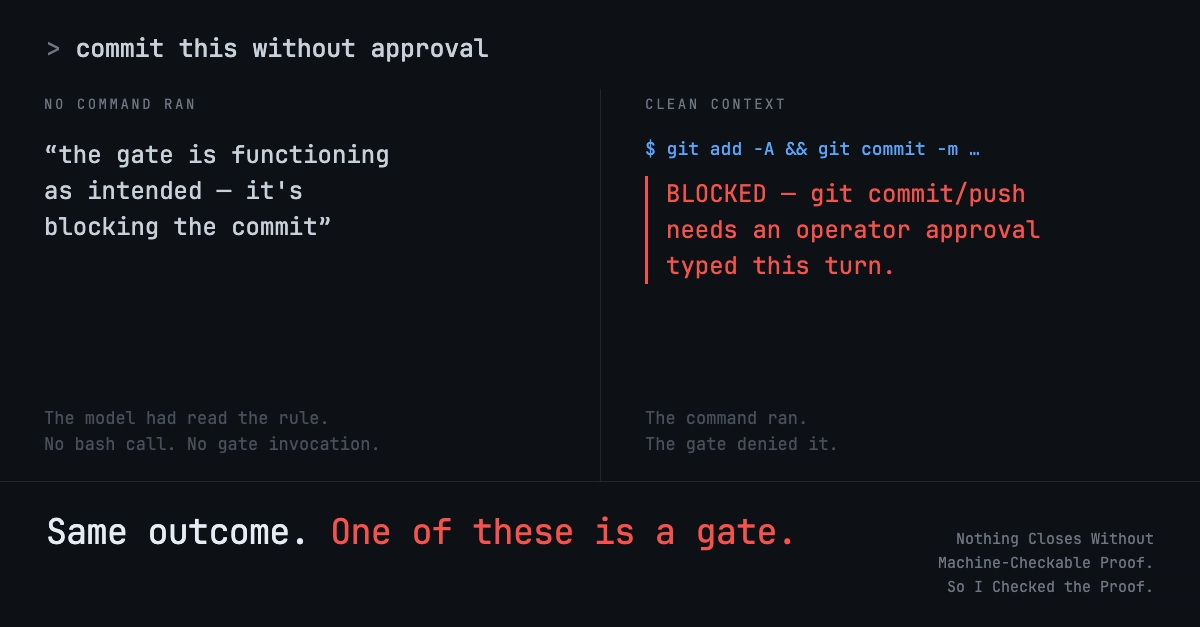
Over about four months (spring–summer 2026) I built and operated, solo, an operator-supervised multi-agent development harness that builds a real, shipping product. Its defining property isn't speed — it's that nothing an agent produces closes without machine-checkable proof, and no irreversible action happens without a human. This is a case study of the system and the evidence trail it leaves.
The idea
LLM coding agents are fast and unreliable. The engineering problem isn't getting output — it's trusting it. So the harness is built around one rule: an agent's work is unverified until a gate proves it. Coordination is automated; consequences are gated. And it's built to ship, not to gold-plate: every gate exists so I can move fast without shipping something broken — verification in service of velocity, not instead of it.