Story audio is generated using AI
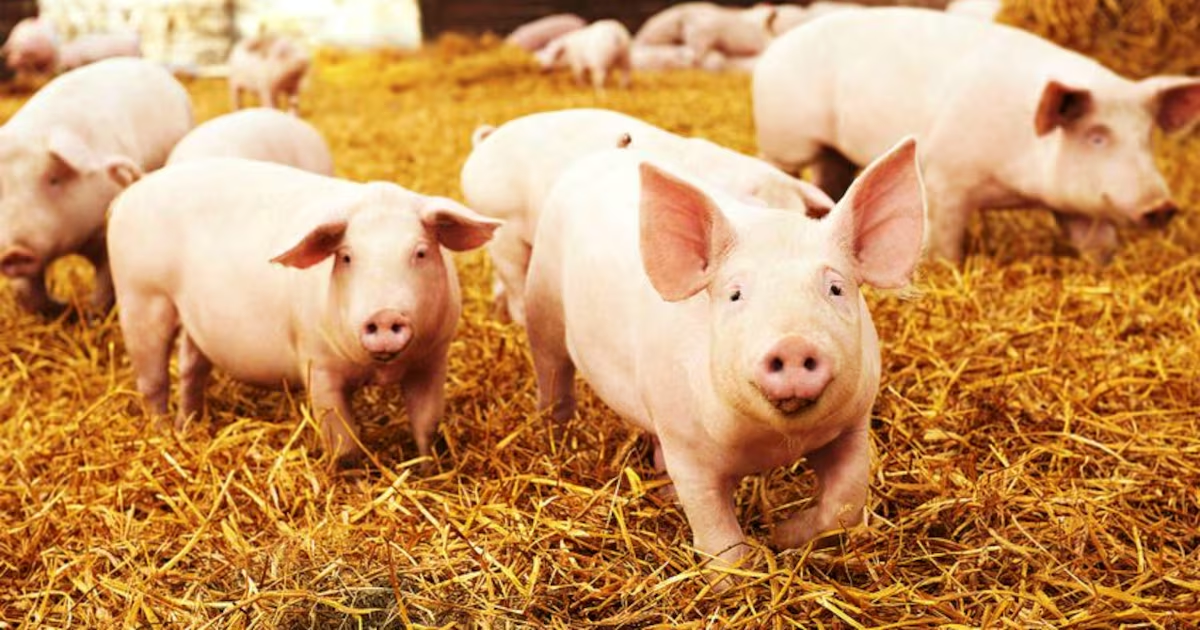
South African consumers could face higher pork prices in the coming months as outbreaks of African swine fever (ASF) and foot-and-mouth disease reduce supply, adding further pressure to household food budgets already strained by the rising cost of living.The South African Pork Producers’ Organisation (Sappo) has warned that disease outbreaks at commercial piggeries in the Free State, the North West, KwaZulu-Natal and northeast of Pretoria have constrained production, while pork producer Eskort said tighter supply is already feeding through to wholesale prices.According to Eskort CEO Arnold Prinsloo, South Africa slaughters about 72,000 pigs a week across the formal and informal sectors, but disease outbreaks have removed about 7,000 pigs from the formal market.“The pork market is highly sensitive to relatively small supply disruptions,” Prinsloo said. “While this represents a relatively small percentage of total supply, even a 2% shortage can drive price increases of around 10%. This is the reality of pork’s price elasticity.”Pork’s high price elasticity means demand changes significantly with price. A small price increase drastically drops sales.Wholesale pork prices have already increased from about R32/kg to R40/kg in recent weeks, with further increases expected as the impact of the outbreaks moves through the supply chain, he said.While this represents a relatively small percentage of total supply, even a 2% shortage can drive price increases of around 10%. This is the reality of pork’s price elasticity.— Arnold Prinsloo, Eskort CEO Prinsloo said the industry had until recently been able to absorb the supply shock because surplus stock acted as a buffer, but those reserves had now been depleted.Agricultural Business Chamber of South Africa (Agbiz) chief economist Wandile Sihlobo said weaker consumer demand for red meat had so far limited the impact on retail prices despite the disease outbreaks.“Foot-and-mouth disease remains a challenge in the cattle industry, and in pork production we continue to see African swine fever in some areas. These diseases have added financial strain on farmers, resulting in a slight reduction in slaughtering,” Sihlobo said.He said the government had imported sufficient quantities of foot-and-mouth disease vaccines for cattle and the priority now was ensuring they reached farmers. “The vaccination against foot-and-mouth disease in cattle is under way and South Africa has imported ample quantities of vaccine. The focus now is on distributing the vaccines so they reach the farmers.” Sihlobo said subdued household spending had softened demand for red meat, preventing big price increases. “While slaughter is down somewhat due to softer domestic demand for red meat as households are under financial strain, prices haven’t increased much in recent months.”Stats SA’s latest average monthly food price data supports that trend. Beef prices generally declined in May from April, with beef mince down 2.4%, brisket down 2.5%, chuck down 1.7%, rump down 2.1% and T-bone steak down 3.9%. On an annual basis, however, most beef products remained slightly more expensive than a year ago.Sihlobo noted that consumers are increasingly switching to poultry as a cheaper source of protein. “The price increase is due to stronger demand as consumers slightly shift from the expensive protein to poultry,” he said.He said record maize and soya bean harvests have reduced feed costs, placing the poultry industry in a stronger position despite rising demand.Meanwhile, the DA said ASF has already caused damage to Gauteng’s pork industry. Shadow MEC for agriculture & rural development Bronwynn Engelbrecht said seven ASF outbreaks had been recorded in the City of Tshwane since November 2025, affecting commercial and smaller-scale pig farms.According to information provided by Gauteng agriculture MEC Vuyiswa Ramokgopa in the provincial legislature, a total of 69,171 pigs have been affected and about 60,000 have been culled. Sappo has incurred more than R10m in culling, disposal and labour costs, excluding losses suffered directly by farmers.Engelbrecht called on the provincial government to publish a comprehensive ASF response plan, including detailed outbreak maps, regular public updates and a full assessment of farmers’ losses.Despite the outbreaks, Sappo has stressed that pork sold through formal channels remains safe to eat, as ASF and foot-and-mouth disease affect animal health but pose no risk to humans. All meat entering the formal market continues to undergo veterinary inspection in accordance with the Meat Safety Act.