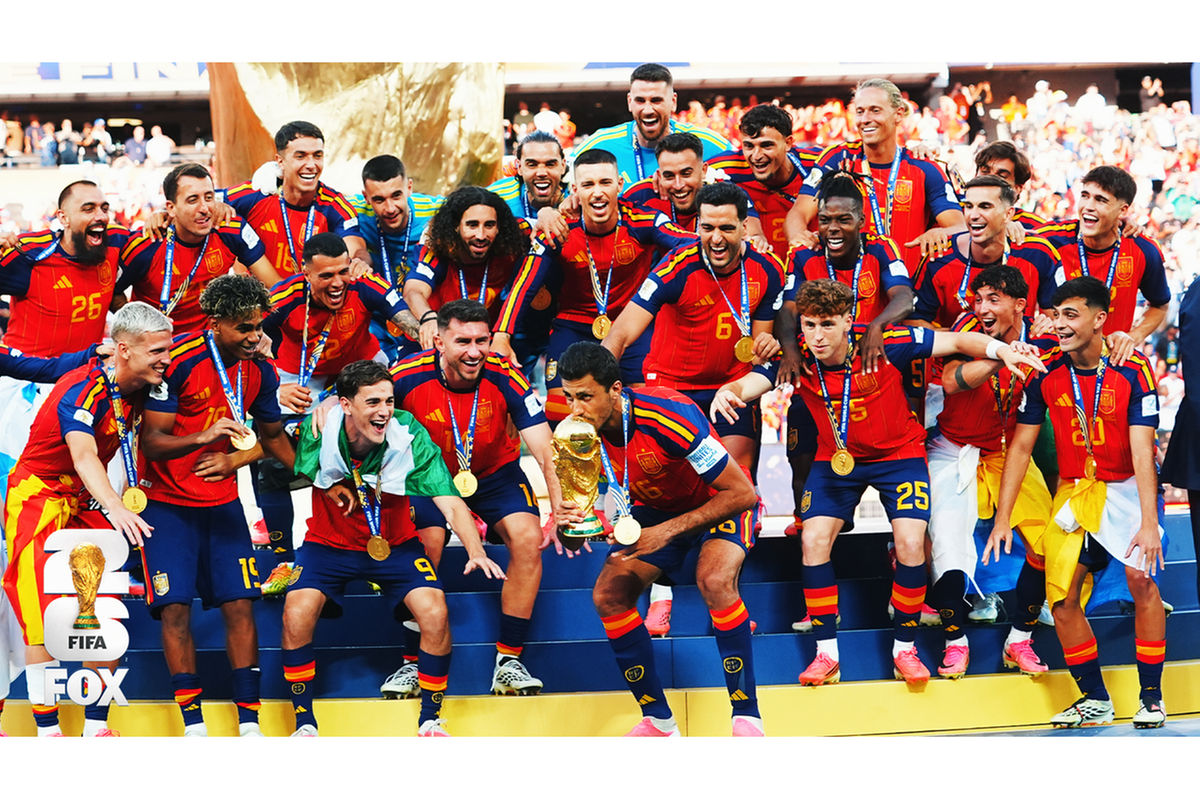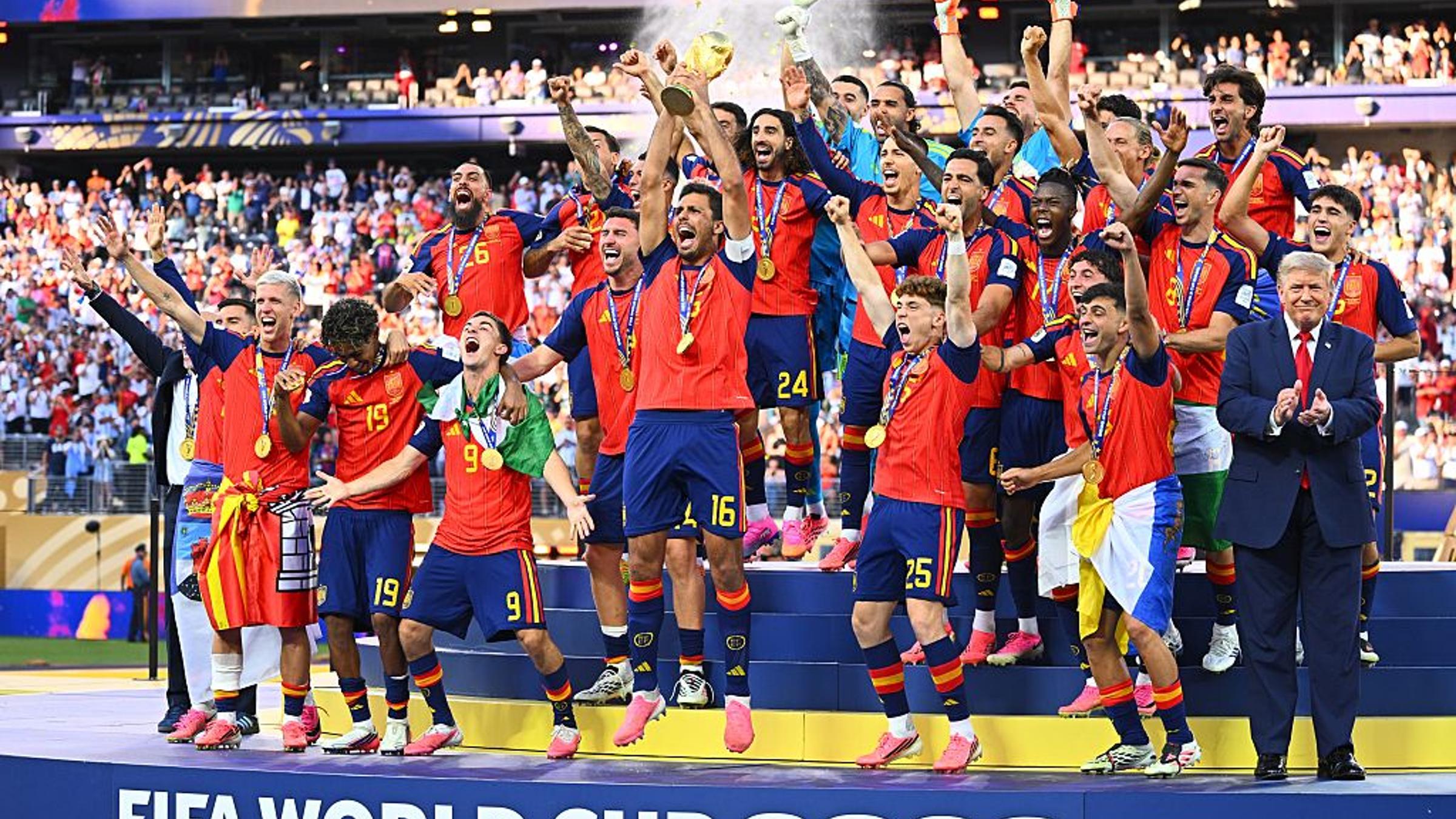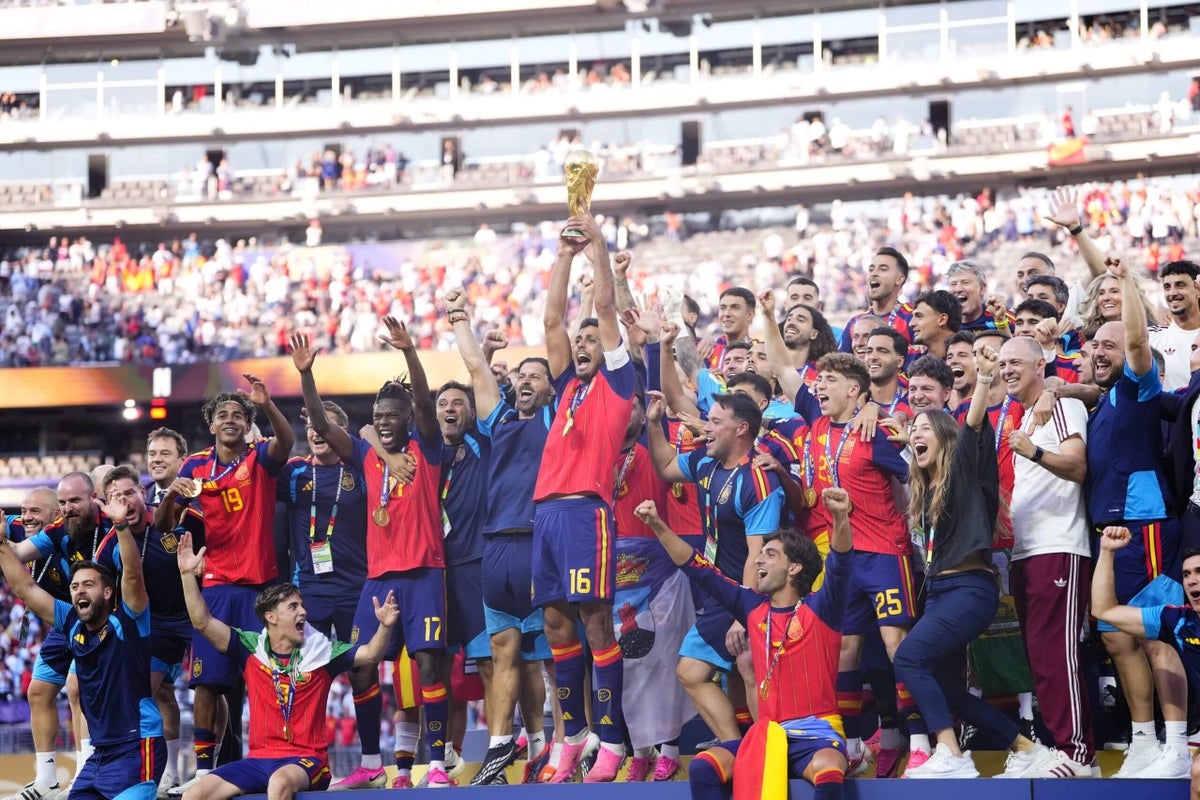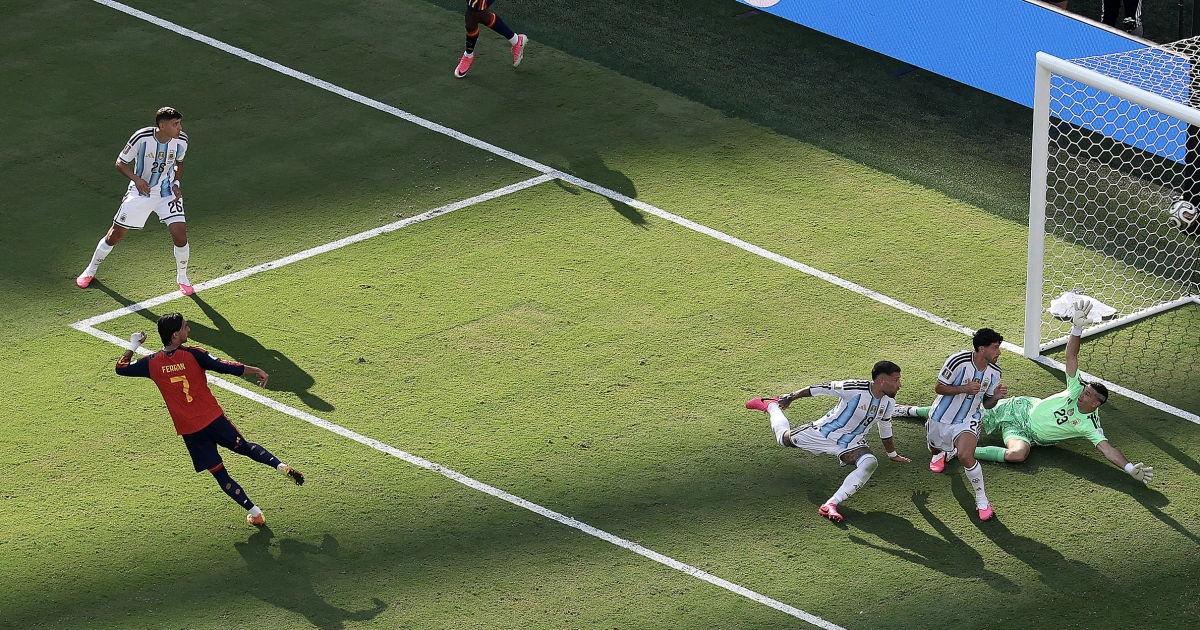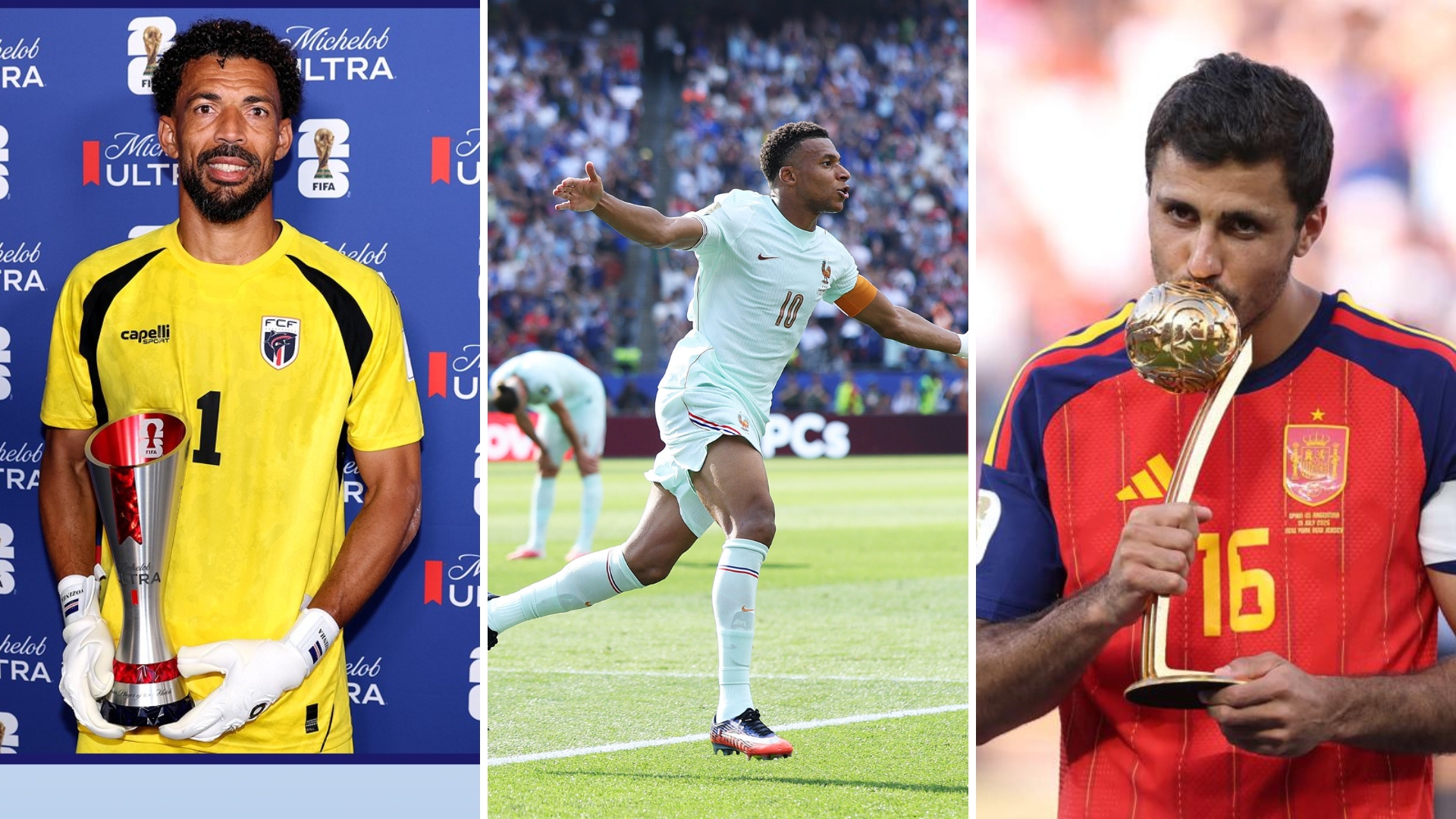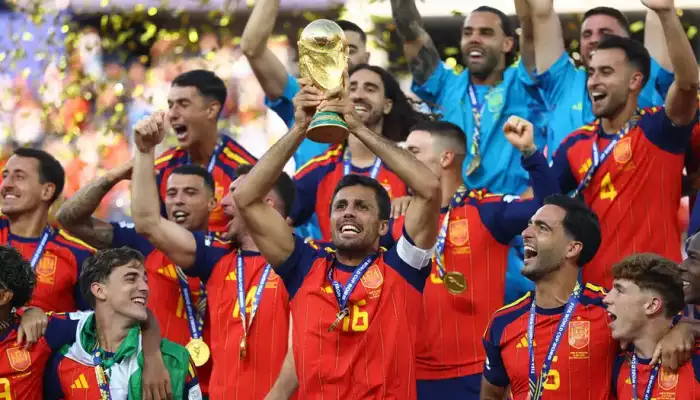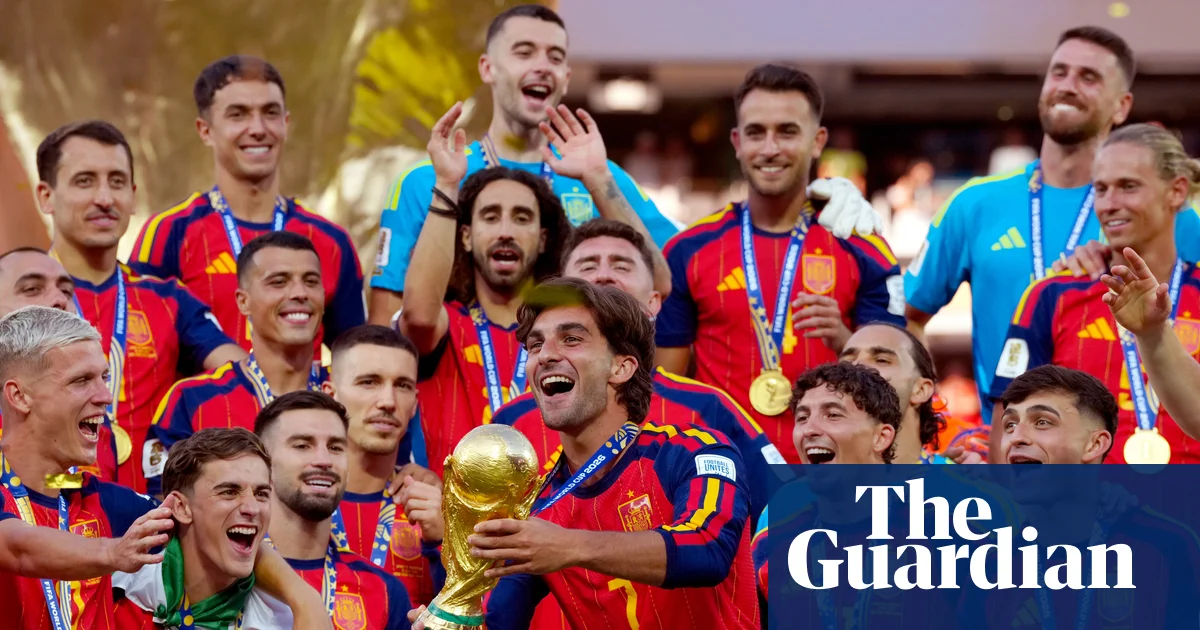
Release the pressure, let it out. All of it and all of them. Again and again they had come, again and again they had been halted. Many players had taken aim at Emi Martínez’s goal but somehow he was still standing and time was slipping away but Spain refused to do so, so they came some more.And then, suddenly, only this wasn’t really sudden, Pedro Porro’s deep cross found Nico Williams at the far post, he headed back, the ball dropped deep inside the Argentina penalty area, bounced on the turf and just kind of sat there: waiting, willing someone take this moment.At 5.42pm Eastern Time, 37 seconds into the second period of extra time, Ferran Torres did. And with the 20th shot of this final, with all his might and all his soul, he won the World Cup. The ball travelled at 102km/h tearing into the net and Torres turned and tore off in the other direction, sprinting to the corner flag where he leapt into the air and volleyed that too. Not quite so hard as he had hit the shot, but hard. From the bench and the pitch his teammates raced towards him, liberated at last. Oh, the release.Andrés Iniesta once said that the moment the ball sat up for him in the 116th minute of the final in South Africa in 2010, he heard the silence. Maybe Torres heard it too; although more often he has heard noise. Here there was an explosion, everyone at that end of the New York New Jersey Stadium going absolutely mad. Torres stood there, doing a familiar gesture: jibber-jabber hands, ears “listening”. Then he got the biggest hug Lamine Yamal has ever given.Late in Spain’s victory over Saudi Arabia, the day that Luis de la Fuente celebrated his 65th birthday, the striker, on as a substitute, had scored the final goal – or thought he had. VAR though intervened. As they reviewed the footage, Torres had stood there, his hands in front of his mouth in a praying position, muttering to himself: por favor, be a goal; por favor, be a goal. Here was a portrait of the pressure, of what players put up with sometimes, a picture perhaps of desperation. Spain were four goals up already, but here he was pleading for it to count. In the previous game against Cape Verde, he had hit the bar; in the next, against Uruguay, he did it again.Too often he had felt that fate, somehow, was conspiring against him. Instead it was saving something for him: the greatest goal, the greatest moment in any player’s career. Justice had been done, not just in the game which Spain had dominated Spain’s way – at that point Argentina had not yet had a shot – but to this team. This family, as De la Fuente calls them, all in it together.It felt right almost that it should be Torres, a symbol of all of them. You could never say that a goal like this means more – how could anything mean more than the moment that wins a World Cup? – but there was something there, something else, something in the way they had won it. Something in who had won it. And who had won it was all of them, Torres as every man, something shared by all of them, the collective expressed in a man who hasn’t always felt it but will now always be beloved. Torres became the seventh different Spain player to score. At the World Cup of the stars, a team took the trophy. He represented them.The European champions were the best team here, lifting that trophy, having conceded one goal, and this was a victory for a system, an ideal, a commitment to an identity. In that, it can feel almost inevitable but it is not. There was also something about this that was a victory for vindication, for the belief their manager has in them and they have in each other, even while others do not. Coming into the tournament, Rodri, the captain, had not completed his rehabilitation yet. Lamine Yamal, the star, was returning from injury too, everyone waiting for him until they realised that maybe they didn’t have to. Williams, who had provided the assist, thought he wouldn’t get there: injured for much of the season, he feared Uruguay had kicked him out of the World Cup.skip past newsletter promotionafter newsletter promotionWho had Porro and Marc Cucurella down as the world’s best full-backs before the tournament? Plenty do now. Fabián Ruiz had missed most the season injured. Aymeric Laporte, imperious again, struggled with Athletic this season. Behind him, the debate around Unai Simón wouldn’t relent. Mikel Merino, the superest of super subs had only played 28 minutes since March, but rescued them. Not once, but twice. And then, at the biggest moment of all, there was Torres.De la Fuente said that they had been “stung” by the doubts in those early games, the lack of recognition. “They are the best players in the world,” he said, and it turned out he was right. Spain’s coach is a man of faith; faith in his footballers, his “family”. Every day over the last month he has exchanged messages with a friend, Antonio, who is like a son to him, expressing the conviction they both felt. “It is written,” the messages say, and now it is.
At the World Cup of superstars, a team take home the trophy | Sid Lowe
The European champions conceded just one goal in the tournament and their success is a victory for a system
899 words~4 min read