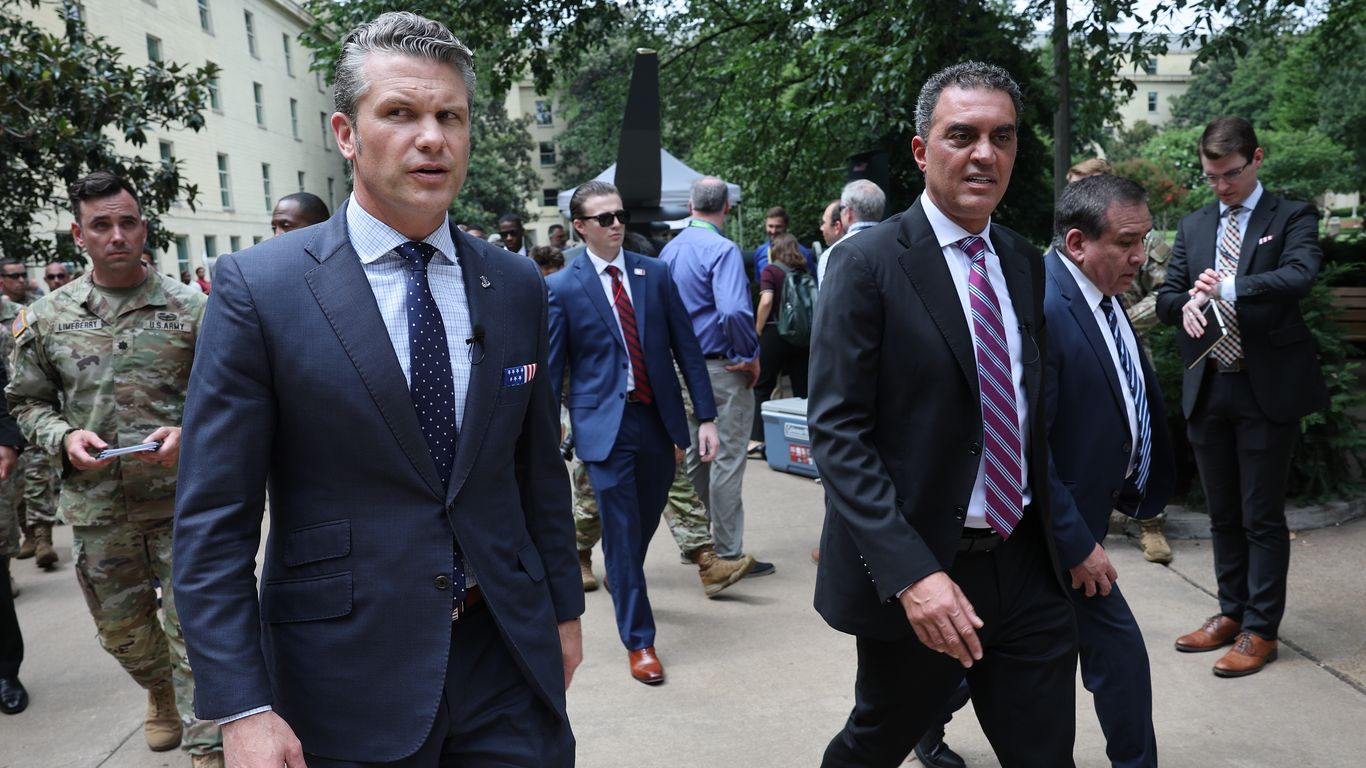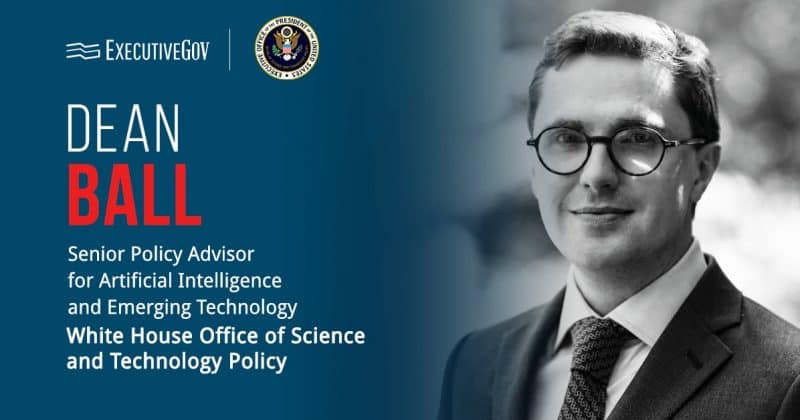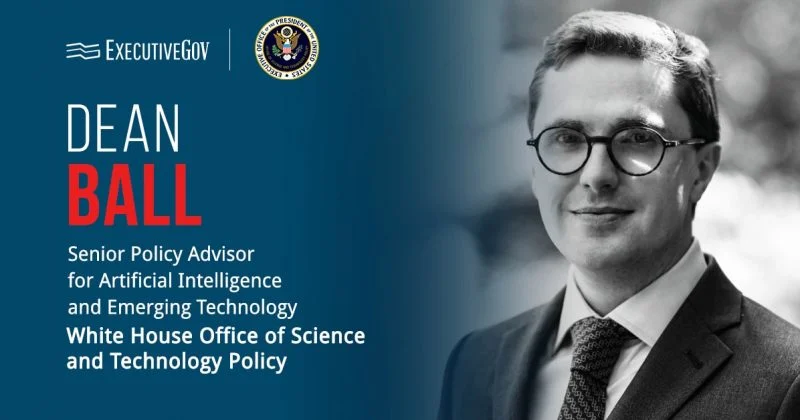
The revolving door between Washington and Silicon Valley just got stuck mid-spin. A senior Trump administration official and key adviser are publicly criticizing Dean Ball, OpenAI’s head of strategic futures, over his views on AI regulation. The awkward part: Ball helped write the administration’s own AI playbook before jumping to OpenAI.
From policy architect to policy critic
Ball served as a Senior Policy Advisor at the White House, where he played a central role in drafting America’s AI Action Plan, announced in July 2025. He then joined OpenAI in mid-June 2026 to lead its Strategic Futures team, a role focused on AI policy and governance at the frontier.
Ball’s core argument is that restrictive government oversight risks creating a monopoly on AI governance, one that could stifle innovation and concentrate power in ways that ultimately make everyone worse off. He advocates for private sector governance frameworks over strict public regulation.
That position doesn’t sit well with the people currently running defense procurement. The DoD’s FY2027 budget request includes $58.5 billion for AI-related initiatives, with $46 billion allocated for a sovereign AI arsenal. The criticism from Pentagon officials essentially boils down to a philosophical disagreement about who gets to set the rules for frontier AI systems.