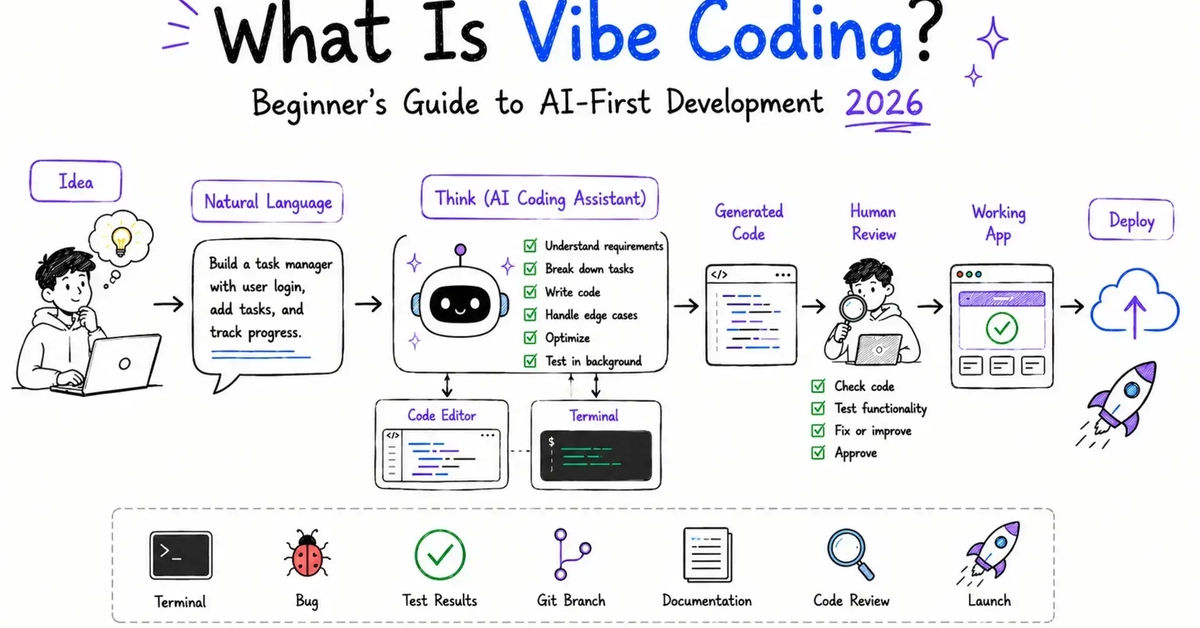
In February 2025, AI researcher Andrej Karpathy described a new way of writing software: describe what you want in plain language, let an AI model generate the code, and largely stop reading it line by line. He called it "vibe coding." A little over a year later, it's not a novelty — it's close to the default way software gets built.
Where the Term Came From
Karpathy's original framing was casual almost to the point of being a joke: a workflow where a developer fully gives in to the vibes, embraces exponentials, and forgets that the code even exists. The phrase caught on fast. Collins Dictionary named it the Word of the Year for 2025, and Google Trends showed searches for the term jump roughly 2,400% since Karpathy first used it.
How Big This Actually Got
The adoption numbers by early 2026 are hard to overstate. 92% of US developers now use AI coding tools daily, and 82% do so weekly worldwide. GitHub reports that 46% of all new code is now AI-generated, and among Y Combinator's Winter 2025 startup cohort, 21% of companies have codebases that are 91% or more AI-generated. Even at a company the scale of Google, roughly a quarter of code is already AI-assisted. Forecasters expect the share to keep climbing — Gartner projects 60% of all new software code will be AI-generated by the end of 2026.