Abstract
Distributed financial systems frequently treat reversal as a secondary state attached to an otherwise completed transaction. A payment succeeds, settlement is recorded, downstream services act on the result, and a later event changes the outcome to reversed.
This representation is convenient but incomplete.
A reversal does not erase the original operation. It introduces a new economic event after the original event may already have produced consequences across ledgers, external networks, inventory systems, credit facilities, customer balances, compliance workflows, and human decisions. By the time a transaction becomes reversible in practice, many of its effects may no longer be technically reversible.
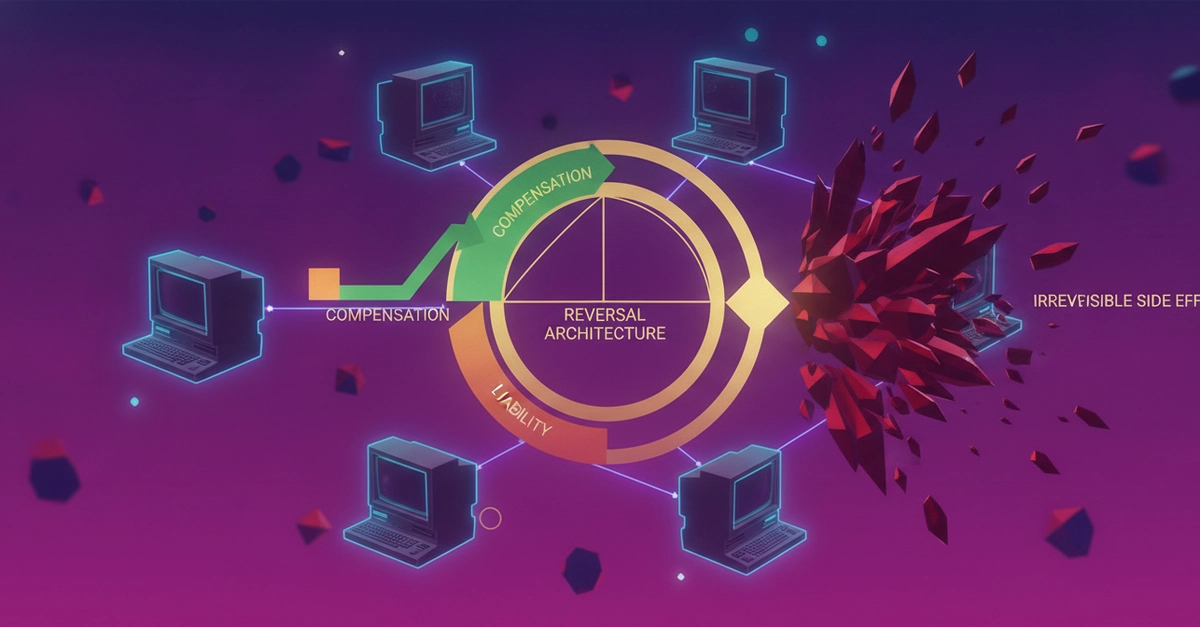
This article examines reversal as an architectural concern rather than a status transition. We explore compensation semantics, liability allocation, reversal windows, causal identity, downstream exposure, and the design of settlement receipts that carry enough information for consumers to reason about reversibility independently.