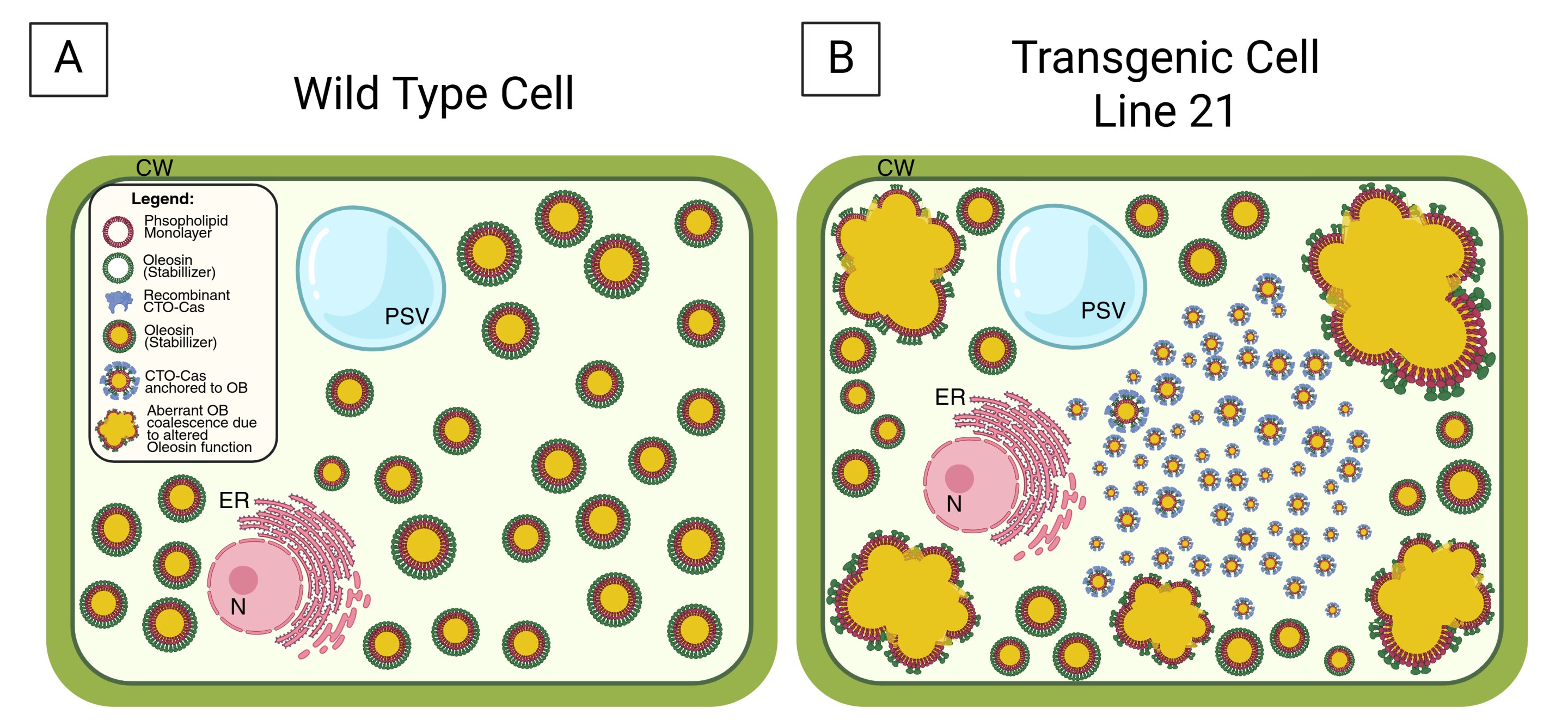
A comparison between normal and genetically modified plant cells illustrates how introducing milk proteins alters internal storage, prompting tiny oil bodies to fuse into large, distorted structures at the cell's periphery. Remarkably, these unusual protein-oil aggregates accumulate successfully without affecting seed germination, suggesting that plants possess an alternative, highly resilient route for storing complex animal proteins. Credit: Almog Ozeri
What if the plants growing in a field could one day produce the same proteins that give milk its nutrition, texture and cheese-making properties? A new study brings that possibility a step closer by revealing an unexpected way plant seeds can manufacture and store one of milk's most important proteins. The discovery could help overcome a major hurdle in producing real dairy proteins without cows, paving the way for more sustainable dairy ingredients and alternative food production.
What if the key ingredient that gives milk its nutritional value, creamy texture and cheese-making ability could be grown inside plants instead of produced by cows?
Researchers at the Hebrew University of Jerusalem have taken an important step toward that goal. In a new study published in Frontiers in Plant Science, they demonstrated that plants can successfully manufacture β-casein—one of the major proteins found in cow's milk. Even more surprising, the protein accumulated in an entirely unexpected location inside plant cells, revealing a previously unknown pathway that could help improve the production of animal proteins in crops.