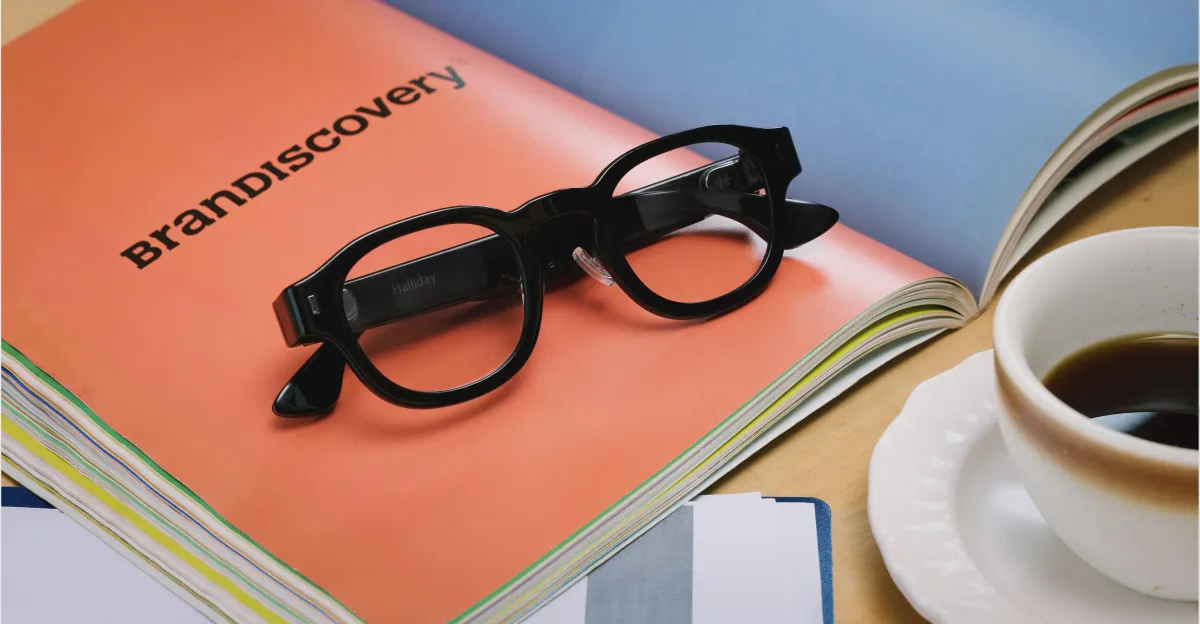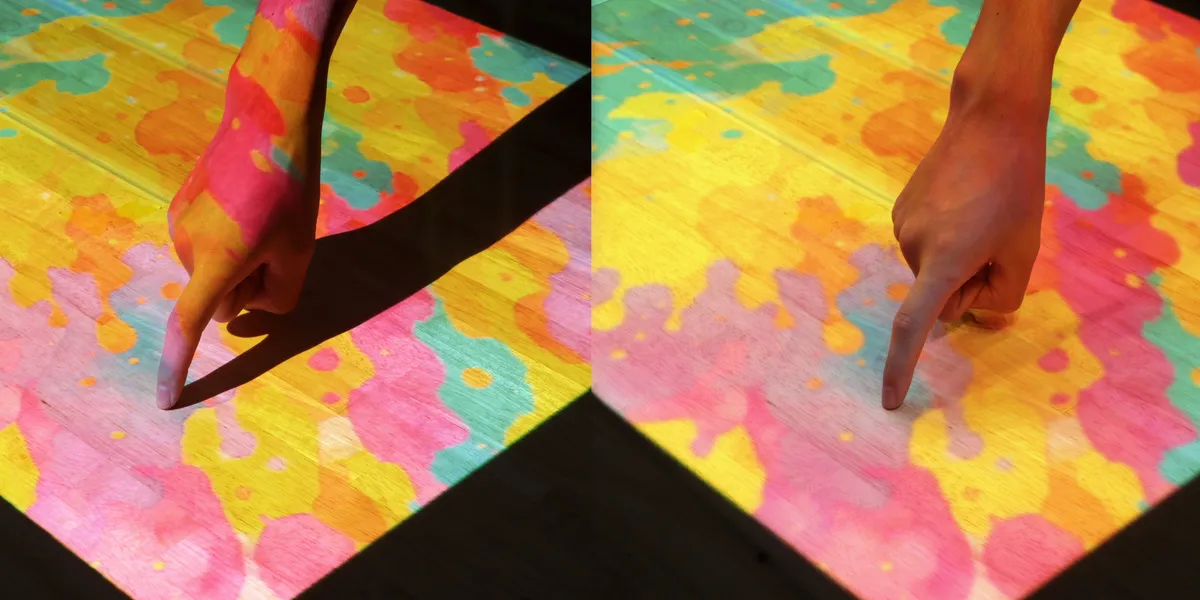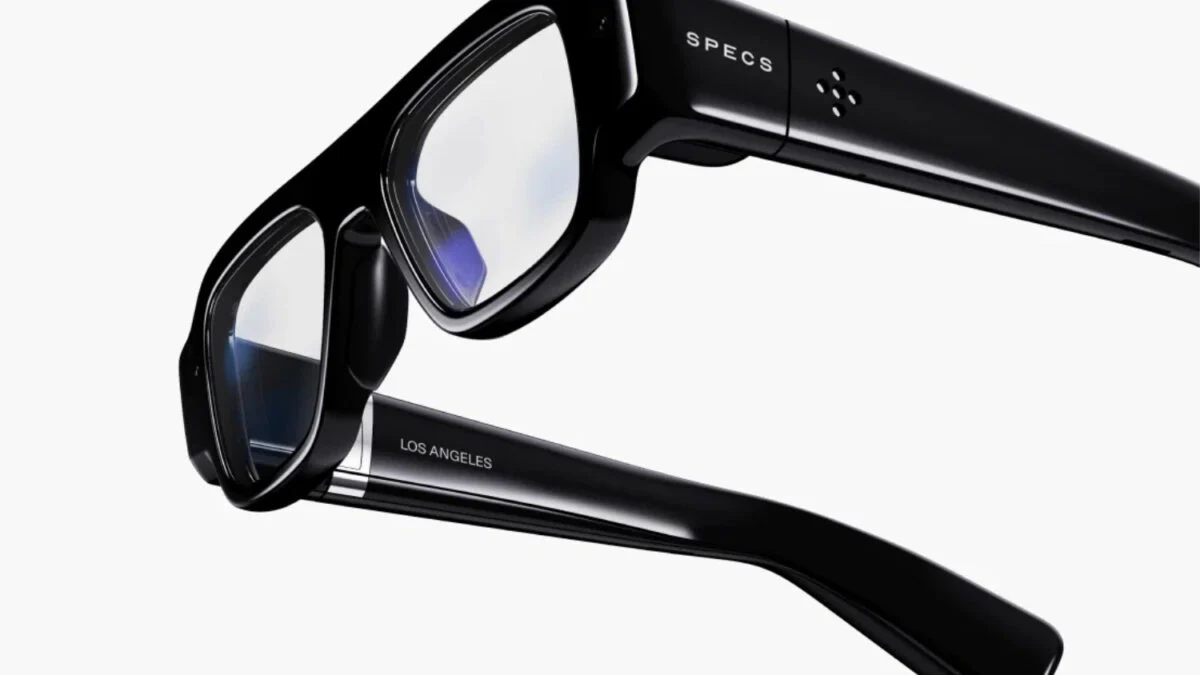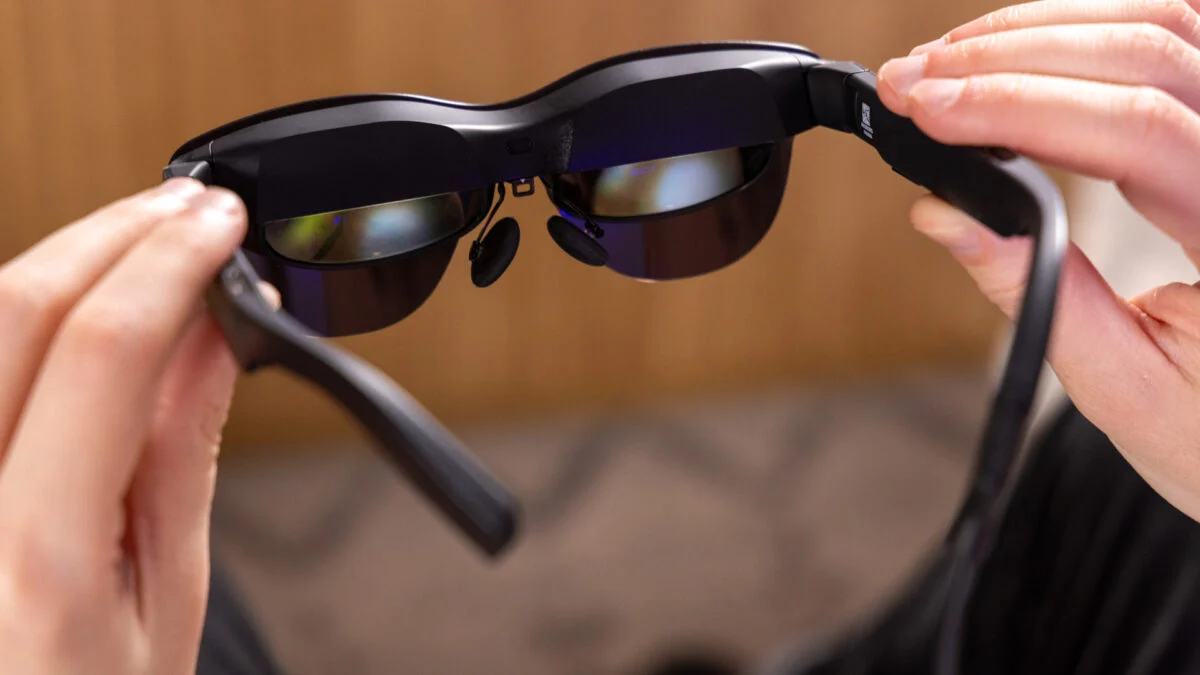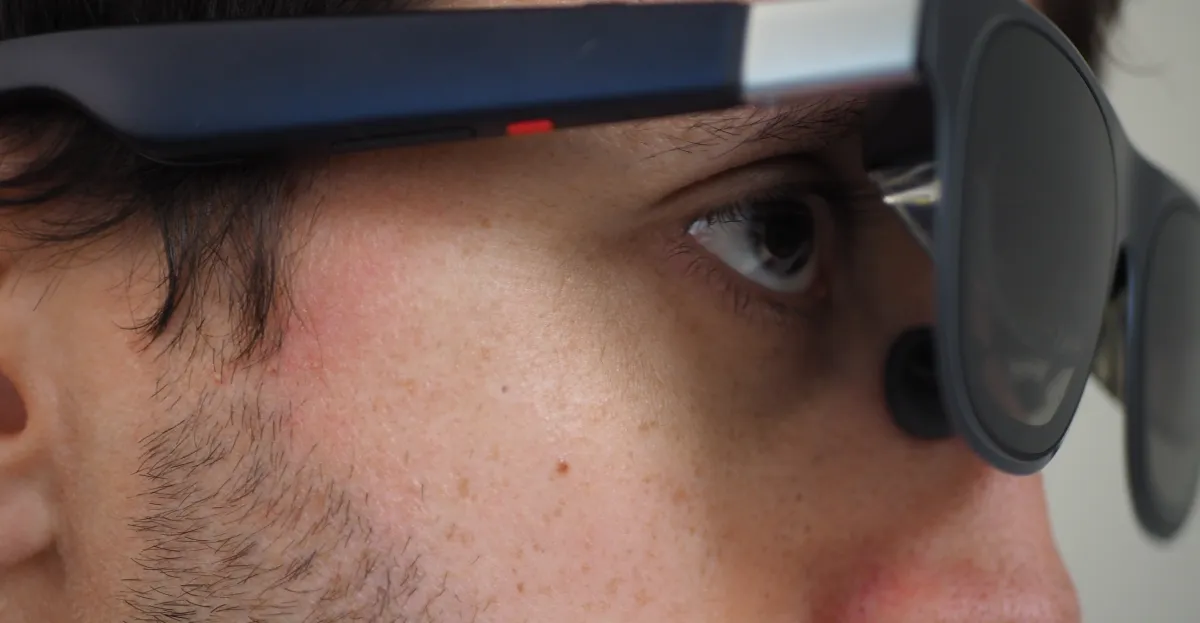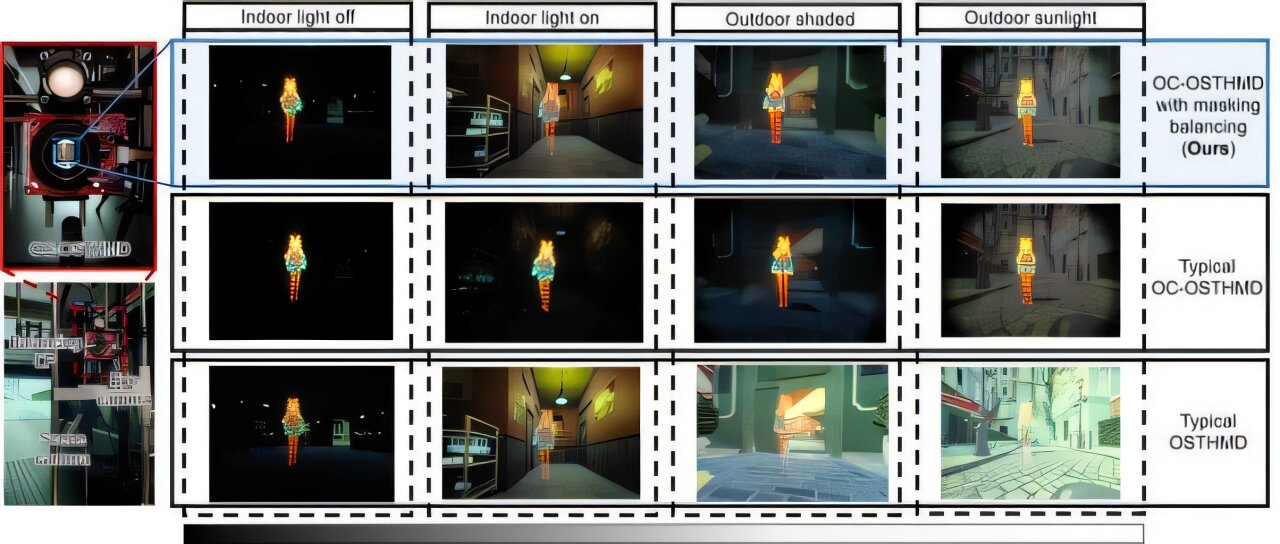
Occlusion-capable optical see-through head-mounted displays (OC-OSTHMDs) with mask balancing show the optimized visibility for both the real and virtual images. Credit: Assistant Professor Xiaodan Hu from Shibaura Institute of Technology, Japan Source link: https://doi.org/10.1109/TVCG.2026.3679903
Optical see-through augmented reality (AR) glasses are designed to overlay digital information onto the real world, but improving the realism of virtual objects often comes at a cost. Existing occlusion technologies physically block part of the incoming light, reducing the brightness of the real environment and making everyday tasks more challenging. Overcoming this balance between virtual realism and real-world visibility is a key hurdle for next-generation AR systems.
Addressing this challenge, a research team including Xiaodan Hu, an assistant professor at Shibaura Institute of Technology in Japan and a key contributor to the project, collaborated with Dr. Yan Zhang and Professor Xubo Yang from Shanghai Jiao Tong University in China and Professor Kiyoshi Kiyokawa from the Nara Institute of Science and Technology in Japan to develop a perception-driven display strategy that jointly considers human visual perception and real-world lighting conditions.