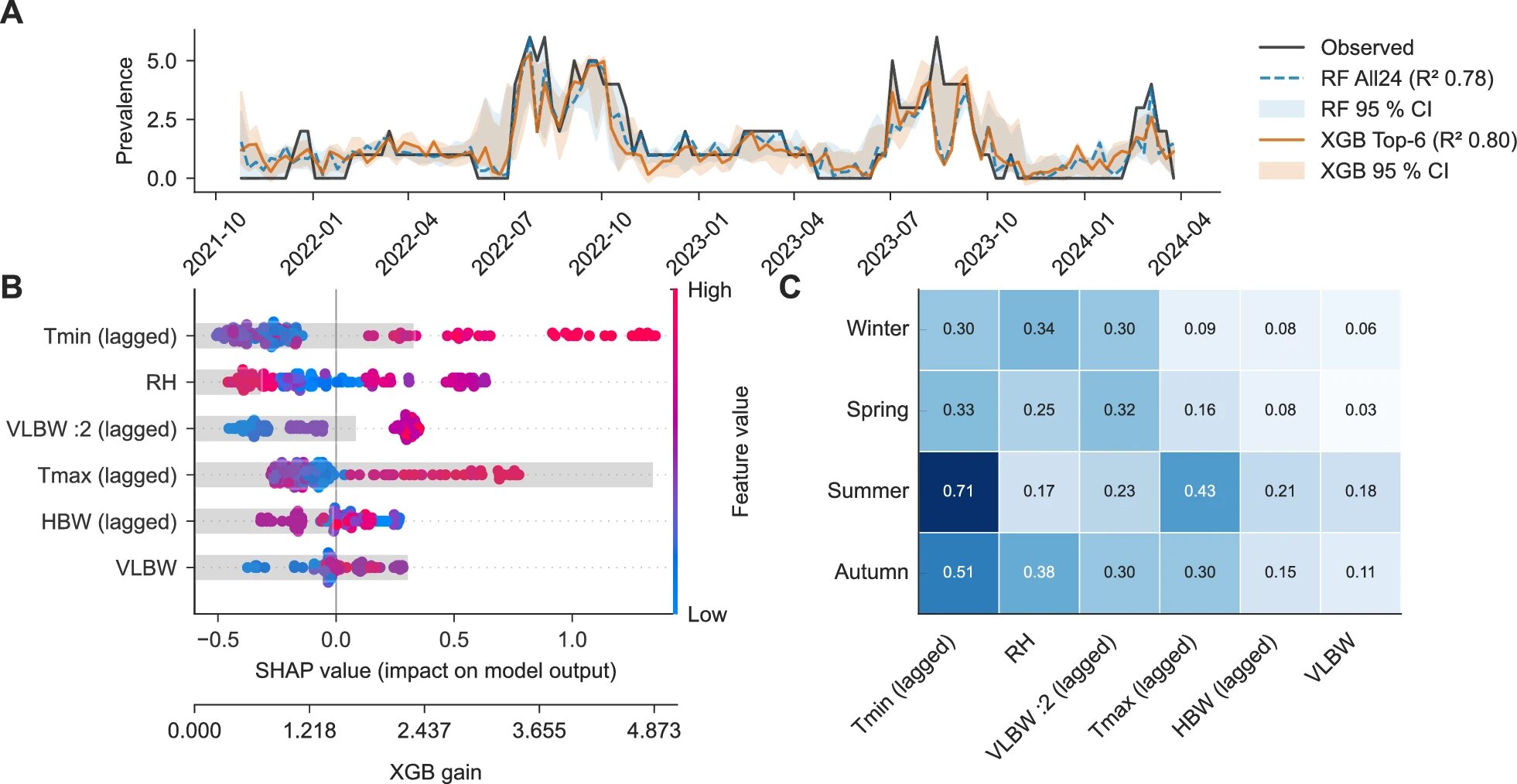
Machine learning-based prediction of molecular cluster prevalence and model interpretation. Credit: Antimicrobial Resistance & Infection Control (2026). DOI: 10.1186/s13756-026-01753-4
Premature babies in the intensive care unit are particularly at risk of becoming infected with potentially pathogenic bacteria. A team of doctors in Hanover has now investigated which external factors play a role in this. They concluded that climatic conditions have an influence. The study was led and designed by Dr Leonard Knegendorf, a clinician-scientist at TWINCORE, the Centre for Experimental and Clinical Infection Research. The findings were published in the journal Antimicrobial Resistance & Infection Control.
The bacterium Klebsiella pneumoniae is part of the normal microbial flora of babies from birth. Under certain circumstances, however, it can also cause disease. Premature babies, in particular, are at high risk of severe intestinal inflammation and bloodstream infections. For this reason, young patients in the neonatal intensive care unit are regularly tested for the bacterium.
"When Klebsiella was detected in these swabs, we sequenced it and classified it into genetic clusters," says Dr. Leonard Knegendorf. "This enables us to identify whether any feared outbreaks are occurring on the ward." Knegendorf is a specialist in microbiology at Hannover Medical School (MHH) and, since May 2024, has also led the junior clinical research group "Data-Driven Clinical Microbiology" at TWINCORE.