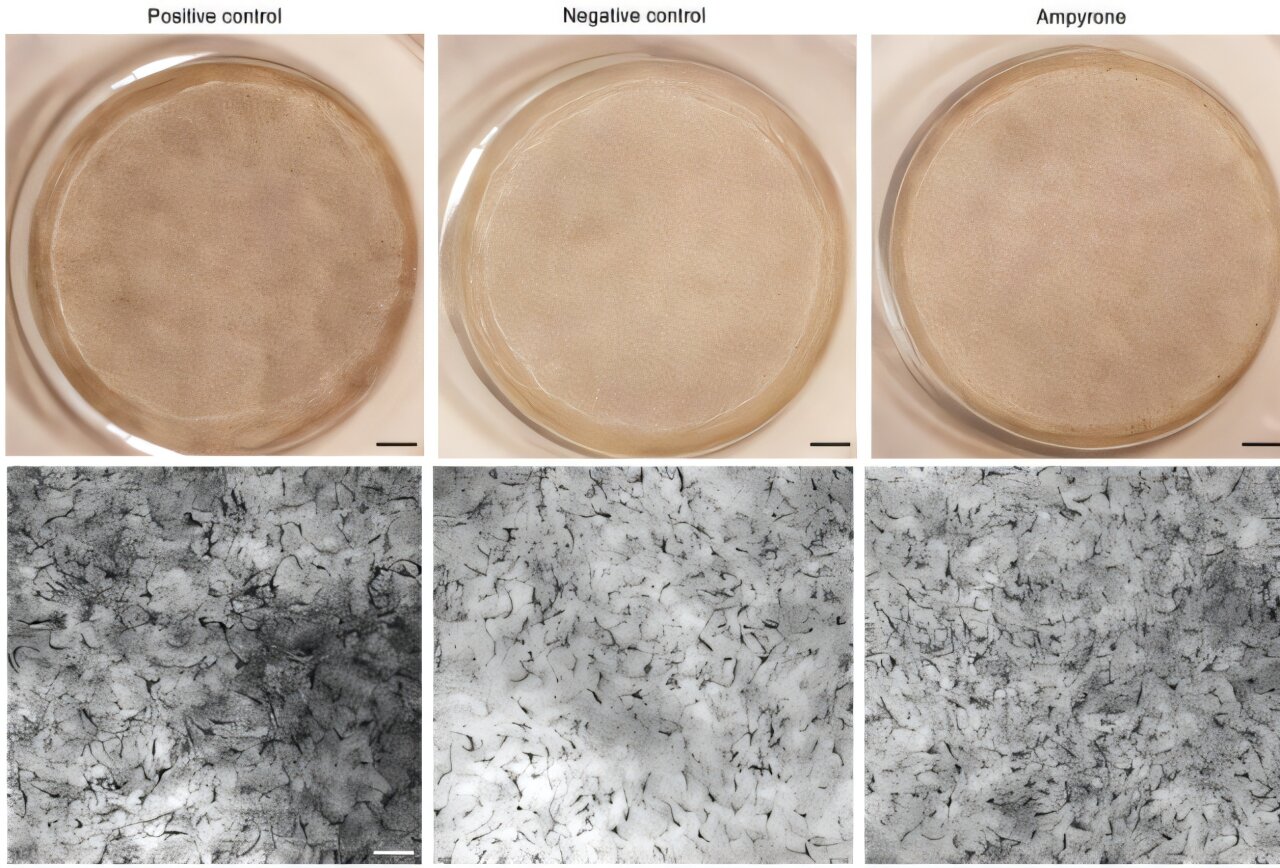
Ampyrone increases pigmentation in a human 3D epidermal model, The top row shows visible epidermal darkening after treatment every other day with ampyrone for 21 days as compared to negative control. The bottom row shows magnification of epidermal cells revealing increased melanin synthesis in the ampyrone treated melanocytes as compared to negative control. Positive control is alpha-melanocyte stimulating hormone (αMSH) plus beta-fibroblast growth factor (βFGF). Credit: Dr. Jonathan Zippin
An NSAID-related compound called ampyrone appears to safely boost production of the pigment melanin in human skin, according to a preclinical study led by Weill Cornell Medicine and National Eye Institute investigators. The discovery could lead to the development of an ampyrone-derived treatment for hypopigmentation disorders.
Such disorders, which include severe genetic forms of oculocutaneous albinism (OCA) as well as inflammation-caused hypopigmented skin patches, are characterized by abnormally low or even zero levels of melanin in cells. The lack of this ultraviolet-absorbing antioxidant pigment can result in an increased risk of skin cancer, vision impairments due to improper retinal development and social difficulties.