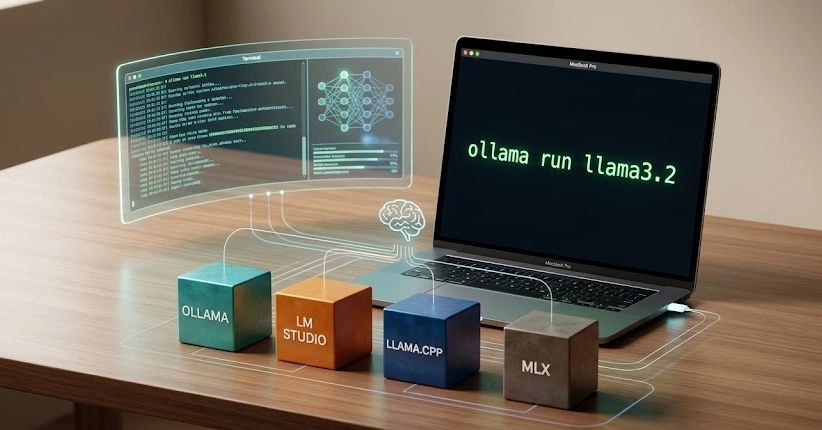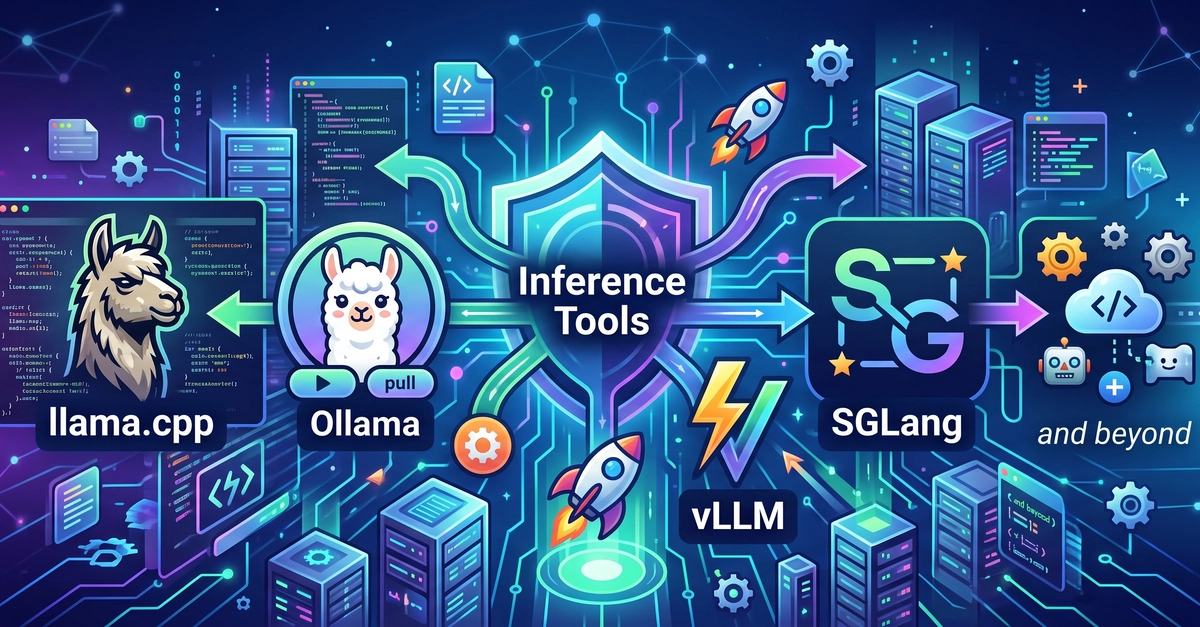
Nine tools, three layers, one decision framework. Everything you need to run open-source models in 2026.
Why This Guide Exists
The local LLM inference ecosystem has quietly matured into one of the most consequential layers of the open-source AI stack. In 2026, you can run Qwen3-235B on a Mac Studio, serve DeepSeek V4 to a hundred concurrent users from a single H100, or deploy Gemma 3 on a Raspberry Pi — all without a cloud API, without a subscription, and without sending a single token to a third-party server.
But choosing the wrong tool for your workload doesn't just cost performance. It determines whether your architecture even works. Running vLLM on a MacBook won't go well. Running Ollama for a team of fifty concurrent users won't scale. Running llama.cpp when you need structured JSON output from an agent loop is friction you don't need.
The single most important framing: These tools do not occupy the same layer of the stack. Some are raw inference engines. Some are experience wrappers around those engines. Some are production-grade serving systems. Choosing "the best one" without specifying your workload is like asking whether a hammer or a drill is better.