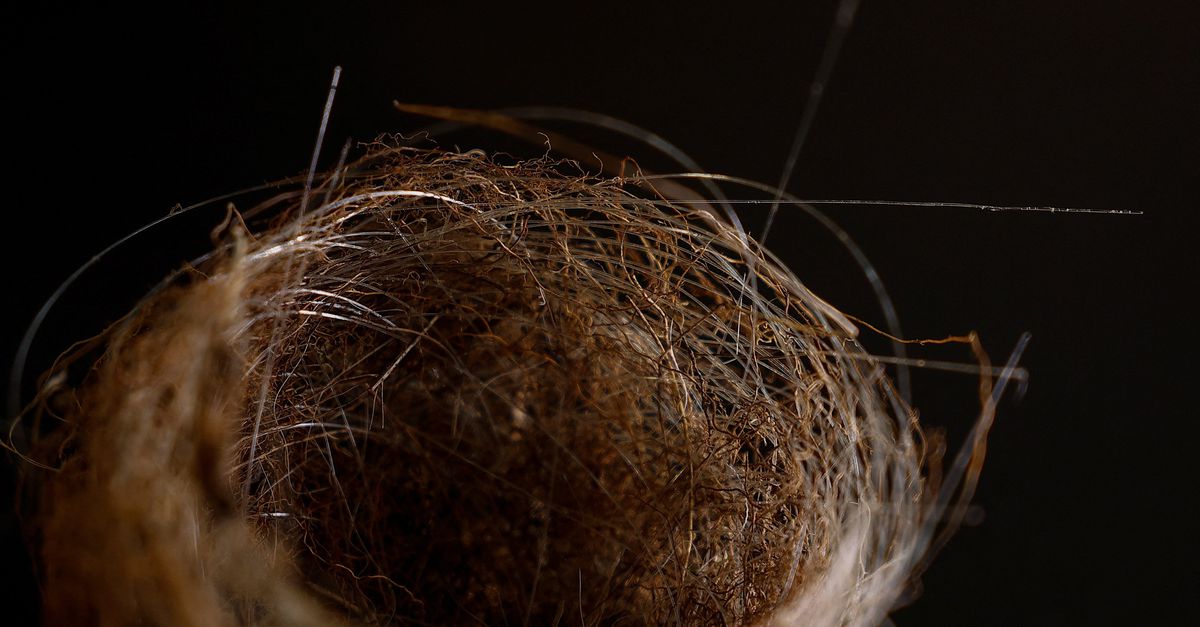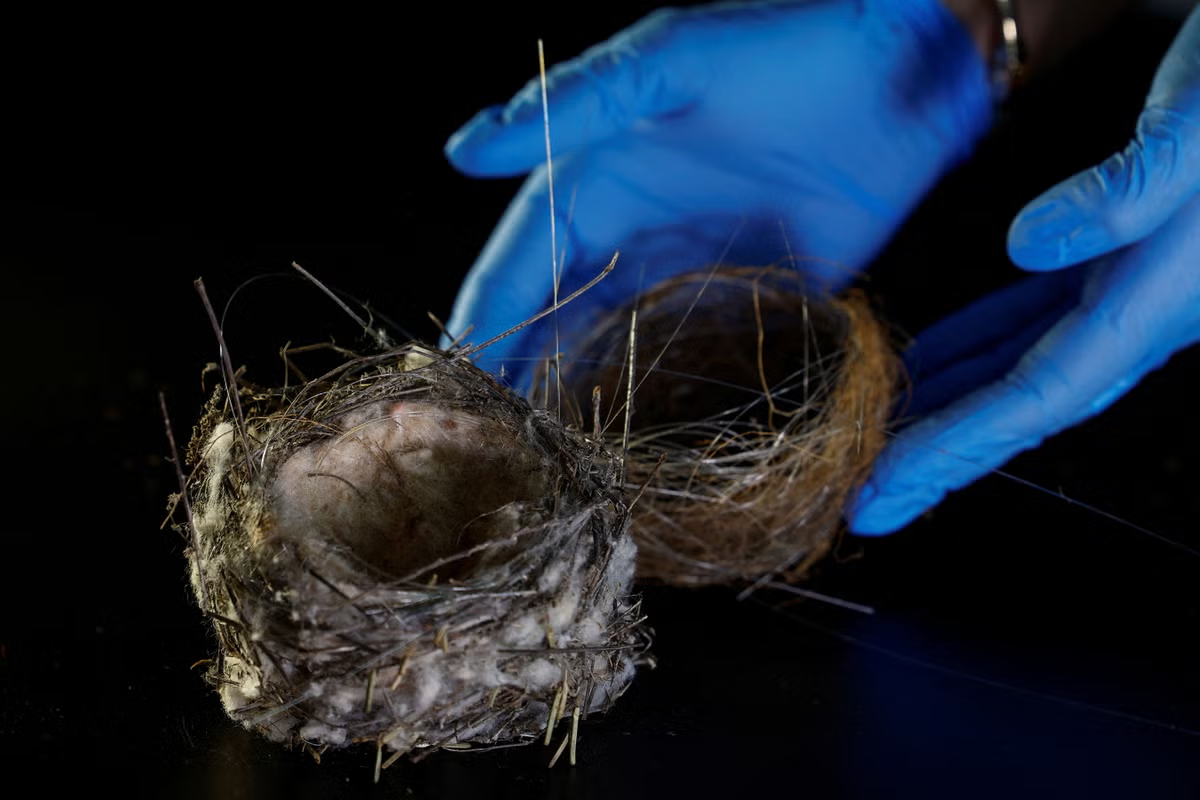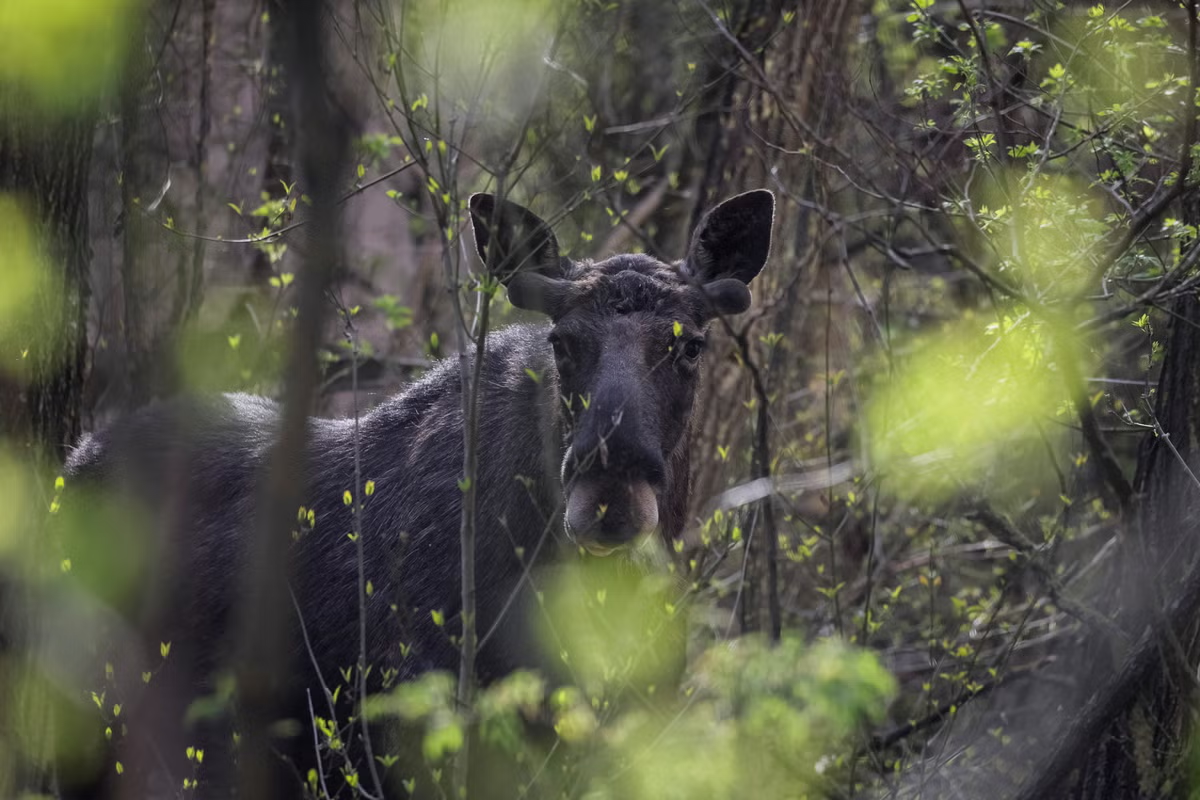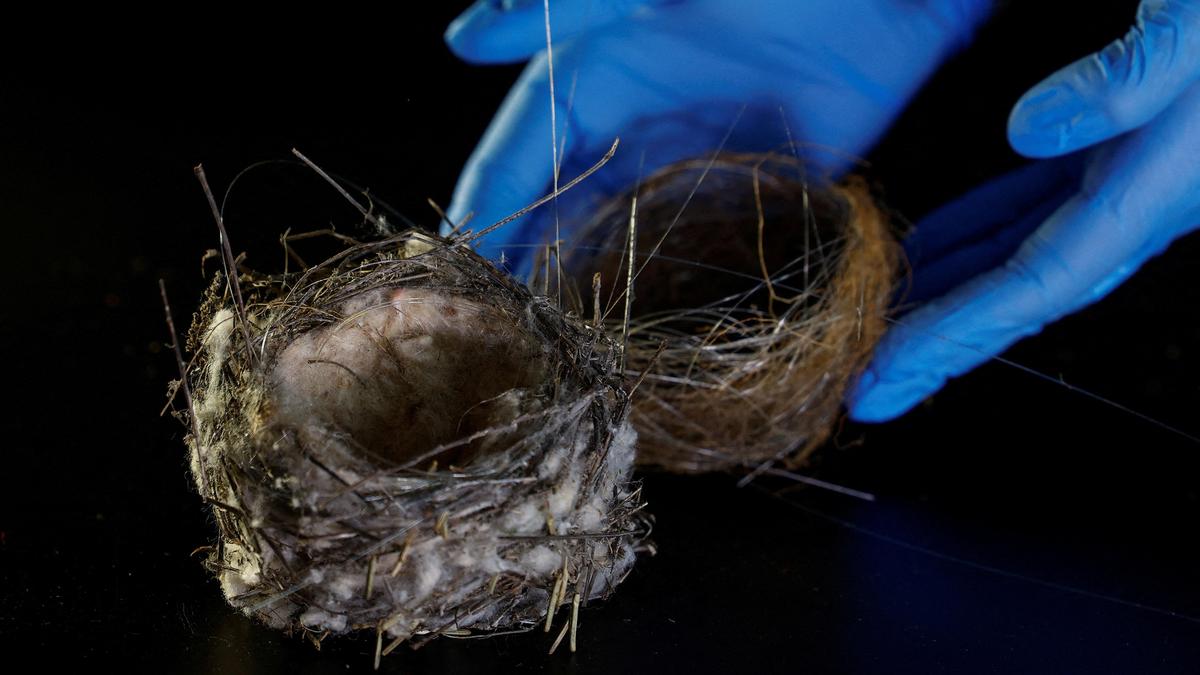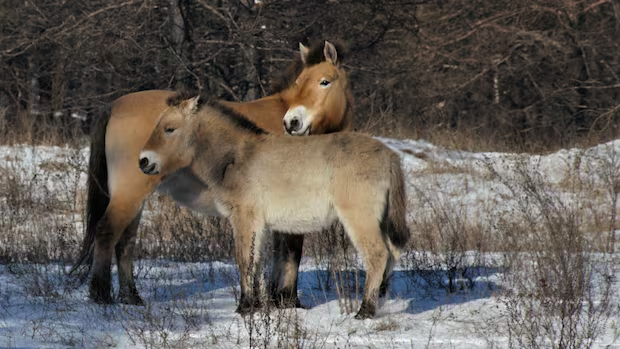
WorldFrom Chornobyl's endangered wild horses to bird nests made of drone cables, modern warfare is reshaping fragile ecosystems along Ukraine’s front lines.Ukrainian soldiers have also found bird nests made from fibre-optic drone cablesSophie Wallace · CBC News · Posted: Jul 19, 2026 4:00 AM EDT | Last Updated: 2 hours agoListen to this articleEstimated 5 minutesThe audio version of this article is generated by AI-based technology. Mispronunciations can occur. We are working with our partners to continually review and improve the results.Before the war, endangered Przewalski's horses were thriving in the exclusion zone around the Chornobyl nuclear reactor site. But since the area has become remilitarized, the rare animals have had to change where they graze— making them more vulnerable to predators — and several have been killed by mines. (Kateryna Korepanova)Hiding out in a bomb shelter in southern Ukraine’s Kherson region, one man readies himself to venture out into the forested front line. But Oleksiy Vasyliuk is not a soldier — he’s a scientist. Vasyliuk and his team conduct their research on an active minefield, facing continuous shelling and aerial drone threats. Doing fieldwork in areas of active combat — what he calls the “death zone” — comes with monumental risks. “Very few biologists are prepared to go into these conditions,” Vasyliuk told CBC, speaking from the shelter where local residents have lent scientists the space for the purpose of a makeshift research lab. “But we feel a responsibility that someone has to study all this.” While data is dangerous to come by, biologists have no doubt that Russia’s full-scale invasion is severely impacting Ukraine’s ecosystems, threatening native species with extinction. And in battle zones, soldiers are finding bird nests made with the silvery threads of fibre-optic lines used by Ukrainian and Russian troops to guide aerial attack drones.A bird nest made with fibre-optic cables used to communicate with attack drones during the ongoing conflict between Ukraine and Russia. (RomanPupenko/National Museum of the History of Ukraine in Second World War)Mykhailo Mlechko, an operator-gunner of the Ukrainian army’s Hart Brigade, found one of these nests 10 kilometers from the front line in the Kharkiv region of east Ukraine. Speaking to CBC, he said the cables are so pervasive, he and his comrade weren’t surprised to see birds repurposing the material to weave their nests.These birds’ nests are just one example of how modern warfare is reshaping Ukraine’s natural environment. But Vasyliuk, chair of the board of the Ukrainian Nature Conservation Group, urges people not to romanticize them — fibre-optic cables and anti-drone netting pose an existential threat to bird populations.War zone is also hotbed of biodiversityAccording to Vasyliuk, at least 22 plant and 12 animal species are endemic to the area, meaning they don’t live anywhere else. “These are not species that are found all over the planet — only where active hostility is ongoing,” he said. Due to the sheer destruction, “there is a probability that we will never see any of these species again.” Vasyliuk is studying the restoration of forest ecosystems, after the destruction of the Russian-occupied Nova Kakhovka Dam in June 2023 released 83,000 tonnes of pollutants into surrounding waterways. A sandy blind mole rat, which is an endangered species of rodent only found along the Dniepro river in Ukraine. (csdeant/iNaturalist)One of the critically endangered creatures Vasyliuk is researching is so beloved, it features on commemorative versions of the Ukrainian two hryvni and 10 hryvni coins. The sandy blind mole-rat’s only habitat in the world is along the Dniepro river, which has been an active combat zone since the beginning of the war. The animals rely on echolocation, meaning they are extremely sensitive to the sound of constant bombing.“For thousands of years, this animal built its nests, these complex underground colonies … and now, for four years, uninterrupted explosions take place,” Vasyliuk said.The sandy blind mole-rat is far from the only species having to adapt to man-made disaster. Hundreds of miles north, the Chornobyl Exclusion Zone (CEZ) has long been a symbol of nature’s ability to thrive without human interference. However, recent remilitarization is changing that.Przewalski's horses near the Red Forest in the Chornobyl exclusion zone in 2021. (Svitlana Kudrenko)The endangered Przewalski's horse, the world’s last remaining wild horse not descended from domesticated breeds, has called the CEZ home since the species was introduced there in 1998. Camera trap data retrieved by soldiers shows that the remilitarization of the area in Northern Ukraine, along the Belarusian border, is having a huge impact on their populations. According to researcher Svitlana Kudrenko, not only are the horses changing their grazing patterns to avoid human activity, making them more vulnerable to predators — they are also unfortunately heavy enough to detonate anti-tank mines. Three have been killed so far, she said. Crucial ecosystems in the Black SeaOrganisations such as the Conflict and Environment Observatory (CEOBS) take data collected by local scientists in conflict zones all over the world, mapping environmental harm related to military activities and advocating for better protections and policy changes.Linas Svolkinas is a researcher with CEOBS, specialising in monitoring the effects of military activities in the Black Sea on local keystone species, such as bottlenose dolphins. “They keep the marine ecosystem functioning,” Svolkinas told CBC from the CEOBS office in Leeds, U.K. Ukraine dam breached, unleashing floods as residents ordered to evacuateEcological consequences of dam collapse in southern Ukraine will be generational, experts sayAccording to Svolkinas, the Black Sea has gone underresearched for a long time due to the surrounding area’s unstable geopolitical situation. Population surveys on dolphins and porpoises, once rare, are now impossible. “All we can do actually is just to count the stranded animals,” he said. Svolkinas said that local biologists have seen huge spikes in strandings since the start of the war, which is mostly likely linked to military activities by Russian naval vessels. Undersea mines, sonar interference and chemical pollutants from incidents like the Nova Kakhovka Dam bombing are causing major disruptions to the Black Sea ecosystem.The destroyed Nova Kakhovka dam, Beryslav town and Dnipro river bank, dried-up after water level sharply dropped following the collapse of the dam in the course of the Russia-Ukraine conflict, are seen from the town of Nova Kakhovka in Kherson region, Russian-controlled Ukraine, July 5, 2023. (Alexander Ermochenko/Reuters)What can be recovered?Vasyliuk hopes that after the war, restoration efforts will not be “blind.” “We will not be able to plant again this forest, because the climate has changed,” he said. “Ukraine will be different.” Vasyliuk urges policy makers and foreign donors to consider Ukraine’s endemic species when planning for rebuild. Until then, the work of documenting loss continues — with the hope the knowledge they gain may one day help Ukraine's recovery. ABOUT THE AUTHORSophie Wallace is a Toronto-based journalist and Mandarin language translator, currently interning at CBC World News in London, U.K. She is doing her Master of Journalism at Toronto Metropolitan University. You can reach her at sophie.wallace@cbc.ca.
Ukraine's wild horses and other wildlife put at risk by years of war | CBC News
From Chornobyl's endangered wild horses to bird nests made of drone cables, modern warfare is reshaping fragile ecosystems along Ukraine’s front lines.
1,154 words~5 min read