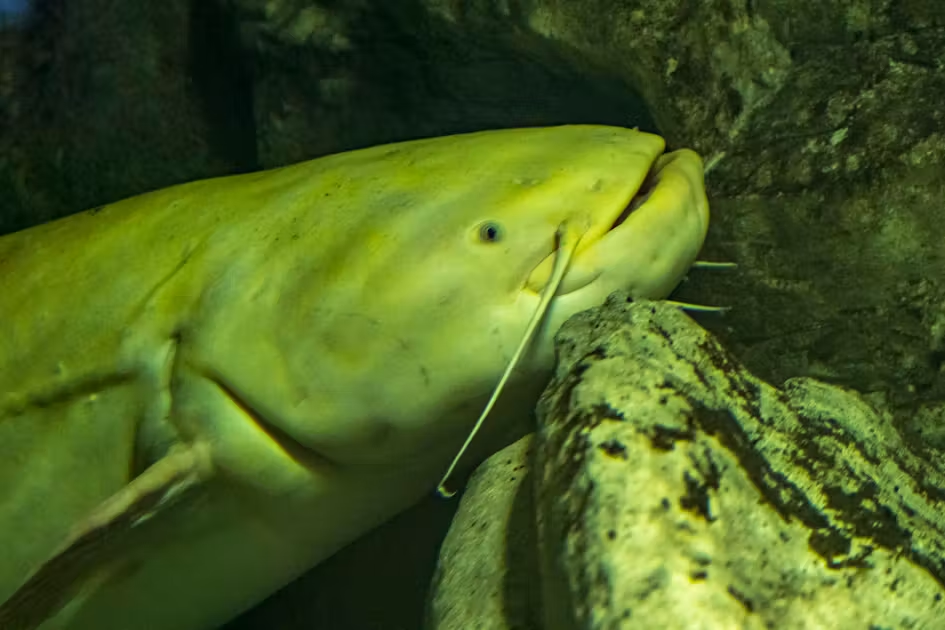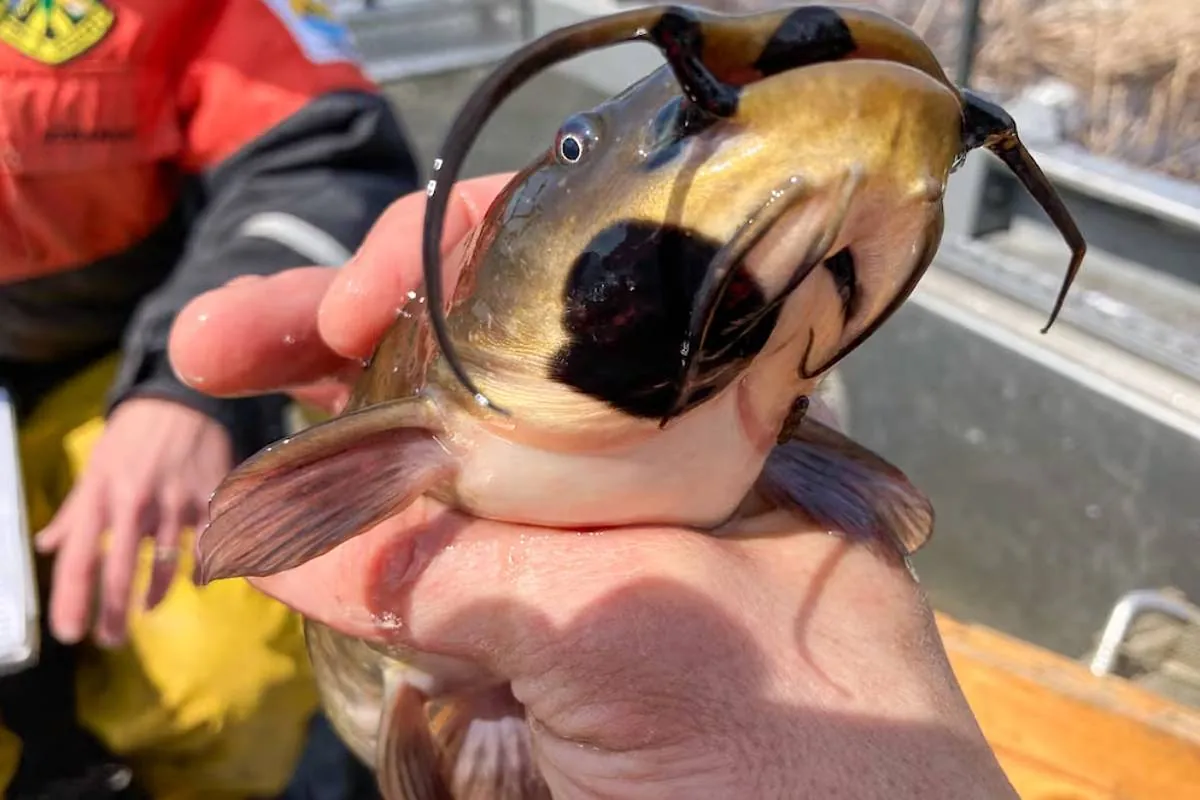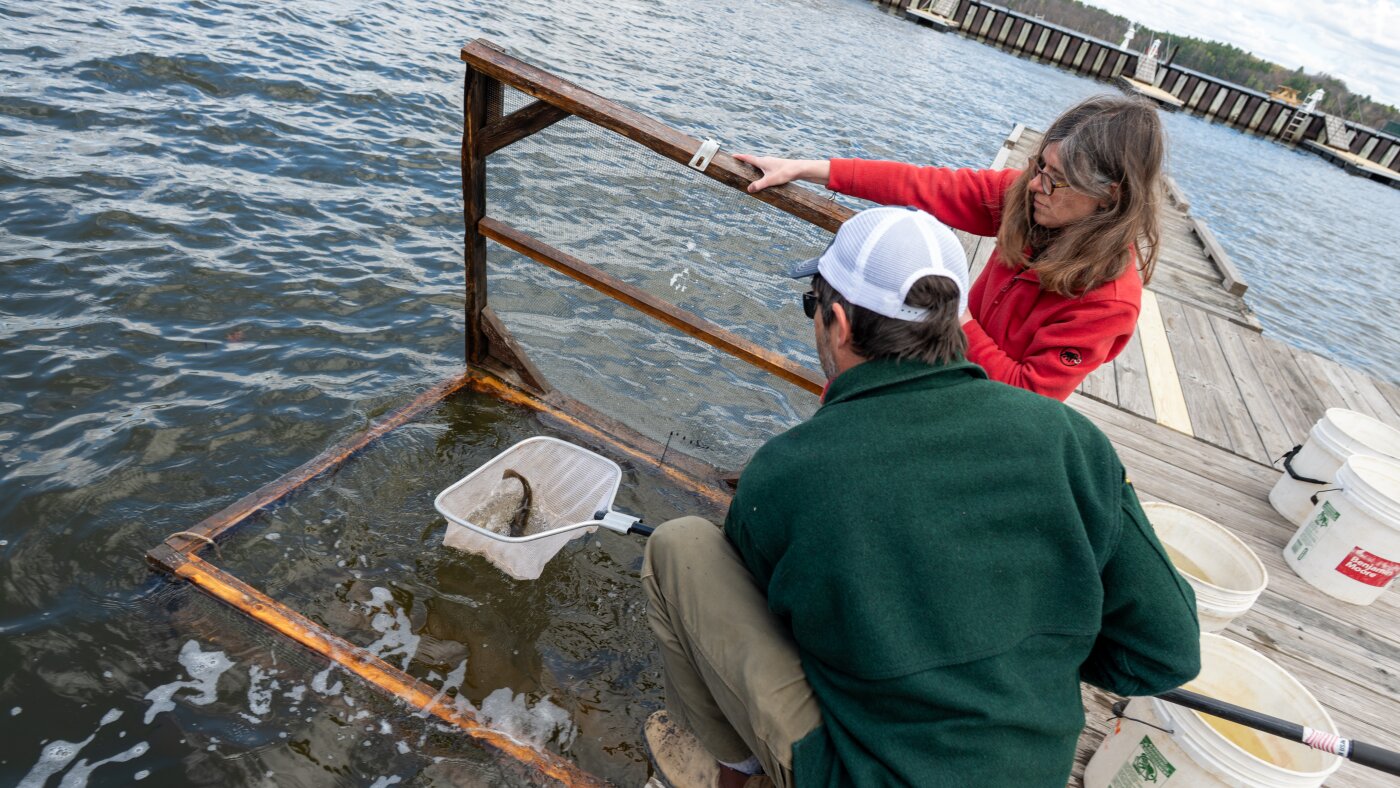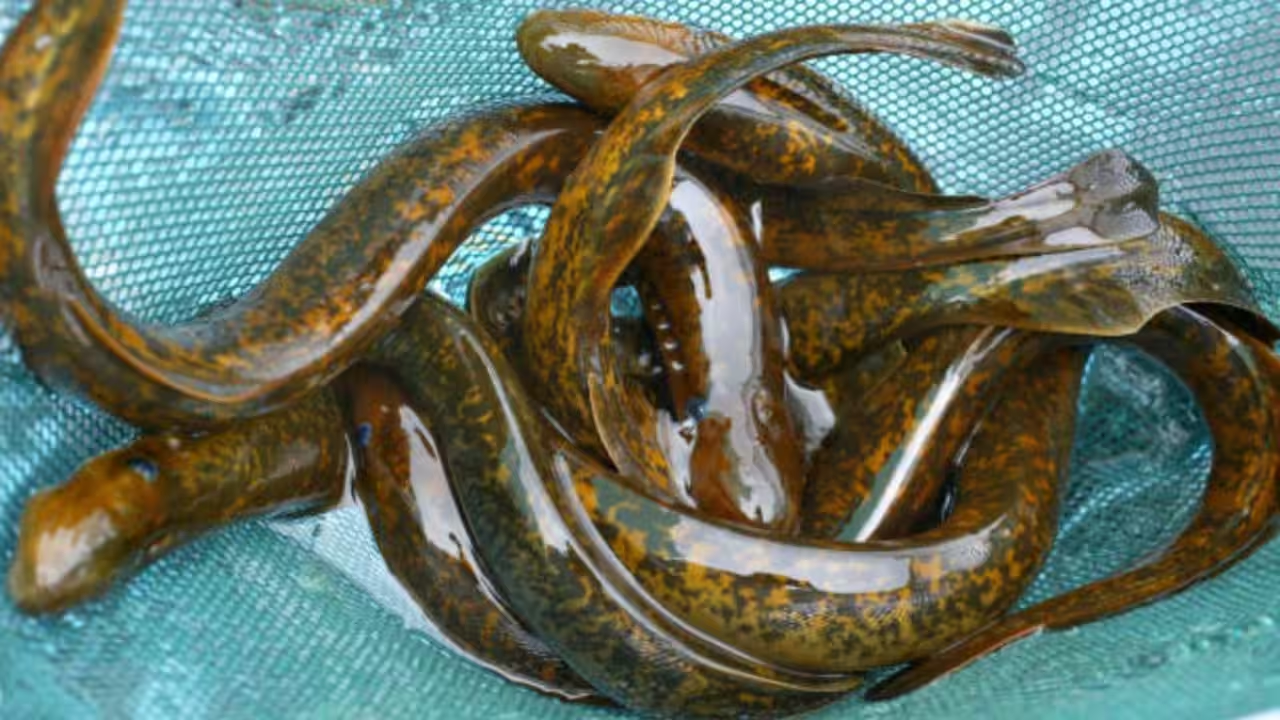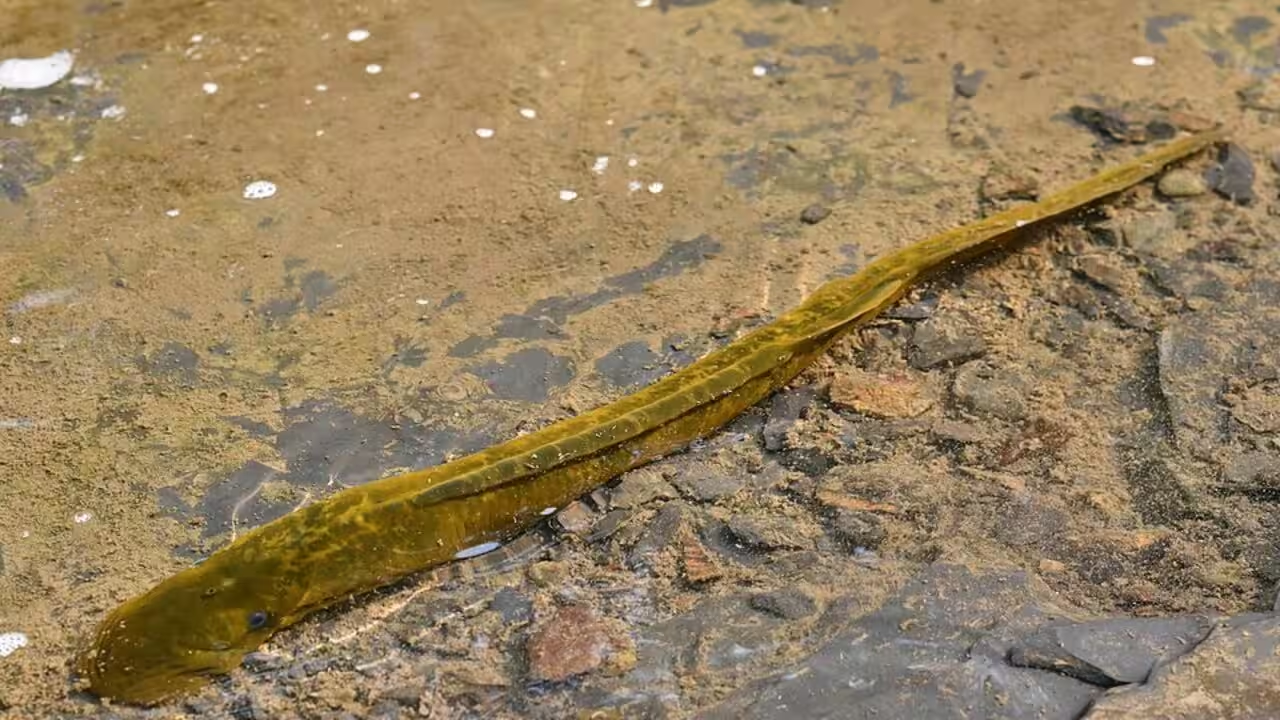
Sea Lamprey (Petromyzon marinus) in the United States. Image Credits: Wikimedia Commons.Fishermen had seen wounds before, but nothing like these. One after another, lake trout were being pulled from the waters of the Great Lakes with perfectly round holes gouged into their sides. Some fish were still alive but barely moving, weakened by blood loss. Others never made it back to shore. At first, no one understood what was happening. The lakes had supported thriving fisheries for generations, yet suddenly catches were shrinking and large native fish seemed to be disappearing.This invasive species was unlike any parasite previously seen in the area. It looked like an eel, but without jaws. Instead, it had a disk-shaped suction-cup mouth filled with rows of sharp teeth and a tough tongue that bored through flesh. After attaching itself to the host, the sea lamprey would feed on blood and bodily fluids for up to several weeks.A shipping canal opened the door to an ecological disasterSea lampreys are native to the Atlantic Ocean, where they naturally migrate between rivers and the sea. In their native habitat, fish have evolved alongside the parasite for thousands of years, allowing populations to coexist with relatively limited ecological damage.According to the Great Lakes Fishery Commission, Niagara Falls long served as a natural barrier, preventing sea lampreys from spreading beyond Lake Ontario into the upper Great Lakes. That changed after improvements to the Welland Canal in the late nineteenth and early twentieth centuries created a shipping route around the falls. The canal enabled sea lampreys to expand their range, reaching Lake Erie by 1921, Lakes Michigan and Huron by 1936 and 1937, and Lake Superior by 1938.The sea lamprey’s life cycle made it highly effective at invading new territories. It spends the first few years of its existence hiding in soft-bottom sediments of rivers and streams and feeding on small organic particles. Afterwards, it goes through a remarkable metamorphosis that makes it develop the characteristic sucking mouth. It feeds differently from sharks and other predators because they do not kill their hosts at once. They attach themselves to living fish by suction, use their rasping tongues to pierce the scales and skin, and an anticoagulant in their saliva helps keep the blood flowing.The parasite that transformed the Great Lakes ecosystemIn the Atlantic Ocean, many host fish survive these attacks. In the Great Lakes, however, native fish had never evolved alongside sea lampreys. As a result, many hosts died either from blood loss or from infections caused by the wounds.The Great Lakes Fishery Commission also notes that one sea lamprey has the potential to destroy about 40 pounds (18 kg) of fish in its parasitic stage that lasts for 12 to 18 months, meaning that even a smaller population of these fish can cause serious damage to the environment. Among the hardest-hit species was the lake trout, once one of the Great Lakes' dominant predators. Whitefish, cisco, burbot, lake sturgeon and several salmon species also suffered heavy losses as sea lampreys spread through the lakes. As populations of these large native fish declined, the balance of the ecosystem began to shift, disrupting food webs that had remained relatively stable for thousands of years.As described in the journal Fish Physiology, the invasion of sea lampreys was a problem for the Great Lakes because it added to the already existing factors, such as overfishing, thus causing the collapse of lake trout populations throughout the upper Great Lakes region. By the 1940s and 1950s, commercial fisheries that had once harvested millions of pounds of fish each year were experiencing severe declines. Communities that depended on fishing for their livelihoods faced economic hardship, while the ecological consequences spread throughout the freshwater ecosystem.Sea lamprey attach themselves to living fish by suction, use their rasping tongues to pierce the scales and skin, and an anticoagulant in their saliva helps keep the blood flowing. Image Credits: Wikimedia Commons.A century-long fight to control an unstoppable invaderRecognising that no single state or province could solve the problem alone, Canada and the United States established the Great Lakes Fishery Commission (GLFC) in 1955. Its mission was to coordinate research and develop methods to suppress sea lamprey populations rather than attempt complete eradication. Scientists soon discovered that targeting the parasite during its larval stage was far more effective than trying to remove adults after they entered the lakes.Researchers noted that one of the primary control methods involves using lampricides in selected tributary streams where lamprey larvae develop. These compounds are carefully managed to kill lamprey larvae while minimising impacts on most other aquatic species. In addition, barriers prevent adult lampreys from reaching upstream spawning habitats, and specially designed traps capture breeding adults before they reproduce.
In 1921, an eel-like parasite reached Lake Erie through a shipping canal, then latched onto native fish, fed on their blood, and helped collapse Great Lakes fisheries
Fishermen had seen wounds before, but nothing like these. One after another, lake trout were being pulled from the waters of the Great Lakes with perfectly round holes gouged into their sides.
783 words~4 min read