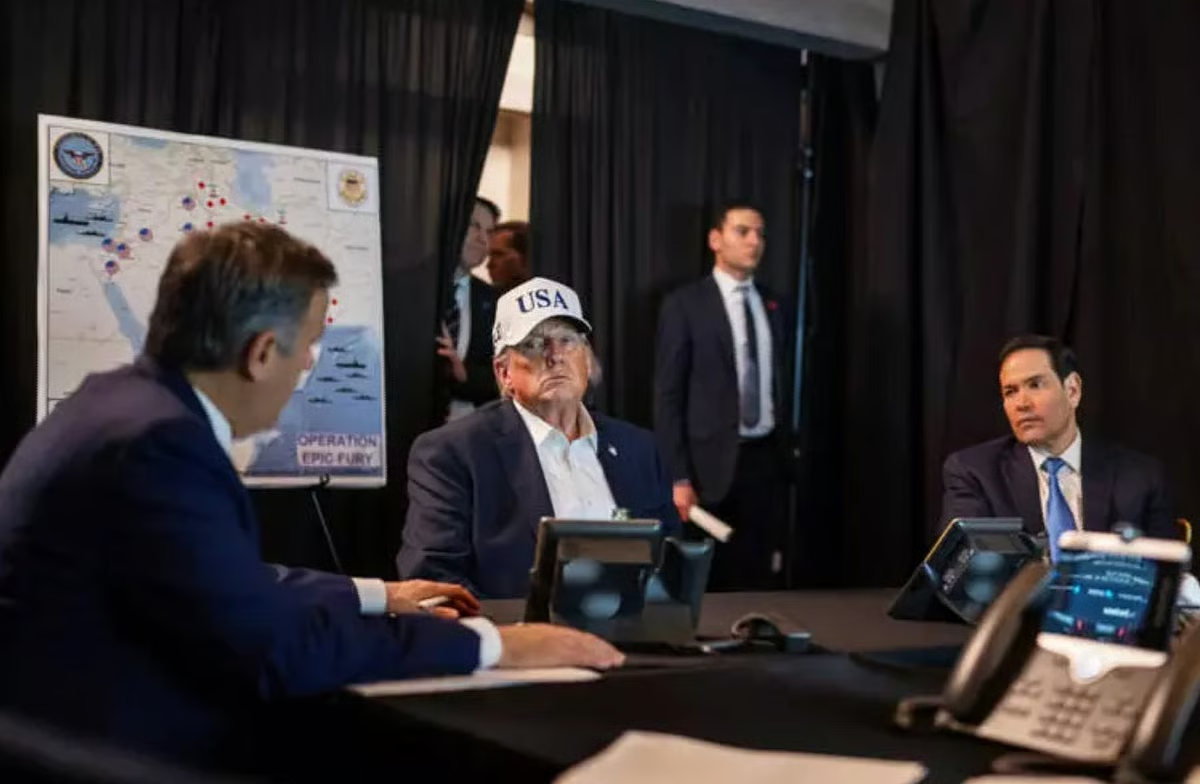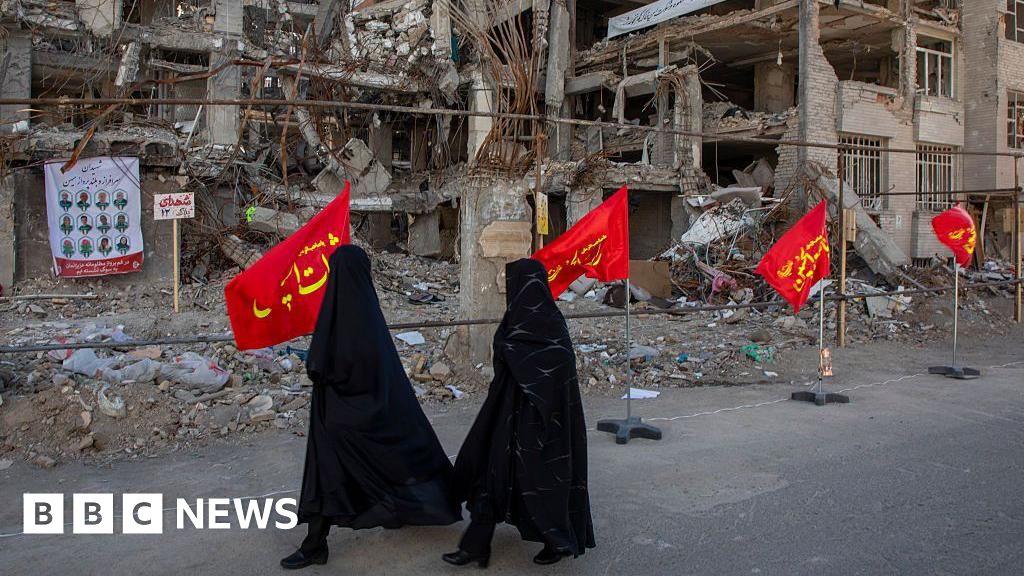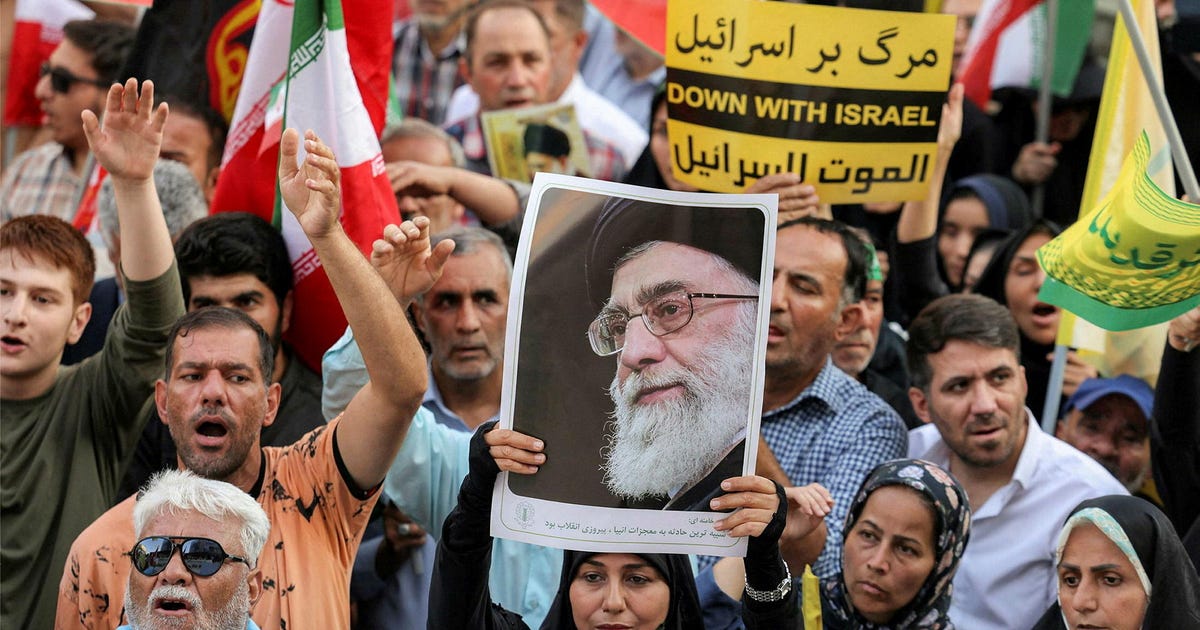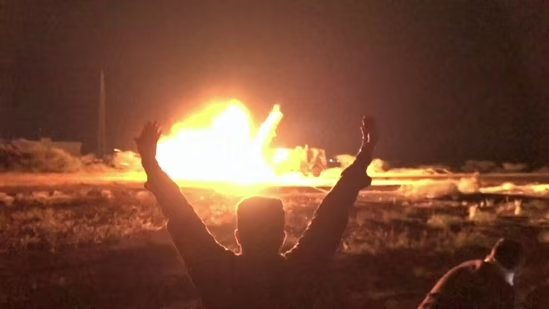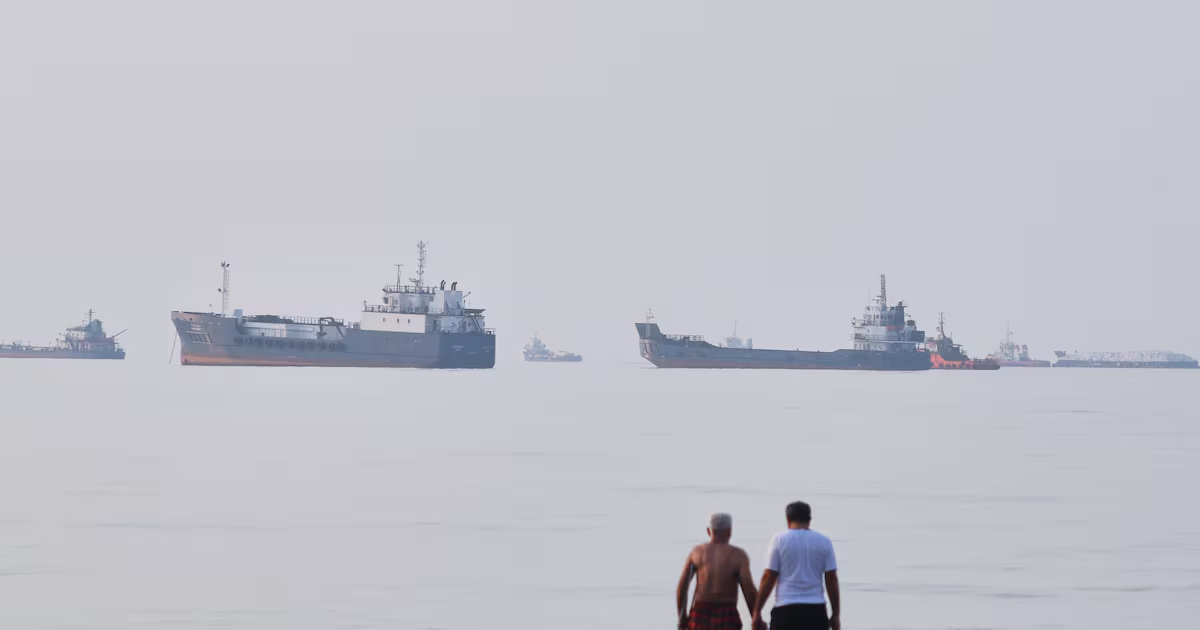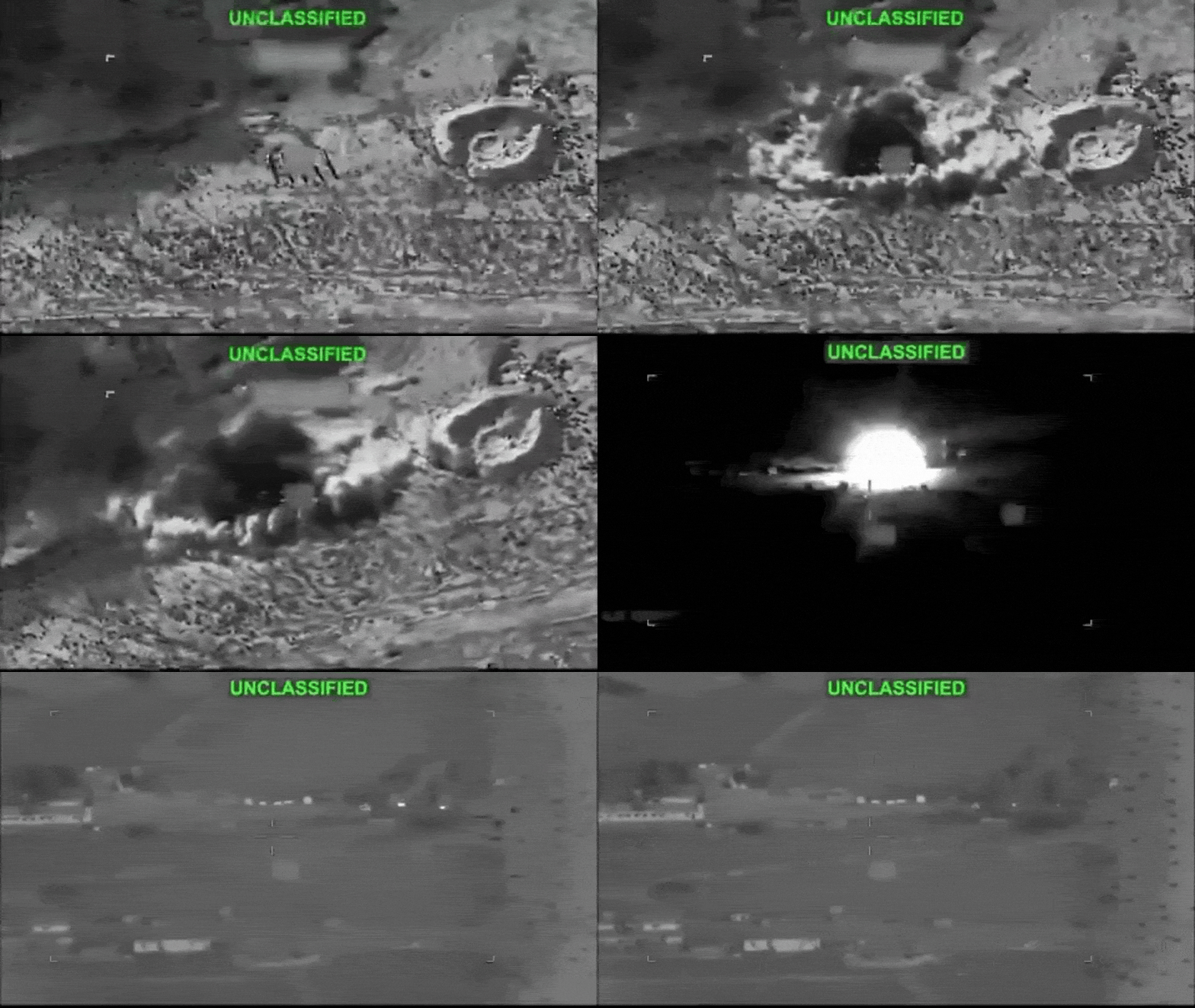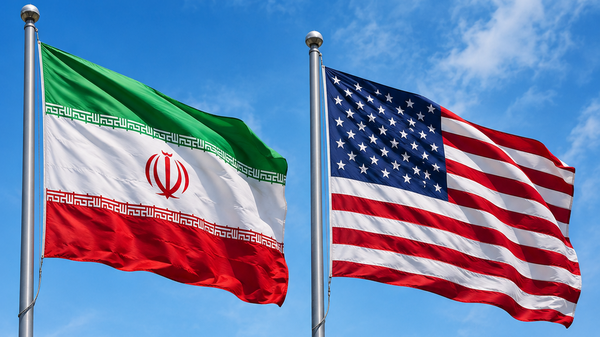
The confrontation between the United States and the Islamic Republic of Iran is now measured by whether a major military strike will actually take place—and, if so, by its timing, location, and intensity. It has become the compass of President Donald Trump’s political fate and perhaps his final opportunity, not merely the direction of the global economy.The men ruling in Tehran are betting on Donald Trump’s weakness and retreat. Yet they may instead find themselves facing a president prepared to embark on the systematic destruction of Iran’s military capabilities and civilian infrastructure, crippling the regime economically and potentially driving it toward total collapse within three months.Those same rulers have placed their Houthi proxy in Yemen on high alert to close the Bab el-Mandeb Strait, opening a front that would accompany the closure of the Strait of Hormuz in a war against freedom of navigation worldwide.For all the latest headlines, follow our Google News channel online or via the app.Should Donald Trump carry out his threat to target power stations and other critical infrastructure, the Islamic Revolutionary Guard Corps (IRGC) ruling in Tehran will unleash a strategy of revenge and self-destruction across the Gulf and the wider Middle East, from Iraq to Lebanon.Meanwhile, Washington is attempting to formulate a broader strategy that treats the Levant as the arena in which the future of Iranian influence will be decided, whether the military confrontation escalates or ultimately returns to a political settlement.Some within the US administration no longer believe it is enough to manage Iran through negotiations, understandings, or another deal. They want instead to reassess the policies required toward the Arab environment that enabled the IRGC to transform its influence, through its network of proxies, into a regional system stretching from Iraq to Syria, Palestine, Lebanon, and Yemen.The meetings that brought President Donald Trump together with Syrian President Ahmed al-Sharaa in Ankara, followed by Iraqi Prime Minister Ali al-Zaidi at the White House, and his invitation to Lebanese President Joseph Aoun to visit Washington, reflect a shift in thinking within parts of the administration—from managing the confrontation with Iran to rebuilding the political balance across the Middle East and the Gulf, from the Arab Mashreq to Israel and Turkey.Particularly noteworthy were the recent remarks by the US ambassador to Turkey and President Trump’s envoy for Syria and Iraq. He disclosed that a regional program is being prepared that would render the Strait of Hormuz “secondary and of little importance” within two years through the creation of a new network of energy and trade corridors linking Iraq and the Levant with Turkey, Central Asia, and Europe. He described it as “a brilliant realignment” of strategic and security partnerships connecting Mesopotamia, the Levant, and the Gulf.The problem is that the administration’s leading figures lack the authority to forge a coherent vision backed by an integrated strategy. Donald Trump’s exclusive control over the final decision on Iran leaves these policies looking more like scattered pieces than parts of a unified strategic design.This comes at a particularly sensitive moment in Washington, where the debate is no longer about defining the men who govern the Islamic Republic, but about confronting an ideology deeply embedded throughout Iran’s ruling establishment, whether among hardliners or pragmatists.Secretary of State Marco Rubio and Defense Secretary Pete Hegseth, together with senior military and intelligence officials, are pressing to capitalize on America’s military superiority and deny the IRGC another opportunity to regroup. They believe this is Donald Trump’s last chance. Otherwise, Iran’s rulers may succeed in bringing him to his knees, leaving him with nothing to show for his strategy.Vice President JD Vance, however, still favors keeping a narrow political window open if Tehran demonstrates a genuine willingness to change its behavior. Trump’s envoy, Steve Witkoff, likewise continues urging the president to stay committed to a deal, convinced that Iran will eventually meet his demands.Vance and Witkoff continue to defend the memorandum of understanding that President Trump himself acknowledged had been based on flawed assumptions. Washington believed concessions would push Iran toward moderation. Tehran read them instead as proof that even greater concessions could be extracted from Trump.Today, US policy combines sustained military attrition, the reimposition of a naval blockade, preventing Iran from controlling the Strait of Hormuz, the systematic destruction of civilian infrastructure inside Iran, and the restructuring of the Arab arenas in which Tehran built its influence.US Central Command and the Pentagon continue preparing for broader operations, including plans for amphibious landings on Kharg Island and other islands, among them Abu Musa and Greater Tunb.Meanwhile, the State Department views Iraq, Syria, and Lebanon as the decisive political arenas in which Iran must be stripped of the instruments through which it has destabilized the region via its proxies and affiliated militias. The IRGC, however, is moving preemptively. It has reinforced its military posture in Iraq, placed the Houthis in Yemen on high alert, and instructed Hezbollah in Lebanon to remain fully prepared, because these proxy arenas remain the fuel stations of the Islamic Republic and its ideology.Prime Minister Ali al-Zaidi’s visit to the White House was far more than a signal of improving bilateral relations. Its real significance was that it took place despite Iranian objections and sustained pressure to prevent Washington from becoming his first foreign destination.Seated beside President Trump as the latter reaffirmed his policy of continued military pressure on Iran, al-Zaidi presented a very different vision for Iraq: A state that holds a monopoly over arms, builds a productive economy, broadens its strategic partnership with the United States, and breaks free from a formula in which the institutions of the state formally existed while much of the country’s political and security decision-making remained outside them.If that vision succeeds, Iran will have lost the single most important pillar of its influence in the Arab Mashreq.If Iraq represents the restoration of the state, Syria represents the restoration of geography.President Donald Trump’s meeting with al-Sharaa in Ankara marked the beginning of a new phase in the relationship between Washington and Damascus.For the first time in years, the United States is dealing with Syria as part of the solution to the Iranian challenge rather than simply another arena of conflict. At the same time, Washington has chosen to pursue that strategy in partnership with Turkey, now the regional actor with the greatest influence over Syria’s reconstruction.The presence of a Turkish frigate off the Syrian coast is not a routine military deployment. It signals Ankara’s transition from protecting its borders to helping safeguard the emerging regional order in Syria.The risk lies in President Recep Tayyip Erdogan’s belief that this role gives Turkey an open-ended mandate.The Syrian authorities’ announcement that they had intercepted a major shipment of missiles, drones, and ammunition bound for Hezbollah was exceptionally significant. It provides tangible evidence that Syria’s new leadership has begun carrying out the mission Washington expects of it.The issue is no longer simply one of border control. It is about ending the role Syria played for years as the logistical and military bridge linking Iran to Hezbollah.President Trump’s request that al-Sharaa help dismantle the infrastructure that enabled Hezbollah to depend on Syrian territory does not mean assigning Damascus the task of confronting Hezbollah inside Lebanon. It means preventing the reconstruction of the weapons, financing, and smuggling networks that formed the backbone of Iranian influence across the Levant.If Iraq marks the beginning of restoring state authority from within, Syria marks the beginning of closing the corridor that carried Iran to the Mediterranean.Lebanon, however, remains the most complex test.President Joseph Aoun’s forthcoming visit to Washington will not be a routine show of political support. It will test the US administration’s ability to reconcile two inseparable objectives: Supporting the Lebanese state’s effort to establish its exclusive authority over arms while exerting meaningful pressure on Israel to end its occupation of Lebanese territory and complete the implementation of UN Security Council Resolution 1701.Washington cannot—and will not—press Israel to withdraw so long as Hezbollah continues to function as a military state within the state. That requires the Lebanese presidency and the army command to demonstrate genuine resolve in disarming Hezbollah, as well as all other armed factions and militias.The US administration is equally determined to separate the Lebanese-Israeli track from any future US-Iran negotiations. Tehran wants Lebanon to remain one of its bargaining chips, to be used whenever negotiations turn to the nuclear file, sanctions, or the Strait of Hormuz. Washington, by contrast, seeks to remove Lebanon from that equation altogether, transforming it into an issue of Lebanese sovereignty rather than an extension of negotiations with the Islamic Republic.The IRGC understands that losing Iraq, Syria, and Lebanon would be far more damaging than losing a military installation or strategic facility inside Iran itself. It will therefore use every instrument at its disposal—time, negotiations, and proxies—to slow or prevent that transformation.Should Baghdad reclaim its sovereign decision-making, Damascus permanently close the Iranian corridor, and Lebanon restore the state’s exclusive control over arms while Israel ends its occupation, the United States will have achieved a strategic transformation that extends well beyond the outcome of any military strike.But if the Iraqi state continues to share authority with armed factions, Syria once again becomes a conduit for Iranian weapons, and Lebanon remains trapped between armed duality and occupation, any military success against Iran will prove temporary. The IRGC will invariably find another path back.The battle now taking shape extends far beyond Iran’s nuclear program, the Strait of Hormuz, and Bab el-Mandeb. It also encompasses how to confront Iran’s plans for retaliation against the Arab Gulf states and the IRGC’s projects in Yemen, Iraq, and Lebanon after the loss of its influence and presence in Syria.It is a battle over the future of the Arab Mashreq itself—over whether its states will regain sovereign control of their national decisions or remain the arena through which Iranian influence is continually reproduced, regardless of how the military confrontation evolves.For now, the world waits anxiously, watching this terrifying duel between two masked adversaries poised for the next move: An American president waiting to see what Tehran’s rulers do before deciding his own course, and the rulers in Tehran watching to determine whether the American president is truly prepared to pursue a decisive military outcome before choosing the nature of their own suicidal response.Read more:Silicon valley didn’t buy democracy, it rented the ballotA truce to catch one’s breathIran overstretching its hand: A dangerous gamble in a volatile region
Terrifying duel between masked US, Iran adversary as countdown to decisive showdown begins
The confrontation between the United States and the Islamic Republic of Iran is now measured by whether a major military strike will actually take
1,733 words~8 min read