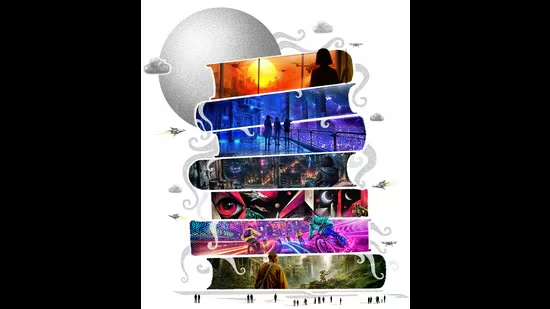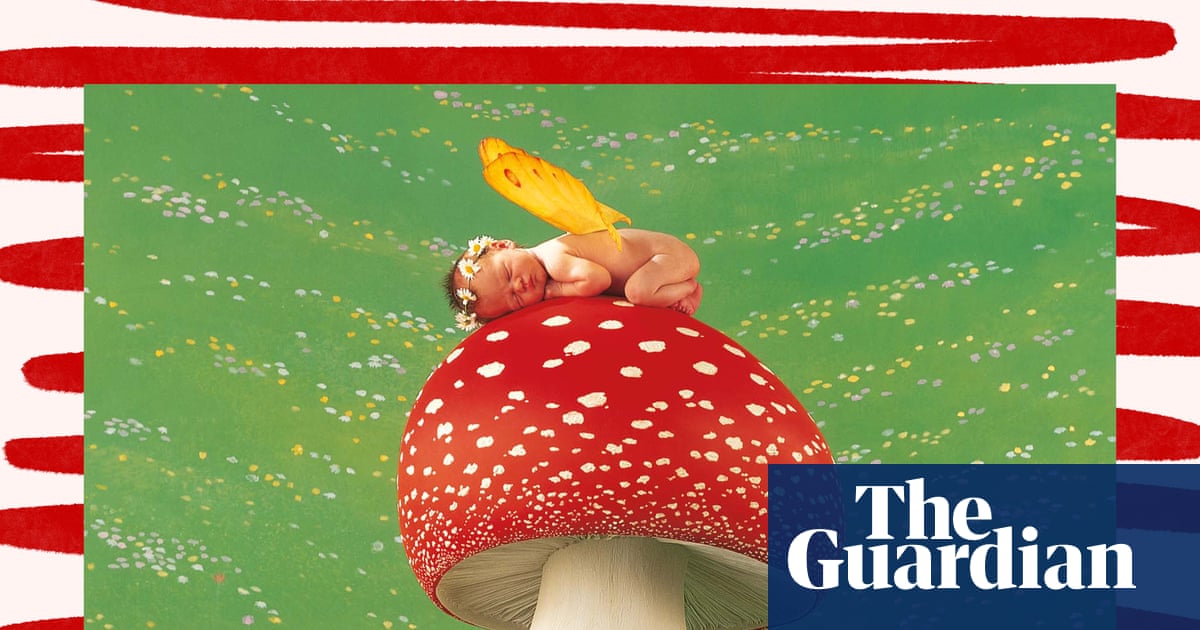
Good morning, and welcome to your roundup of the most fascinating and compelling stories from the Guardian. This week we are featuring magical mushrooms, the man who changed the shape of Britain’s modern-day news (it’s not who you think it is), and 2,600-year-old spoilers. Hope you enjoy the trip.1. Life among the garbage mountains of the world’s biggest cityBantar Gebang, Jakarta’s largest landfill, supports the livelihood of thousands of waste pickers. Photograph: Claudio Pramana/The Guardian“We can work when we please, the trash does not stop,” says Karmidi, who started working at Bantar Gebang – Jakarta’s largest landfill – when he was just 10. Every day, about 8,000 tons of rubbish arrive from Jakarta to the site, where huge rolling peaks of rubbish stretch across more than 100 hectares (247 acres).You need to see it to believe it: The video and pictures in this piece are just as astounding as the stories of the brave people who live and work there.Risks beyond the rubbish: The people who rely on the site (where they earn about 100,000 to 200,000 rupiah – about AU$8-16 a day), face an uncertain future as Indonesia’s government grapples with how to manage swelling levels of waste in the capital, the world’s largest city. The site is well over capacity and the government wants to gradually close it from next year, raising questions over where the rubbish will go and what will happen to those who depend on it for their livelihoods.How long will it take to read: Two minutes2. Why the Odyssey is everywhereChristopher Nolan’s The Odyssey has sailed into cinemas this week. Illustration: Steven Wilson/The GuardianWhy are we still connecting with stories that are thousands of years old? This month Christopher Nolan’s take on the Greek epic the Odyssey is set to break box office records, and Charlotte Higgins examines what it is that resonates so strongly with us now – and what that tells us about this moment in time.Ancient poem, modern lessons: That something written more than 2,600 years ago can still captivate us feels extraordinarily powerful. The Odyssey provokes questions like – what extent does our fate lie in our own hands? What makes a good leader, a good man, a good husband? What are the acceptable limits of revenge? (But not, sadly, how long should this section of a newsletter be).How long will it take to read: A very brief, by Homeric standards, four minutes.Further reading: Sian Cain reveals how fans are embarking on epic journeys to see The Odyssey the way Nolan wants them to. And the archaeologist following Homer’s route on a bicycle3. How the Daily Mail’s fearsome former editor still shapes the British pressAt the Daily Mail, Paul Dacre broke new ground in selling readers an angry rightwing perspective. Illustration: Anaïs Mims/GettyPaul Dacre, the long-serving former editor of the Daily Mail, featured prominently in news stories this week after Prince Harry lost his high court case in London against the newspaper’s publishers. The long career of Dacre – and how he influenced those now leading much of the British press (without a doubt, some of the global press too) – is chronicled with unmissable detail by Andy Beckett.Notable quote: “He was terrifying. He wouldn’t always shout. Sometimes, his voice would get very low. He would say, ‘You’ve missed a story’,” a former Mail columnist says.How has his influence been felt? “Across the press, including at non-rightwing titles such as the Guardian, it was assumed that anyone who had spent significant time at the Mail had acquired skills and a mentality that could not be learned elsewhere,” Beckett writes. He adds that as the internet made journalism more competitive and relentless, editors who had shown they could cope with the Mail’s pressures were attractive to other papers.How long will it take to read: A shouting-match-worthy 14 minutes.Further reading: The twists and turns, intrigue and deeply fascinating story inside Prince Harry’s battle against the Daily Mail.skip past newsletter promotionafter newsletter promotion4. What a three-day mushroom tour of the Tarkine can tell usSky-blue pixie’s parasols (Mycena interrupta) growing on a log. Photograph: Alison PouliotA three-day fungi workshop in the Tarkine sounds like a magical trip, and this piece from Alexis Buxton-Collins doesn’t disappoint. Joining her group are toxicologists, botanists and ecologists, “but everyone seems united by a sense of wonder when it comes to fungi”.A proper journey back in time: A bit further into the past than Greek legends, the Tarkine has sheltered a vast range of astonishing creatures for 65m years. There are freshwater crayfish almost a metre in length, and still rumours that thylacines might prowl the dense Gondwanan rainforest.How long will it take to read: Just under two minutes.5. Sam Neill’s last interview‘A true gentleman’ … Sam Neill in Jurassic Park. Photograph: Moviestore Collection Ltd/AlamyThere has been an outpouring of grief this week after actor Sam Neill died, aged 78. The international star – claimed by Northern Ireland, New Zealand, and sometimes Australia, recently answered an eclectic range of questions from Guardian readers’ questions.Celebrity pets: “Helena Bonham Carter is very happy to be a cow. She’s had 16 calves now. She’s up for it, if nothing else,” Neill said. The entire piece is full of gems like these.How long will it take to read: Three and a half minutes.Further reading: From an obituary to his life in pictures, Neill may have won acclaim as an actor but his real legacy was that of an unselfish, decent man who was, according to his seemingly endless tributes, a “true gentleman”.Sign upIf you would like to receive these Five Great Reads to your email inbox every weekend, sign up here. And check out out the full list of our local and international newsletters.
Five Great Reads: an ancient epic, a fearsome editor and Sam Neill’s last messages to readers
Guardian Australia’s weekend wrap of essential reads from the past seven days, selected by Jacqueline Housden
951 words~4 min read