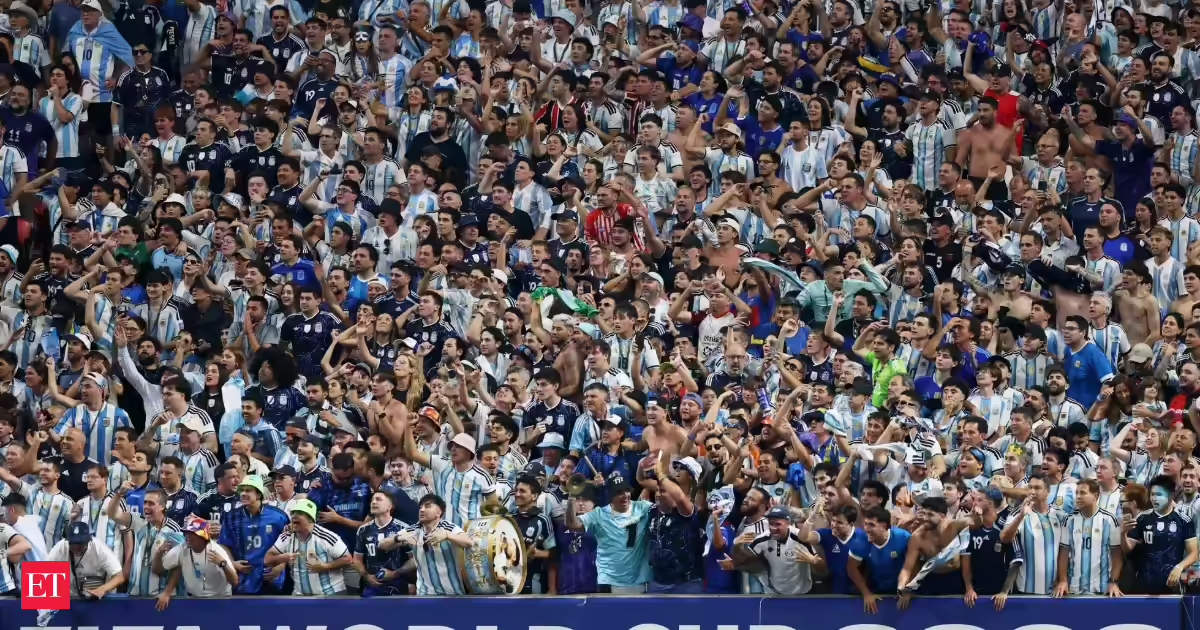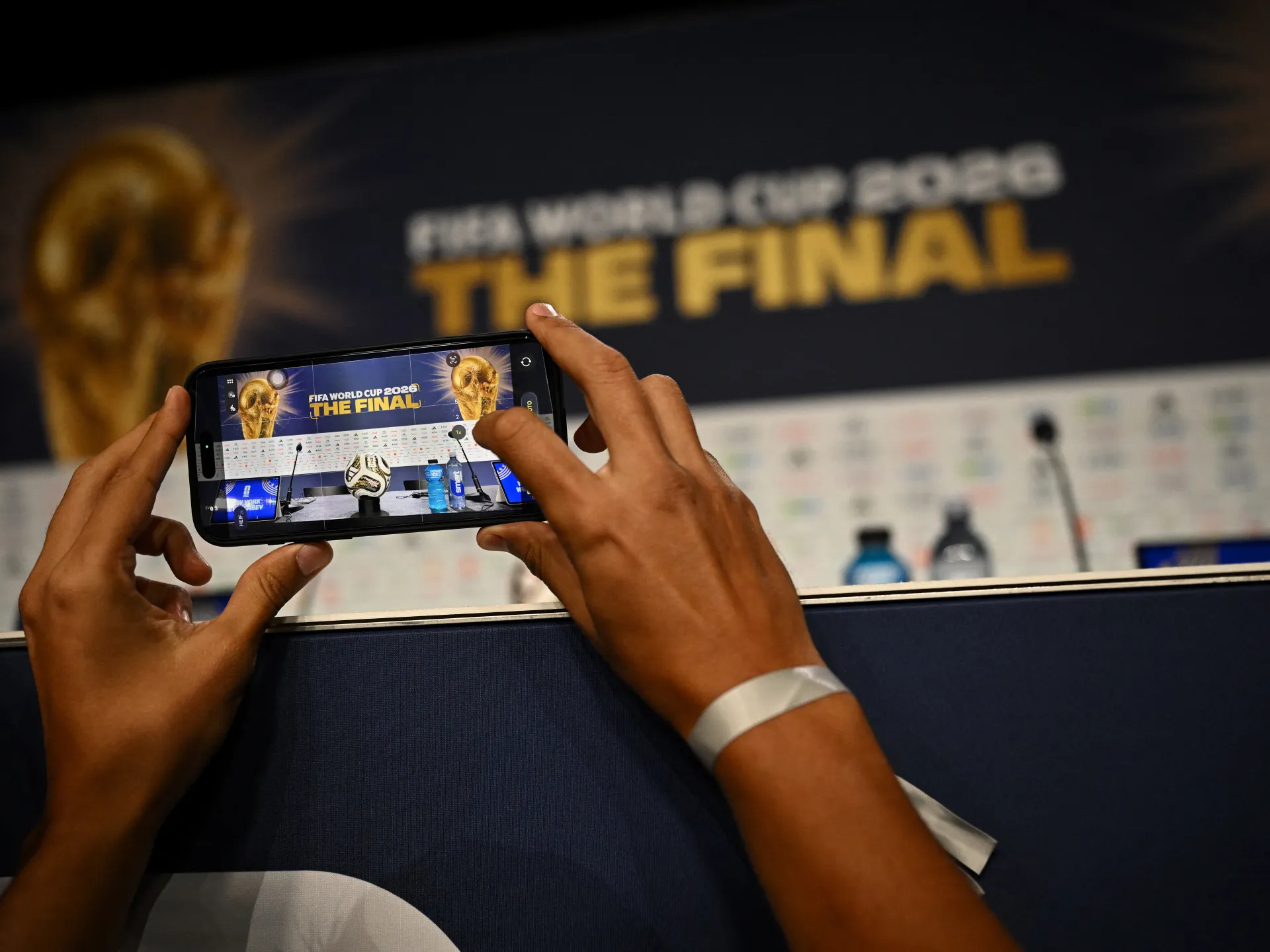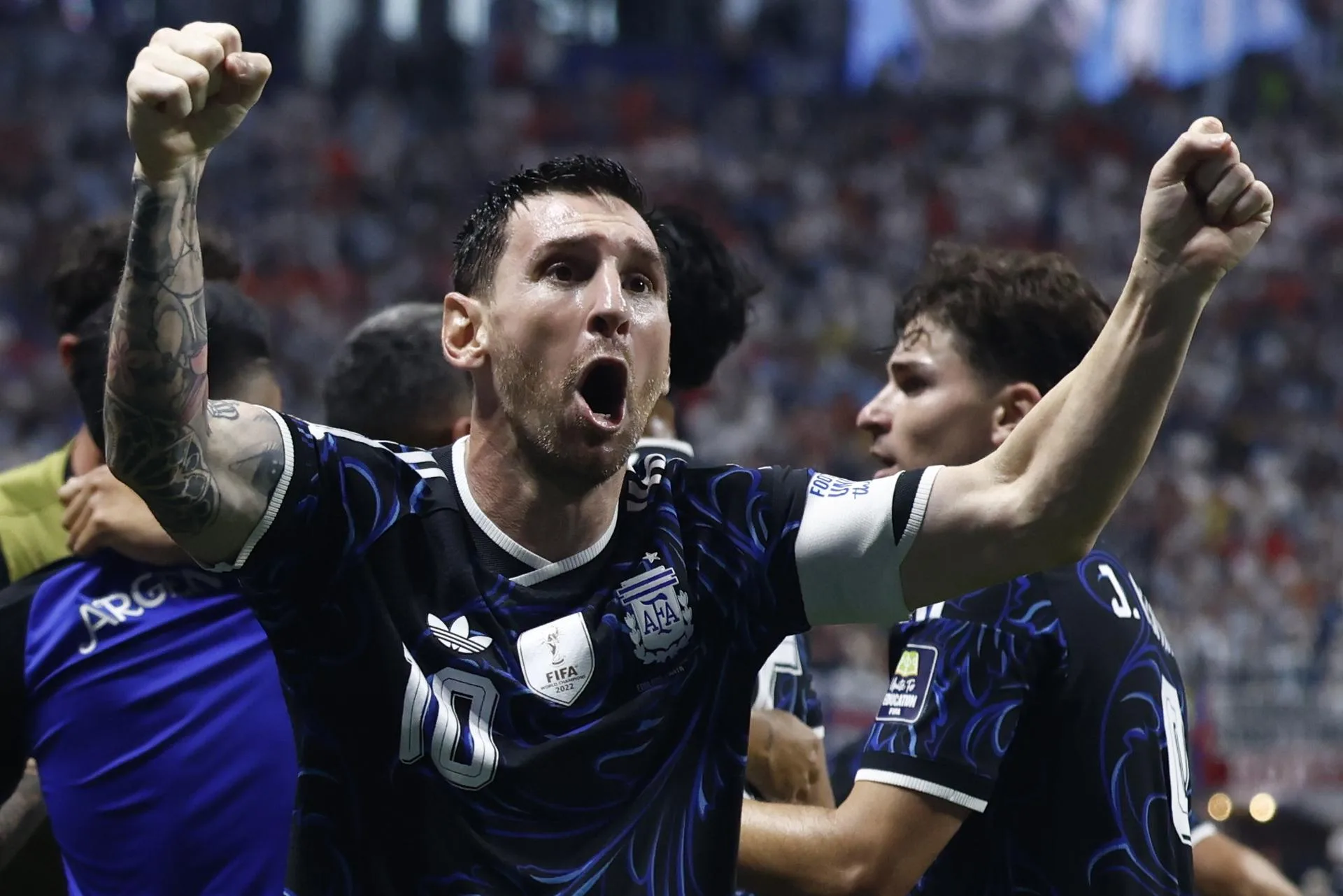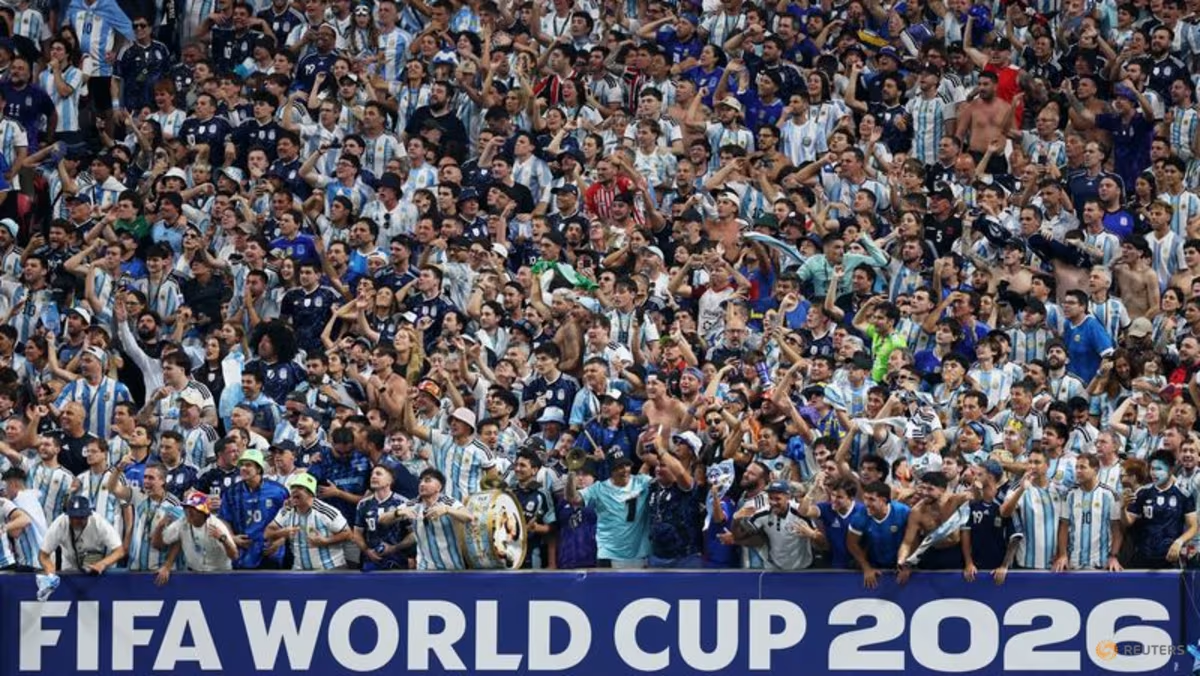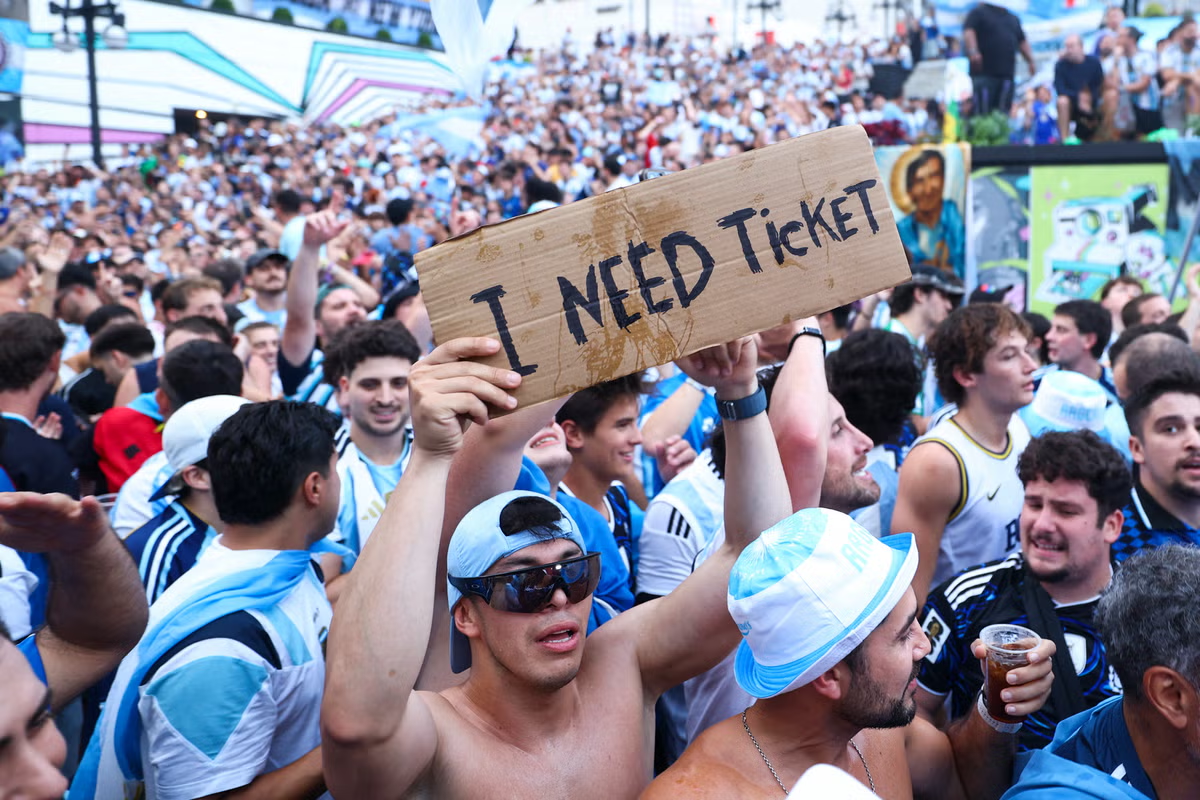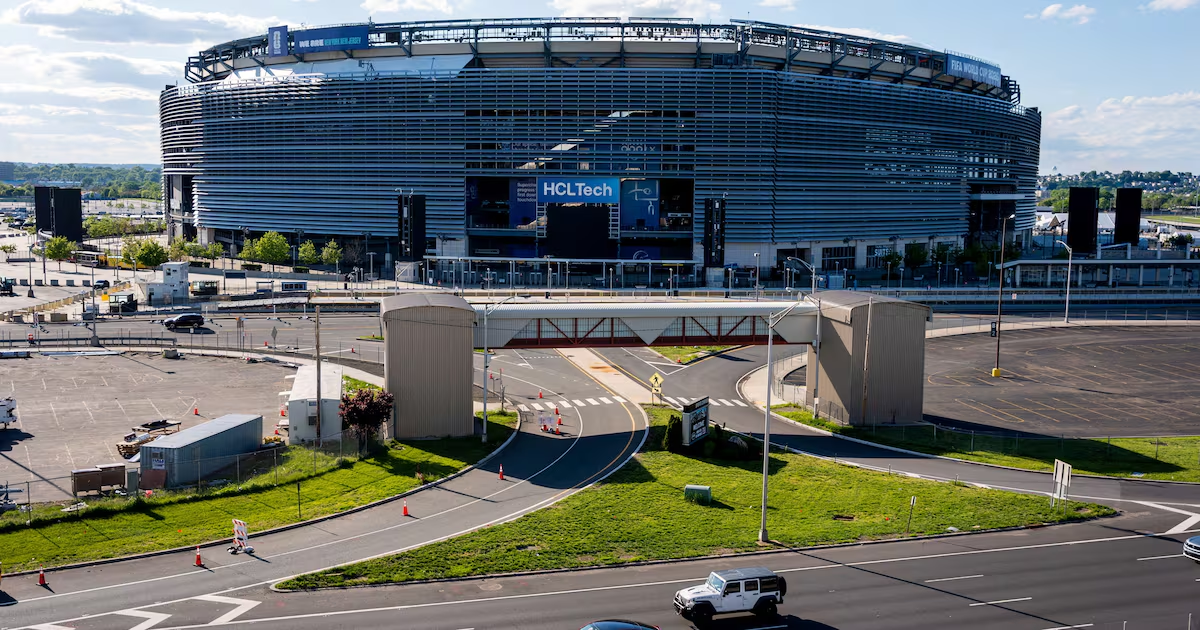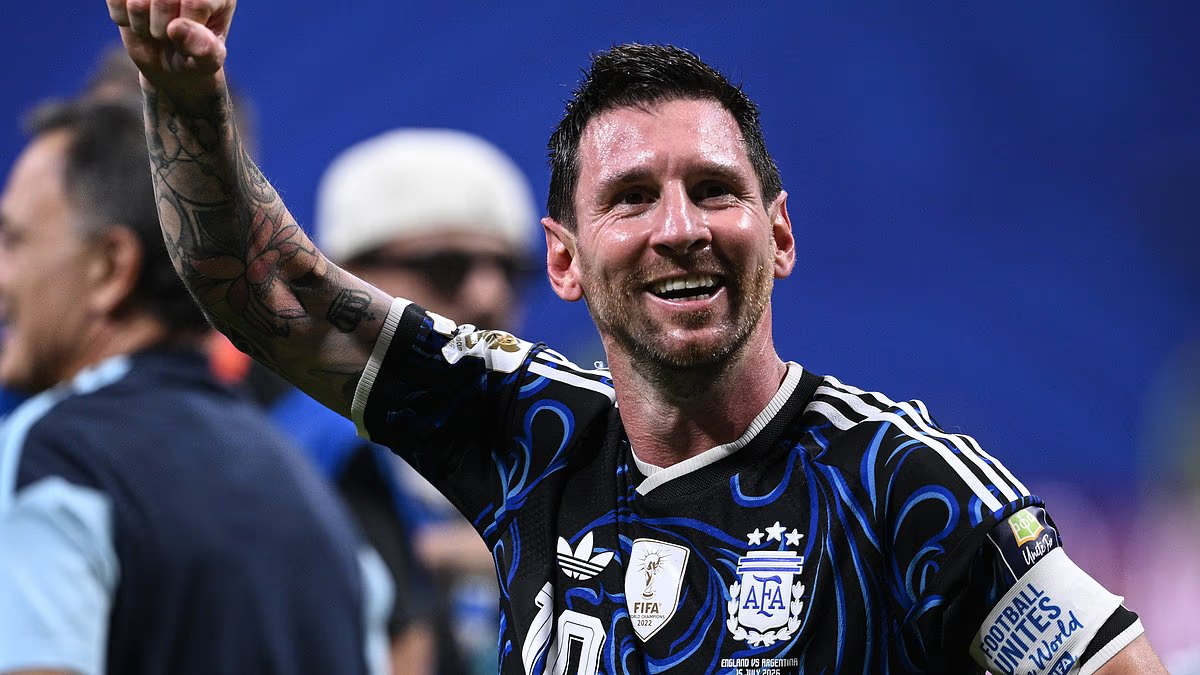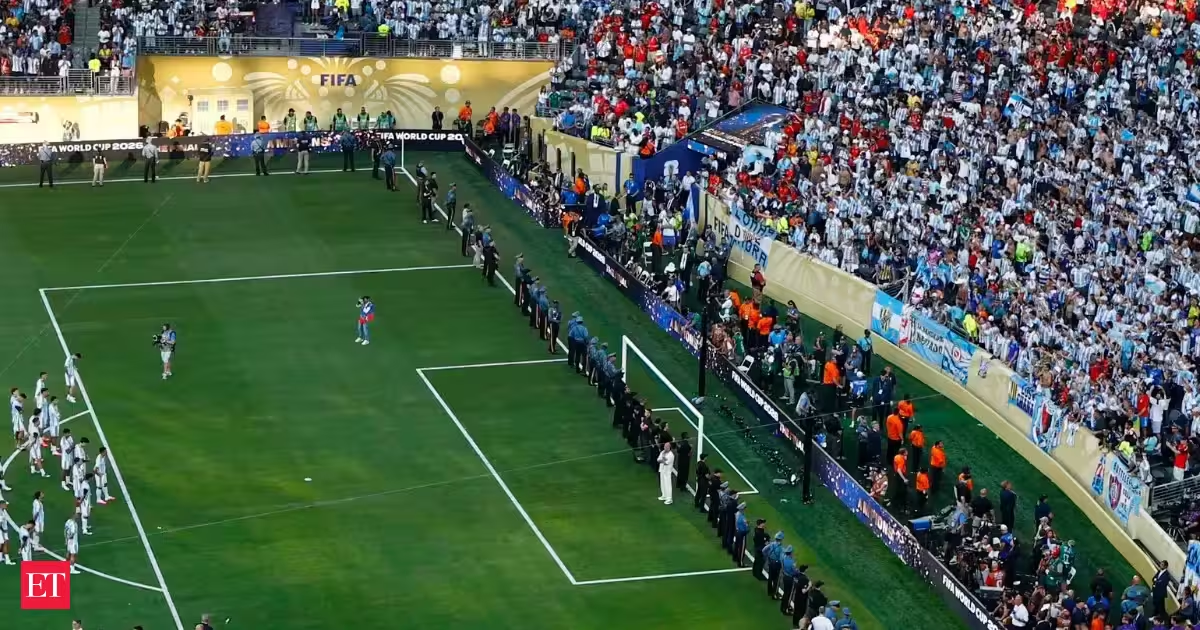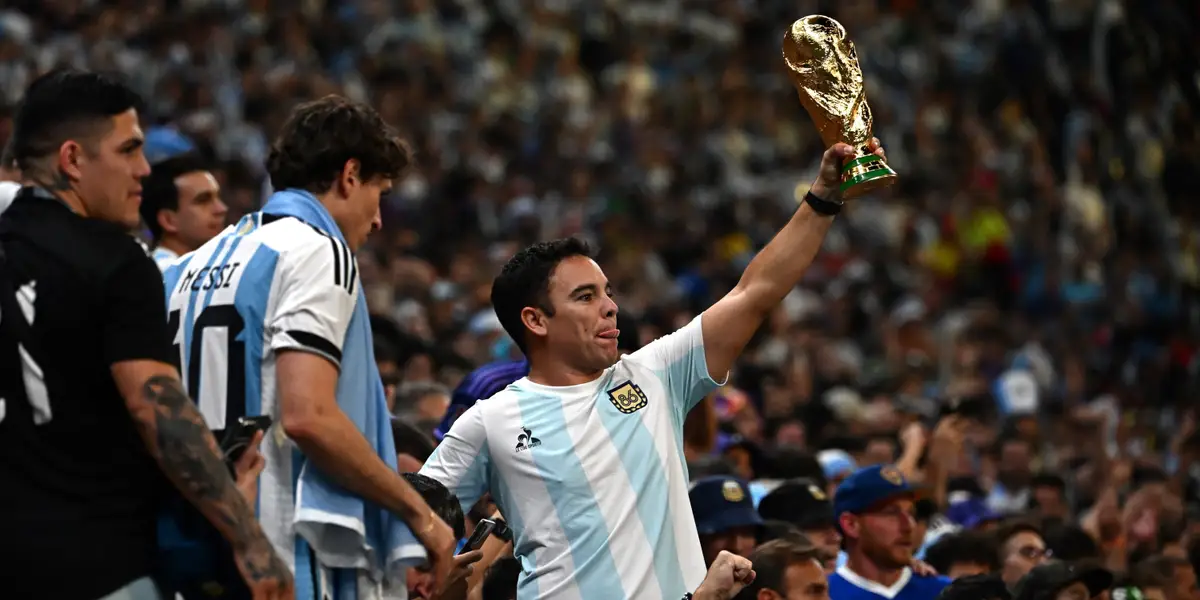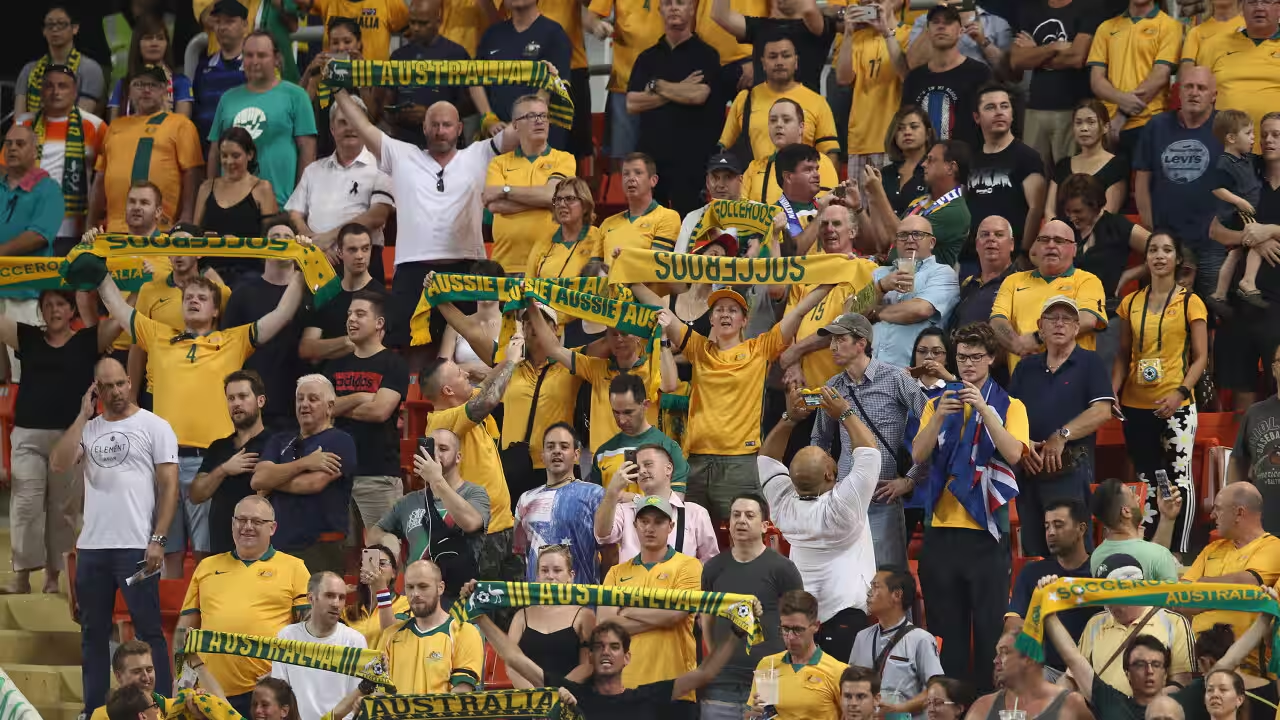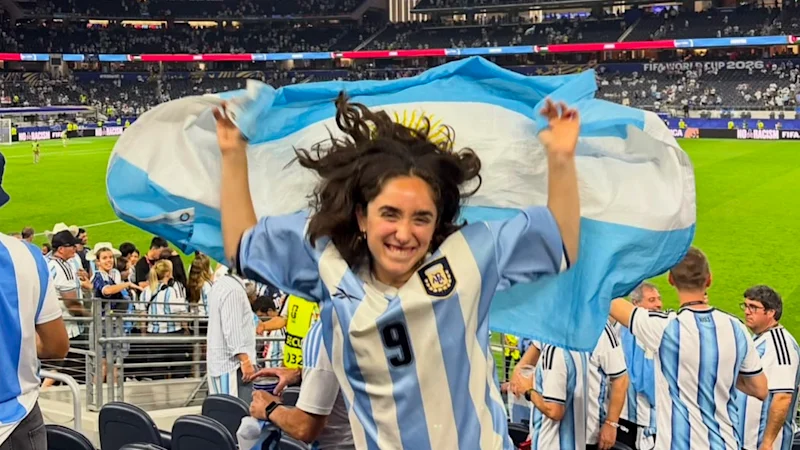
July 19, 2026 — 5:26pmAfter watching Argentina’s semi-final win over England on a cold Melbourne morning last Thursday, Delfina Moresco booked a flight to the United States. Within hours, she was on a plane to New York.The Argentinian-Australian had already burned through her savings travelling to the US for the South American nation’s first four matches at the World Cup, and had barely recovered from the jet lag since returning home and navigating early morning kick-off times, before she turned around to fly back.Melbourne Argentinain-Australian Delfina Moresco has travelled to the 2026 World Cup twice – and says despite costing her thousands, it’s the best thing she’s ever done.“The vibe on the street, the parties after the match, it’s genuinely the best thing I’ve done in my life,” the 26-year-old told this masthead from New York.This World Cup has been branded the most expensive sporting event in history, but the eye-watering cost of tickets and outlay on travel didn’t stop Australians, whether supporting the Socceroos or other nations, from attending. It is also claimed to be the most lucrative sports event ever for organiser FIFA, whose projected revenues are set to exceed $15 billion, partly due to an expanded 48-team format.Australians who travelled to watch games say the experience was fantastic despite lucrative pricing tactics and rule changes from governing body FIFA. The tactics included allowing dynamically priced tickets to be resold for thousands while FIFA collected 30 cents of every dollar transacted, inflated stadium transit and parking costs, the introduction of “hydration breaks” for additional TV revenue, and political interference in the overturning of a US player’s suspension.Veteran of six World Cups Kevin Pollard led a tour of 70 fellow Socceroos fans to the US for Travelrite International. He said despite paying much more for tickets, as well as food, drinks and the need to tip, attendees “absolutely raved about being there”.“It was definitely the best World Cup I’ve been to. Every city you went to there was a party on the street, it was something that was lost last time (when hosted in Qatar).”While some fans on his tour gagged at having to pay more than $1000 per ticket for each of Australia’s group stage matches, and pulled out of the trip, he said most fans managed to secure tickets at face value – though they still spent up to $US600 ($860) for some matches.Some in his group did pay $US2000 for tickets to Australia’s second match against the United States in Seattle, where demand was stronger than for other games.“The tournament was very expensive, you’d queue up and spend $US20 on a 4.2 per cent beer in the stadium, deal with the server for five seconds, and they’d ask you for a 20 per cent tip,” he said.Australians were also introduced to the commercialisation of all facets of a match-day experience that is on a level unknown in local competitions.Australian fans travelling with Kevin Pollard, with Turkish fans before the two nations met in Vancouver in June.Kevin PollardIn Dallas, for example, where Australia played its knockout stage game, losing to Egypt in a penalty shootout, the stadium took at least 45 minutes to reach in traffic, with no substantial public transport option. The cheapest parking cost $US125.As it was so far out of central Dallas, and in a sports precinct in the city of Arlington, there were no local bars. Instead, an official bar complex owned by the sports precinct was the only option to escape the harsh sun for fans gathered before kick-off. Entry cost $US40, with beers inside costing $US18.“Yes it was a lot, but in the end we were happy to pay that little bit extra to get into venues before matches. We had a fantastic time,” Pollard said.In the scheme of things, Australian fans got off cheaply, he remarks, noting that average ticket costs for fans attending games of football-mad nations such as Colombia, Portugal, Brazil and Argentina were much higher.Moresco at the “banderazo” rally of Argentinian fans in Times Square on Saturday before the final.This is a point that Melbourne-based Moresco is at pains to point out. “Not only the cost of tickets, but when you consider how much Australians earn, compared to salaries in Argentinian pesos, I wouldn’t be complaining,” she said.Indeed, Moresco was forced to pay $US2100 on a ticket to Argentina’s match against Cape Verde. In total, her two trips to this World Cup inclusive of tickets and accommodation cost just under $16,000. She considers herself lucky, having saved money by staying with friends in some cities, hitching rides to stadiums and avoiding expensive drinks inside stadiums.Perhaps her luckiest break was winning a finals ticket through a fan competition, although she still had to pay $2300 for the last-minute flight back to the US.In the months leading up to the tournament, opportunistic resellers were asking for as much as $US100,000 per ticket for premium seats at the final.The resale market has stabilised recently, with the average price for a final ticket around $US11,000 on Friday, according to platform SeatGeek. This final was, on average, the most expensive event the platform has ever sold tickets to, 8 per cent more expensive than the 2024 Super Bowl. On FIFA’s resale platform on Friday, remaining tickets were listed for $32,000.Shortly after landing in New York on Friday, local time, Moresco went straight to a pre-match “banderazo” flag rally in Times Square, events which have become known for their loud noise and high emotion. She was with Argentinians who had spent $US7000 for tickets, but said they had not let the costs dampen spirits.“The banderazo is almost as good as the game itself,” she said. “Coming here was the best thing I’ve ever done, the people I’ve met, the connection to your country, the friends you make and keep running into throughout the tournament.“Everyone is in such a good mood, I didn’t see a single unhappy person there.”The Business Briefing newsletter delivers major stories, exclusive coverage and expert opinion. Sign up to get it every weekday morning.Elias Visontay is a National Consumer Affairs Reporter at The Sydney Morning Herald and The Age.Connect via email.From our partners
World Cup’s high cost didn’t stop this fan’s last-minute dash to final
Branded the most expensive sporting event in history, the World Cup’s eye-watering ticket costs and travel expenses didn’t stop some Australians.
1,023 words~5 min read