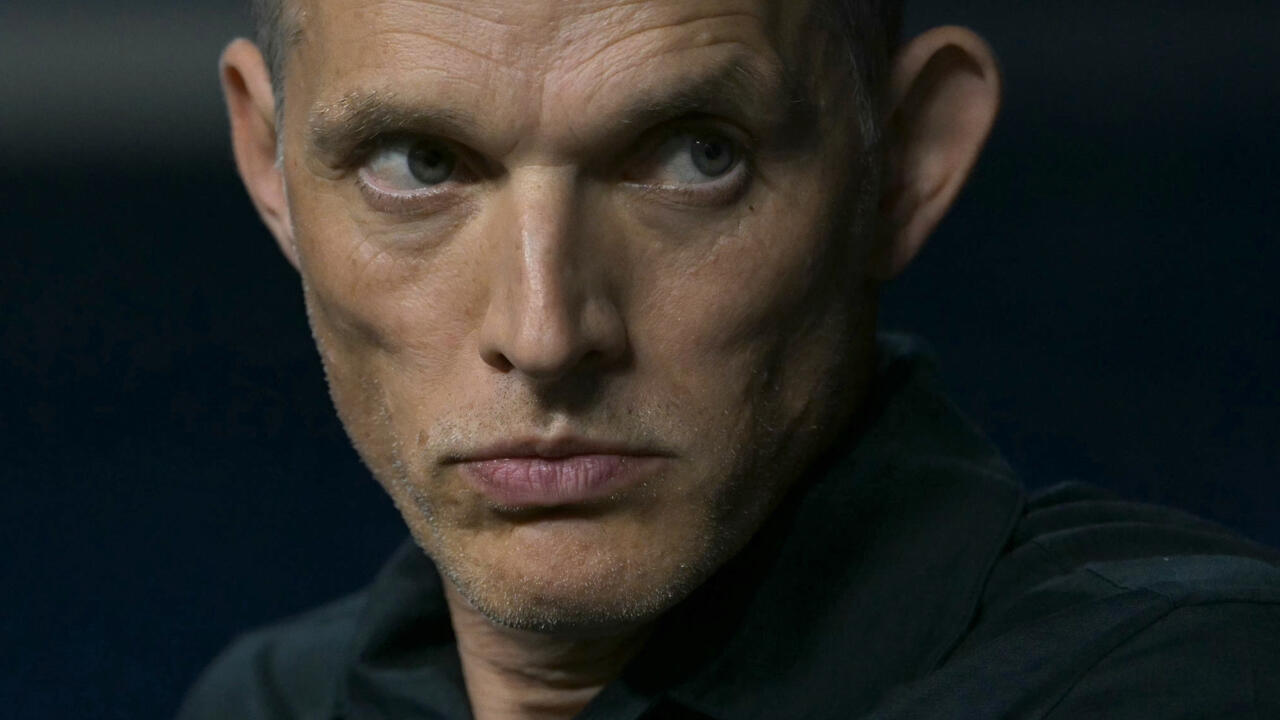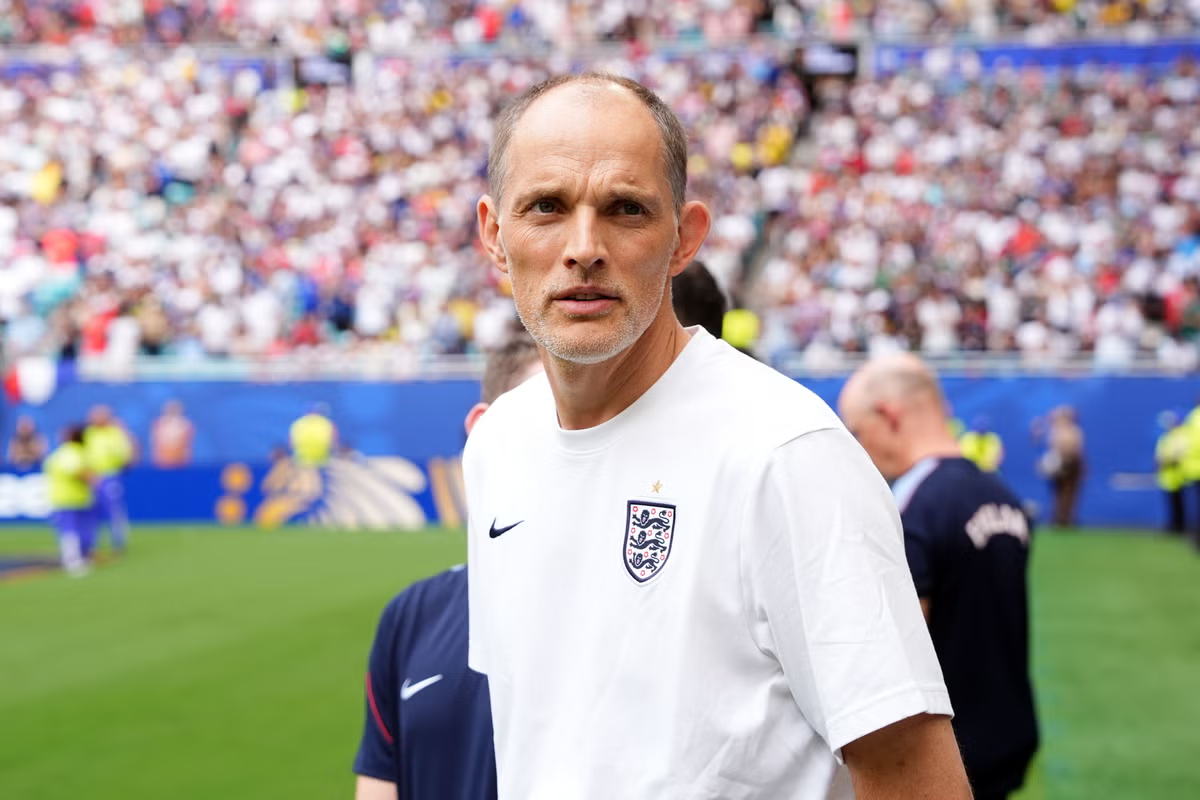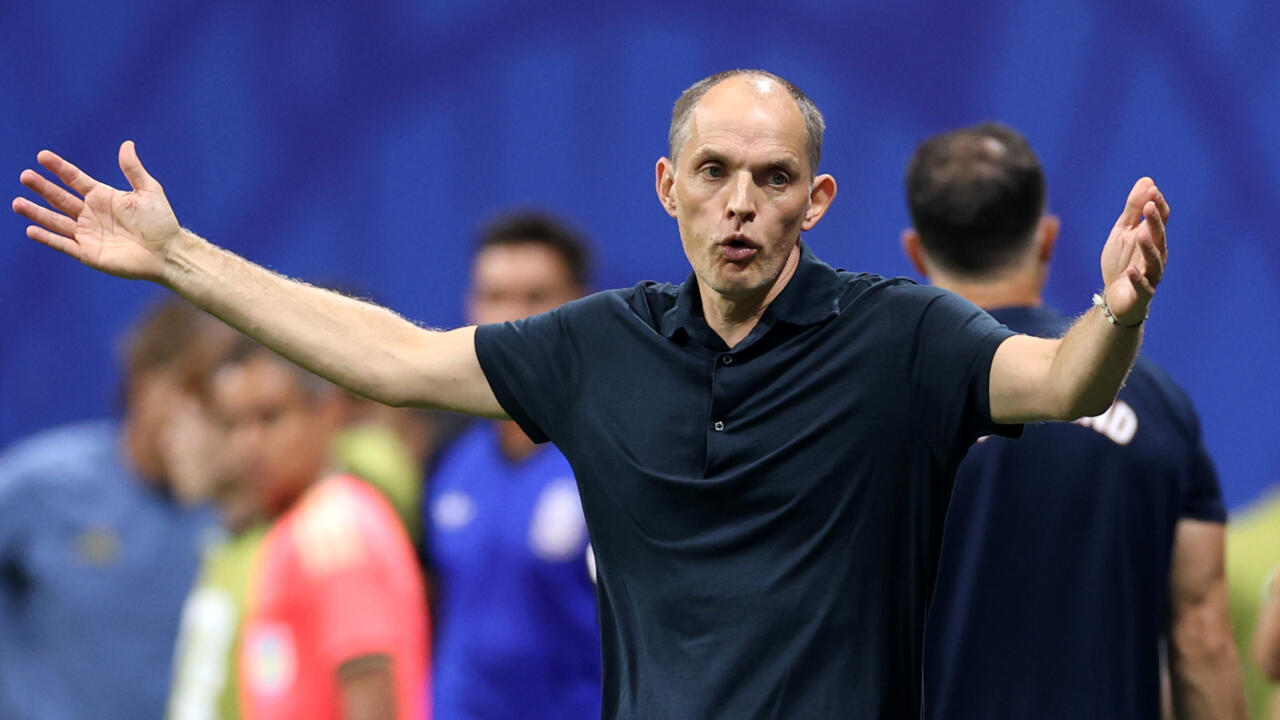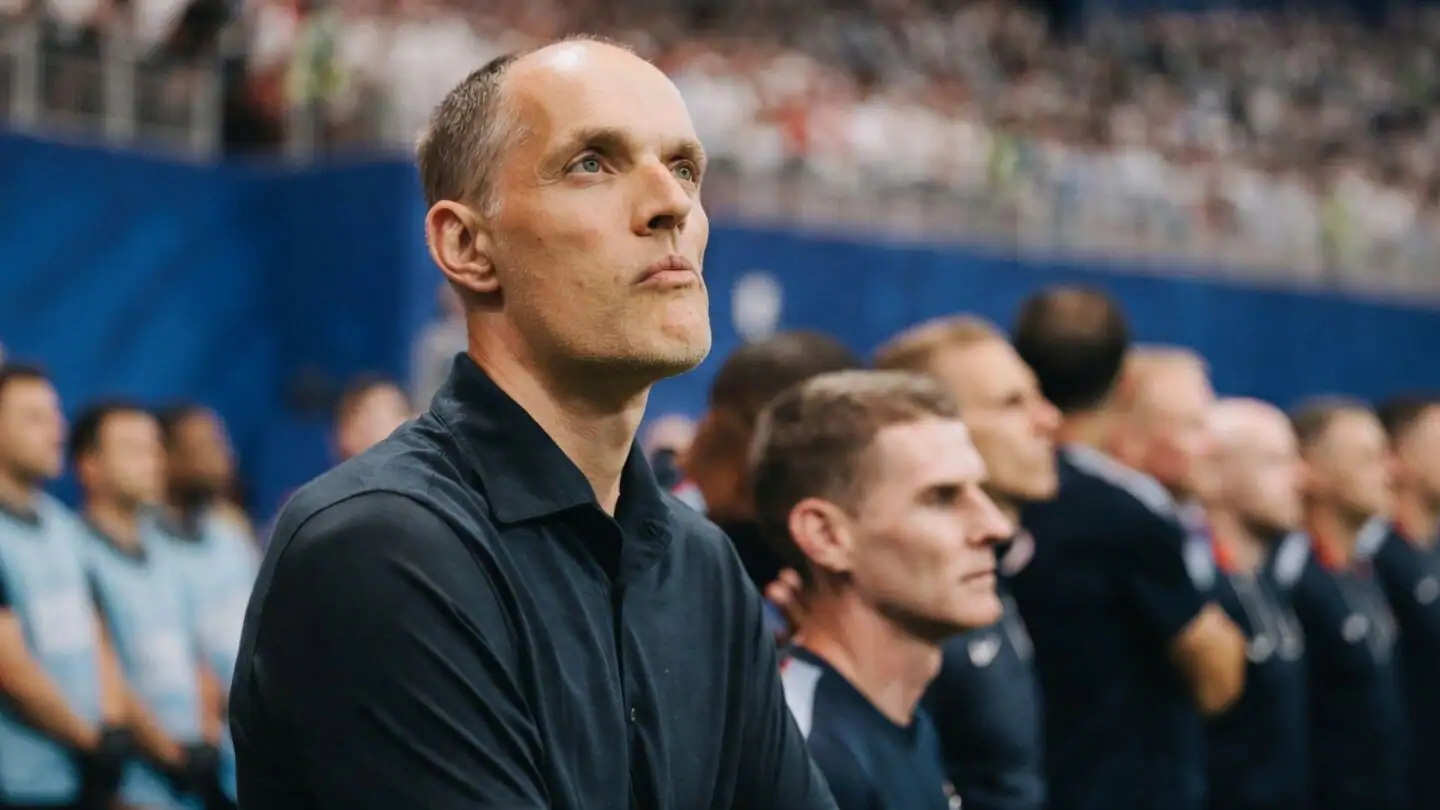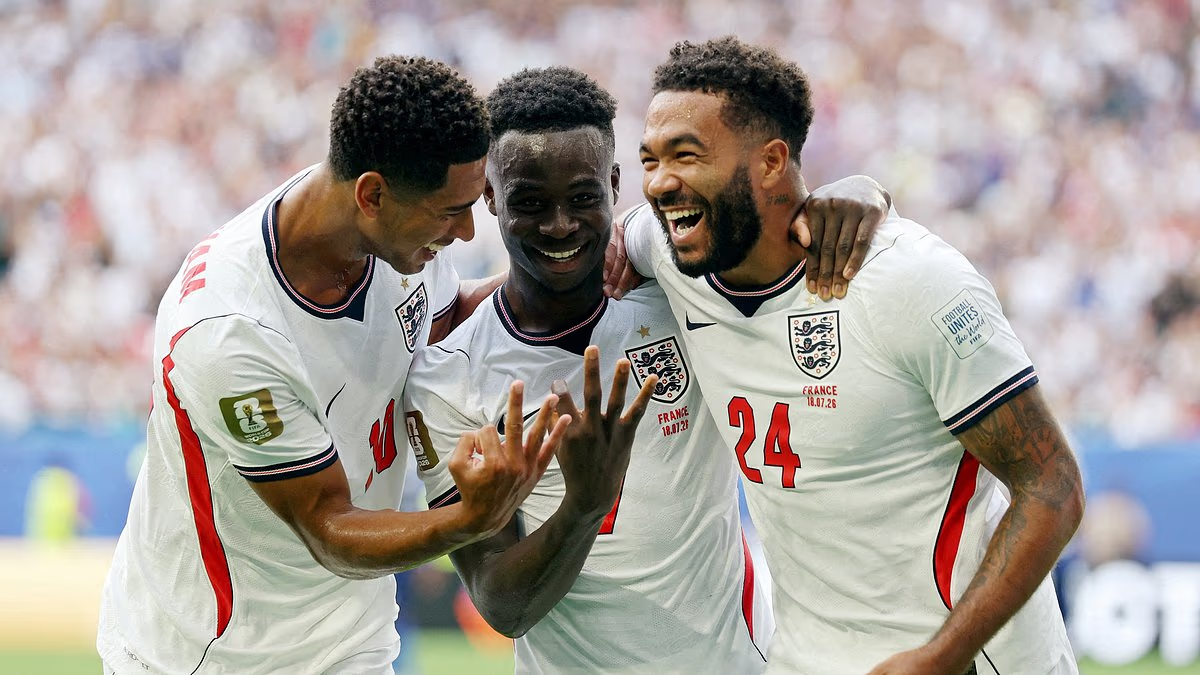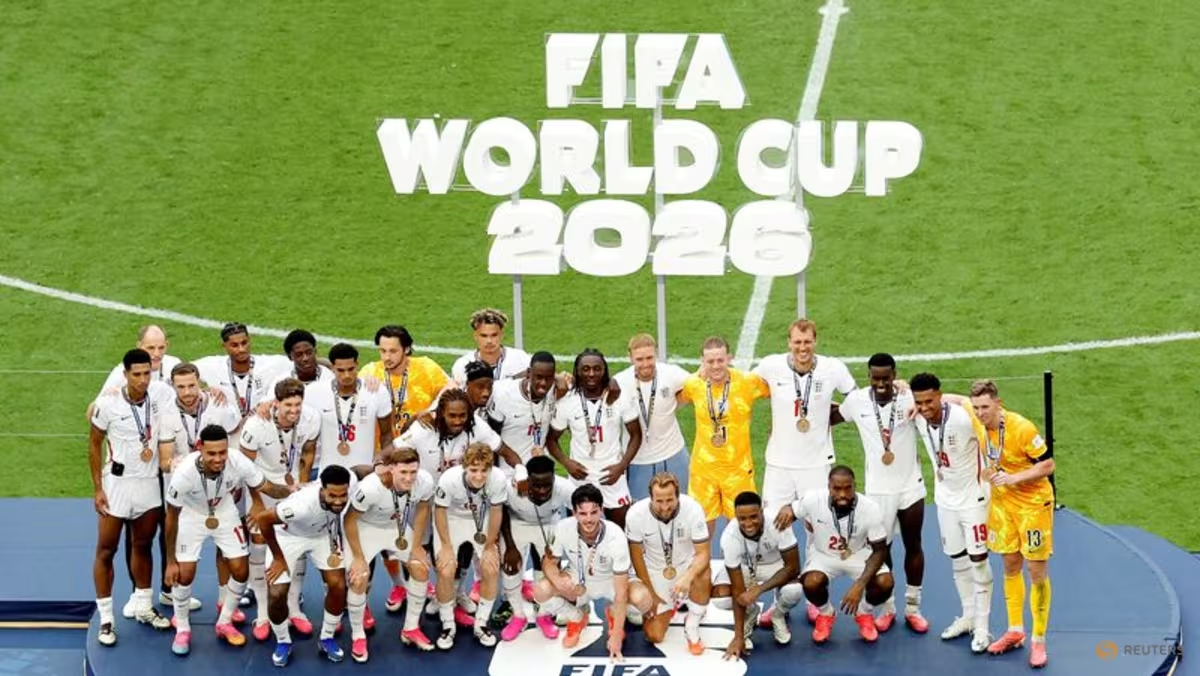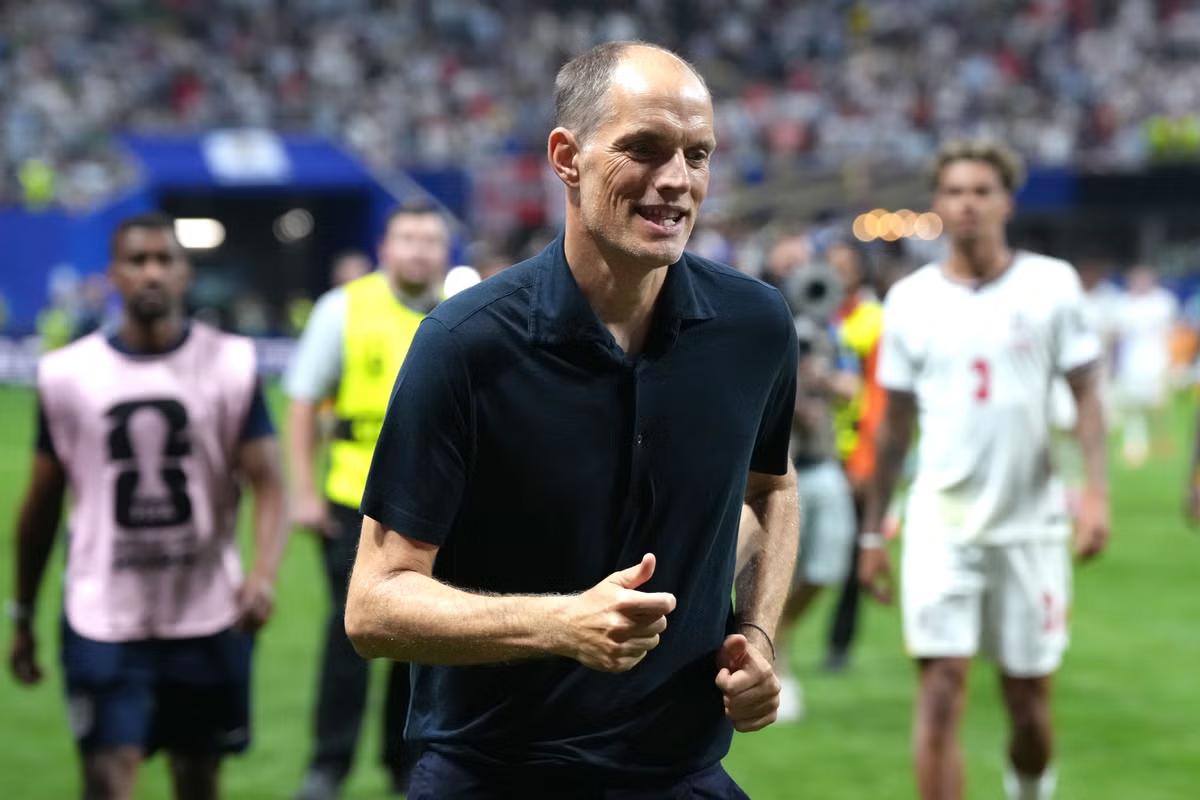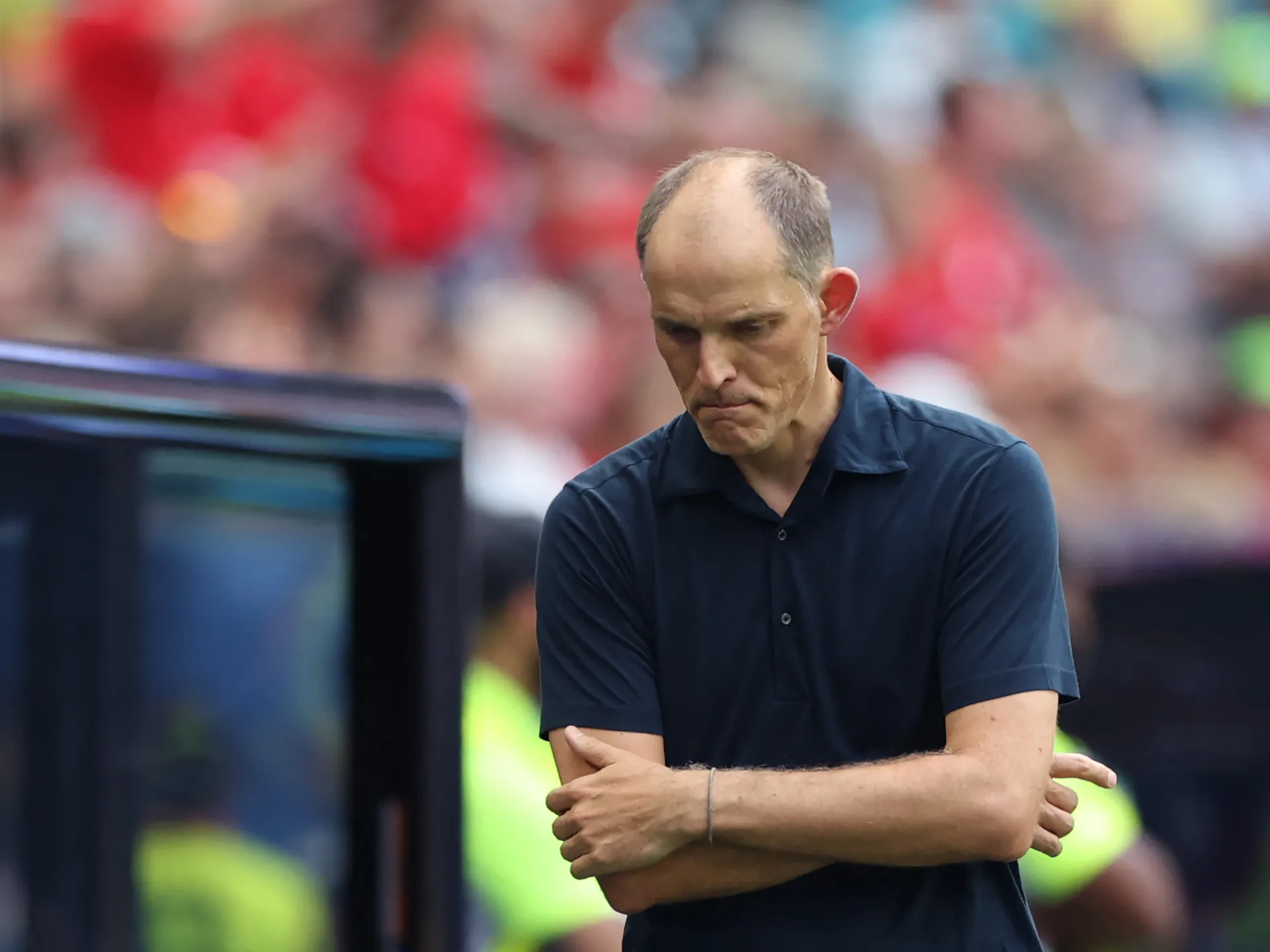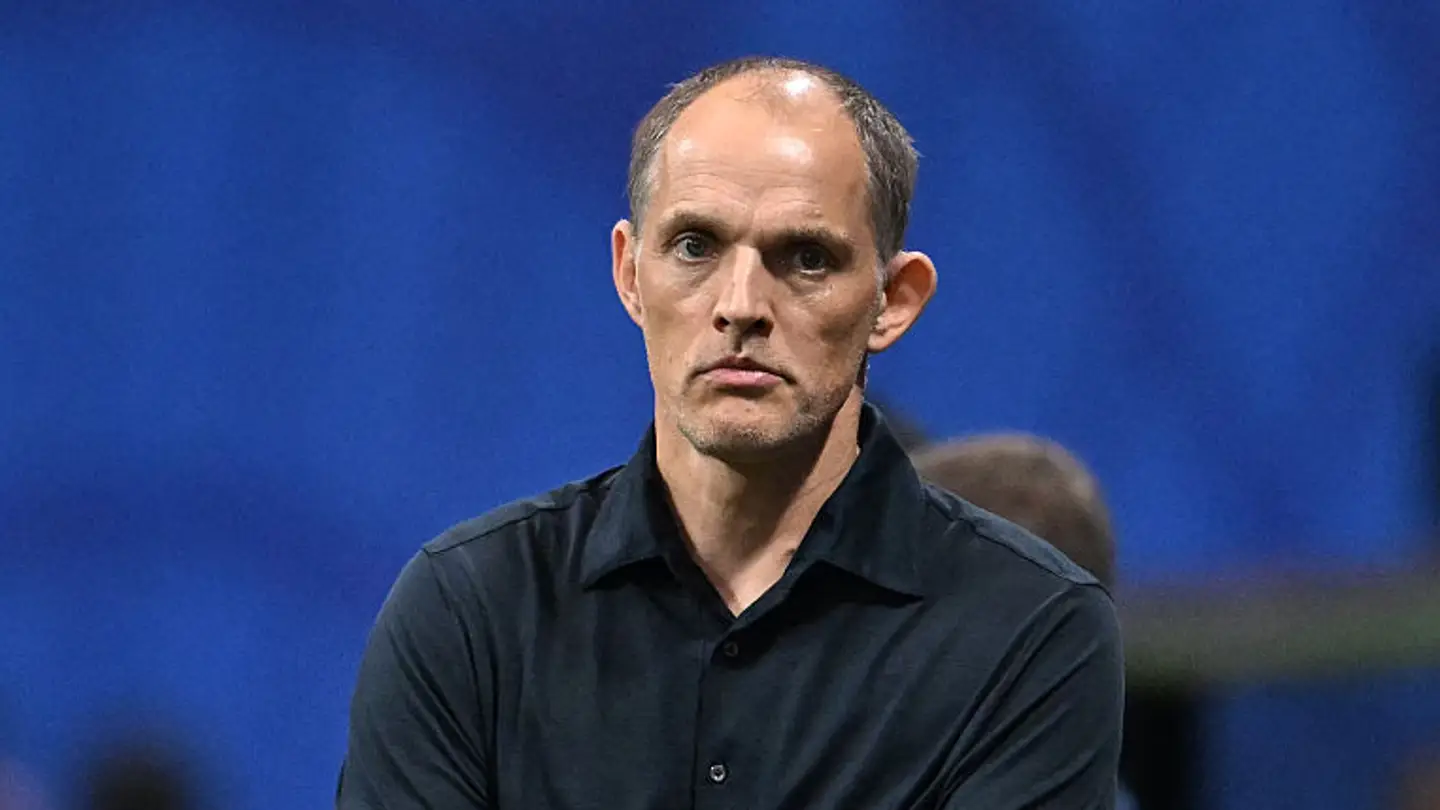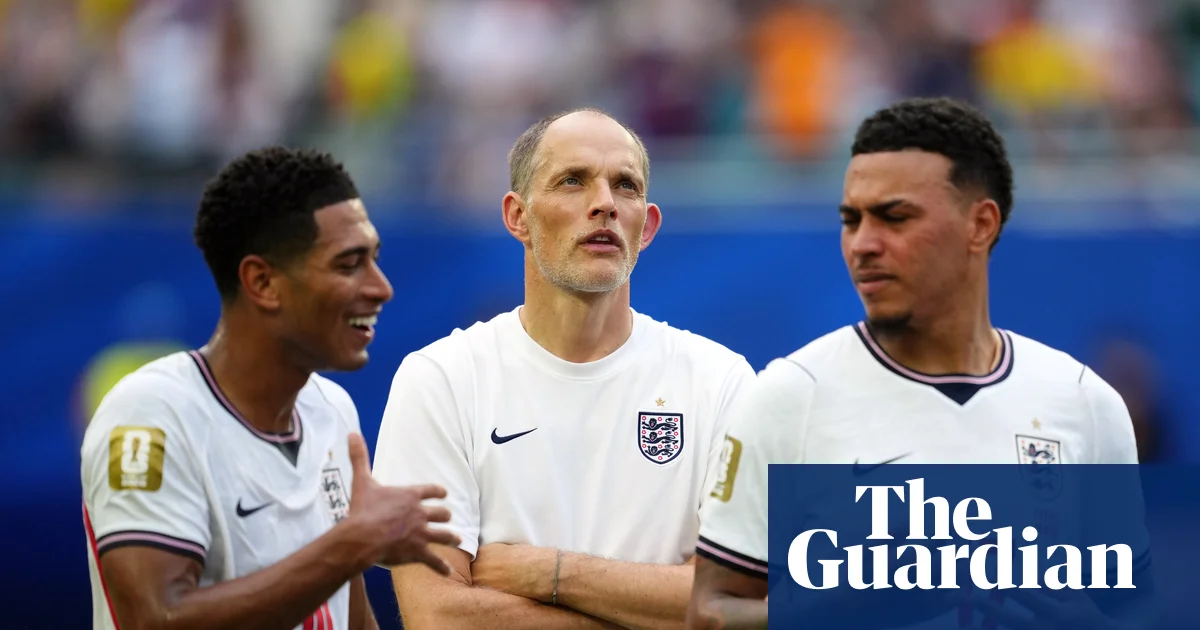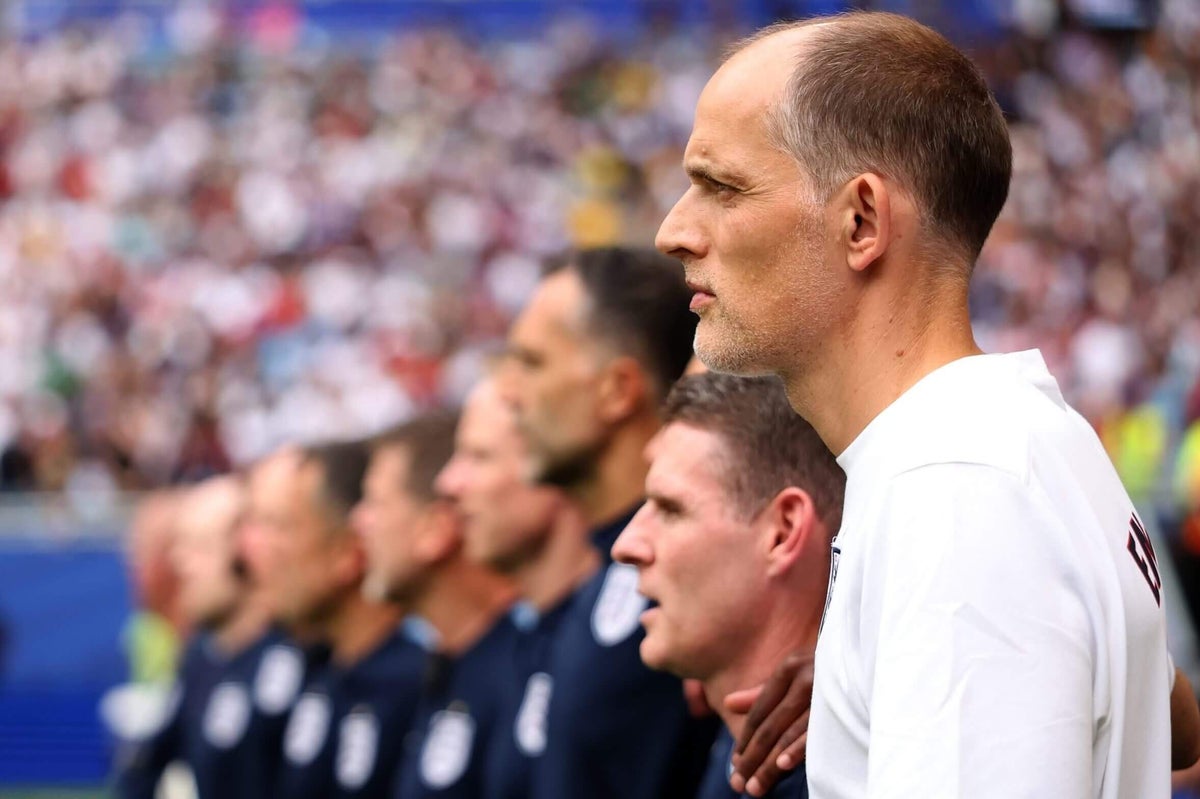
It has become a staple of the England team in recent years. The shattered standing forlornly by the podium at the end of a draining tournament, hearts broken, bodies exhausted, having to watch as the opposition receive the reward that England were so agonisingly close to. It happened two years ago in Berlin, when Spain won Euro 2024. And three years before that at Wembley, when Italy won Euro 2020 after a penalty shoot-out.But at the end of this bizarre game in Miami, this silly 10-goal thriller, this giddy attacking exhibition of some of the world’s best players, and some of the world’s worst defending, England were on the winning side. The France players headed down the tunnel and England stood by the podium in the middle of the pitch. The medals were carried out on silver trays and after the Venezuelan match officials received theirs, Harry Kane led the whole England squad up onto the stage. Jude Bellingham brought up the rear, with Thomas Tuchel just behind him.In a choreographical sense it might have felt like what these players had dreamed of, stepping up one by one, handshakes and hugs, a medal round their necks. But the differences between this and their dreams were staring them in the face. First that the medals were the wrong colour; this was the ‘Bronze Final’ after all. And secondly that there was no trophy for Kane to lift at the end. All they could do was call Jason Steele — the training goalkeeper, not an official squad member — over before they had a smiling team photo taken. When the players went for a walk around the pitch with their medals around their necks, Tuchel insisted that Steele go with them.To fly home with those bronze medals is not nothing. In fact, as Tuchel said afterwards, this makes it England’s second best World Cup campaign ever, their best since 1966, and their best on foreign soil. They have only reached the semi-final on two other occasions, in 1990 and 2018, and both times they lost this fixture. The medals are a manifestation of a campaign that included far more good than bad.Imagine if you could lay out the bare facts of this campaign to an England fan at the start of June: beating France to third place, after losing to an inspired Argentina in the semi-finals, beating Croatia, Norway and Mexico along the way, winning in the Azteca Stadium with 10 men. Most England fans, knowing only that, would have accepted it. Those simple facts are all to Tuchel’s credit.And yet the strange thing about this last week is that it does not quite feel like that. It feels as if the specific circumstances of Wednesday night in Atlanta — the retreat, the punishment, the fall-out afterwards — have wounded Tuchel. That much of the credit he had built up over his first 18 months was lost in those 40 minutes, and that he will have to work hard to rebuild it.That, ultimately, is the biggest single question as England fly home. What weighs more in the minds of the public? Is it those bronze medals they won here in Miami, the smiling photoshoot, the sense of unity and achievement on the podium? Or is it the pain of Wednesday, when England had one foot in the World Cup final before meekly letting Argentina barge past them?Tuchel, perhaps understandably, wants to see the positive side. He said after this game that the questions he received in Friday’s press conference “felt as if we went out in the group stage without a win”. He believes that there has been more good than bad over the course of this campaign. “I strongly think and I strongly believe,” he said, “that we built more in this World Cup than we can lose in 30 minutes.”It is probably too early to know. What happened in Atlanta was so traumatic that, even three days on, its effects are still being felt. Tuchel admitted in his Friday night press conference that the pain is still getting worse. John Stones looked shaken by what had happened. Anthony Barry was overcome by emotion during his half-time interview here, praising the squad for “playing with broken hearts” and attacking France in the first half. If they watch the final on Sunday, with Argentina playing Spain, they will feel even worse.But there is no question that Wednesday night has dented Tuchel’s standing with the public, in a way that this win alone will not be able to repair. The fact remains that he was recruited at great cost with the aim of winning this World Cup, and because of his tactical nous in knockout football. It means that what happened in Atlanta damages him more than it could ever Gareth Southgate. That is why there has been such a deluge of anger and frustration from the public, even more than from the tournament exits under Southgate.It will not have escaped fans, either, that the intellectual underpinning of the Tuchel appointment has taken a dent. The idea behind the Football Association appointing Tuchel was that by signing up one of the best managers in club football into the international game you could gain a tactical edge over your opponents.It is a great idea in theory — and not one unique to England — but the reality of this World Cup is that Tuchel, Carlo Ancelotti, Mauricio Pochettino and Julian Nagelsmann all had bitterly painful exits in the end. And the two men still standing in the final? Lionel Scaloni and Luis de la Fuente, the two international football specialists, who have no glittering club CVs behind them but do have a deep understanding of how to win in this form of the game. If they are still the masters of the international game, what does that say about the idea of appointing Tuchel in the first place?Tuchel himself does not believe that his standing has been set all the way back to zero. “I don’t think that I lost the trust after whatever happened in the 30 minutes against Argentina, or maybe 45 minutes against Argentina,” he said in his press conference here.The biggest challenge to Tuchel now is what happens to that public anger, whether it passes with time or threatens to come back in the autumn. The fact that Tuchel held his hands up so clearly on Saturday night — “I take the blame and of course the responsibility” — will count in his favour. He has now owned the events of Wednesday in a far clearer way than he did on Wednesday or on Friday. He has opened up about “the scar” of Atlanta which he will carry forever.World Cup Best Moments & Final PreviewEngland will not play again for more than two months. No-one can say with any certainty now how the public will react to Tuchel when England host Spain at Wembley on September 26. Maybe all this will just feel like ancient history by then, and people will move on with optimism towards Euro 2028. Or maybe it will continue to fester, and then the Nations League campaign could get uncomfortable.Ultimately September does give the chance for a restart, a new second chapter in the Tuchel era. If the history of English football has taught us anything it is that people will argue about Wednesday’s semi-final defeat for decades. There is nothing anyone can do about that now. And two months from now, Tuchel will have the chance to renew that relationship with the public again.“We need to win the trust on a daily basis in international football,” he said. “In seven or eight weeks, we’re back together, and in the Nations League, we need to gain the trust, and rebuild the trust. It’s never a given.”
Thomas Tuchel won World Cup bronze. Now he must win back England’s faith
Head coach remains wounded by the nature of the defeat to Argentina, despite ending the World Cup win a win over France
1,300 words~6 min read