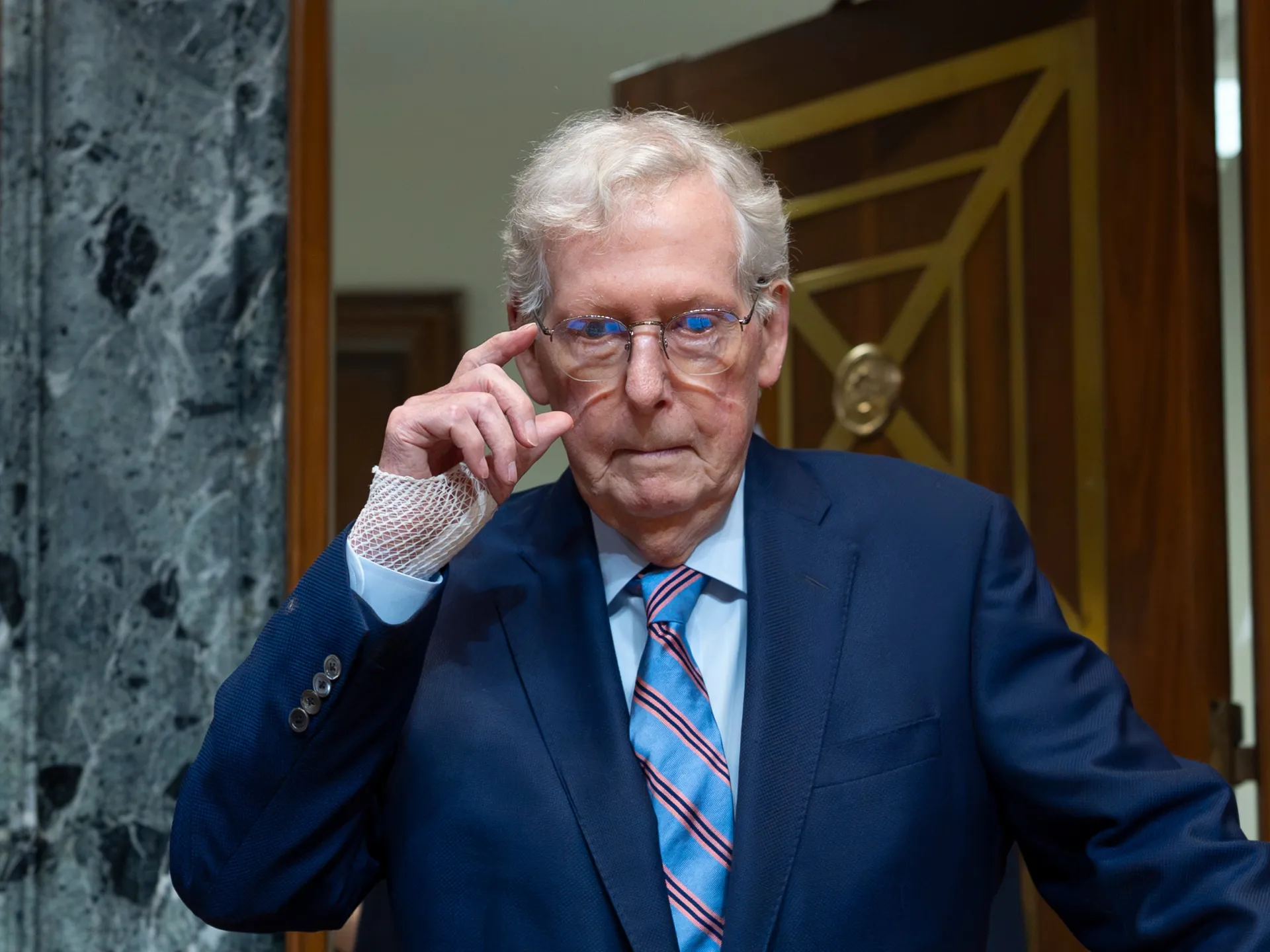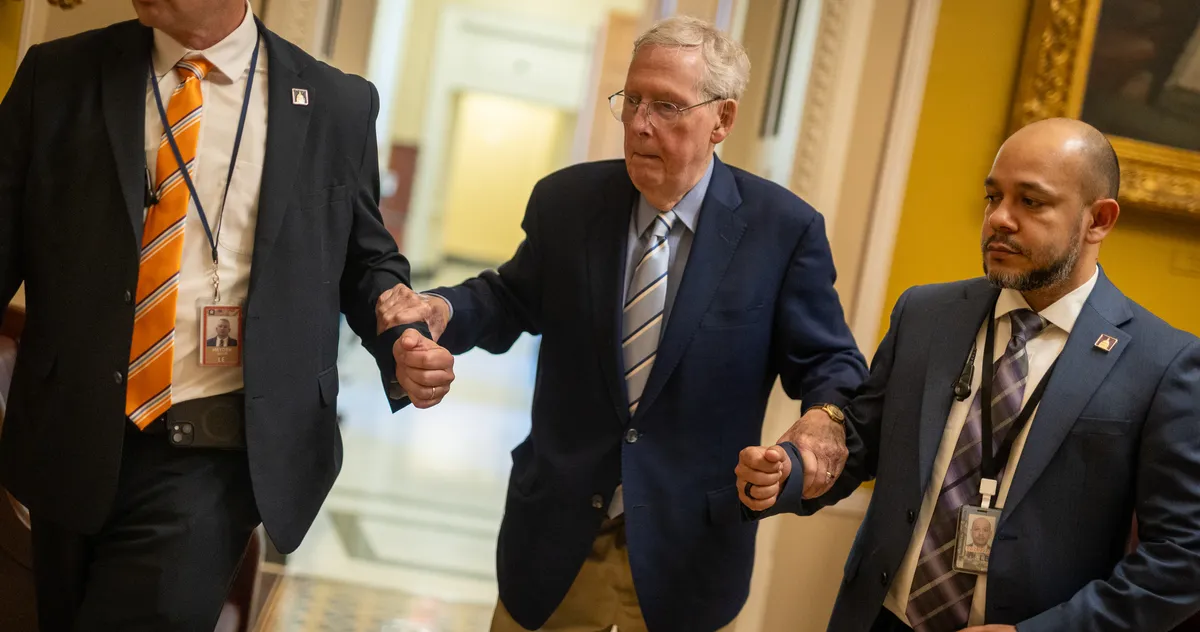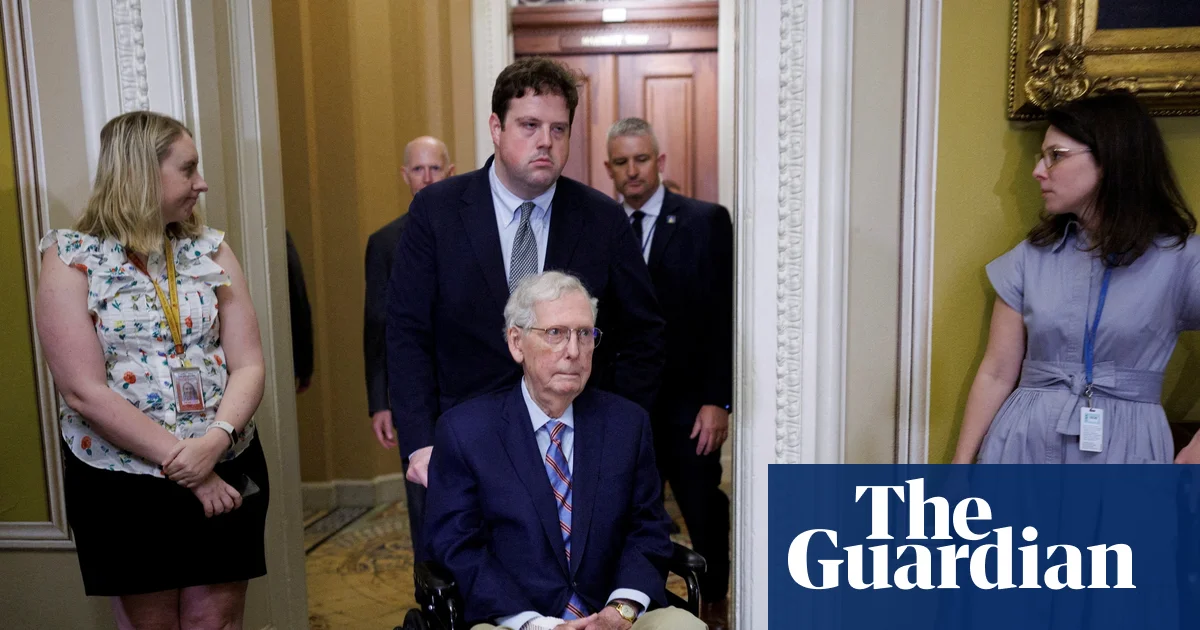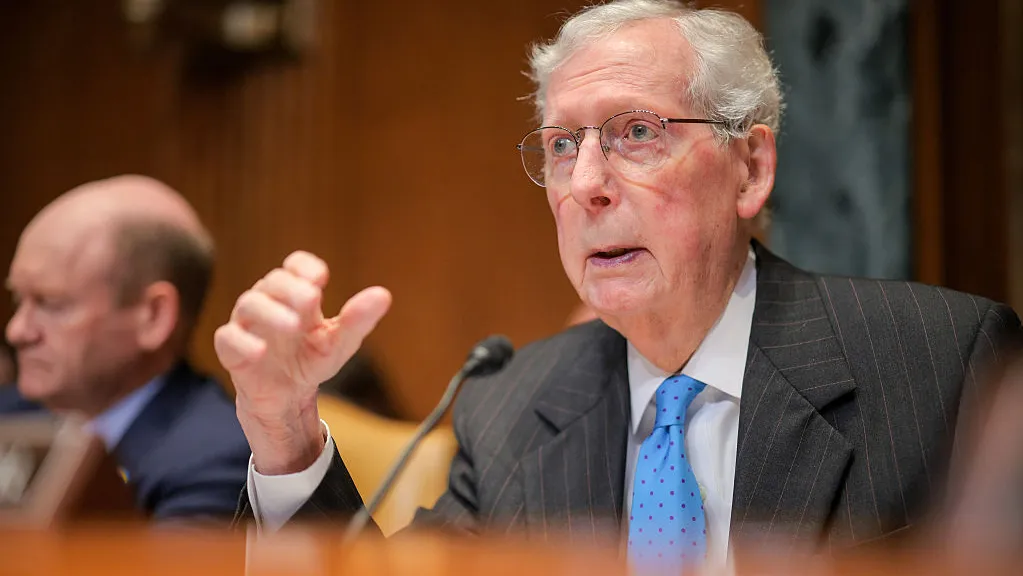
The rumour mill in Washington DC is hyperactive at the best of times. But an elderly senator's lengthy absence from Congress has cranked it into frenzied overdrive.For weeks, reporters have found it impossible to get clear answers about what happened to Mitch McConnell after an ambulance ferried him from his Capitol Hill home on June 14.Internet conspiracists filled the information vacuum. "Mitch McConnell is officially brain dead," MAGA influencer Laura Loomer told her followers, citing a White House source. "He's not coming back." On July 12, McConnell's staff put out a statement quoting him as saying he was recovering from a fall and "mild" pneumonia. They also released what some called a "proof-of-life photo" showing a smiling McConnell supported in a bed by his wife.It was fuel to the fire.Mitch McConnell's office released this photo of the senator with his wife, Elaine Chao, and a copy of the day's Washington Post newspaper. (Supplied: Office of Senator Mitch McConnell)Late night TV hosts summed up the public cynicism. Jon Stewart sarcastically described the picture as "totally believable evidence that Mitch McConnell is not only alive, but the happiest boy in the hospital"."Nothing says perfect health like having someone hold you up when you're already sitting," fellow host Jimmy Fallon quipped. "I'm not sure how OK he is because that's actually a video."But beyond the jokes, the saga has reignited a serious debate about Washington's aging politicians, who have a reputation for clinging to power well beyond retirement age, while sometimes fading from public view without explanation.'This is not normal'"I really don't even know how this is legal at this point," Alexandria Ocasio-Cortez said when asked about the McConnell case this week.The progressive Democrat was 29 when she was elected in 2019, making her the youngest woman elected to Congress.Now 36, she is still decades younger than most of her colleagues. The median age of a House member is about 58, and the median for a senator is about 65.Alexandria Ocasio-Cortez, one of the youngest members of Congress, says there are "country-altering implications" when elected representatives are absent. (Reuters: Al Drago)"How is it that we have sitting elected members of Congress going missing for months at a time?" Ocasio-Cortez said."Especially now when … the margins in the Senate are razor-thin, the margins in the House are razor-thin. Every single person's absence here has country-altering implications."I just find it shocking. And how is everybody pretending this is normal? This is not normal."'Nothing new'McConnell is set to retire when his term ends next year. His statement said he appreciated the "honest questions" about what had kept him from the Senate, but: "You all know how folks of my generation often hesitate to share the vulnerability that comes with growing older. Even in the public eye, I feel that same instinct — I can't help it."His situation is just the latest on a long list of similar cases.In 2023, an 89-year-old senator returned to work after months of ill health and, seemingly confused, insisted to a reporter she had been at work the whole time.In 2024, an 81-year-old congresswoman was absent for more than five months before a local reporter found her in an assisted-living facility. Her son later confirmed she had rapidly deteriorating dementia.And McConnell himself has been at the centre of these conversations before, including when he froze up and stared blankly during a press conference a few years ago."It's nothing new," says Oscar Pocasangre, a political scientist with the New America think-tank who has researched how the country's electoral system "reinforces the gerontocracy"."It fits a lot with a pattern and it's what we would expect from a political class that is so much older than the population that it represents."Push for limitsThe issue was further highlighted by the sudden death of senator Lindsey Graham last week.The 71-year-old became the sixth member of the current Congress to die since it convened last year. The youngest was 65, the oldest was 87.A paper co-authored by Pocasangre last year outlines some of the downfalls of the age divide between politicians and the public. As younger Americans' concerns are overlooked in Congress, they pay less attention and are less likely to vote, campaign, donate or run for office, it says.People this week left condolences outside the office of Lindsey Graham, the sixth member of the current Congress to die. (Reuters: Jonathan Ernst)Some say the solution is to introduce age limits or term limits. About eight in 10 Americans support both limits for members of Congress, according to a recent NPR/PBS/Marist poll.Florida's Republican Governor, Ron DeSantis, and former Democratic congressman David Trone are leading a bipartisan effort for term limits.Their US Term Limits campaign argues that Congress resembles "an elite country club of career politicians who are consumed by an obsession to remain in power".It wants senators to be limited to two six-year terms, and House members capped at three two-year terms.Striking a balanceBut Pocasangre would prefer a different approach: reforms to the US's "winner-take-all" electoral system, under which only one person can represent a House district and only two can represent a state in the Senate.He says a more representative Congress could be achieved through a more proportional electoral system, where multiple members can be voted in to represent a single areaThat could be something like Australia's senate system, where 12 people are elected per state — encouraging the major parties to put forward more diverse candidate lists, and creating more space for smaller parties to break through.Some US states have already moved towards more proportional systems. Pocasangre hopes to see more state-based experimentation of models that could one day rise to the national congressional level."Having old politicians by itself is not necessarily bad because the institutional knowledge that they bring is really important," Pocasangre says."What is bad is that in the American system right now, that comes at the expense of the representation of all the other age groups out there."So I think it's a matter of being able to have a good balance between the institutional knowledge that old age brings, but also being able to include and incorporate the new ideas and the talent of new generations."
Curious case of absent US senator reignites elderly politicians debate
Washington's rumour mill is hyperactive at the best of times. But an elderly senator's lengthy absence from Congress is cranking it into frenzied overdrive.
1,023 words~5 min read