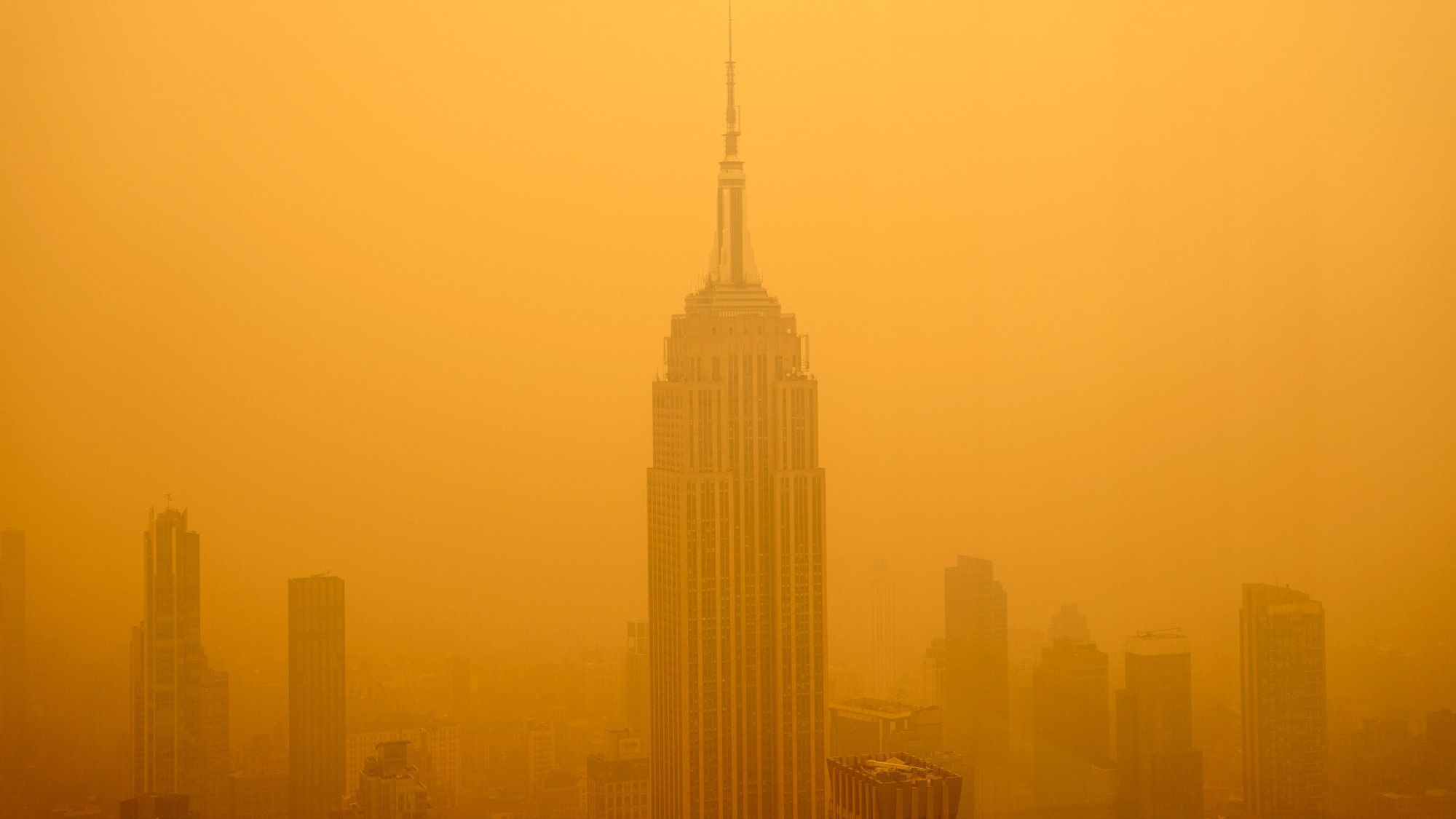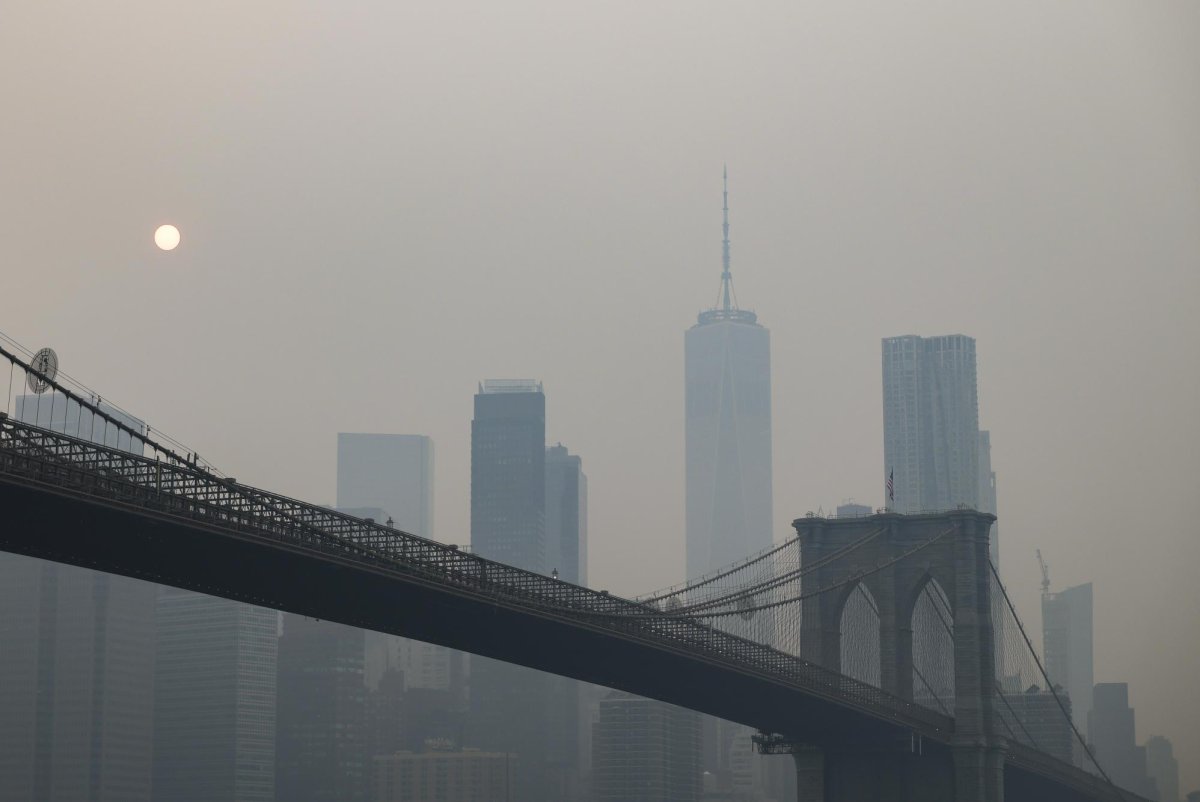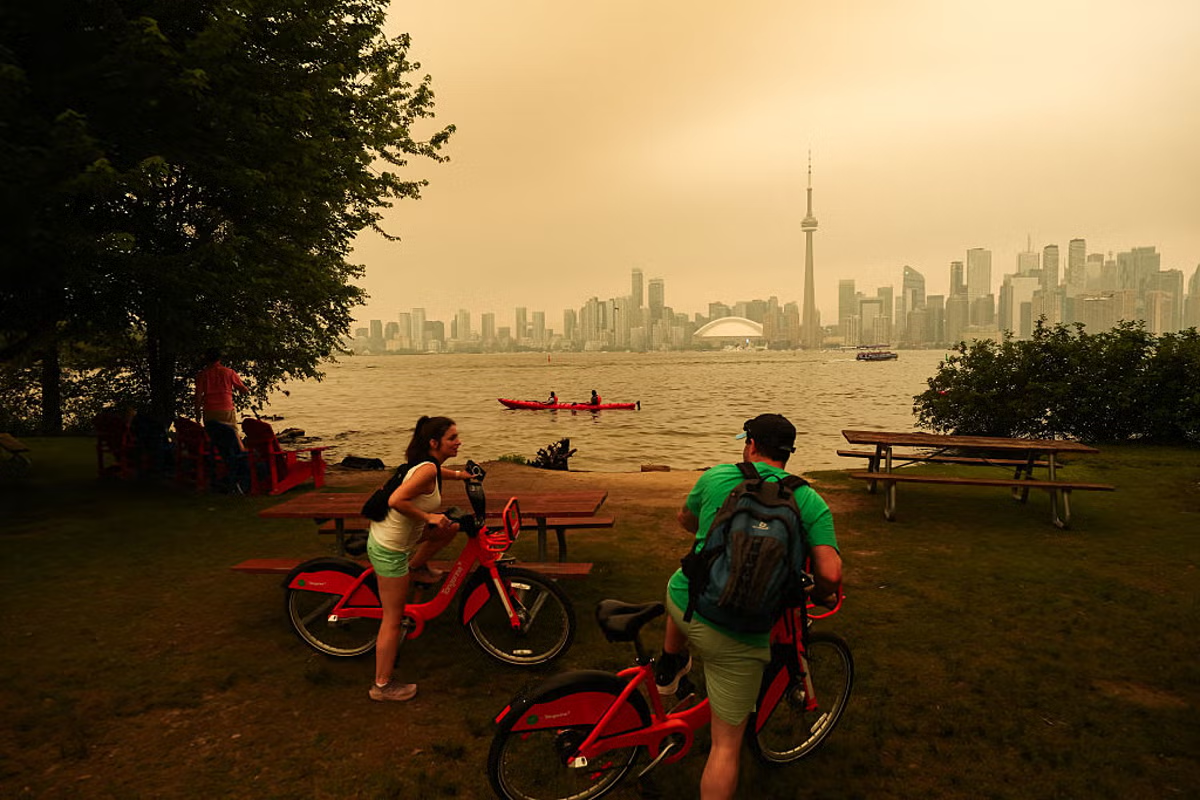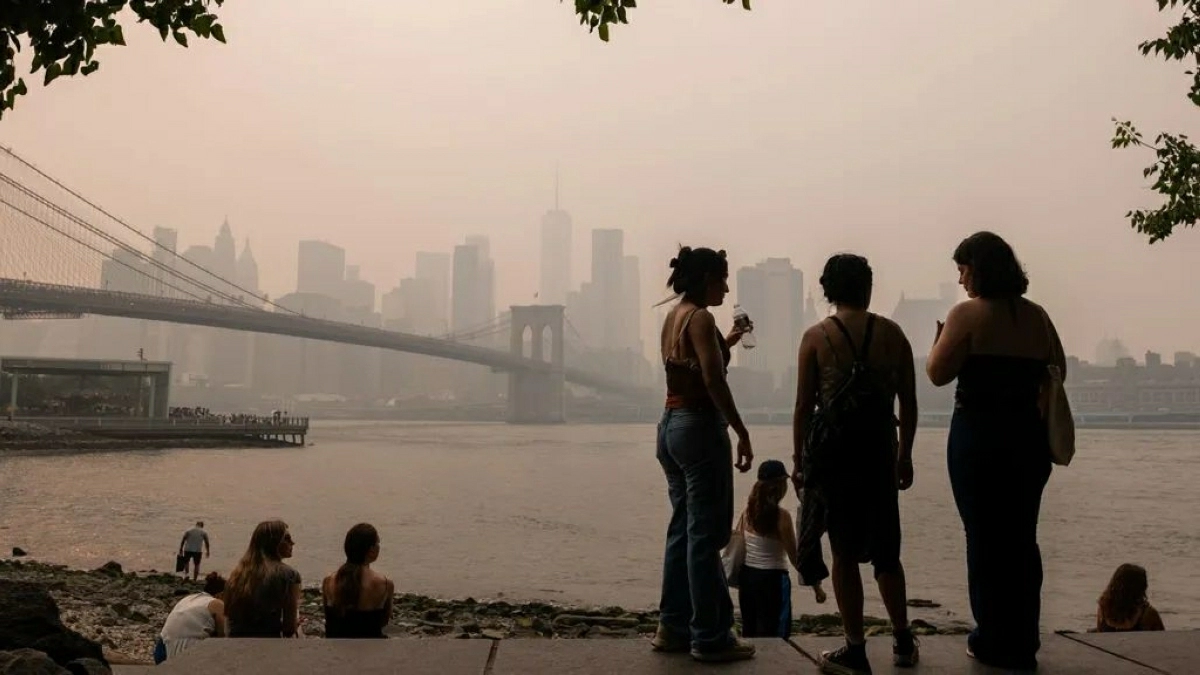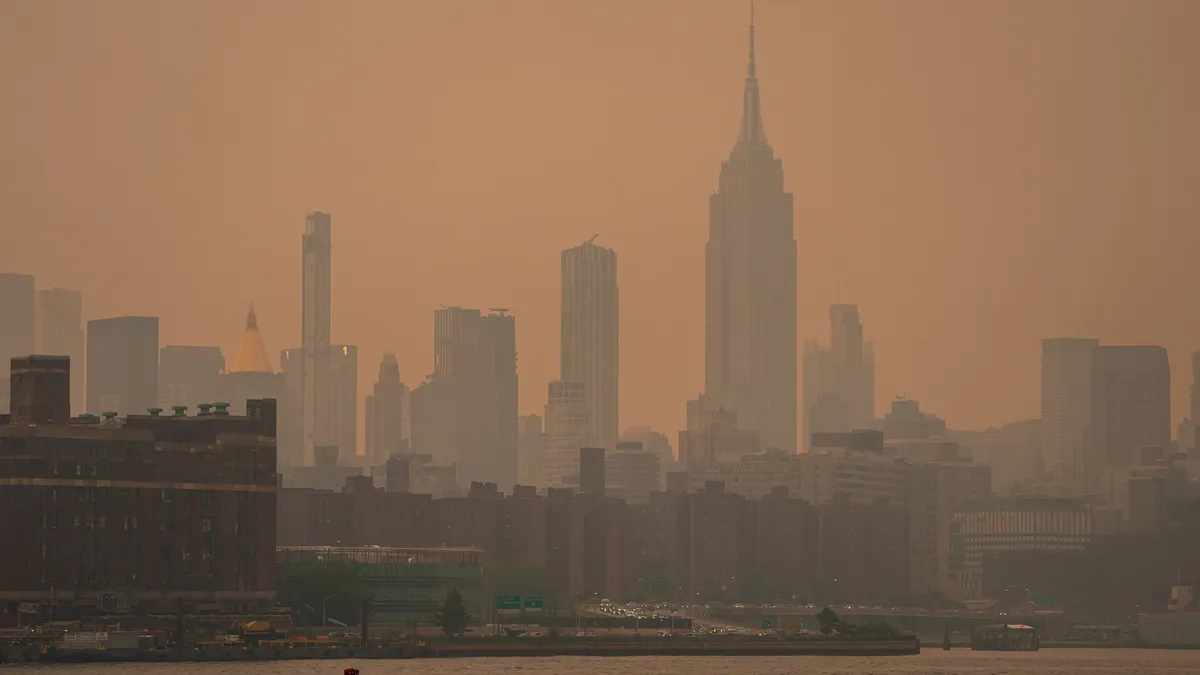
As a barrage of intense wildfires in Canada sent massive plumes of billowing smoke into the air, public health officials in the United States triggered air quality alerts across the northern and eastern U.S. on Thursday, July 16. The air is unhealthy to breathe, especially for sensitive groups, but people also need to consider another population: Their pets.In New York City, where Dr. Ann Hohenhaus is the director of pet health information for the Schwarzman Animal Medical Center, KN95 masks were handed out for free to residents, who were urged to remain indoors due to the smoky air.Hohenhaus told USA TODAY Pets it's crucial for people to apply that same level of caution to their pets.“The number one thing pet owners should do during an air quality alert is keep their pet indoors," said Hohenhaus. “If we’re moving ourselves indoors, why would we not move our pets indoors as well?”Hohenhaus explained that dogs are suffering the same way that people are right now: They're breathing in that hot, heavy air filled with smoky particles. Humid conditions hold in more of those particulates, exacerbating the problem. She also noted that when the air is humid, panting becomes ineffective, so it's very easy for pets to overheat."It's hotter and likely more polluted closer to the ground, where your pet is breathing," she said. "You need to remember this is really tough for your pet ... There's no reason for a trip to the park today."Hohenhaus emphasized that if your pet needs to relieve themself, keep it to an in and out trip; avoid going around the block so they don't run into any respiratory issues.Improve conditions indoorsIn order to mitigate the air quality in your home during these adverse conditions, the Schwarzman Animal Medical Center recommends taking the following steps:Close windows and doors to keep outdoor air from drifting inSet your air conditioner to "on" instead of "auto"Run an air purifier with a HEPA filter, if you have one💨 Coping with smoke: How to exercise, entertain and protect pets indoorsWhich pets face a higher risk?Hohenhaus said that brachycephalic, or flat-faced, dogs such as various bulldog breeds and pugs, are more susceptible to these conditions since they already have problems breathing due to their anatomy.She also highlighted small breed dogs, like Pomeranians and poodles, as high risk since they're prone to a condition known as collapsing trachea."So, their windpipe gets kind of flabby and it flattens out rather than being a nice tube to conduct air in and out of the body," Hohenhaus said. "And pets with a collapsing trachea have a very hard time in bad weather because, even on a good day, they have a hard time breathing. When the air is heavy and dirty, it's more irritating."Pet owners need to monitor indoor animals, like cats and birds, closely, too. Hohenhaus said that birds are very sensitive to changes in air quality, while cats that have asthma may be coughing more or having trouble breathing.Watch out for these symptomsIf your pet's respiratory rate spikes to more than 40 breaths per minute at rest, Hohenhaus said that necessitates a trip to the emergency room.Additionally, you should head to the ER IF your pet is constantly coughing and can't seem to catch their breath, since they may need medication to find relief.When conditions improve, Hohenhaus recommended practicing counting your pet's respiratory rate while they're sitting on the sofa next to you, so you can easily identify when their breath rate is rapid in the future.You can watch the following videos from the Schwarzman Animal Medical Center for a tutorial on how to find your pet's baseline breath rate:At the end of the day, Hohenhaus' number one piece of advice remained the same: When in doubt, stay indoors, and keep your pets there, too.Air quality map
Protect your pet from wildfire smoke: Warning signs to know
Pets can suffer from wildfire smoke, too. A veterinarian explains the warning signs and how to protect them.
635 words~3 min read