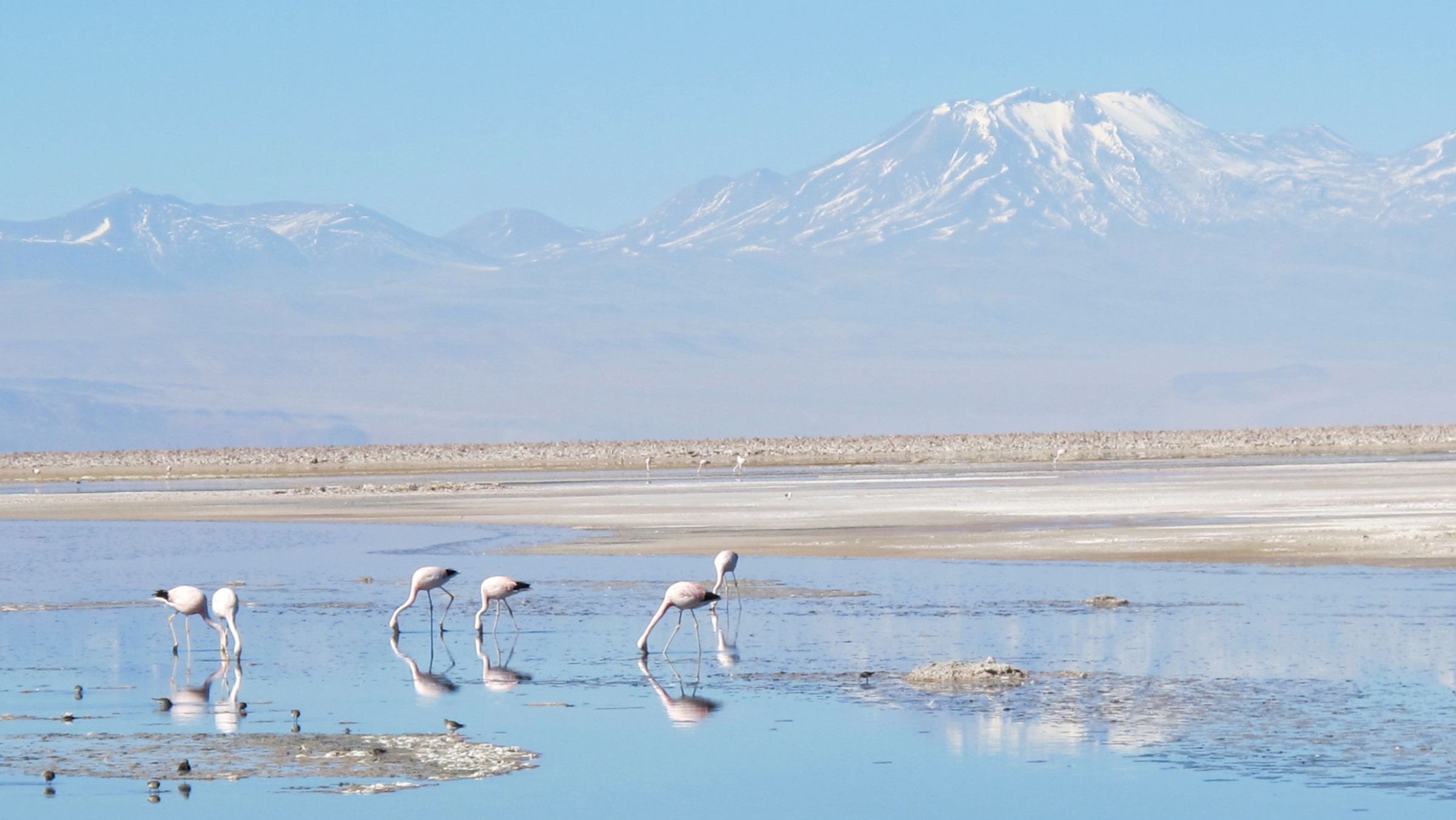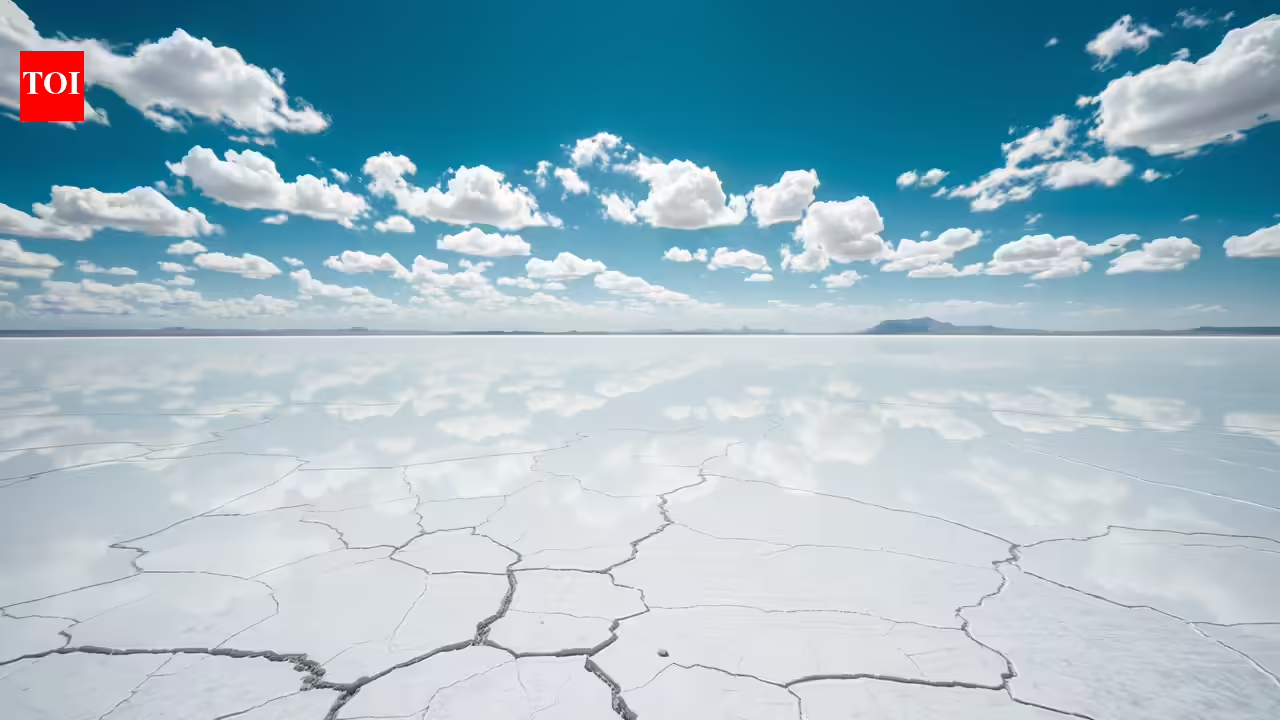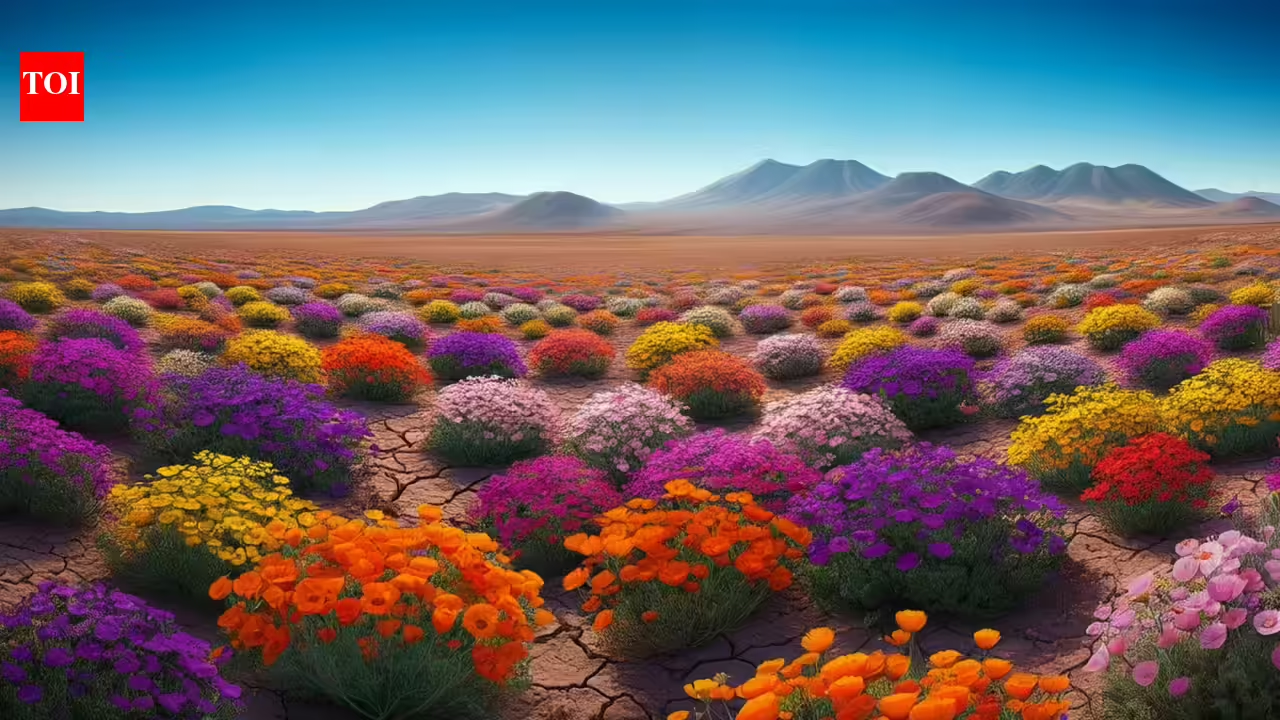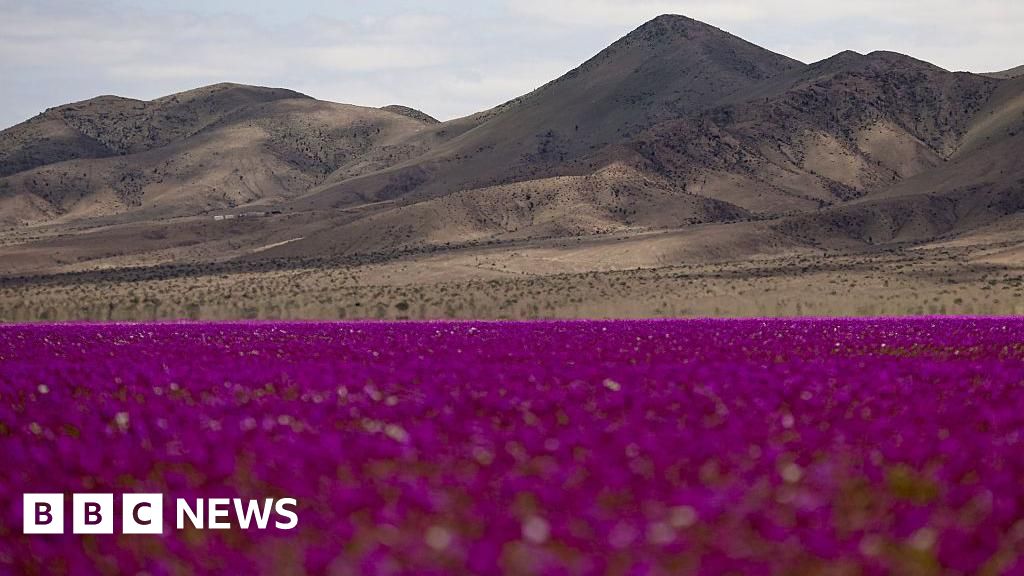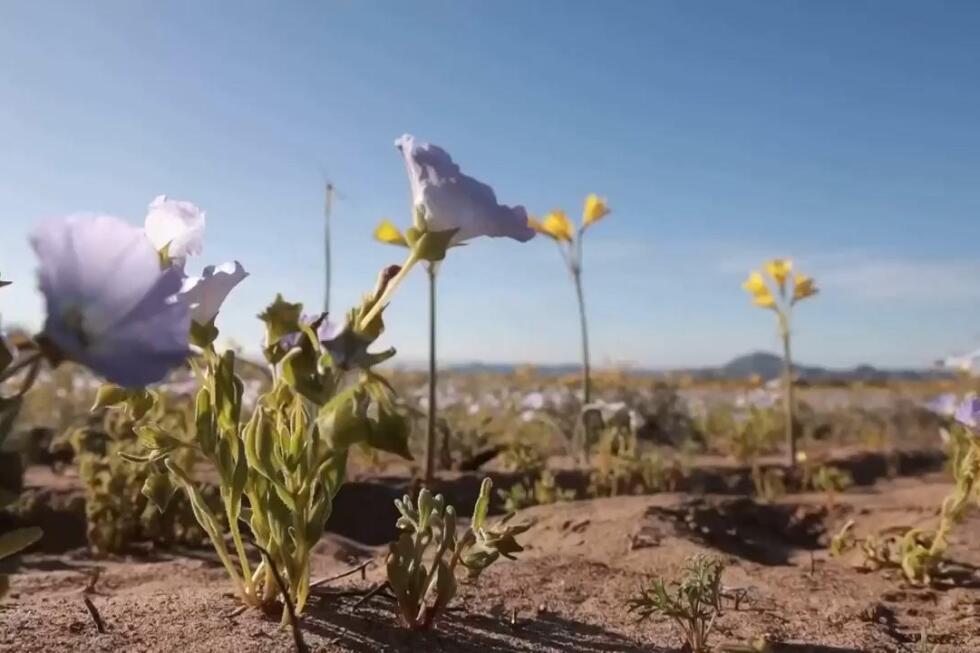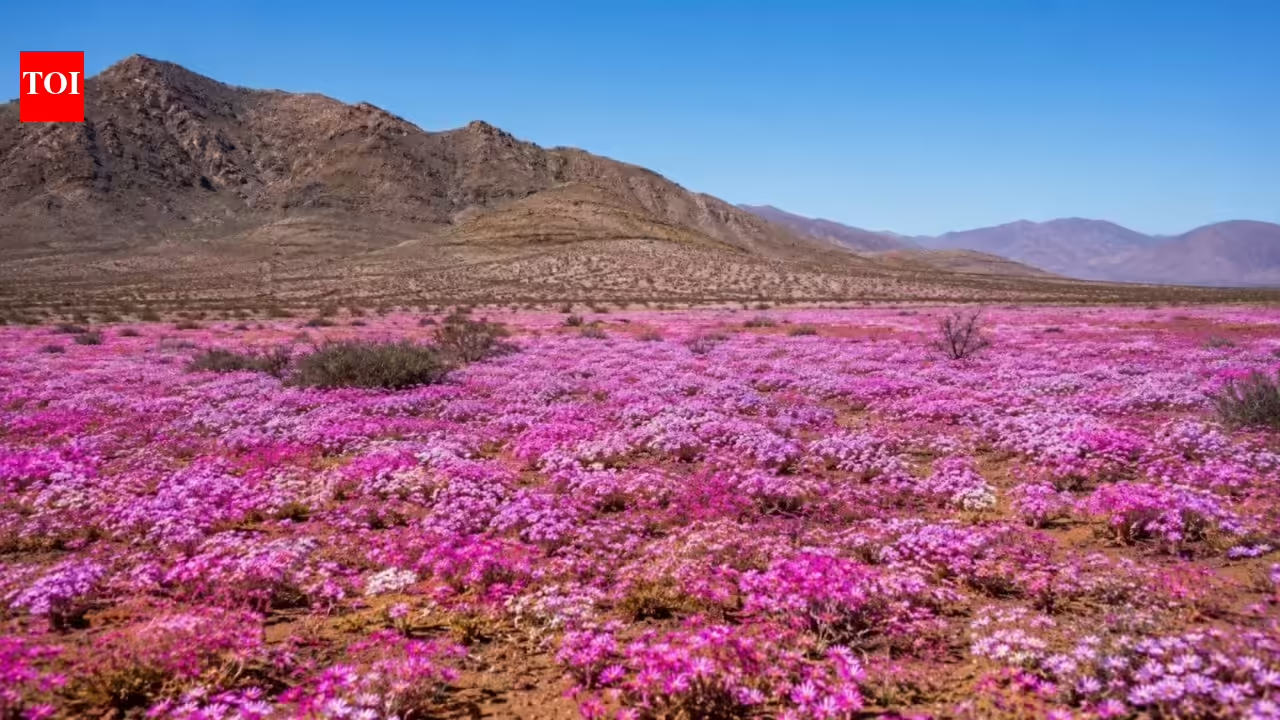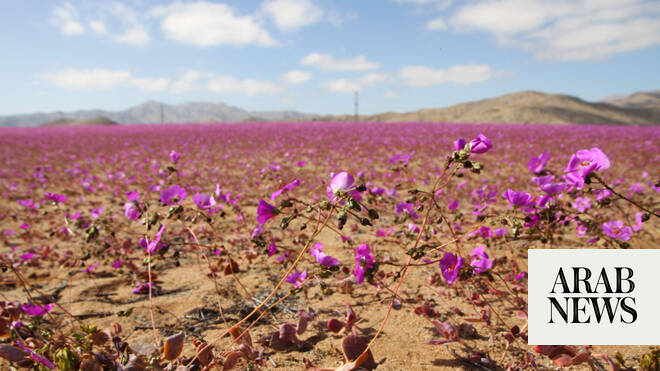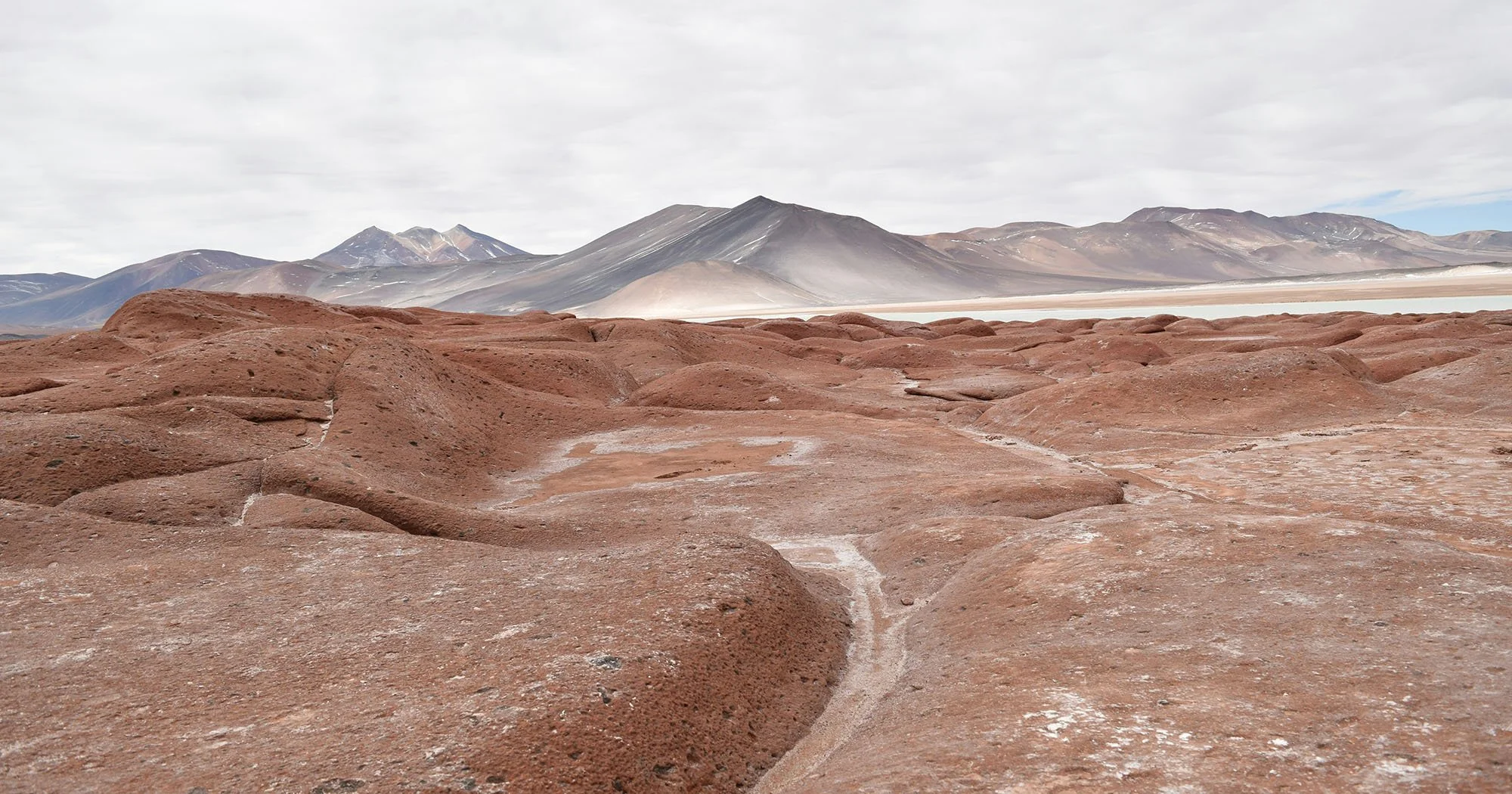
You have to cross a border of fog to exit the city of Antofagasta in northern Chile and leave the sea behind. Like a guardian of the absolute desert, Chile’s coastal mountain range sleeps a mineral slumber, the bluffs defending the driest desert in the world. The pampa — vast, treeless plains — and desert landscape has changed dramatically in recent decades, starting with the great copper boom of the 1990s. There are more highways, more cars, more trucks on account of the region’s mining and related activities. Tons of materials are transported from the depths of the desert and onto cargo ships in Mejillones, 60 kilometers north of Antofagasta, before they embark for other ports. Tons of sulfuric acid, used to process those minerals, are conveyed to the desert and into the mountains by train or in orange trailers. Buses come and go, bearing workers from all over the country. They make Antofagasta one of Chile’s busiest airports, after Santiago. Lots of cargo, lots of movement: north to south, mountains to sea and back again.The region is known for its clear, unpolluted skies, which are still dark by night. Enormous telescopes gaze up at it; they detect waves that hail from space, revealing the composition of the universe itself.The hills look like telluric insurgencies, preserved for millions of years in the pampa’s calm. Mountains made of rock, sand, salt. Friend-mountains, caregiver-mountains, guide-mountains.There’s a deep-rooted belief that “healthy” ecosystems, or at least diverse and important ones, are “green.” Deserts aren’t very green. They can be white, beige, brown, black, blue. Any green isn’t necessarily due to plants, but to the minerals found in rock. Many harbor fossils. The mitochondria of some fish are still intact. These slopes have served as chalkboards for ancient inhabitants, as observation posts for new galaxies and mineral concentrations. Theirs is the soil where agriculture was developed thousands of years ago, thanks to the use of guano and the presence of water. After all, water transforms everything.The ability to describe this place, the Atacama Desert, depends on our sensitivity to nature. Even the name associates it with the void, with nothingness. Deserted. Uninhabited, desolate.Nothing could be further from the truth.There’s a deep-rooted belief that “healthy” ecosystems, or at least diverse and important ones, are “green.” Deserts aren’t very green. They can be white, beige, brown, black, blue. Any green isn’t necessarily due to plants, but to the minerals found in rock. Copper oxide is green. Bones can turn green in proximity to a foundry.We climb countless slopes, on foot or by bike. We sprint downhill, trying not to fall. Mountains are our legs on earth. They lift us up and drop us down. We grow with them; they fill us with geologic energy and grant us the pleasure of walking their surfaces, millions of years old. They achieved the encounter of different cultures, shedding visual and material traces of human synchrony in the form of geoglyphs, cave paintings and other relics.✺It’s getting harder and harder to recognize the landscape of Antofagasta and the pampa en route to Calama, a town to the north, along the Loa River. Industrial hubs have been established on the outskirts of Antofagasta: facilities for storing and processing minerals. Plastic waste flutters and settles into gulches, catches in the fencing. A relentless sun blanches and smashes it to pieces.Tailing basins, designed to hold the byproducts of extraction, grow taller and taller, as if humans and our ambition were competing against nature. Landscapes that were forged over millions of years have been irrevocably altered in just a few decades.Alongside the roads traveled by trucks, day and night, there are plastic bottles filled with urine: small bottles, medium-sized bottles, big 5-liter jugs. Some are full to the brim, others halfway. Cargo trucks need to reach their destinations on time; there’s none to lose. Green mining, lost dignity, efficiency.Some old mining sites are still running. Their waste takes the form of vast dumps, spilling into mineral-enriched sands that can be toxic both to people and to biodiversity. Tailing basins, designed to hold the byproducts of extraction, grow taller and taller, as if humans and our ambition were competing against nature. Landscapes that were forged over millions of years have been irrevocably altered in just a few decades.The area around Sierra Gorda, a village between Antofagasta and Calama, is almost unrecognizable. Nearby are the Caracoles silver reserves, discovered in 1870, which produced great wealth. Now they’re nothing but ruins. The former offices of the saltpeter mines, which produced the main ingredients used in gunpowder and fertilizer, evoke the past, when thousands of people labored at processing caliche, a nitrate-bearing rock. The sun lashed everyone who arrived — some voluntarily, others hooked and lowered like cattle into the mines.All those lives made their mark on the desert. Because the desert doesn’t erase its wounds. The graveyards where workers have been buried are scattered across the landscape, conserving past life, mummified: the lives of those who laughed and wept and endured the desolation of time.Workers’ blood still permeates the sand and rock, even if we can’t see it. Traces always remain of the search for rights and dignity in one of the harshest environments on Earth. There were nameless massacres, as Andrés Sabella recounts in his novel Norte Grande: at San Gregorio, La Coruña, Antofagasta, and many other places. The order was to fire at the protesters. Business had to go on.Business and exploitation must still go on.These are “Chile’s wages.” Copper is extracted in different areas with high mineral concentrations, which require enormous quantities of rock to be processed. The rocky material itself isn’t processed but discarded. In some places near Sierra Gorda, there’s no more pampa at all, no more vastness: only tailing basins that block any view of the horizon. The desert — churned, sucked, and acid-washed — rests in these graveyards of the Anthropocene.Enormous mining trucks transport “inert material” around the clock. They climb up and down the mountain, like Wall-E’s interminable rearrangement of electronic waste. Like the myth of Sisyphus. And so new trapezoidal hills are formed, gradually covering up the real ones. In some places near Sierra Gorda, there’s no more pampa at all, no more vastness: only tailing basins that block any view of the horizon. The desert — churned, sucked and acid-washed — rests in these graveyards of the Anthropocene.Ancient caravan routes are now mere remnants, quickly blotted out by the path of red trucks. The geoglyphs at Salar de Talabre, located on a mountaintop in Chuquicamata, date back more than 3,500 years. The slope is surrounded by acid tailings from the mines. Since 1952, Salar de Talabre, a tailing basin, has been used to dispose of mining waste from Chuquicamata; these days, too, from Radomiro Tomic and Ministro Hales. In this way, it has become a source of pollution from arsenic and other compounds, with serious consequences for the nearest human settlements. What happened to the biodiversity of Salar de Talabre? Where did the flamingos flee? How many people have died from exposure to mining pollution? How many are sick? The dust that rises in the afternoons reaches Calama, ringing people’s lives like a halo of potential death. The Loa River was commandeered in its entirety, source to mouth. It’s the country’s longest river, the one that flowed into the Chilean economy, into the copper and saltpeter business. The river that nourished the Lickanatay nation. The same river that was savagely polluted by the mining industry, devastating the ancestral oasis of Quillagua. The very same river whose pools granted shelter to the Loa water frog, rescued from extinction by renowned naturalist Andy Cherrier and his colleagues.Now the desert has new inert inhabitants: renewable energy devices. Northern Chile, which receives the most solar radiation on Earth, is an ideal spot for the development of solar energy. Hundreds, thousands of solar panels are distributed like macropixels among ravines, pampas, slopes, and wherever there’s room for them. Shadow now replaces harsh desert light on the Earth’s surface.What will become of those panels when their lifetime is over? The same question applies to wind turbines and so many other “tech solutions” for the environmental, ecological and social crises afflicting our planet. Where will they go? Junked in some gorge like the clothes piled up in Alto Hospicio? Desert as garbage dump. A place for the disposal and collection of tailings, polymetals, clothing, tires, and countless other materials of the “Minerocene.”Thanks to the newly unveiled highway between Antofagasta and Calama, the trip is shorter now. But it still reveals overwhelming changes in the landscape. For those of us from the pampa and northern Chile, it shakes our conscience. It’s shocking to see how the desert rock, crushed and processed, gradually invades the landscape and starts to hide the true hills. The desert has been visually and chemically transformed.The elders would lose their way: They wouldn’t be able to find their paths, and their guiding stars would be concealed by dust and light pollution.Desert as site of plunder. Politicians and candidates want to build prisons there (as if this were a solution). Some propose walls and ditches to keep people from migrating. Desert as a site of cruelty and human rights violations: Pisagua, Chacabuco, La Veleidosa Mine, Calama, Quebrada El Way — sites where detention facilities were built and massacres took place. Where are they? The desert always reveals its secrets. Thanks to the newly unveiled highway between Antofagasta and Calama, the trip is shorter now. But it still reveals overwhelming changes in the landscape. For those of us from the pampa and northern Chile, it shakes our conscience. Beloved desert. Obscured by relentless “progress,” abused, repeatedly massacred, negated in its beauty and sanctuary, awarded to the highest bidder, forgotten, rejected, despoiled, meteorically Martian, lunar. The land that brings us joy, the sun renewing our hope that the Atacama Desert may someday receive the respect it deserves — and that future generations will still experience places where rocks haven’t moved for 20 million years. The universe itself lives in Atacama. If we let it die, part of the planet’s natural and human history will die with it. Now that its southernmost lands are bright with blossom, let’s use that beauty to fight for the desert. The singular, unequaled desert we all carry inside us, in each and every cell.
Ode to the Atacama Desert — The Dial
What is extracted and what remains?
1,724 words~8 min read