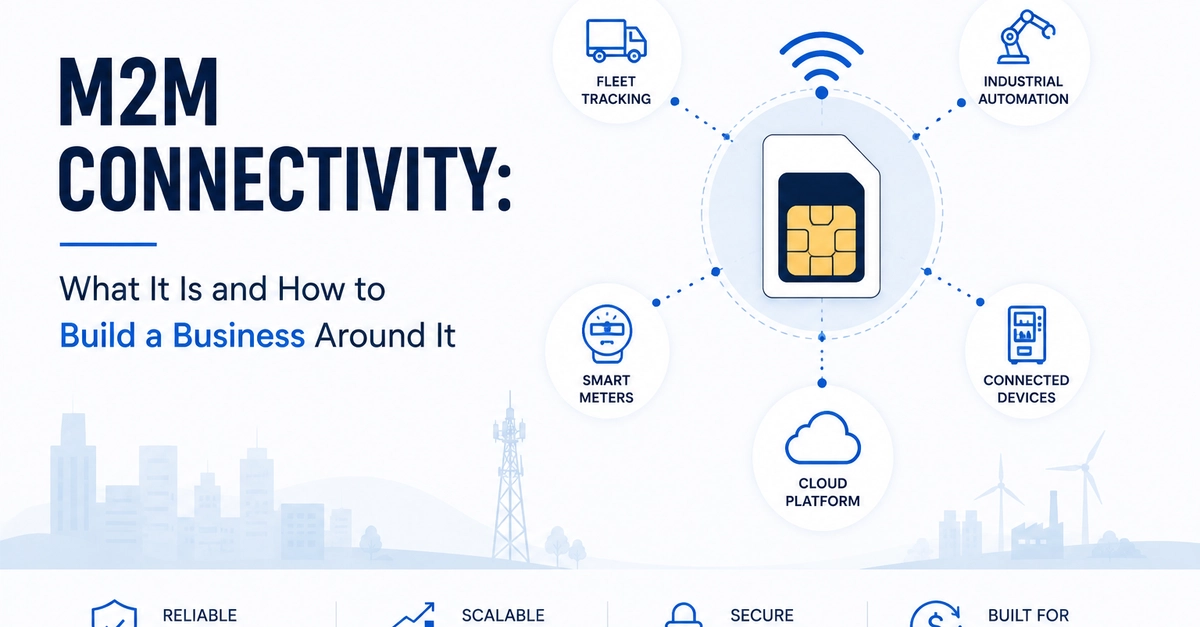
****If you've spent any time around IoT projects, you've probably noticed that "M2M connectivity" gets thrown around loosely. Some people use it as a synonym for IoT. Others mean specifically cellular SIM-based connections between machines. For this article, I'm sticking with the narrower, more useful definition: M2M connectivity is the network layer that lets a device a meter, a vehicle tracker, a vending machine, an industrial sensor exchange data with a backend system without a human initiating the session.
That narrower definition matters because it's the difference between "we integrated an IoT SDK" and "we're responsible for provisioning, billing, and keeping tens of thousands of SIMs or eSIM profiles alive across multiple countries." The second one is a business. This post is about what that business actually looks like from an engineering and architecture standpoint.
What M2M Connectivity Actually Involves
At the network level, M2M connectivity usually rides on one of a handful of cellular technologies: NB-IoT and LTE-M for low-power, low-bandwidth devices (think water meters or asset trackers that report a few times a day), regular LTE/5G for anything needing real-time throughput, and increasingly 5G RedCap as a middle ground for devices that need more than NB-IoT but don't need full 5G bandwidth.