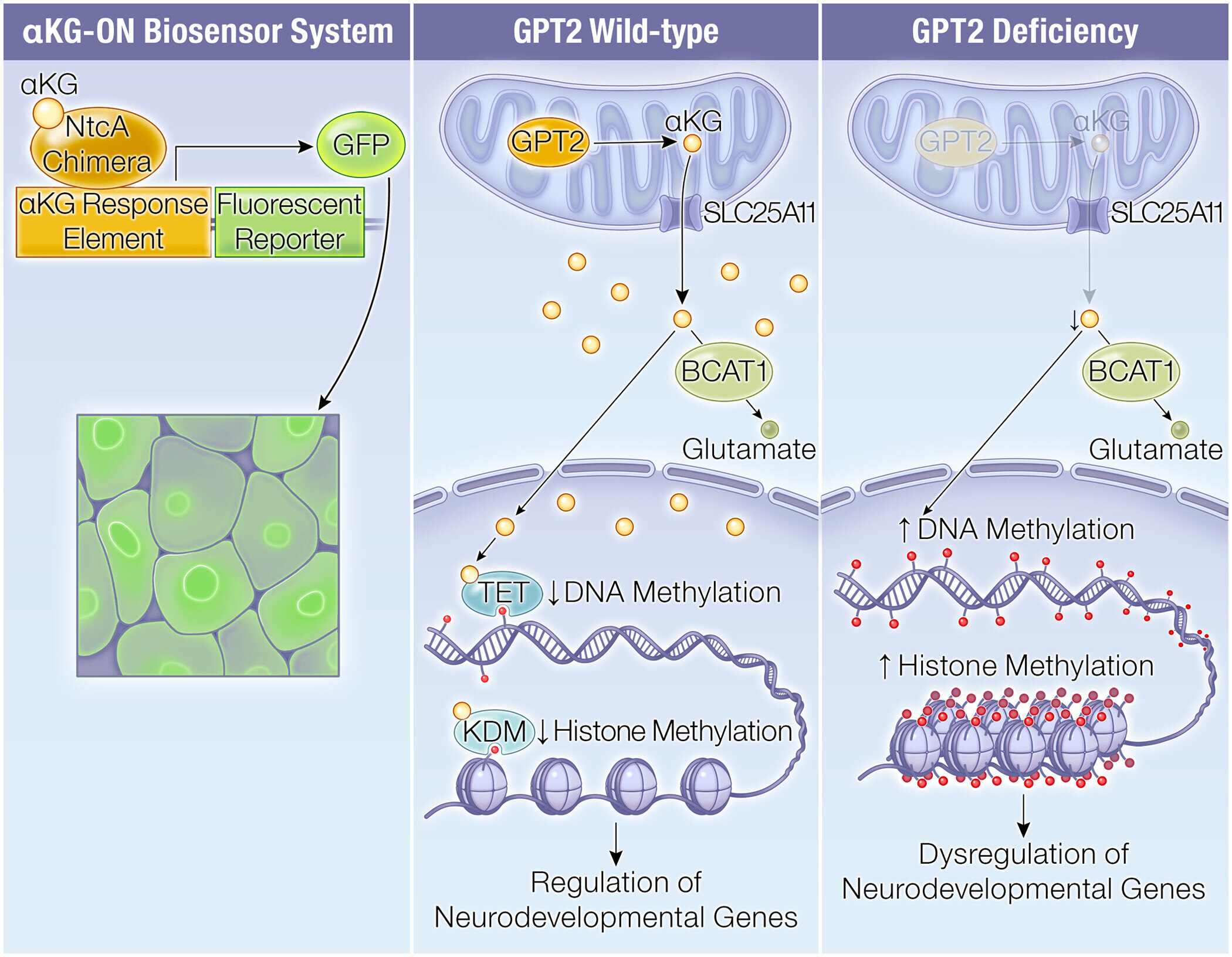
Mechanisms governing αKG-dependent chromatin demethylation. Credit: Science (2026). DOI: 10.1126/science.adx8675
Scientists at Children's Medical Center Research Institute at UT Southwestern (CRI) have discovered why babies born with a rare inborn error of metabolism called GPT2 deficiency suffer from severe neurological impairment. Using their newly developed biosensor to track the essential metabolite alpha-ketoglutarate (αKG), researchers found that the mitochondrial enzyme GPT2 and transporter protein SLC25A11 work together to control the production and transport of αKG from the mitochondria to the nucleus.
The findings are published in the journal Science.
Since αKG is essential for unwinding DNA for gene transcription, this research suggests that αKG supplementation at birth might help diminish disease progression, according to study leader Samuel McBrayer, Ph.D., assistant professor at CRI and of pediatrics.
"GPT2 is expressed throughout the body, so it was difficult to understand why this enzyme would have a special role in the brain," McBrayer said. "The disruption of GPT2 activity causes substantial changes in DNA structure, most profoundly in brain cells, which dysregulates many important genes that must turn on during brain development."