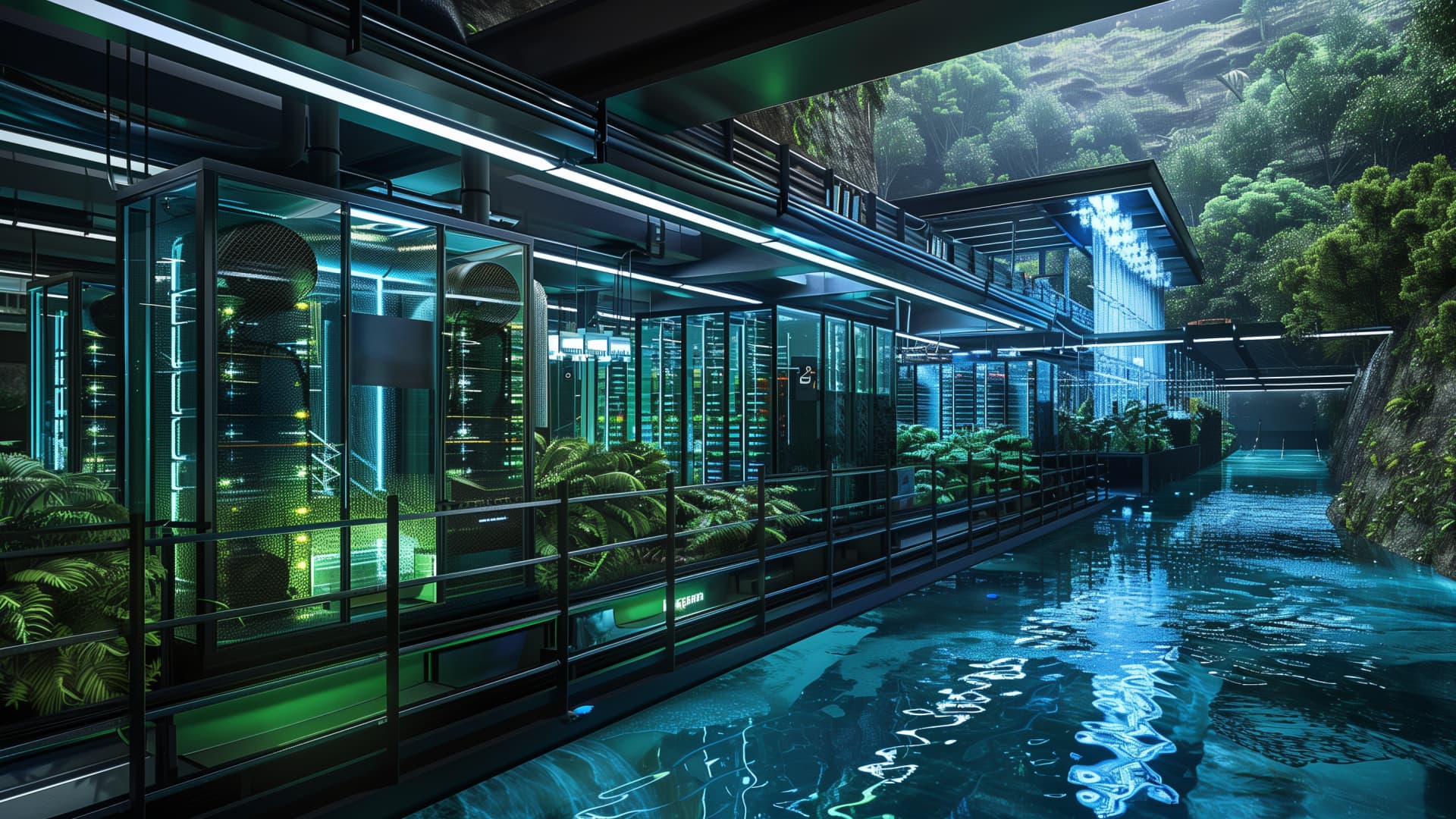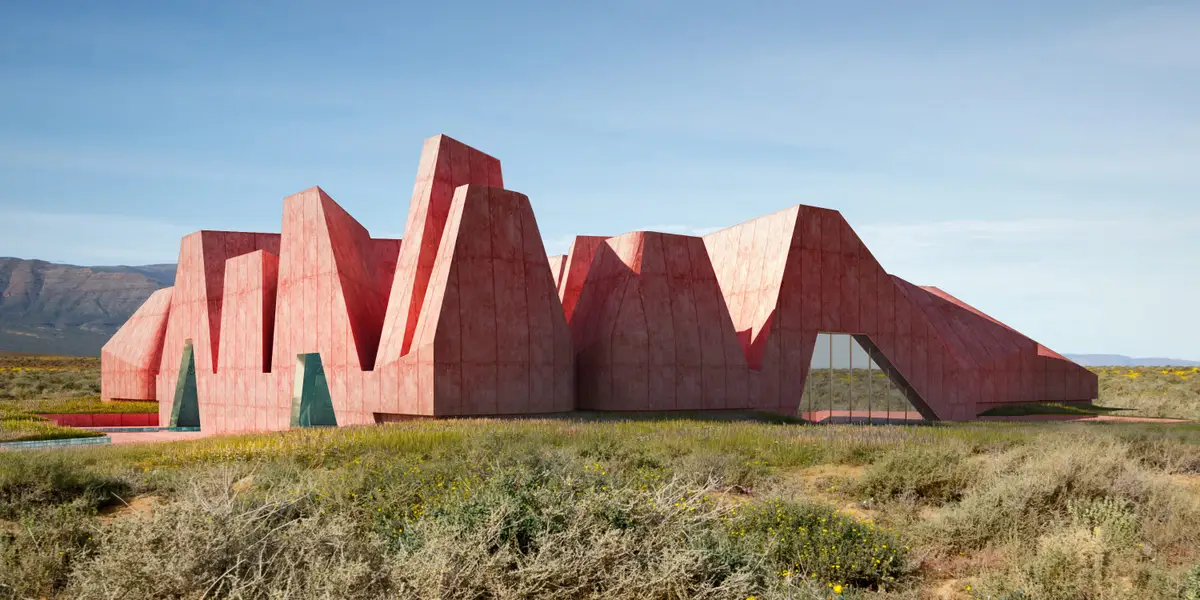
Forma's "Pink Thermal Baths" imagines an underground data center that transfers the heat it emits to a public bathhouse above ground.
Forma
A data center goes up in the middle of a California desert oasis, and in return, a nearby community gets a 32,000-square-foot bathhouse where people lounge in pools warmed by subterranean servers.Forma, a New York-based architecture studio, designed the "Pink Thermal Baths" concept in 2021, before generative AI ignited a race to build computing facilities across America.Miroslava Brooks, a founding partner of Forma, told Business Insider the concept wasn't meant to be a blueprint for turning hyperscale AI campuses into spas. Instead, it asks a question that has become more urgent as computing complexes pop up near residential neighborhoods: What can a data center give back to the place that hosts it?"I really think that the first question is, what does this building give back? And that has to go beyond just energy and the data," Brooks said.The cloud is getting harder to ignoreData centers aren't new. Before frontier AI model labs, they've supported banks, websites, streaming services, and cloud storage.Thomas McGoldrick, a managing director at Gensler who has designed data centers for about 20 years, remembers when they were treated as "back-of-house" facilities supporting individual businesses."Now, the transfer of data becomes more and more important," he said. "It's become part of our strategic infrastructure."