The "God Component" Anti-Pattern
When building SaaS interfaces at Smart Tech Devs, developers frequently fall into a dangerous architectural trap when creating reusable UI elements, such as a <DashboardCard />. Initially, the card just needs a title and some text. But soon, the design team asks for an optional button. Then they want an optional icon. Then a subtitle. Then a loading state.
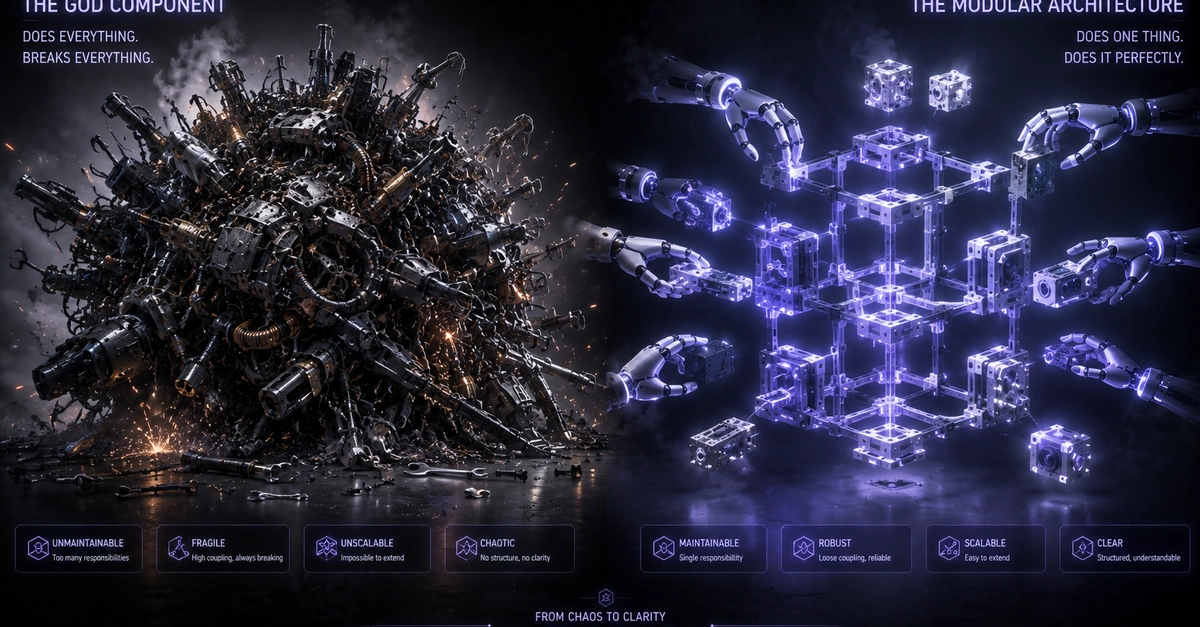
The junior developer accommodates this by adding a new prop for every single request: <DashboardCard title="Sales" subtitle="Q3" hasIcon={true} buttonText="Export" isLoading={false} onButtonClick={handleExport} />. This results in a massive, fragile "God Component" that requires 20 different boolean flags to render correctly. If you need a card with a dropdown menu instead of a button, the entire component breaks. To build truly scalable, indestructible design systems, you must utilize Inversion of Control via Component Composition.
The Solution: React children Slots
Inversion of Control simply means moving the rendering responsibility out of the component and handing it back to the developer using it.