TypeScript Declaration Merging in 2026: Augmenting Third-Party Modules Without Losing Type Safety
This article was written with the assistance of AI, under human supervision and review.
Most TypeScript codebases eventually hit the same wall: third-party libraries ship with incomplete or outdated type definitions, forcing teams to choose between abandoning type safety or forking the entire dependency. Neither option scales. When Express.Request lacks your custom authentication properties or Redux.Store omits your application state shape, the typical response is to cast everything to any and hope the runtime behavior matches expectations. That approach compounds technical debt and eliminates the compiler's value proposition entirely.
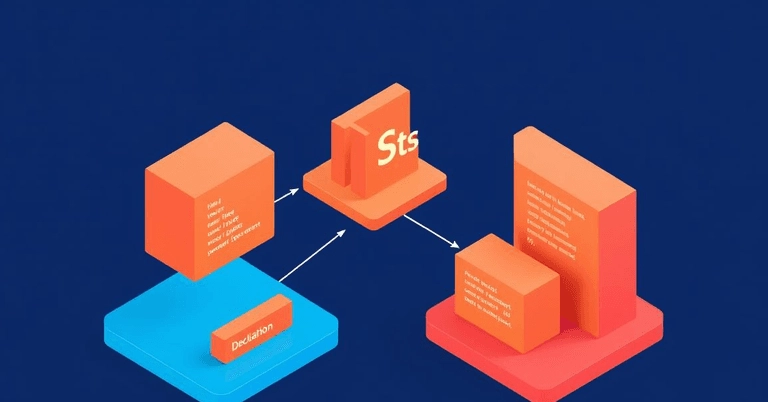
Declaration merging solves this problem by letting developers augment existing types without modifying upstream code. TypeScript's compiler merges multiple declarations with identical names into a single coherent definition, enabling precise extensions to third-party modules while preserving type safety across the entire dependency graph. The pattern requires understanding which structures support merging, when to use global versus module-scoped augmentation, and how to structure declaration files to avoid conflicts with future upstream changes.