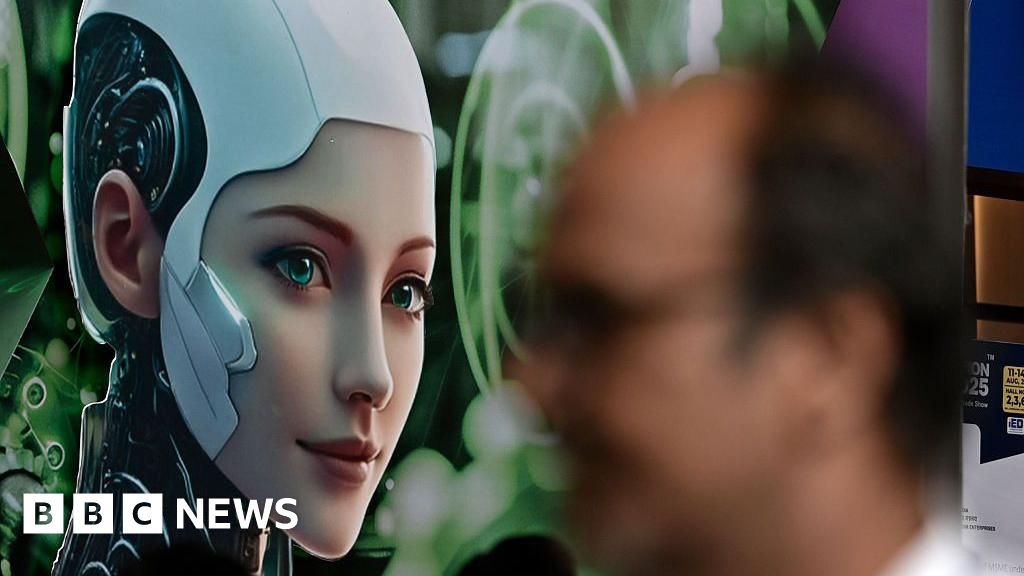
We have built machines with a strange kind of intelligence: they have read everything and felt nothing
| Photo Credit:
NanoStockk
Billions of dollars are pouring into AI in India. Google alone has pledged $15 billion. But look closely at what that money buys: data centres, chips, cloud. It is all compute. Just this week, IBM’s stock suffered its worst single-day fall in history down 25 per cent because its corporate customers diverted their budgets to AI servers and memory chips. The gold rush is so fixated on computing power that it is swallowing everything else in enterprise technology. Yet almost nobody in Big Tech is spending a rupee teaching AI to hear.Why does that matter? Start with your car.You know your car is in trouble before your car does. A new rattle. A change in the engine’s hum. A squeal when you brake. Your ear catches the problem weeks before the dashboard light comes on. The light is just a machine’s late confession. The sound was the truth and it arrived first.Now here is the uncomfortable part. The artificial intelligence we are building to run our factories, drive our vehicles, and power our robots cannot hear that sound at all. Today’s AI is astonishing at language and images. It can write your emails and paint you a picture. Why? Because it was trained on the internet with decades of our text, photos, and videos. That was the data lying around, so that became the AI’s entire picture of the world. But the internet is only the part of reality humans chose to type, photograph, and upload. Everything else, the hum of a healthy motor, the shudder of a failing pump, the heat of an overloaded wire never made it online. Nobody posts vibrations.Strange kind of intelligenceSo we have built machines with a strange kind of intelligence: they have read everything and felt nothing.This was fine when AI lived inside chatbots. It is not fine now. The next wave, call it Physical AI, is supposed to walk into the real world: robots on factory floors, machines that fix other machines, systems that keep power grids and water plants running. We are sending them in with a map of reality drawn entirely from the internet.And here is the part Big Tech has not fully confronted. The enterprise money it is chasing sits in factories, refineries, railways, and power plants and none of those use cases work without the messy, physical layer. A chatbot can summarise a maintenance report; it cannot tell you the compressor will seize on Thursday. For that, AI must live where the machine lives: in vibration, sound, pressure, heat, and current. If the giants want the industrial enterprise to pay for AI, they will have to leave the clean world of text and pixels and learn the grimy dialect of the shop floor. The companies that skip this step will keep selling copilots; the ones that master it will sell something factories will actually fight to buy — foresight.A failing bearing whispers its warning thousands of times in that same second. Record too slowly and the warning doesn’t blur it vanishes. Record everything and you drown in data too vast to store or send. So the sensor itself must be smart enough to decide, in the moment, which whisper matters.The fix is not to abandon digital computing it remains unbeatable for learning and planning. The fix is to start listening where the world actually speaks. Put intelligence next to the sensor. Catch the tremor while it is still a tremor.For India, which wants to be the world’s factory floor and whose economy runs on pumps, motors, looms and lathes, this is not academic. The nation that teaches machines to listen will own the next decade of industry. The ones still scraping the internet for text will be photographing the smoke after the fire.Physical AI will not be limited by how much it can compute. It will be limited by how much of the world it can perceive. And right now, our smartest machines are brilliant, well-read and deaf.The writer is General Manager & Head – AI Lab, Hitachi IndiaPublished on July 18, 2026