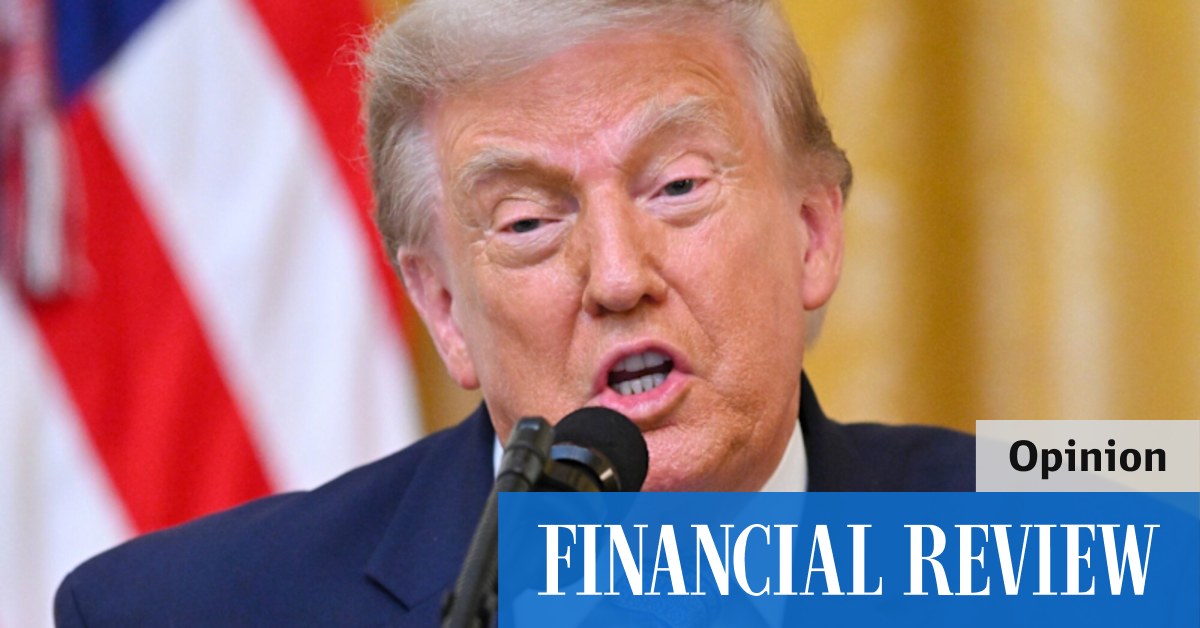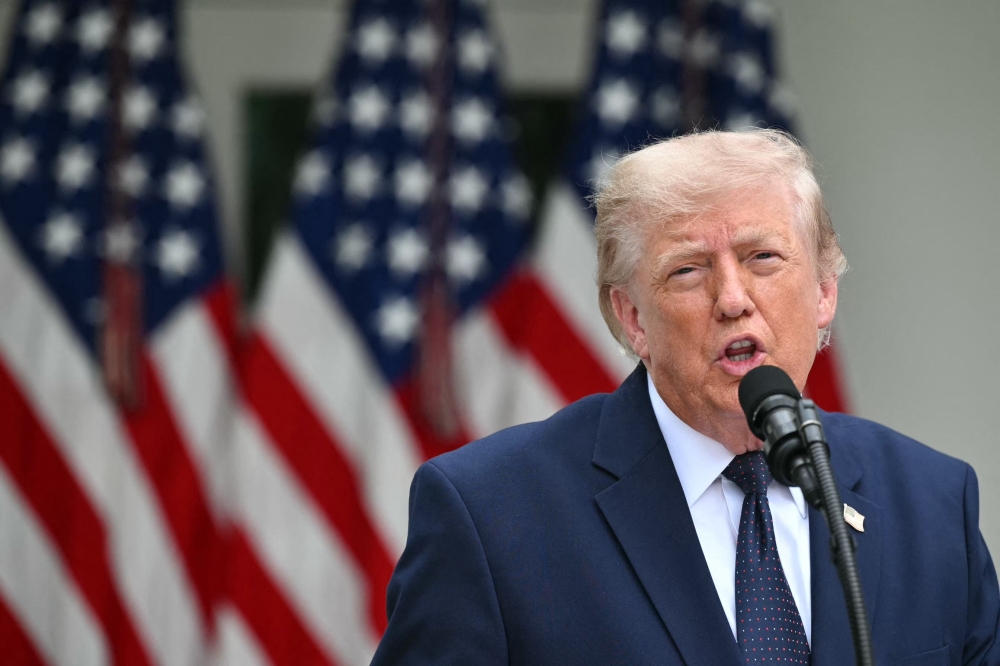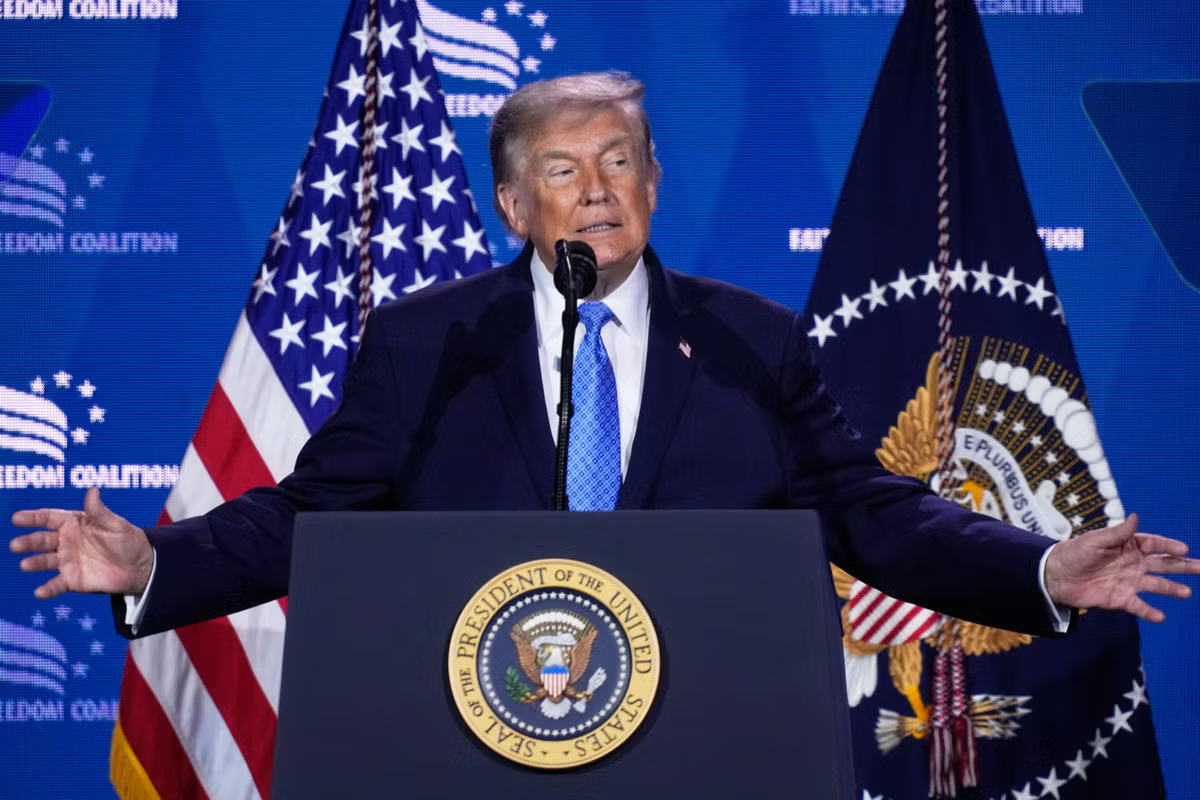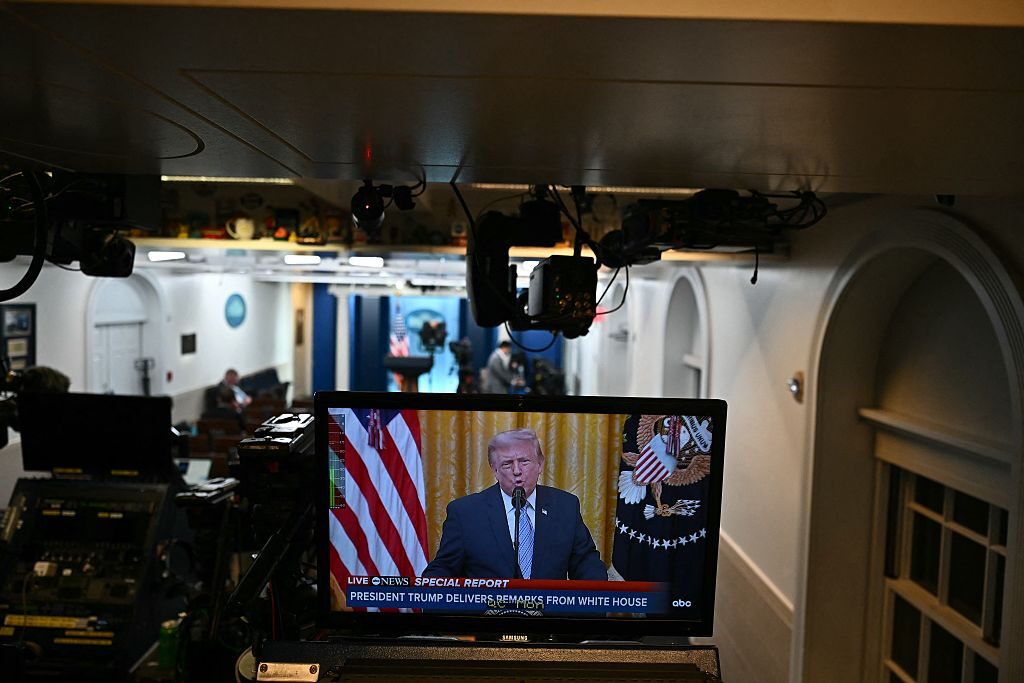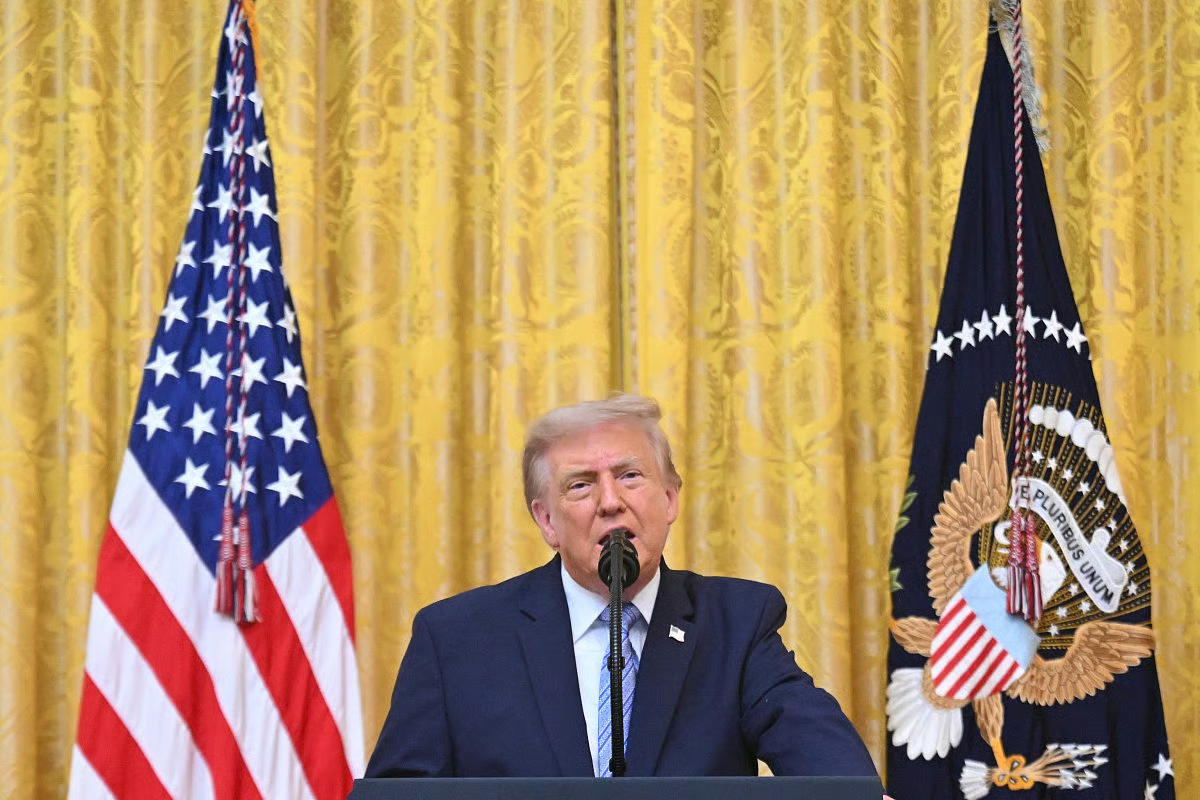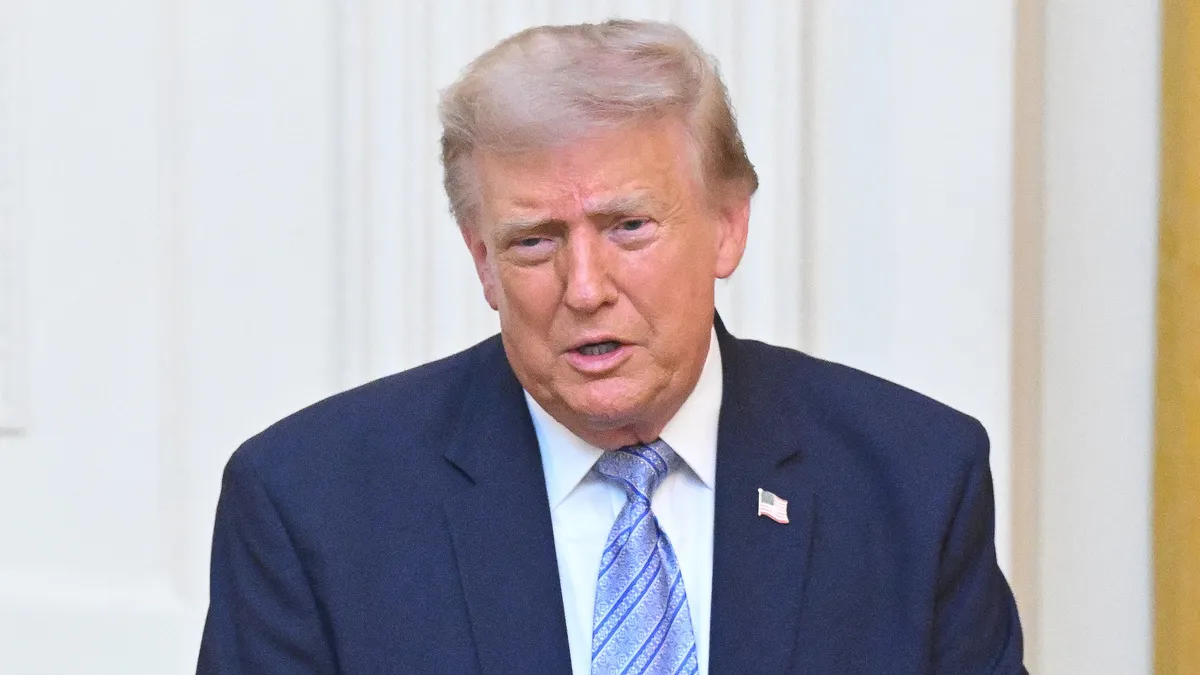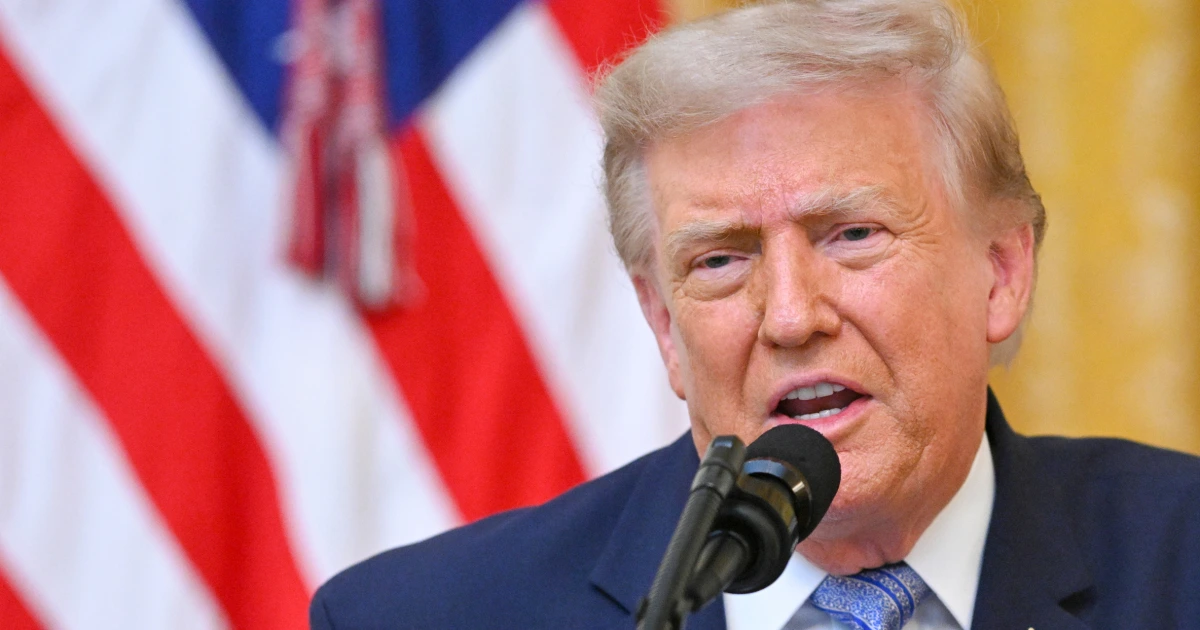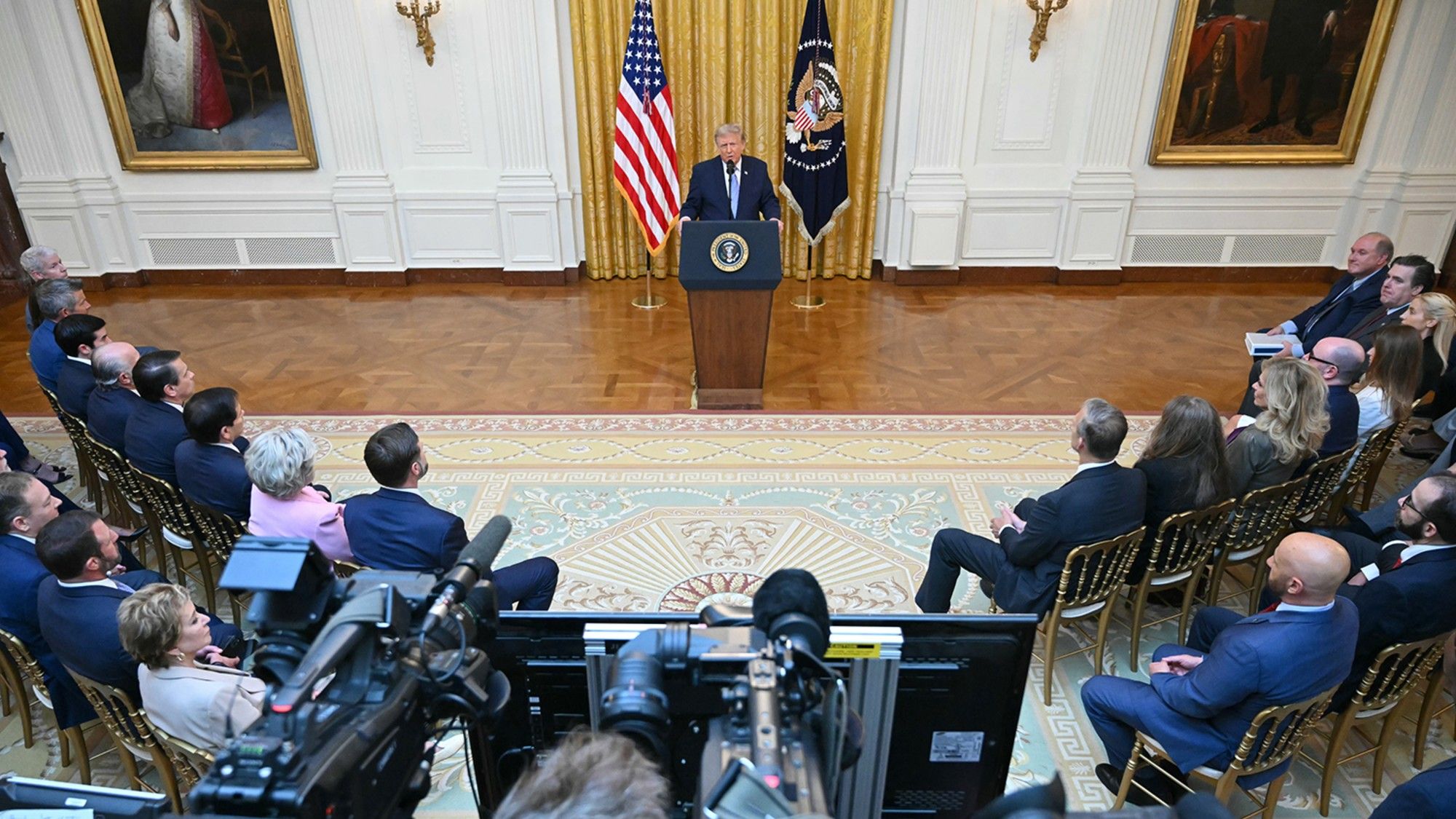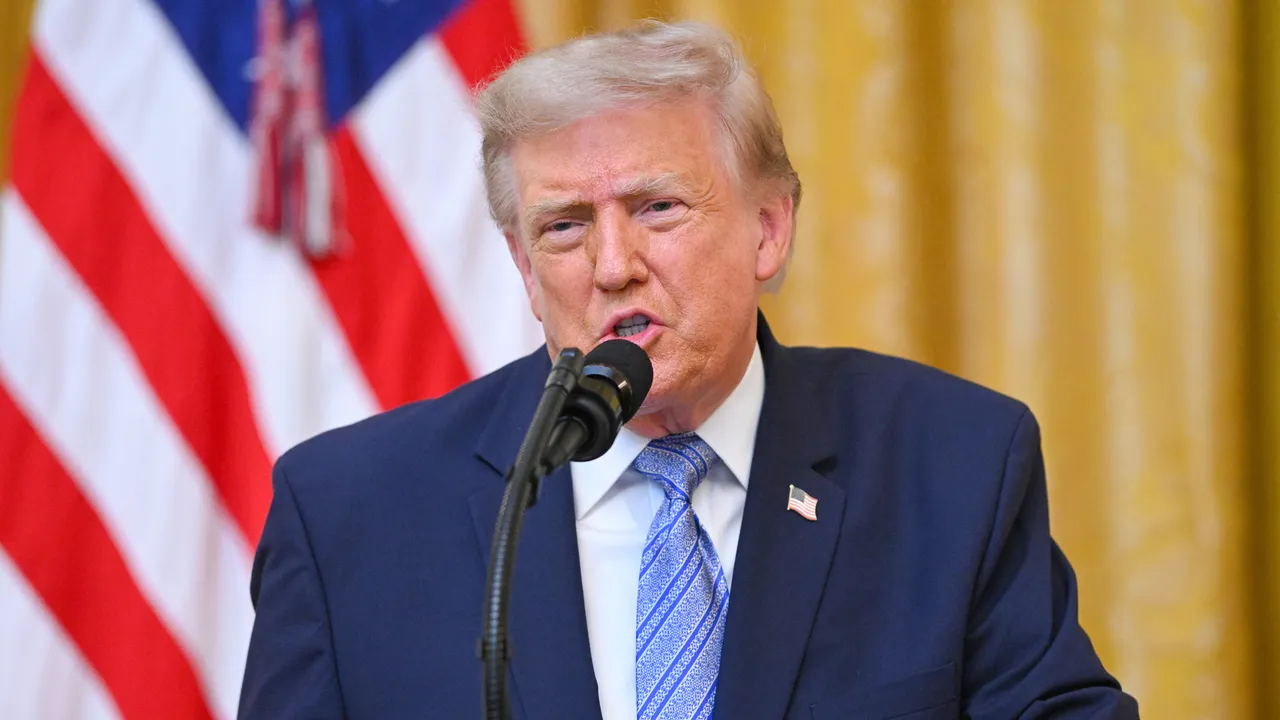
President Donald Trump wants Americans to be very afraid about the midterm elections, and for an obvious reason: he is very afraid about what the election results portend for his party’s control of Congress and, therefore, his Presidency. On Thursday, during a prime-time address, Trump served up a mishmash of purported reasons—recycled, overstated, and downright fantastical—to be doubtful about the reliability of the election results: hordes of noncitizens streaming to the polls; a meddling China seeking access to voter rolls; “shocking vulnerabilities in our election infrastructure”; ballots “floating aimlessly through the mail.” Trump’s stated ask was that viewers urge lawmakers to pass the voter-suppression legislation known as the SAVE America Act, which would require voters to prove citizenship to participate in federal elections, and would impose a nationwide photo-identification requirement.But, as Trump well knows, the SAVE America Act is beyond saving, for the simple reason that the proposal lacks enough support among Republicans to pass the Senate. So Thursday night was not about one last legislative push; it was about setting the stage for Trump to claim, as he has for more than a decade now, that any election he fails to win—indeed, fails to win by a landslide—has been rigged against him.In part, that desperation may reflect his inability to accept the reality of defeat. The Presidential ego cannot tolerate the loser label, and he has surrounded himself with people who are willing to sustain his delusions. This week’s confirmation hearings for Cabinet nominees featured another dreary instance of a pick unwilling to state who won the 2020 election; this time, it was Trump’s choice for director of National Intelligence, Jay Clayton. Like others wary of incurring the President’s wrath, Clayton would provide only the standard, grudging minimum: “Joe Biden was certified as the President.” Pressing Clayton about this non-answer, Jon Ossoff, the Democratic senator from Georgia, asked him, “Isn’t it humiliating to be unable to answer this question? To have to indulge the President’s delusions?”But it is not unreasonable to worry that something more dangerous than soothing Trump’s ego may be in the works here. “I’m not an alarmist,” Representative Jim Himes, the ranking member of the House Intelligence Committee, told MS NOW’s Lawrence O’Donnell shortly after Trump concluded his remarks. “But understand what happened tonight. The President was setting the context—he was setting the basis for him to turn around at midnight on Election Day and say, ‘I warned you.’ ” Himes raised the spectre of Trump’s deploying Homeland Security officials to seize ballot boxes in key states, claiming a crisis of voting by noncitizens. “That is the moment in which American democracy dies,” Himes said.Trump’s twenty-five-minute address, delivered from the East Room, had the self-congratulatory air of a State of the Union speech without the accompanying props—cheering lawmakers, unsmiling Justices, celebrity guests. Before launching into his jeremiad about “an election system so broken and so vulnerable that no one can possibly defend it,” Trump praised himself for creating his namesake investment accounts, for lowering prescription-drug prices (TrumpRx), for cutting crime, for a soaring stock market. “Two years ago, our country was dead,” he proclaimed. “Now we are the hottest country anywhere in the world.”Voters, it appears, have a more dyspeptic view; a Washington Post-Ipsos poll published earlier in the day found the President’s approval rating to be floundering at thirty-seven per cent, where it was in April. More alarming for Trump, the poll suggested a weakening of his base; just fifteen per cent, a new low, said they “approve strongly” of his performance. And, while Trump asserted that the United States is “winning big in Iran,” poll respondents begged to differ, with only twenty-nine per cent approving of his conduct of the war. Trump’s rating on his handling of the economy was not much better, at thirty-three per cent.Those anemic numbers help explain the President’s mania for changing the subject to election fraud—laying the groundwork to explain away any losses in November, or, worse, something closer to what Himes warned about. In advance of the speech, Trump had touted “really, really big news.” The White House press secretary, Karoline Leavitt, back from her maternity leave, teased that the findings “will shock you.” And yet the supposed revelations—padded by newly declassified, if still heavily redacted, documents—were far less explosive than Trump claimed. The bait and switch was less surprising than it was reminiscent of former Attorney General Pam Bondi’s bogus binders full of recycled material about Jeffrey Epstein.Trump accused China of “the largest compromise of election data in history, resulting in China’s illicit acquisition of two hundred and twenty million U.S. voter files,” which he called an “unprecedented election-security nightmare.” He failed to mention that these voter files are often publicly available, that China’s gathering of this data has long been known (the information was presented to Trump before he left office), and that, most important, there is an absence of any evidence of tampering with the actual election results, by China or any foreign actor. An April, 2020, redacted assessment by the National Intelligence Council concluded that “Chinese intelligence officials analyzed multiple US states’ election voter registration data,” but did so in order “to conduct public opinion analysis on the 2020 US general election,” not to change the outcome. A 2021 analysis of foreign threats to the election, prepared during the Trump Administration and declassified after he left office, found “no indications that any foreign actor attempted to alter any technical aspect of the voting process in the 2020 US elections, including voter registration, casting ballots, vote tabulation, or reporting results.” China, it said, “considered but did not deploy influence efforts intended to change the outcome of the US Presidential election.”Trump said a “stunning investigation by the Department of Homeland Security” had uncovered approximately two hundred and seventy-eight thousand noncitizens registered to vote, largely in four states. The methodology of this tally is disputed, but, more to the point, and unmentioned by Trump, the evidence of noncitizens actually voting is minimal. A February, 2026, analysis by the Bipartisan Policy Center found that “noncitizen registration is already rare, and noncitizen voting is even less common.” The group found that, in many cases of supposed registration by noncitizens, “further review shows the individual is in fact a citizen, and they were only flagged due to clerical errors or outdated records.” As to noncitizens casting ballots, the conservative Heritage Foundation uncovered only seventy-seven instances of noncitizen voting between 1999 and 2023.One of the weirder turns in Trump’s speech was his claim that he had been misled about election interference, during his first term, by his own intelligence community, “members of the deep state” who “worked to actively suppress and downplay information about the extent of China’s sinister election meddling, covering it up from both the President and the American people, like nobody thought was possible.” Officials “responsible for sounding the alarm” about China’s acquisition of voter data, Trump said, “instead kept the information secret and hidden. They did not disclose to me as President or to anyone else.” One e-mail, he said, showed that intelligence analysts “deliberately massaged the Presidential daily briefing to withhold information regarding Chinese activities related to the election.” The e-mail in question, from November 20, 2020, outlined something less than a grand conspiracy. It stated, “We have deliberately massaged our one pending PDB to avoid any direct links to the election.” Even assuming the most malign interpretation of that e-mail, the notion that Trump was the victim of his own intelligence community is a strange claim, given that his then director of National Intelligence, John Ratcliffe, under whose purview the President’s Daily Brief fell, now serves as his C.I.A. director. The declassified documents show a roiling debate within the intelligence community over China’s interest in influencing the election, with a minority saying that the matter should be taken more seriously. They fall short of proving Trump’s claims of a deep-state coverup.We know Trump’s modus operandi for defusing and discrediting problematic information and outcomes, because he has told us. After the 2016 election, Lesley Stahl, of CBS News, asked him why he persisted in attacking journalists. Stahl relayed what Trump had told her: “You know why I do it? I do it to discredit you all and demean you all, so that, when you write negative stories about me, no one will believe you.” Trump is up to the same trick here. The more he plants the seed of an unreliable election system, the better he can respond if the outcome does not go his way. The intelligence community’s 2021 foreign-threats assessment called out this tactic—foreign countries that spread “false or inflated claims about alleged compromises of voting systems to undermine public confidence in election processes and results.” Speaking on CNN after the speech, Sue Gordon, the Principal Deputy Director of National Intelligence during Trump’s first term, said that his speech “does the work of our adversaries,” and added, “They don’t have to interfere. They just have to convince us to not trust our democracy.” As Trump has demonstrated for years now, and as he put on vivid display Thursday, the more dangerous threat is coming from within. ♦
Trump’s Election-Fraud Bait and Switch
The President promised “really, really big news” before his prime-time speech. What he delivered—padded by heavily redacted declassified documents—felt more like Pam Bondi’s bogus Epstein binders than any true revelation.
1,523 words~7 min read