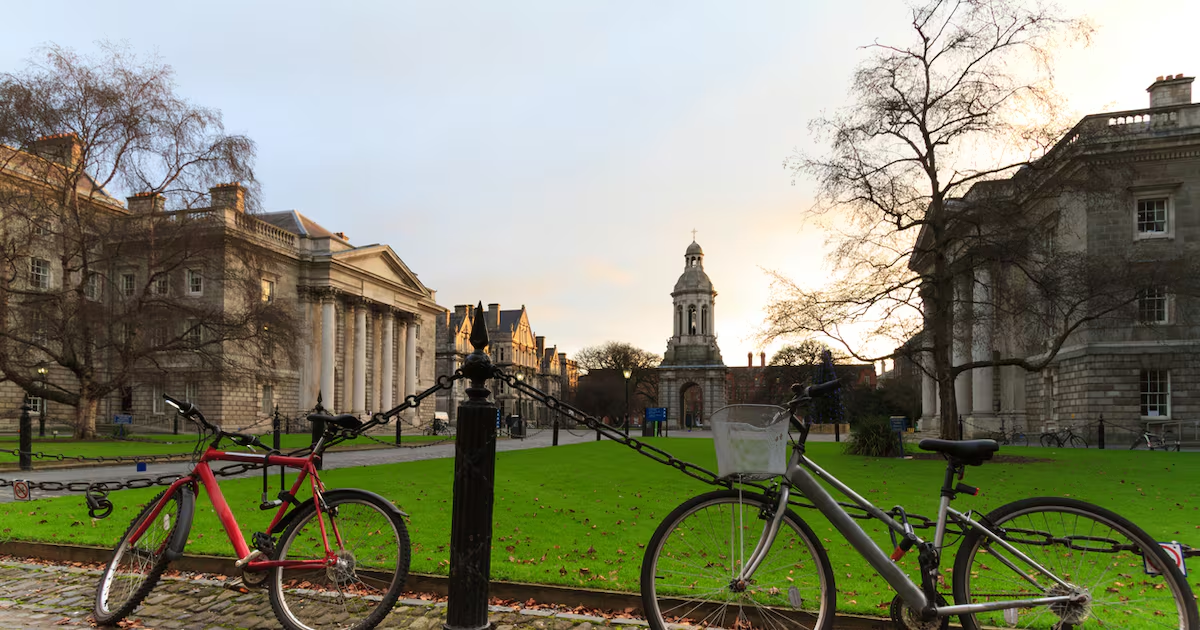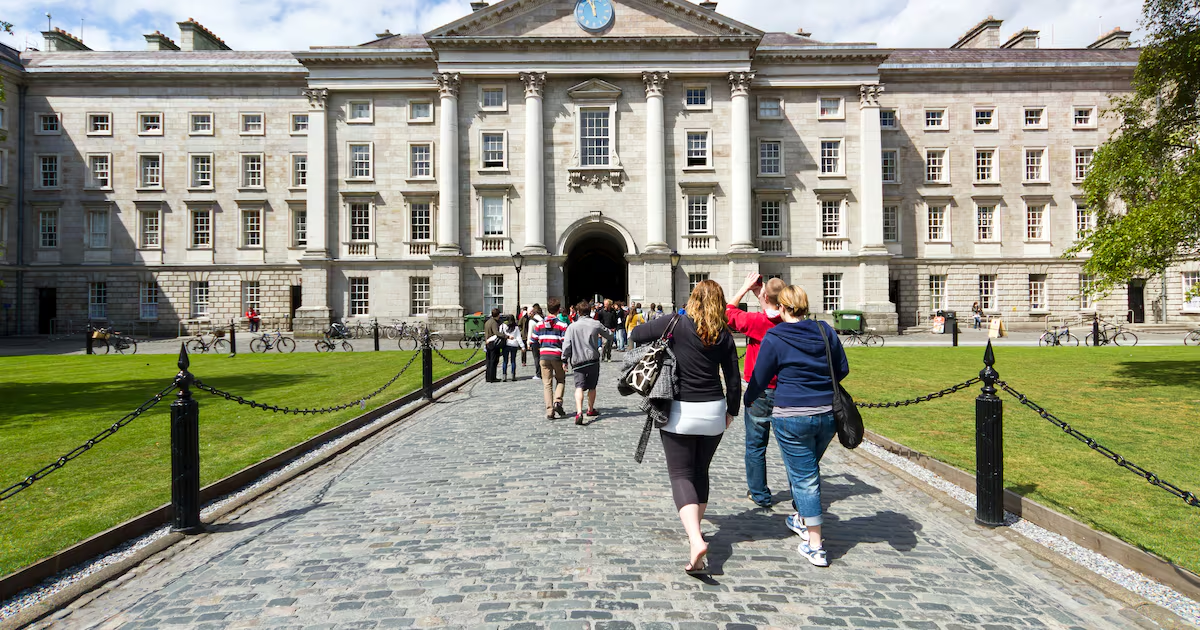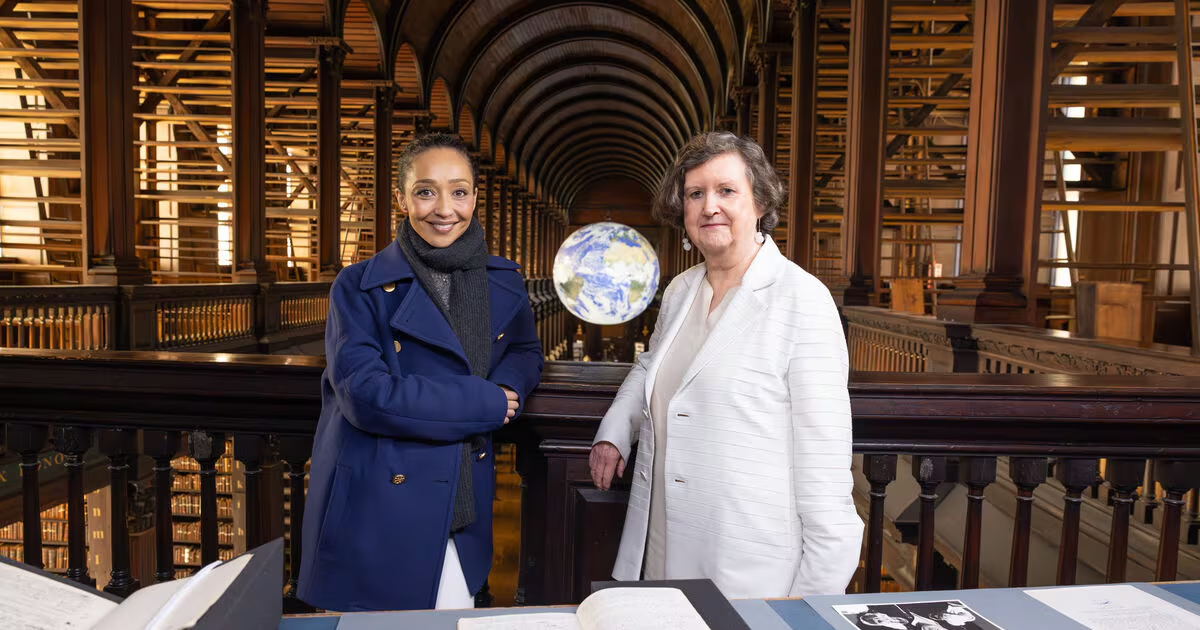
Irish third-level institutions have made immense contributions to human learning. University College Cork’s first professor of mathematics, George Boole, is acknowledged as the founding father of computer science and the inventor of Boolean algebra – the logical underpinning for computer circuits. He, more than any other Irish academic, shaped the world in which we live today: it is no coincidence that UCC launched the first Irish website and one of the 10 original global websites.University College Dublin, for its part, was the alma mater of James Joyce – the most consequential novelist of the 20th century – while the University of Galway created history when Alice Perry became the world’s first female engineering graduate in 1906. Next on our list we come to – consults notes – Trinity College Dublin, the setting for several popular novels by Sally Rooney and the inspiration for the Jedi Knight headquarters in the highly regarded science-fiction film Star Wars: Attack of the Clones.With all that learning, all of those accomplishments, it would be logical for RTÉ to make a series in which prominent graduates return to their alma mater. The broadcaster has done just that with Trinity’s Treasures (RTÉ One, Friday, 8.30pm). And yet – presumably for budgetary reasons – has decided to initially restrict its scope to just one college, the aforementioned Trinity College. But why restrict it to just one institution? Trinity’s Treasures is off to a starry start as it welcomes Oscar-nominee Ruth Negga (future episodes feature musician Eleanor McEvoy and academic and equal rights campaigner David Norris). Negga graduated from Trinity with a bachelor of arts in acting studies before going on to greater things but has fond memories of her time in Dublin 2 and waxes nostalgic as she revisits her old stomping ground. “When you have the opportunity to study somewhere so beautiful, so hallowed, I feel such a sense of pride,” she says, amid the throng of tourists bustling towards the Book of Kells.She is off for a deep dive into the college’s archives. She meets archivist Estelle Gittins, who shares with her a medieval manuscript believed to have been written and illustrated entirely by women – a millenniums-old protest against the patriarchy that echoes down the centuries. Negga also speaks passionately about her love for the overlooked postwar novelist Leland Bardwell. She recalls having her mind blown by Bardwell’s Girl on a Bicycle, a coming of age story set in 1940s Ireland. “I was so shocked to know she is not as celebrated as she is by many of us – and not well known. She captures the inner landscape of what it is to be a woman… a coming of age in postwar Ireland.” One of Bardwell’s plays was performed in Trinity and Gittins shares an early script for the work, which came to be known as Thursday (it had a different name when put on at Trinity). “The title was undecided,” says Gittins. “This was being performed at the Players Theatre in Trinity,” she tells the quietly gobsmacked Negga.Negga is engaging company – though at times can seem ever so actorly, a bit floaty and detached. But it was perhaps a mistake to drag in present-day Trinity undergraduates to read aloud from the works of JM Synge.This is no ding against the young actors, who are talented, enthusiastic and delighted to be performing in front of Negga. But all the thespian derring-do conjures an air of luvvydom. It’s a good idea that does not work in practice.All of this is absorbed by the wide-eyed Negga, who is a good sport and does her best to look astounded. But the true passion comes to the surface when she visits an old rehearsal room and recalls the lecturers and coaches who did so much to make her the actor she is today. Imagine a similar episode featuring, say, Fiona Shaw or Brendan Gleeson – but then neither is a graduate of Trinity, so what would be the point?
Trinity’s Treasures with Ruth Negga on RTÉ One: Why restrict such a good idea to just one college?
Television: With all the learning and accomplishments of Irish institutions RTÉ has – presumably for budgetary reasons – limited its scope here to Trinity College
662 words~3 min read