Have you ever wondered what’s actually happening behind the scenes when you're staring at a mobile loading screen, or why players suddenly "teleport" backward when your Wi-Fi hiccups?
Making a game talk to players all over the world is a massive puzzle. Over the last 25 years, developers and hackers have played a high-stakes chess match to figure out the best way to build digital worlds. Here is the secret history of how online gaming evolved from simple web pages to massive multiplayer universes.
Phase 1: The "Wooden Block" Era (The Early 2000s)
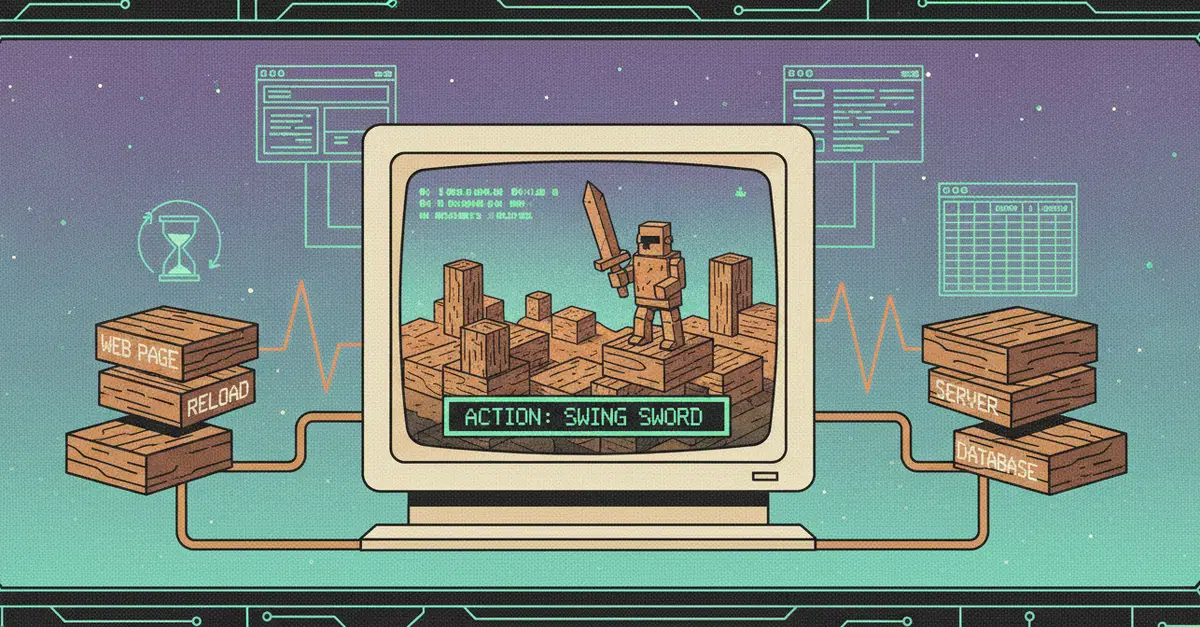
Back in the early days of the internet, games like Neopets' NeoQuest didn't have smooth graphics or fancy apps. They were built using standard web server tools.
Every single time you took a step or swung a sword, your web browser had to completely reload a brand-new page. The game's "brain" lived on a server far away, which would take your move, update a giant digital spreadsheet (a database) tracking your stats, and send a whole new webpage back to your screen. It was clunky, but it meant your game automatically saved exactly where you left off, even if you shut down your computer for months.