This spring I interviewed with a company whose product I genuinely respect — an internet-intelligence platform built on DNS data, the kind of quiet infrastructure that keeps the modern web navigable. The role was Senior Distributed Systems Engineer. The mission: help rewrite a core product from C into Rust and Go.
I have lived this exact migration before. I was the Senior Release Manager who oversaw the release process while Dyn's C and Python codebase — an internet-intelligence product of the same species — was rewritten in Go inside Oracle after the acquisition, as that organization scaled from a few hundred engineers into what the world now knows as OCI. I reviewed the pull requests. I signed off on the code that moved from dev to prod. I watched release success climb from roughly 80% to over 99.9%, not because anyone got smarter overnight, but because the process got honest. Seventeen years of this. Ransomware recoveries at 6 AM. A hundred-plus public repositories. An open-source, three-binary full-text search engine I wrote from scratch.
I spent nearly five hours across this company's interview loop.
Not one question was about distributed systems.
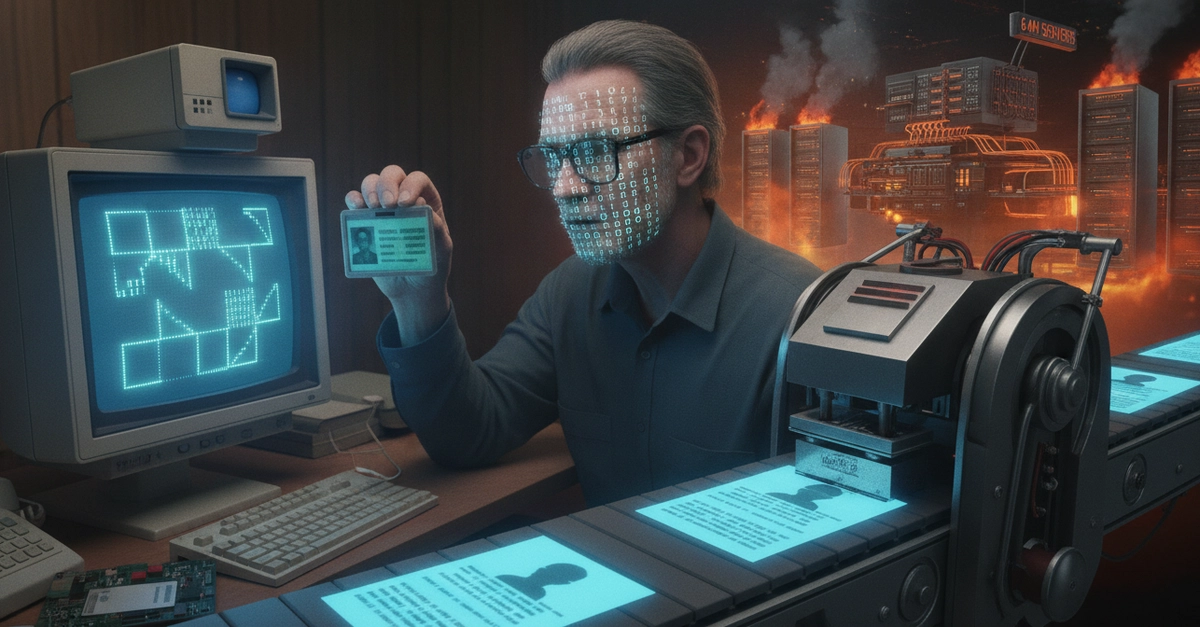
The technical evaluation that decided my candidacy was a grid puzzle: given a matrix of 1s and 0s, count the islands. A freshman flood-fill exercise. In 2026, any AI assistant one-shots it in any language you name, and every candidate knows it, and every interviewer knows every candidate knows it.