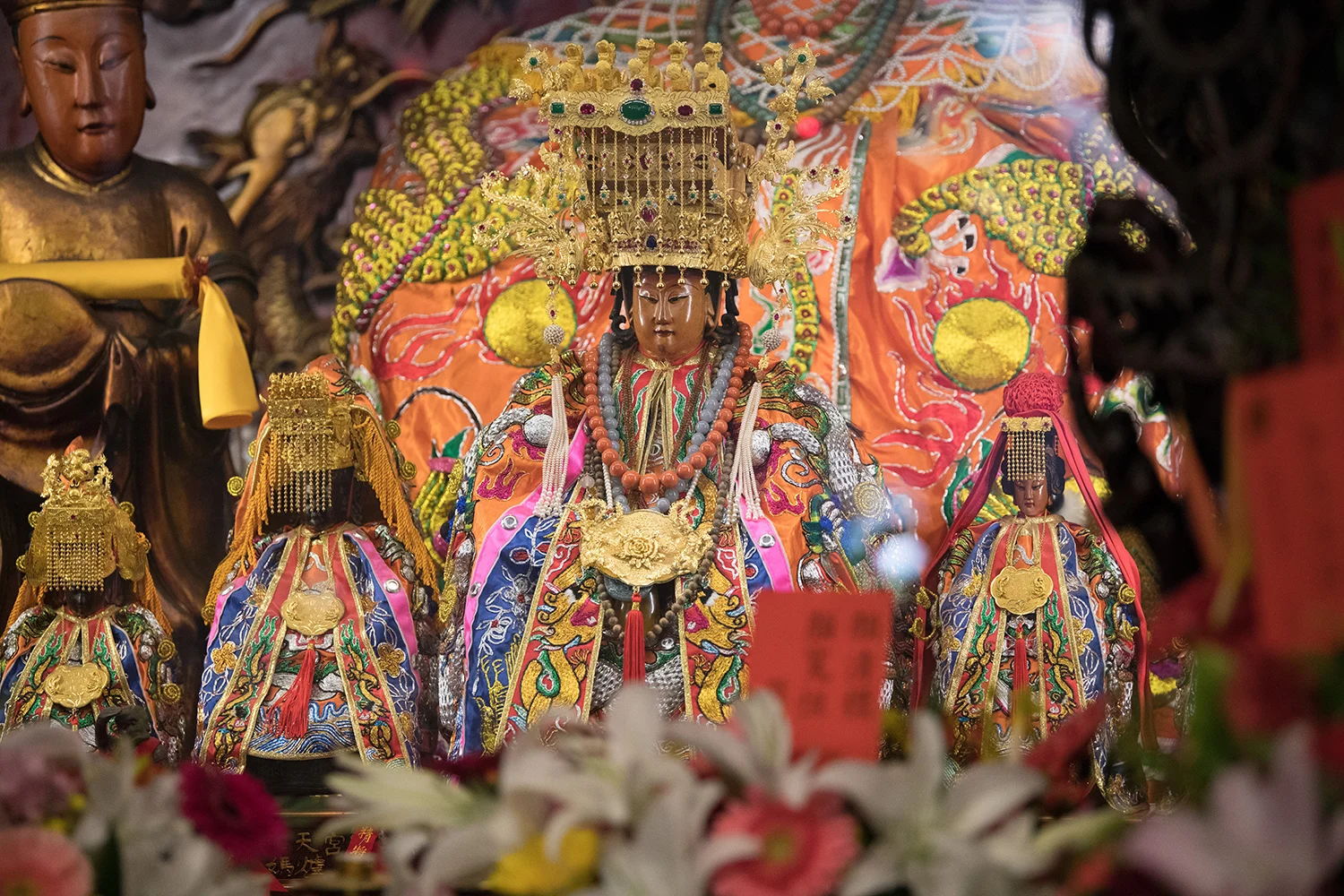
On a rain-soaked April day on Taiwan’s western coast, tens of thousands of pilgrims walked alongside a palanquin bearing a wooden statue of the sea goddess Mazu, one of the most widely worshipped deities on the island. Borne by four devotees, Mazu’s image glided along the street, stopping every so often for the adoration of locals who turned out in the thousands to offer fried snacks, cookies, freshly brewed tea, and fruits to the pilgrims—all for free.
Mazu—also known as Matsu—is believed to have been once a human woman, like many Chinese deities. She lived, if the stories are true, in a coastal island of the southern Chinese province of Fujian in the 10th century, becoming famous for her miraculous gifts. A few centuries after her death, she became a patron of sailors and fishermen throughout southern China. It’s a heritage of worship shared by many Taiwanese—but one that Beijing is now trying to exploit for its own ends.
For nine days in late April, the Dajia Mazu pilgrims travel roughly 200 miles on foot across Taiwan’s western coast, from the second-largest city of Taichung through rice fields and villages, before looping back again to the Mazu statue’s home at the Dajia Jenn Lann temple in Taichung’s suburban district of Dajia. This year, local authorities estimated tens of thousands turned out for the first day alone, with hundreds of thousands joining at different stages along the route. In total, well over 1 million people participate in Mazu pilgrimages across Taiwan each year, peaking in the spring during a time that many call “Mazu madness.”