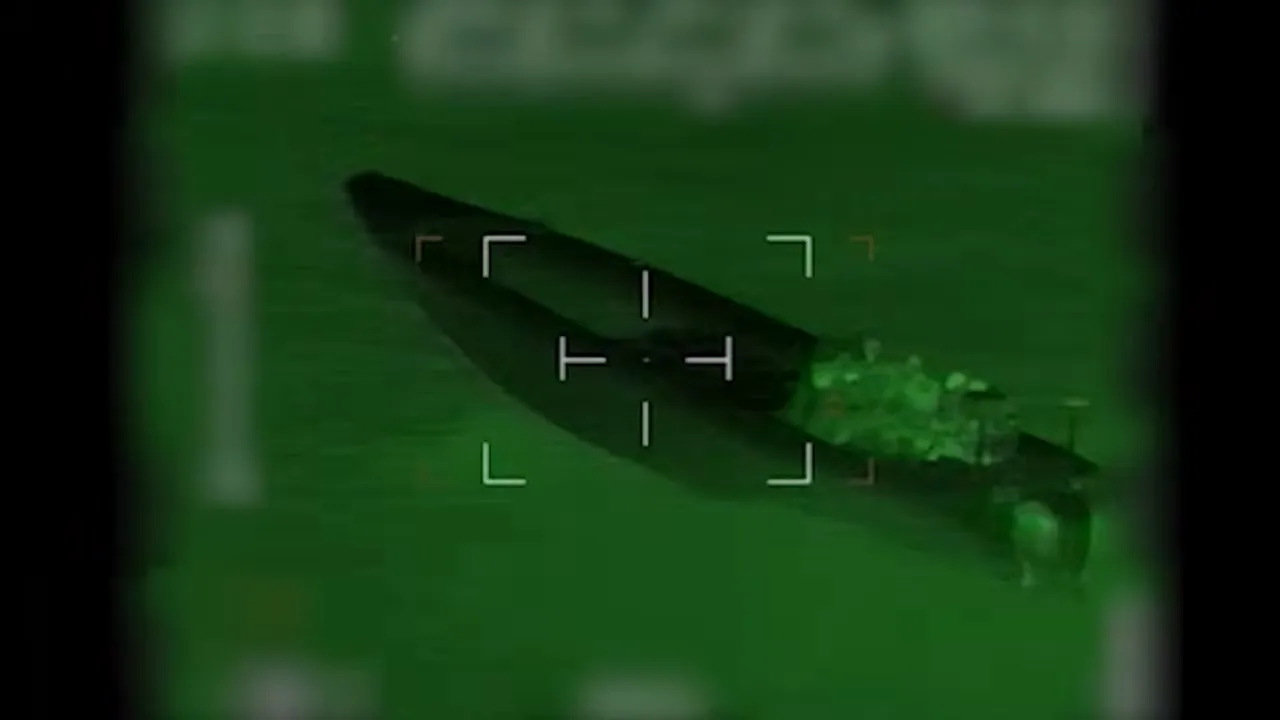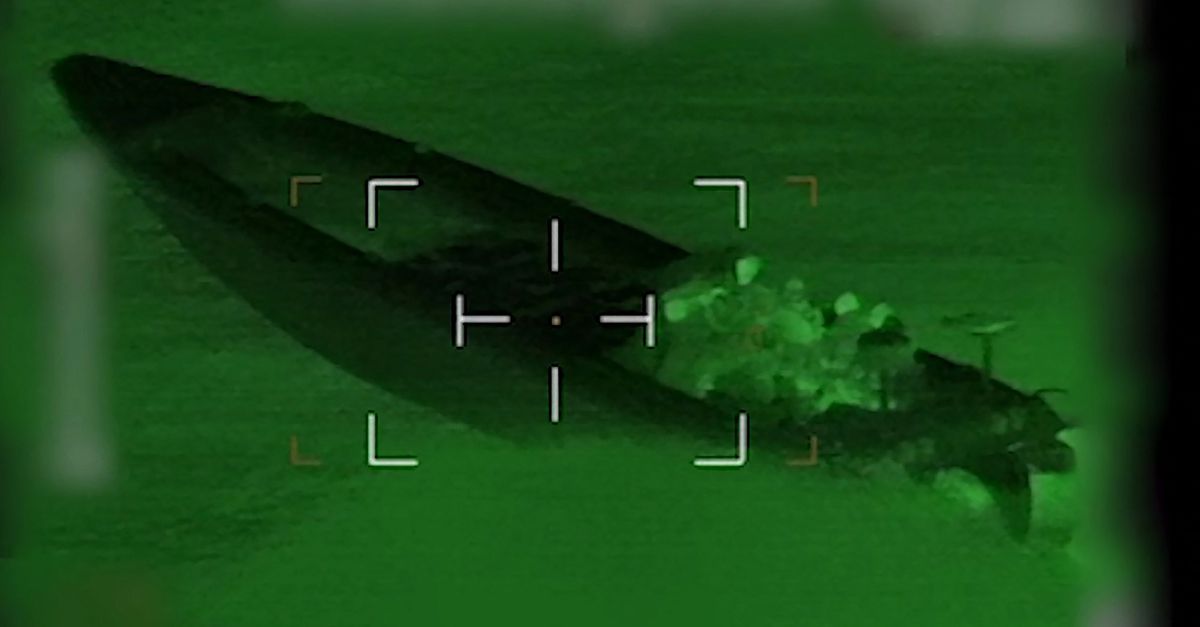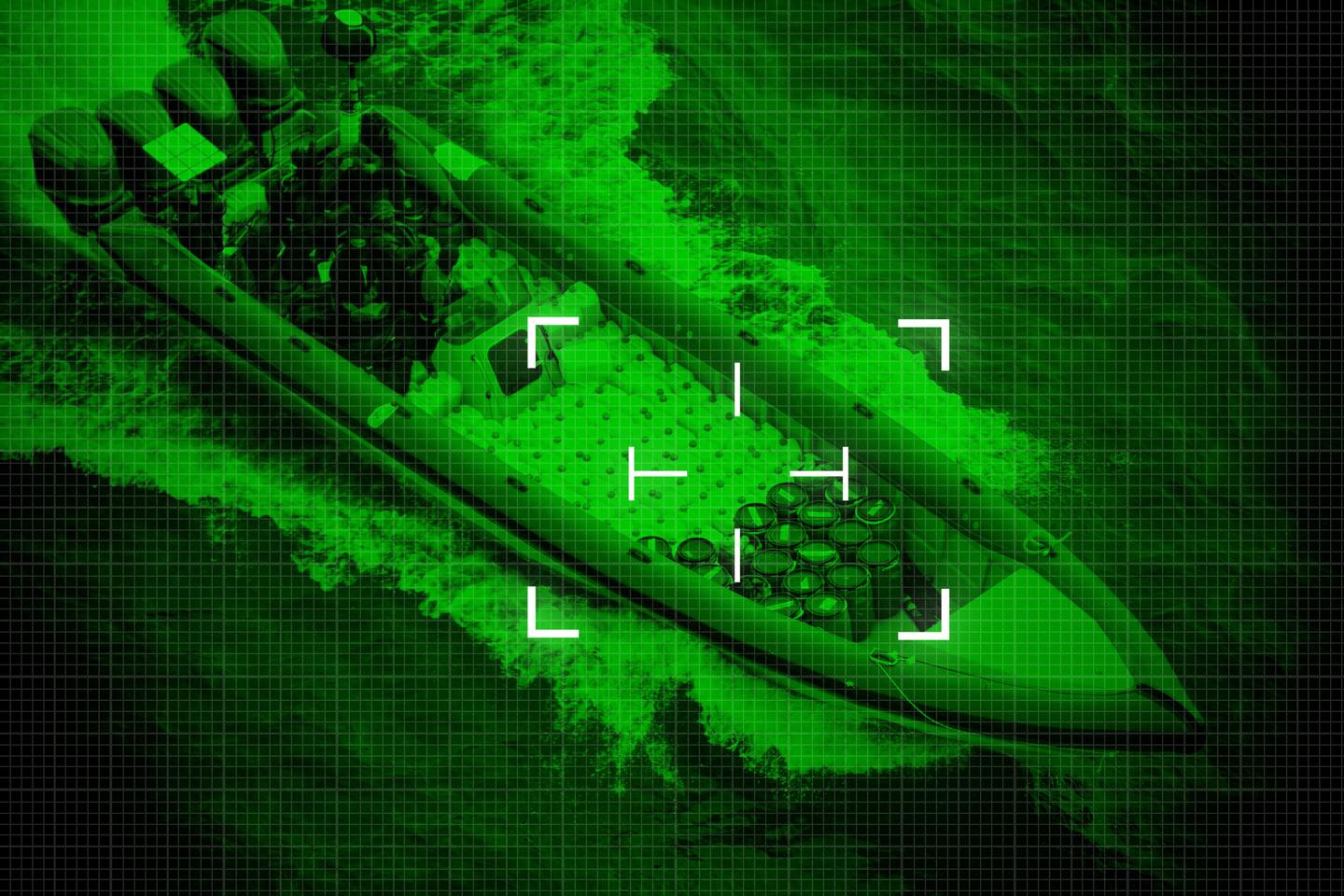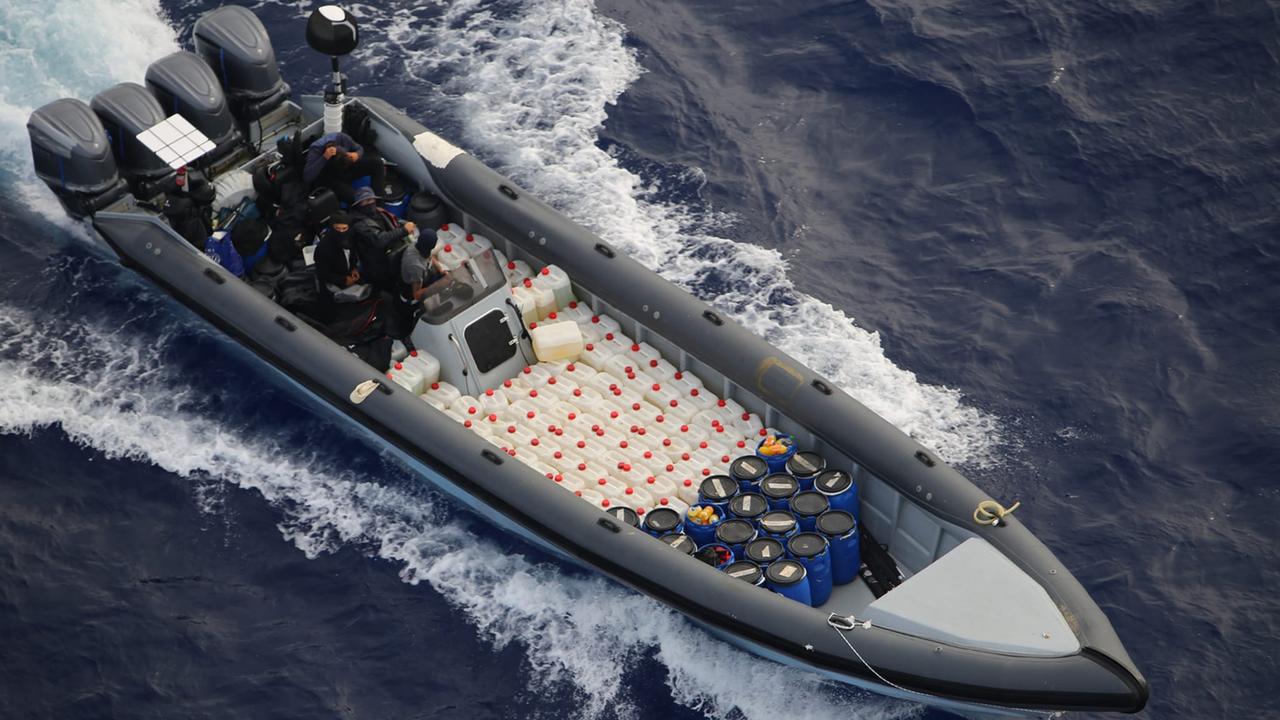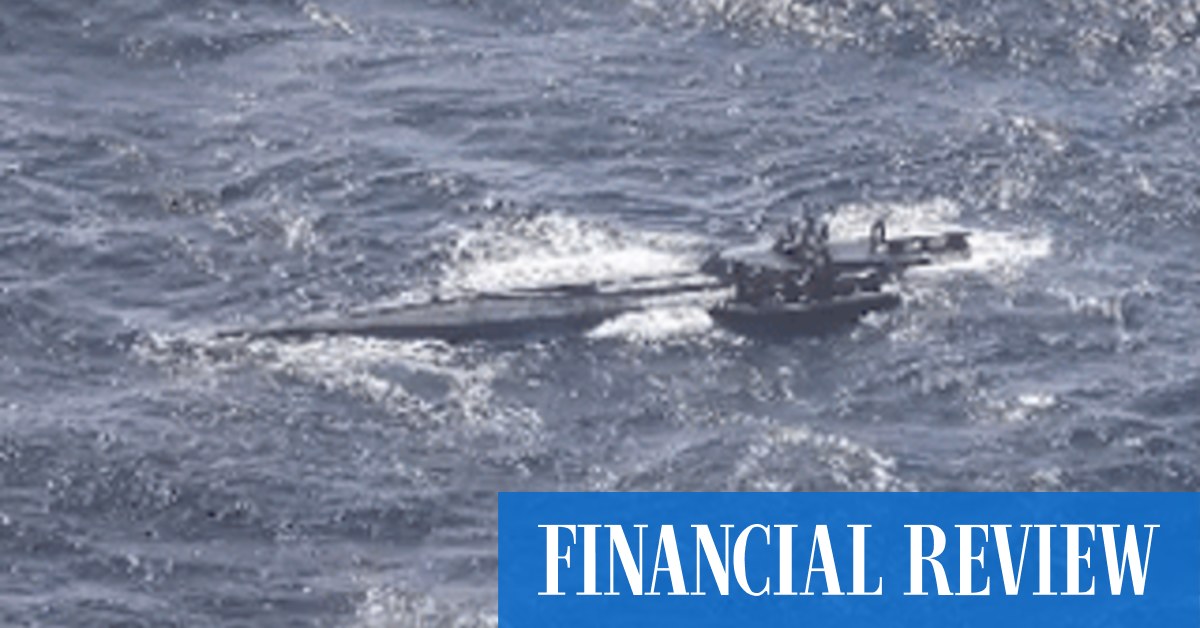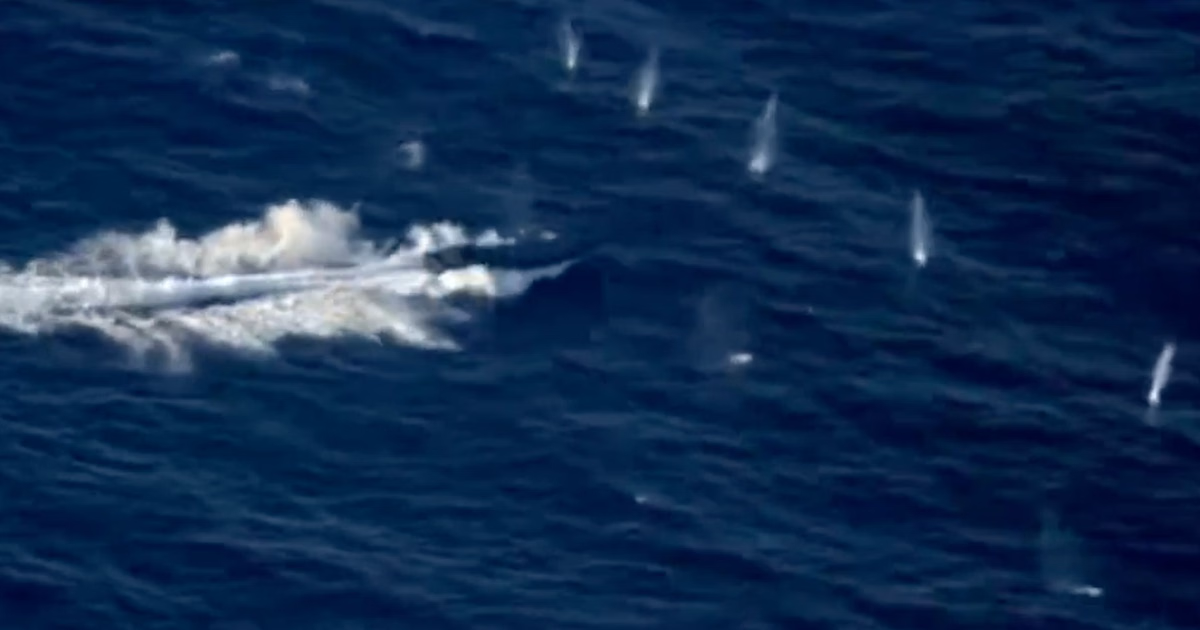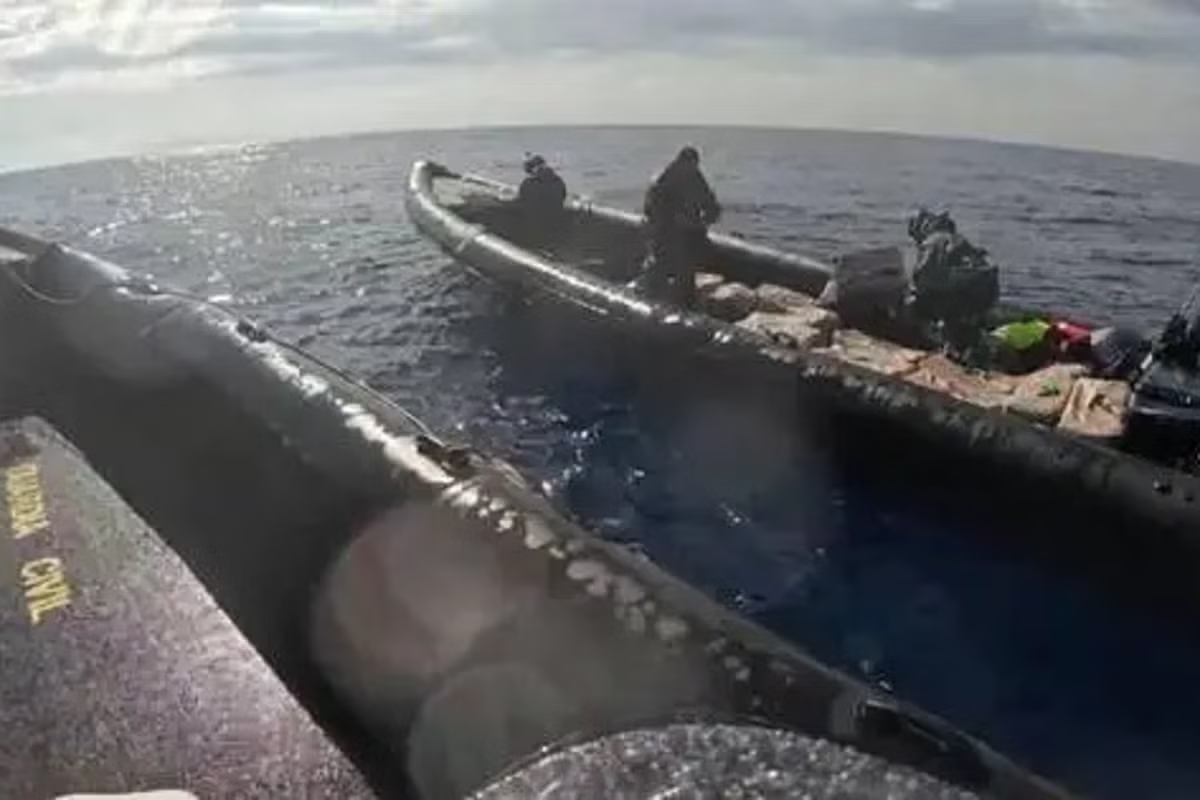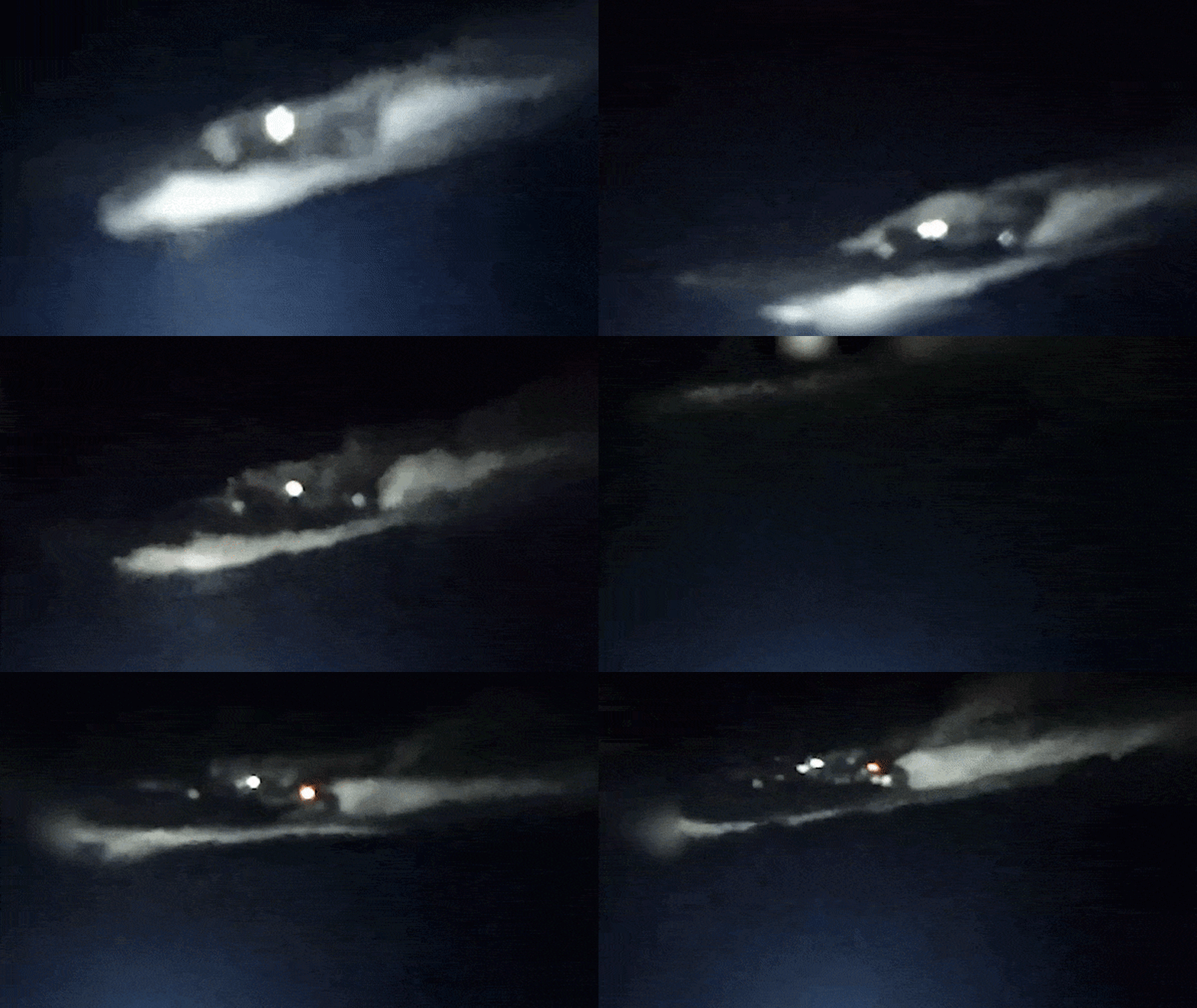
The boat appears through the green, grainy lens of a night-vision scope, skipping across the surface of the Atlantic Ocean hundreds of miles from the European coastline. On board are 2.5 tonnes of cocaine, four crew members and a bank of high-powered engines capable of outrunning most coast guards.Then a flash, a plume of smoke and the high-speed smuggling vessel, known as a “go-fast” boat, sputters to a standstill, immobilised by a shot into its engines by a French navy sniper firing from a helicopter.The October operation marked the first time that the French or any European military had fired on drug-smuggling vessels that have turned a corridor of the Atlantic off the western shores of Africa into a new “cocaine highway”, according to European officials and counternarcotics authorities.But such bullet-to-outboard-motor strikes could become more frequent if European antidrug officials succeed in a push to make sniper fire and other military tactics part of an expanded counternarcotics arsenal.Europe’s proposals stop well short of the tactics embraced by the Trump administration, which has labelled drug cartels as terrorist organisations and carried out missile strikes on dozens of alleged smuggling vessels in the Caribbean, killing at least 221 people.But Europe’s lead agency in the fight against drug trafficking urged members this year to adopt new legal authorities that would allow more military-style operations, according to confidential documents reviewed by The Washington Post as part of a joint investigation with German broadcaster NDR, LeMonde in France, NRC in the Netherlands and other European news organisations.A “call to action memo” from the Maritime Analysis and Operations Centre, or MAOC, calls for the “use of force during maritime pursuits, allowing for engine-disabling tactics and shooting”.French maritime officials endorsed the MAOC plan in a separate document, noting that authorities have been powerless to stop all but a fraction of cocaine-smuggling vessels reaching Europe “due to a lack of naval assets”.The move towards a more militarised approach – which faces opposition in some capitals – reflects rising alarm over the record amount of cocaine reaching Europe’s shores and narco traffickers’ ability to manoeuvre past European defences.After years of crackdowns at Rotterdam, Hamburg and other major ports, smuggling networks are increasingly off-loading shipments in the Atlantic before reaching European territorial waters, officials said, distributing bales of cocaine to smaller, more elusive craft that follow GPS signals to drop-off points at tiny harbours and inlets.Many transfers are staged at what amount to narco-smuggling flotillas on the open seas, officials said.Transport ships from South America steam towards floating encampments of go-fast boats tethered to one another, with supply vessels bringing food and fuel to crews that at times wait weeks for their illicit cargo and coordinates.“It’s ‘Mad Max’ at sea,” said Dimitri Zoulas, head of OFAST, France’s national anti-narcotics agency. For Europe, he said, “This is a phenomenon never before seen on this scale.”In the Caribbean, the Trump administration has used missile strikes to blow up at least 67 boats in international waters off Central and South America, killing crew members while providing scant evidence that narcotics were on board. In interviews, several Western security officials said those US operations appear to violate international law.In May, the Spanish Civil Guard seized 30 tonnes of cocaine bound for Europe on the Arconian Credit: Guardia CivilA special chamber in the Arconian held the drugs.Guardia Civil“We’re not talking about doing that,” one official said, speaking on the condition of anonymity to discuss sensitive operations. Even so, European officials cited a need for more robust measures to combat surging cocaine supplies.The scale of the problem was underscored in May when Spanish commandos conducted an overnight raid on a cargo ship south of Spain’s Canary Islands – an operation that led to the largest cocaine seizure ever recorded.Spanish authorities collected 30 tonnes of cocaine hidden in a sealed chamber of a vessel called the Arconian, according to court records and government statements. They also found containers of more than 11,000 gallons of gasoline, fuel that authorities said was likely for a fleet of go-fast boats.Overall, the amount of cocaine seized by European authorities has risen more than sevenfold since 2014, according to the United Nations Office of Drugs and Crime, which estimates that annual street sales on the continent now approach $US14 billion ($20 billion).Europe’s cocaine binge is being fuelled in part by record levels of coca plant cultivation in Colombia, a long-standing shift in US demand towards fentanyl and other synthetic drugs, and cartels’ perception of Europe as a more lucrative and lightly defended market, officials said.“The cartels have shifted their focus towards Europe in the face of more aggressive interdiction and disruption operations by the United States,” said Derek Maltz, a career DEA officer who served as acting administrator in the Trump administration last year.Partly for that reason, Maltz said, “The UK and Europe are getting hit with a tsunami of cocaine.”Colombian coca plant cultivation is at record levels.APThe October sniper shot is seen by some officials as a demonstration of a capability that could alter cartels’ calculations. The strike was part of a joint mission dubbed “Operation Galgo”, named for a greyhound-like dog breed.Months in the planning, the operation targeted stretches of the Atlantic increasingly used for cocaine drop-offs, according to information released by MAOC. It involved three frigate warships, three surveillance planes and two helicopters.The sniper shot took place near the Portuguese island of Madeira, roughly 966 kilometres from the mainland. Video of the operation was released by the French military.“We see hundreds of fast boats coming in” to such offshore zones to take deliveries from larger vessels, said Andy Kraag, head of the European Serious and Organised Crime Centre in the Netherlands. Once loaded, “they will try to outrun you in every way they can,” Kraag said.Powered by multiple outboard engines, the boats can reach speeds up to 160km/h and operate in swarms, officials said, outrunning and overwhelming typical coast guard or harbor patrol vessels.Spain banned go-fast boats in 2018 because of their association with drug and human trafficking. But the vessels remain ubiquitous in smuggling operations. Satellite images show “graveyards” holding dozens of impounded or abandoned go-fast boats – known as “narcolanchas” in Spanish – along the country’s waterways.Earlier this year, Spanish police engaged in a shoot-out with smugglers aboard go-fast boats that had travelled 32 kilometres up the Guadalquivir River towards Seville. In 2024, two Spanish police officers were killed when their vessel was rammed by suspected smugglers aboard a go-fast boat near the coastal city of Cádiz.The Spanish civil guard tows a sunken submarine believed to be carrying tonnes of cocaine.Europa PressThe boats cost hundreds of thousands of dollars, a sum that makes them relatively disposable to narco-trafficking organisations whose shipments have street values exceeding $US100 million, experts said.The MAOC document urged a broader mobilisation of European military and counternarcotics assets to the cocaine-smuggling corridor, which stretches from Cabo Verde off the coast of West Africa past Spain’s Canary Islands. Ships and aircraft positioned there should have “a clear mandate for counternarcotics operations”, the memo said. It also called for Europe to provide funding to others willing to join the effort, including the Senegalese Navy and Cabo Verdean Coast Guard.Paulo Silva, a senior MAOC official, declined to comment on the memo, but acknowledged that vast quantities of cocaine were reaching Europe partly because the assets needed to stop shipments were inadequate.MAOC, based in Lisbon, is an intelligence-gathering and sharing consortium that does not conduct its own operations. It has eight member countries, including France, Spain, Germany and the United Kingdom, as well as liaison officers from the US Drug Enforcement Administration.In an interview, Silva said that Europe’s intelligence on cocaine shipments vastly exceeded its interdiction capabilities. MAOC aided in seizures of more than 100 tonnes of cocaine last year, he said, but had intelligence on vessels and aircraft suspected of transporting another 770 tonnes – shipments that authorities were not in position to stop.Traffickers are shifting cocaine from large cargo ships onto smaller “go-fast” boats to reach markets in Europe.Gamma-Rapho via Getty ImagesThis intercepted “go-fast” boat carried more than 2.3 tonnes of cocaine.moac.euSeizures “are just the tip of the iceberg”, he said, noting that tracking and interdicting became more difficult once the cocaine had moved from a large ship to smaller, faster vessels. “Sometimes we just can’t find the assets to try to stop a drug venture before a trans-shipment takes place,” he said.Cartels increasingly use multiple transfers to elude authorities. Officials said that cocaine shipments now change vessels an average of three times before reaching Europe, after years in which cocaine was primarily smuggled aboard massive container ships into Europe’s major ports.Prospects for the mobilisation envisioned by MAOC remain unclear. Legal constraints and security priorities make many European governments reluctant to enlist their militaries in counternarcotics missions seen as the province of police and antidrug authorities.When asked whether that could change in Germany, the interior ministry responded with a statement that said “the deployment of the [military] to combat crime is not, in principle, envisaged”.Among European nations, only France and Britain acknowledge authorising their militaries to use disabling fire in counternarcotics missions.Britain, where most cocaine deliveries arrive by small aircraft and other means, has not used the tactic in the English Channel or elsewhere near its borders, officials said. Instead, such strikes generally have taken place in the Caribbean and the Gulf of Oman, where the Royal Navy operates as part of a multinational naval partnership patrolling international waters.France and Britain declined to answer questions about the legal authorities they rely on when carrying out strikes on smuggling vessels. “Any drug interdiction operations are conducted in full compliance with national and international legal frameworks,” the British Ministry of Defence said in a statement.Drug seizures at ports such as Hamburg are decreasing, suggesting that they are no longer the main supply route.APThere are no precise figures on how much cocaine is reaching Europe aboard go-fast boats, stripped-down descendants of the flashy vessels made famous on the television show Miami Vice in the 1980s. But data make clear there has been a fundamental shift in smuggling.Seizures at Antwerp, Rotterdam and other major ports have plunged in recent years after high-profile crackdowns. Seizures at Hamburg, for example, fell to just five tonnes in 2024 from 37 tonnes in 2023. But the street price of cocaine has also fallen steadily, officials said, indicating a continuing, abundant supply.Much of that supply now arrives in Spain and Portugal, officials said, before being loaded on trucks and other vehicles to be distributed across Europe.Go-fast boats account for only part of this. Officials said that traffickers have also turned to submersible vessels that glide below the waterline, small aircraft that can land on private airstrips, and the use of more permissive ports in West Africa to off-load shipments onto fishing boats and other vessels.The Arconian, the ship raided by Spanish commandos, was registered to a company in Sierra Leone. The operation was set in motion by intelligence provided by Dutch authorities and the DEA, according to Spanish news reports.Spanish authorities arrested 17 Filipino crew members as well as six Dutch nationals suspected to have been onboard to guard the illicit cargo and who were armed with semiautomatic weapons.The cocaine was packaged in more than 1200 bales, each marked with a name or brand likely corresponding to different criminal syndicates expected to take delivery, officials said. A preliminary ruling on the case in Spanish court said the plan for the massive haul involved its “imminent introduction to the Iberian Peninsula”.The Washington Post
Fed-up Europeans use sniper fire to stop narco traffickers on new ‘cocaine highway’
Antidrug officials are pushing for military tactics to be employed against ‘go-fast’ smuggling boats.
1,917 words~9 min read