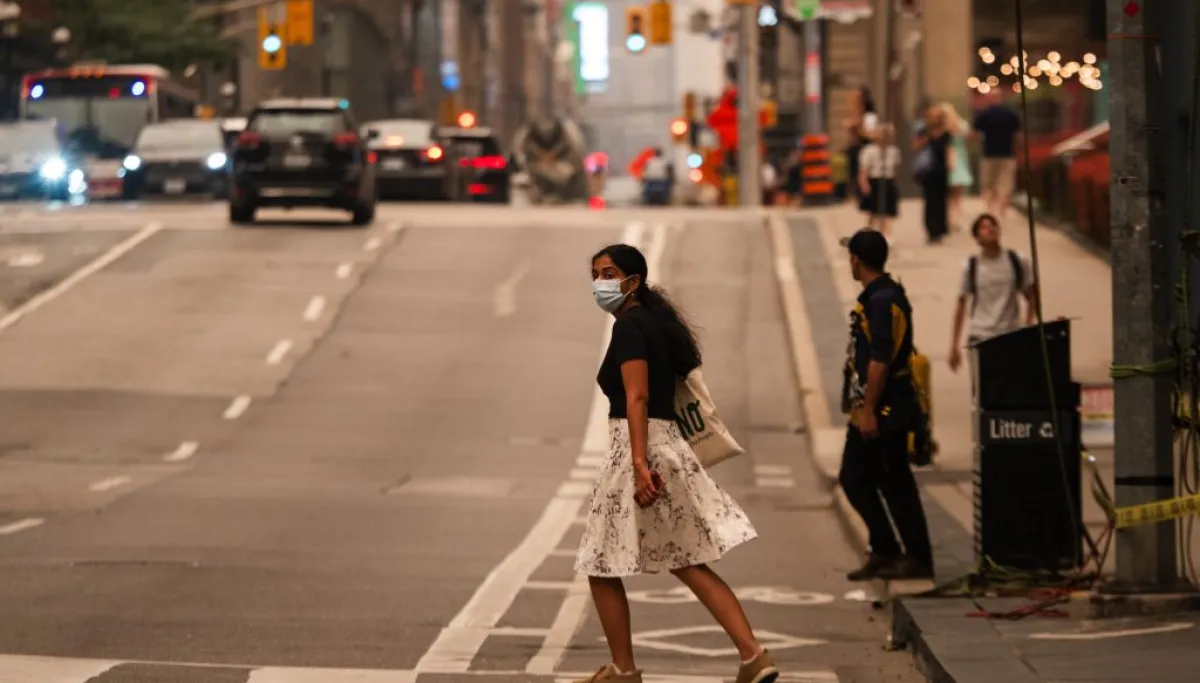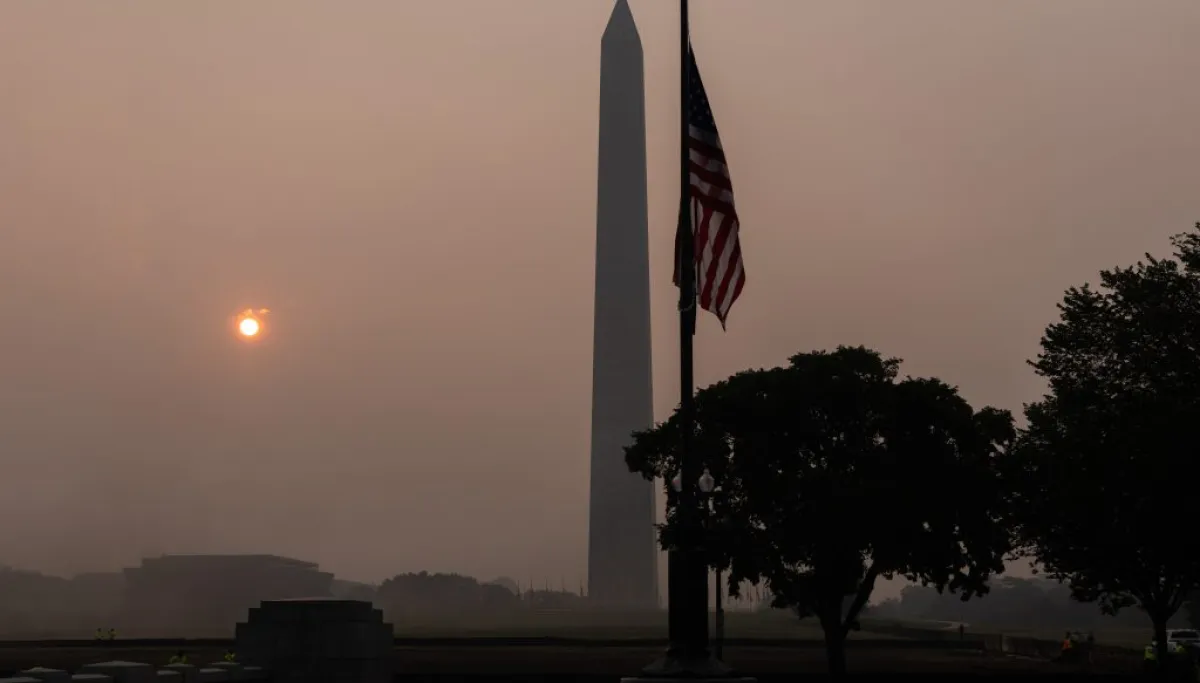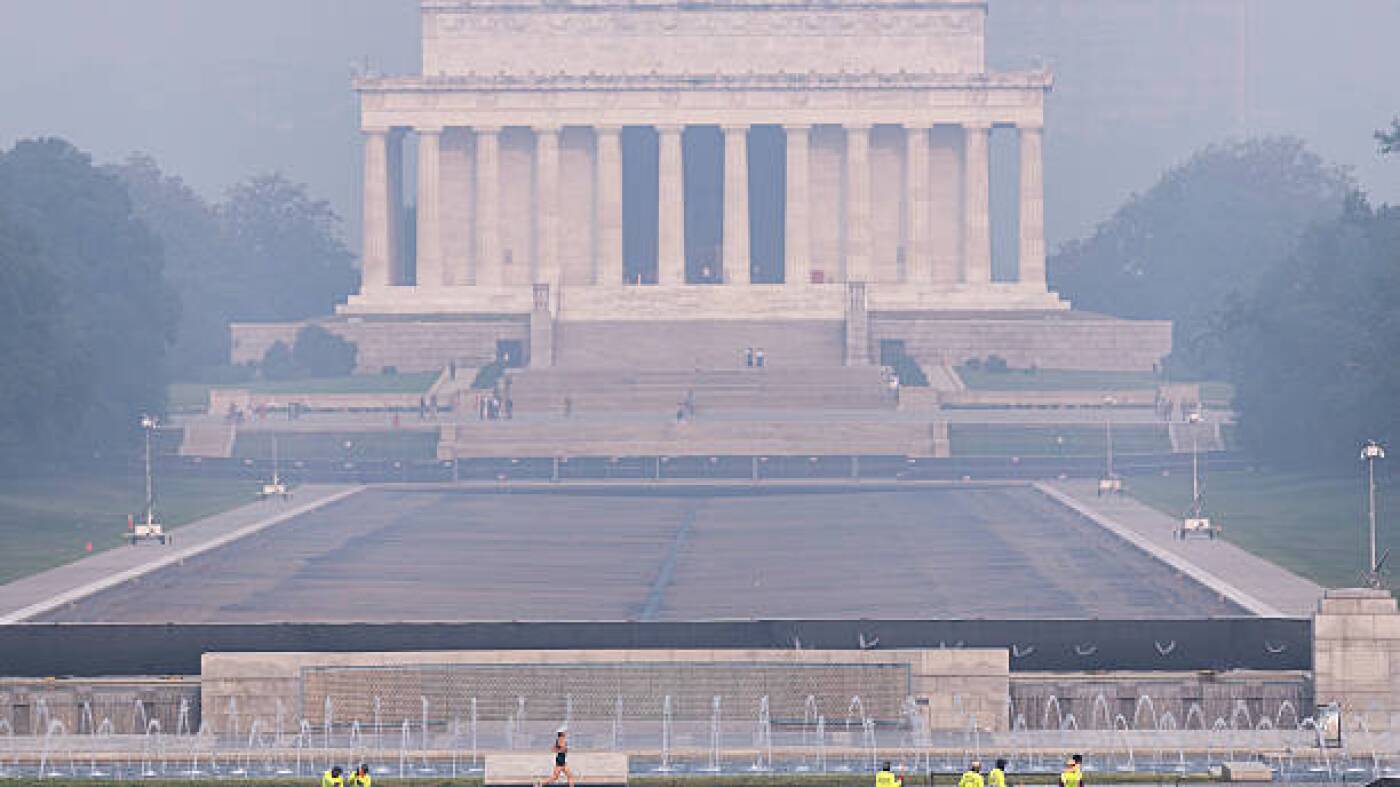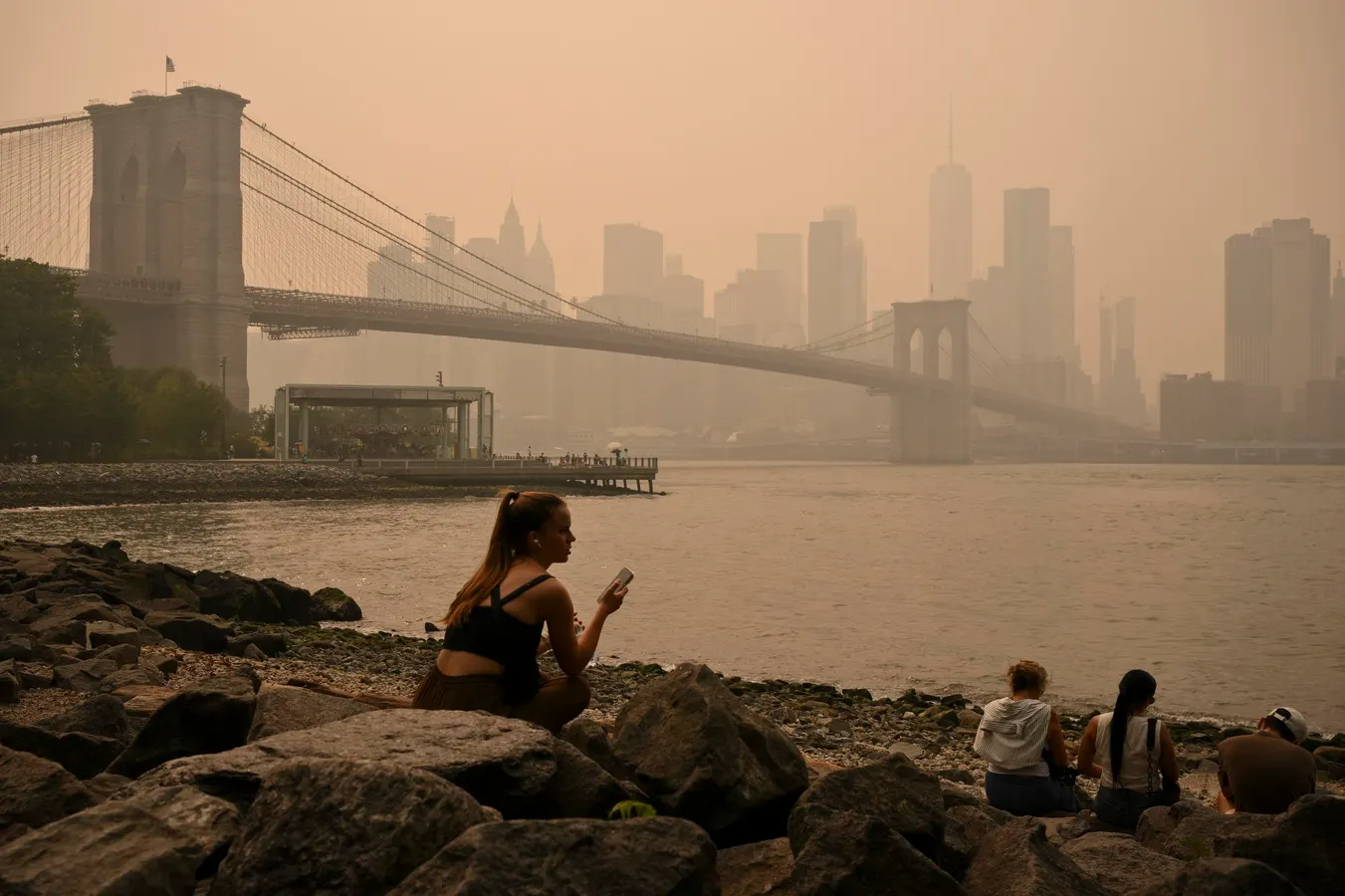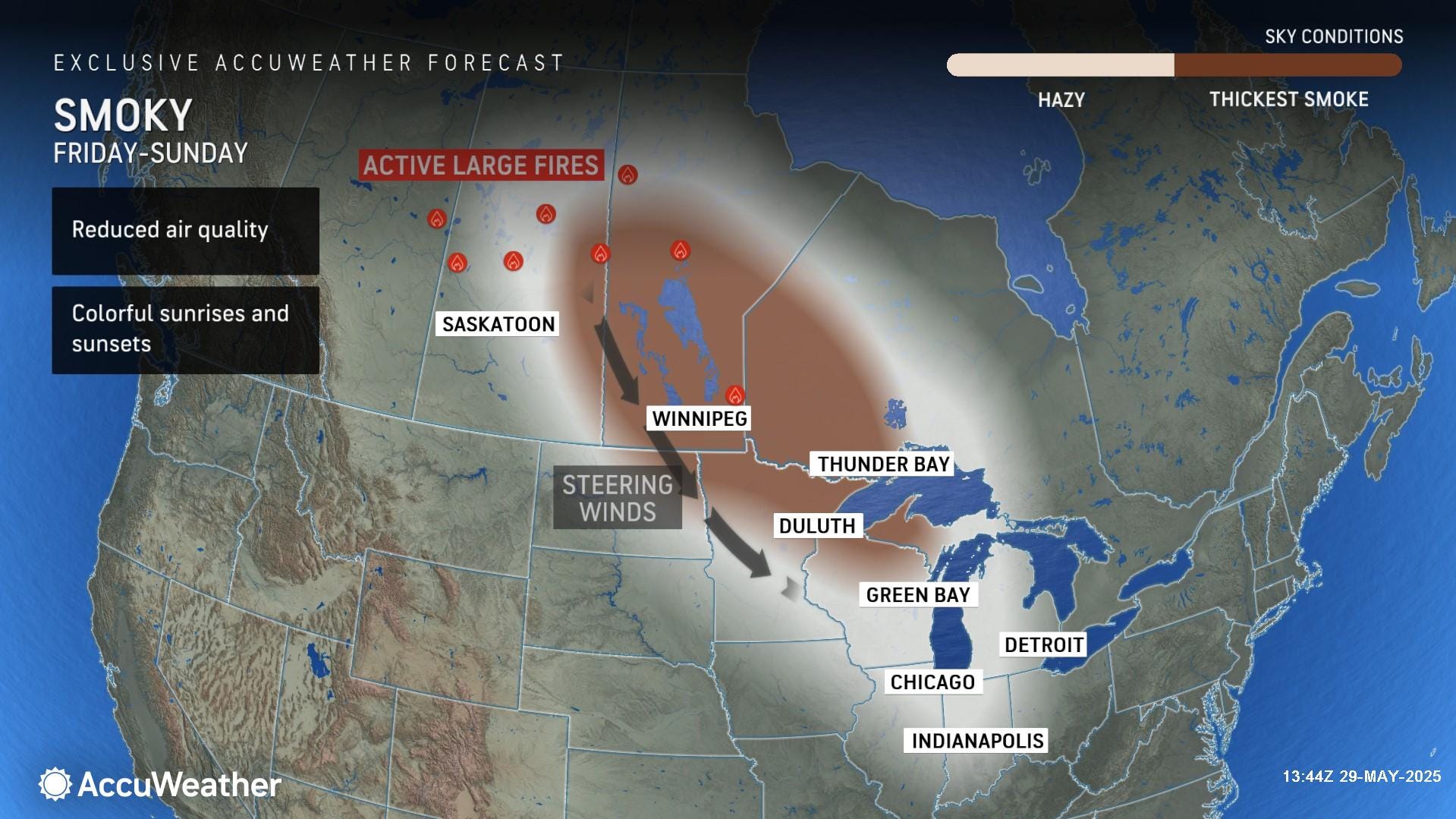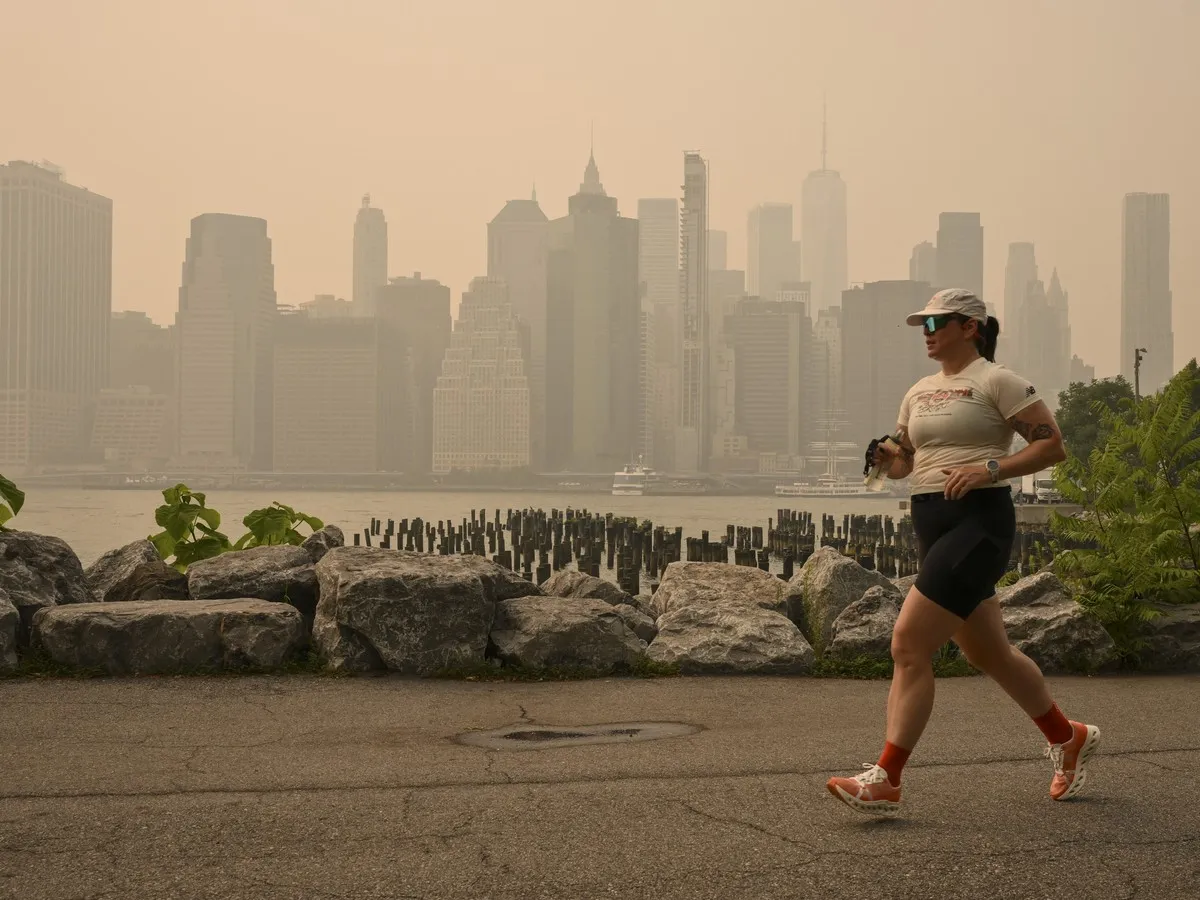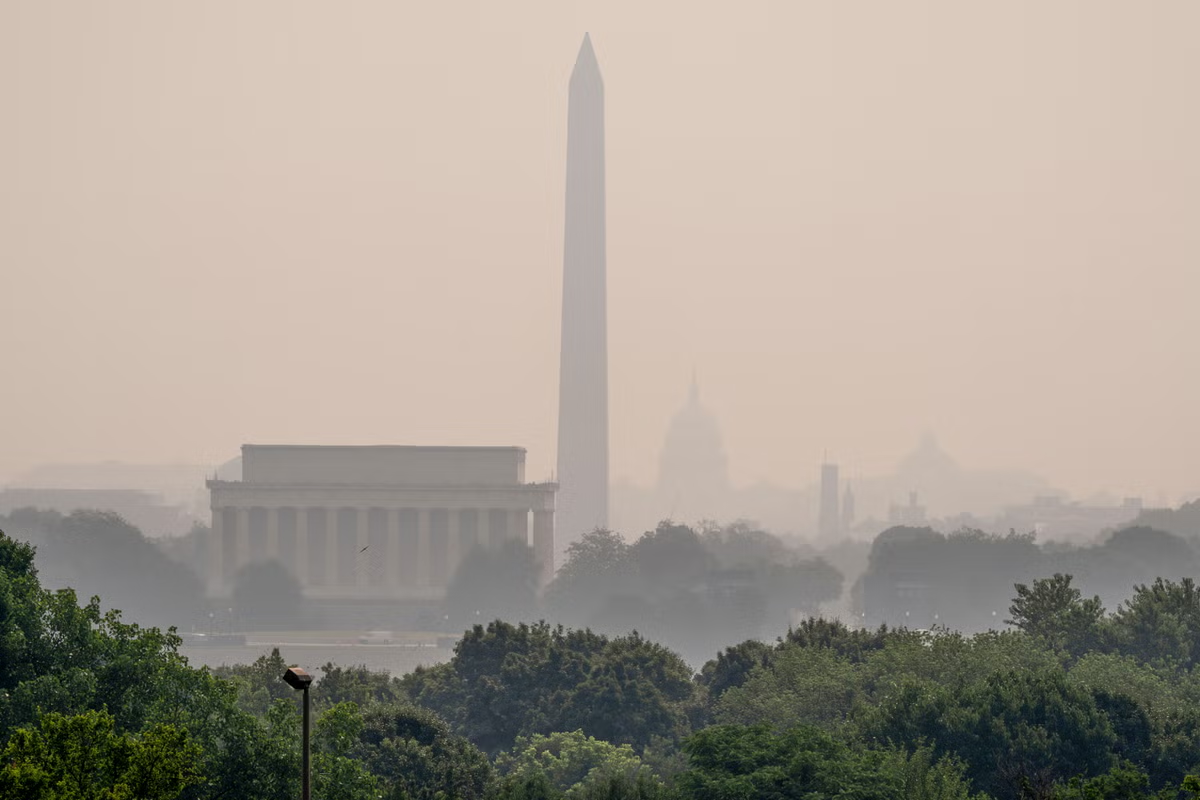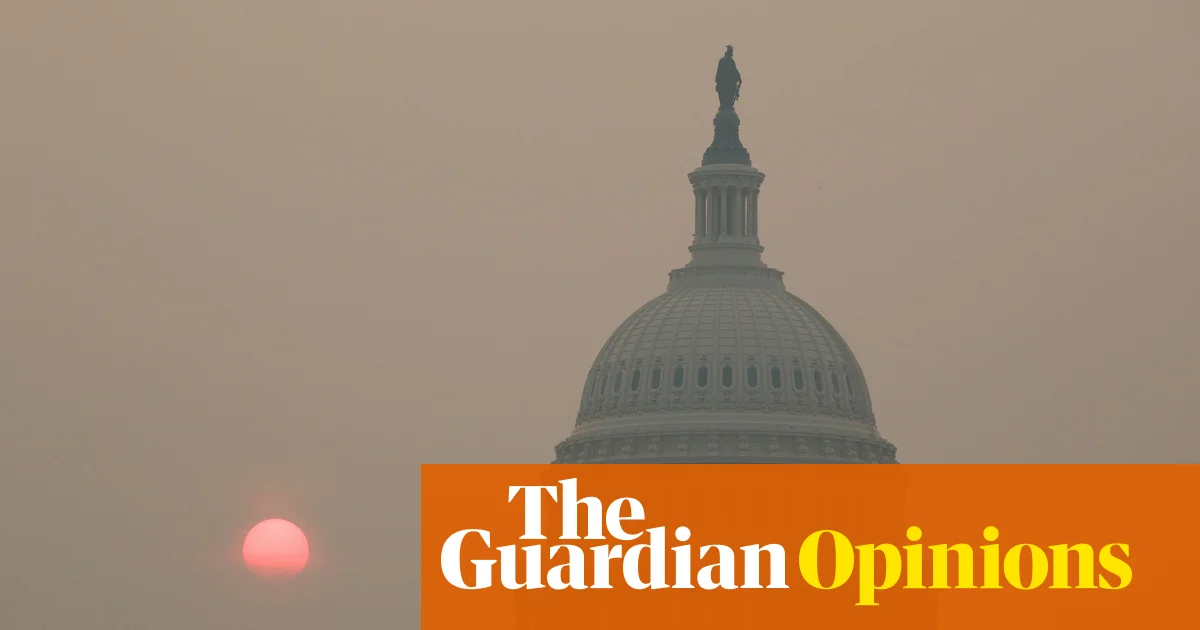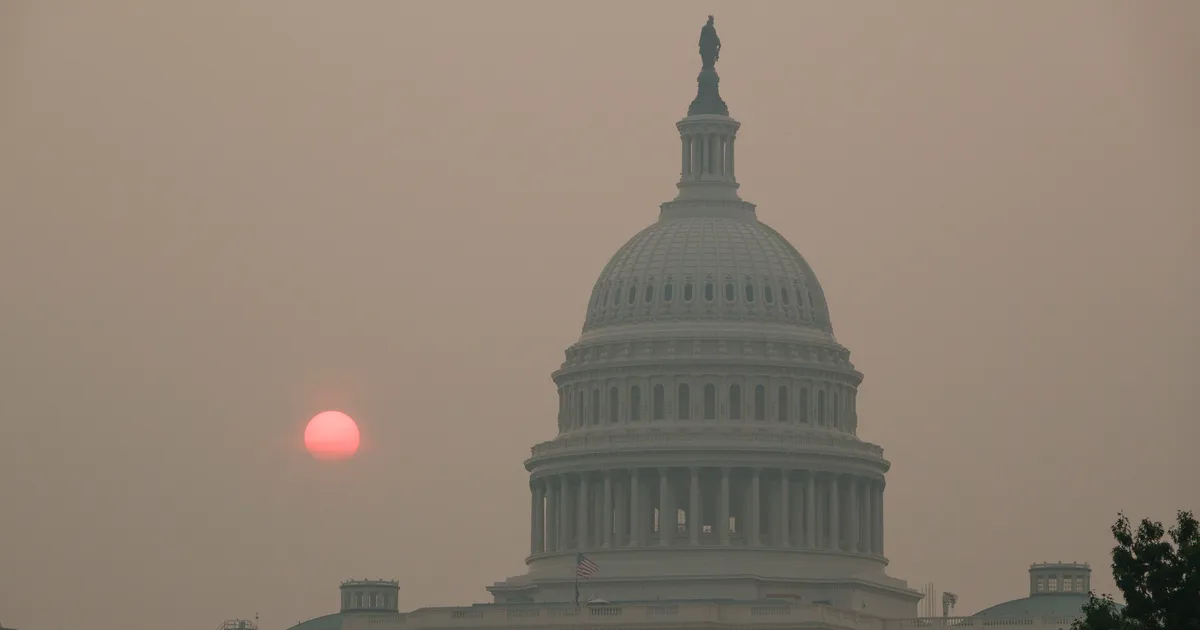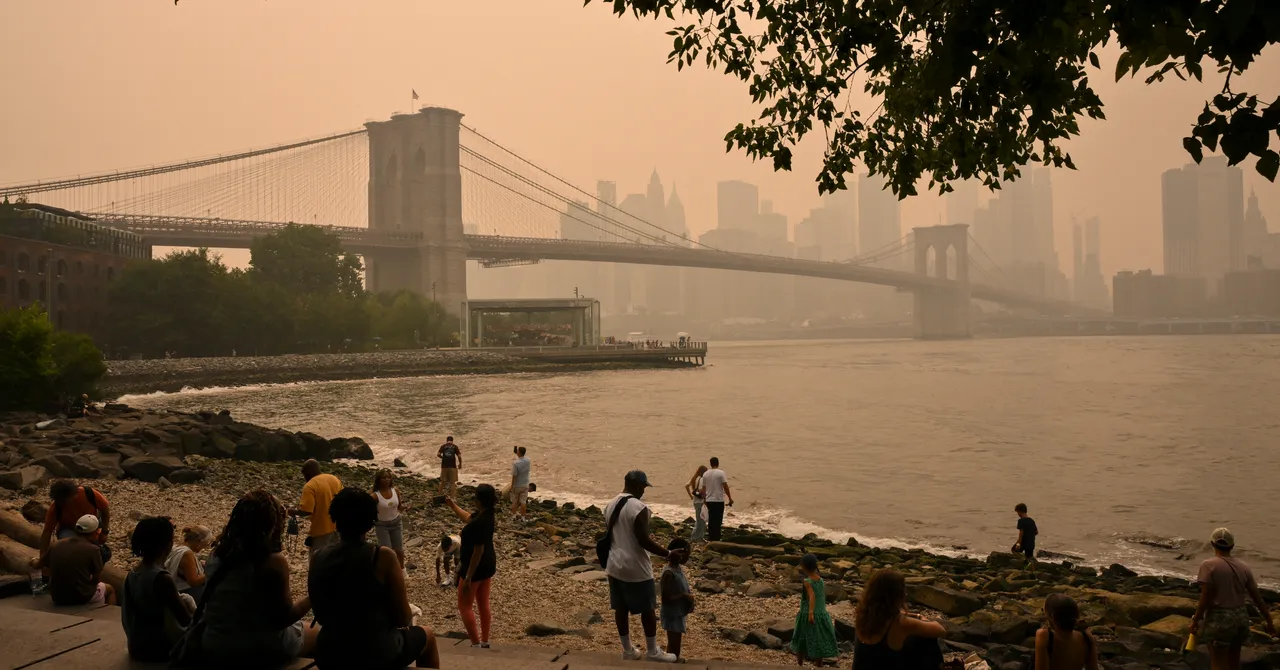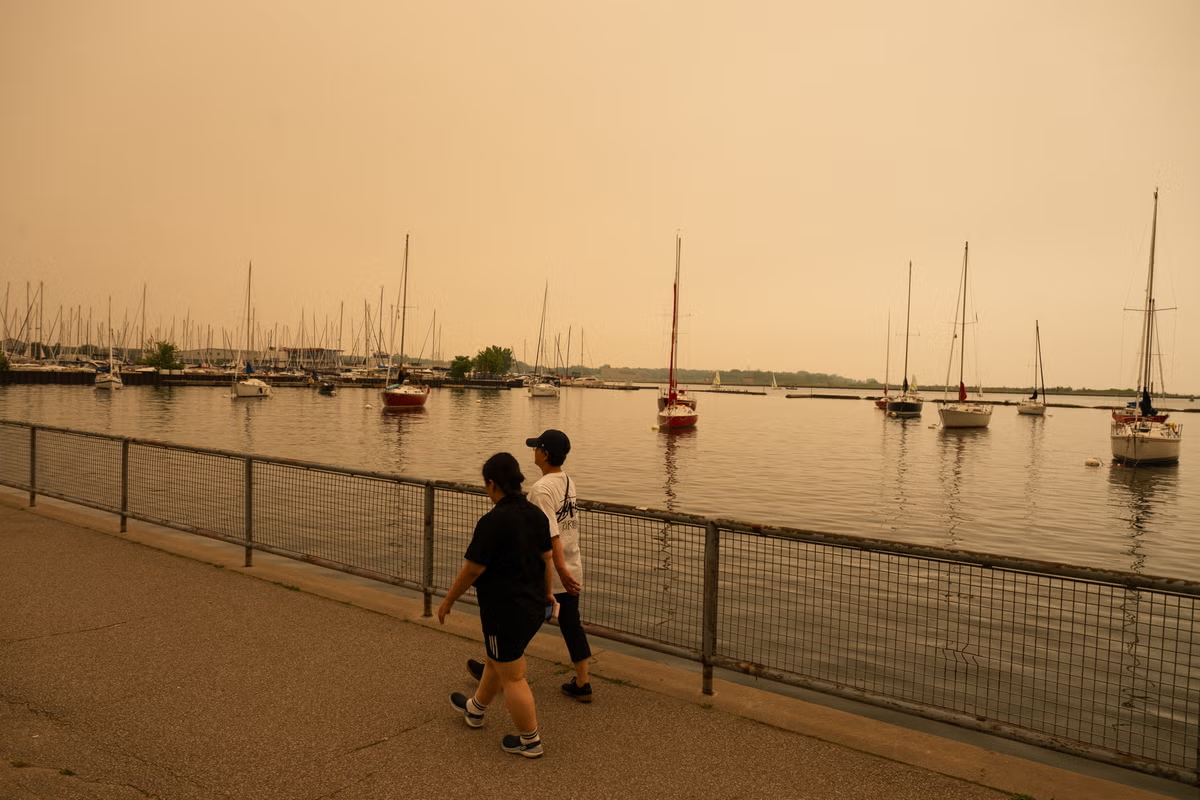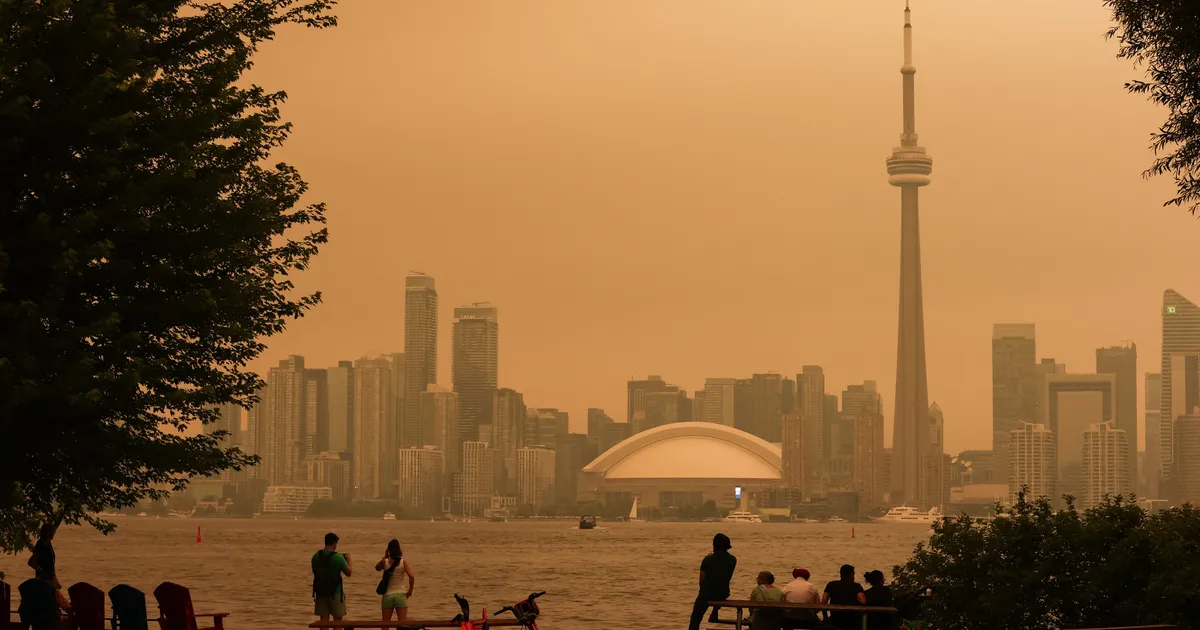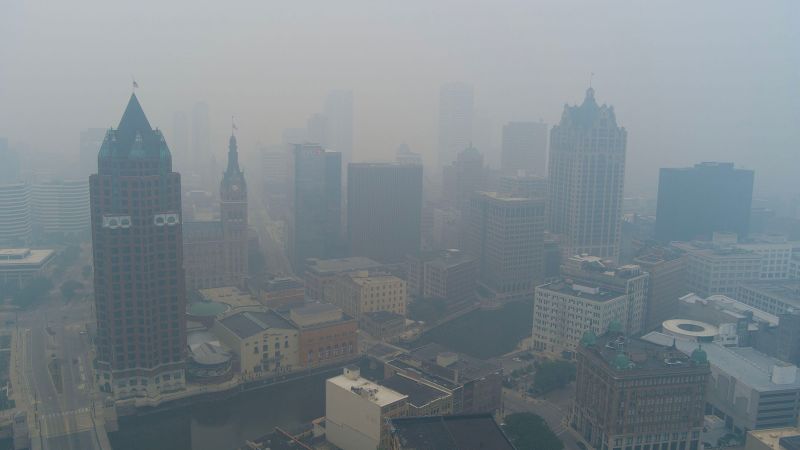
WHAT’S HAPPENING TODAY: Good afternoon and happy Friday, readers! If you are in the D.C. area, we are dealing with some terrible air quality today due to the wildfires in Canada. 🇨🇦🔥 We hope you all take precautions and limit your outdoor activities. You can read more here about how you can stay safe from the unhealthy air. Welcome to Daily on Energy, written by Washington Examiner energy and environment writers Callie Patteson (@CalliePatteson) and Maydeen Merino (@MaydeenMerino). Email cpatteson@washingtonexaminer dot com or mmerino@washingtonexaminer dot com for tips, suggestions, calendar items, and anything else. If a friend sent this to you and you’d like to sign up, click here. If signing up doesn’t work, shoot us an email, and we’ll add you to our list.Republicans are accusing Canada of mismanaging its forests, making swaths of remote woodland more prone to wildfires, as much of the East Coast has fallen under unhealthy air quality warnings due to wildfire smoke traveling south from Ontario.
Pushback in Congress: Ohio Republican Sen. Bernie Moreno is introducing a bill to punish Canada economically for forest management inaction, imposing sanctions against the country over wildfire smoke. The bill would require the president to determine if Canadian wildfires harmed U.S. air quality and if the Canadian government failed to take action preventing, mitigating, or containing such events. It would also require the president to impose sanctions against various Canadian officials, including those working in land management, wildfire prevention, and emergency management. It would then revoke visas for individuals sanctioned under the bill. Further north, four Republican lawmakers from Michigan sent a letter to Canadian Prime Minister Mark Carney asking for the Canadian government to take stronger measures to mitigate wildfires through forest thinning, fire fuel reduction, and prescribed burns. How to prevent wildfires: Climate change has been long considered a key driver of increased risk of wildfires, with the National Oceanic Atmospheric Administration pointing out that extended drought periods, increased heat, and lower snowpacks can generate a thirsty atmosphere, which pulls on moisture from trees, shrubs, grasses, and other vegetation, making forests more prone to flammability. Tackling climate change is not the only way to mitigate wildfires, though, as countries heavily rely on forest management to prevent fires. This includes controlled fires to reduce the amount of flammable “fuel” on the forest floor, as well as traditional forest thinning. Some environmentalists have criticized this method of management, claiming that it favors logging industries and leads to forest degradation and deforestation. More than 911 million acres of Canada is forest. Much of this is located in remote and hard-to-access areas, making it near impossible to manage every single wildfire, some experts say. There are several conservationists, though, who say Canada has the room to increase mitigation. “Fire is a natural part of forest ecosystems and the reason we manage forests is to mitigate harm to human life and communities,” Danielle Franz, CEO of the American Conservation Coalition, told Daily on Energy. “Canada does prescribed burns at a tiny fraction of the scale it should. Their forests are genuinely too vast to manicure end-to-end, but they’ve repeatedly under-invested in the manageable areas that actually matter.” MORE STATES SIGN ONTO THE WHITE HOUSE RATEPAYER PROTECTION PLEDGE: