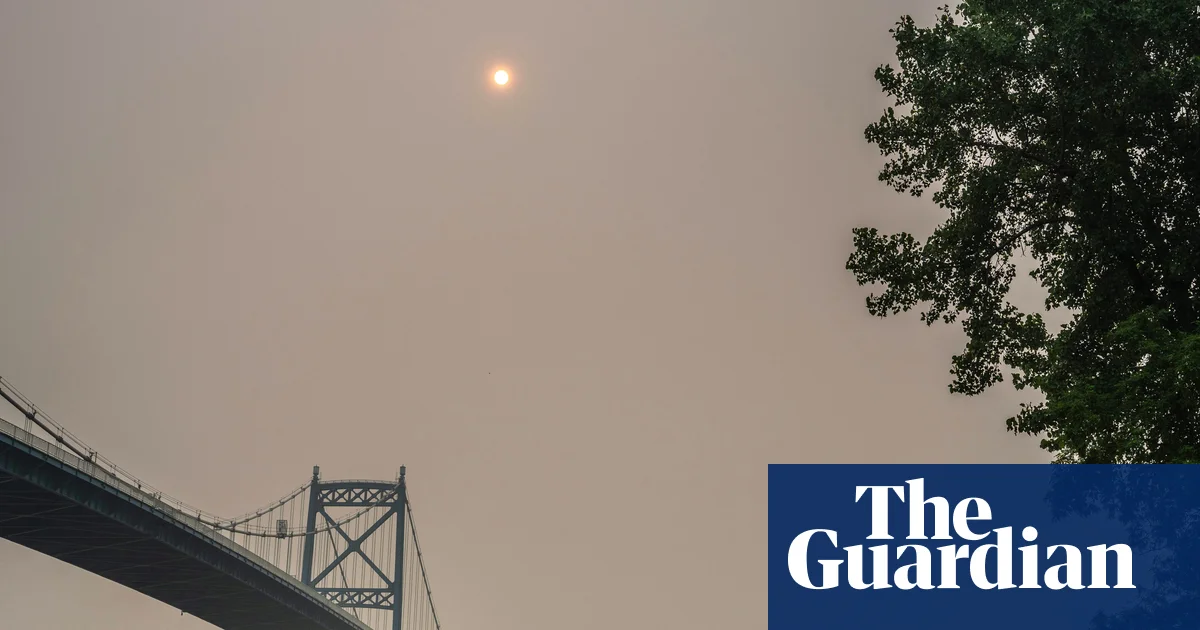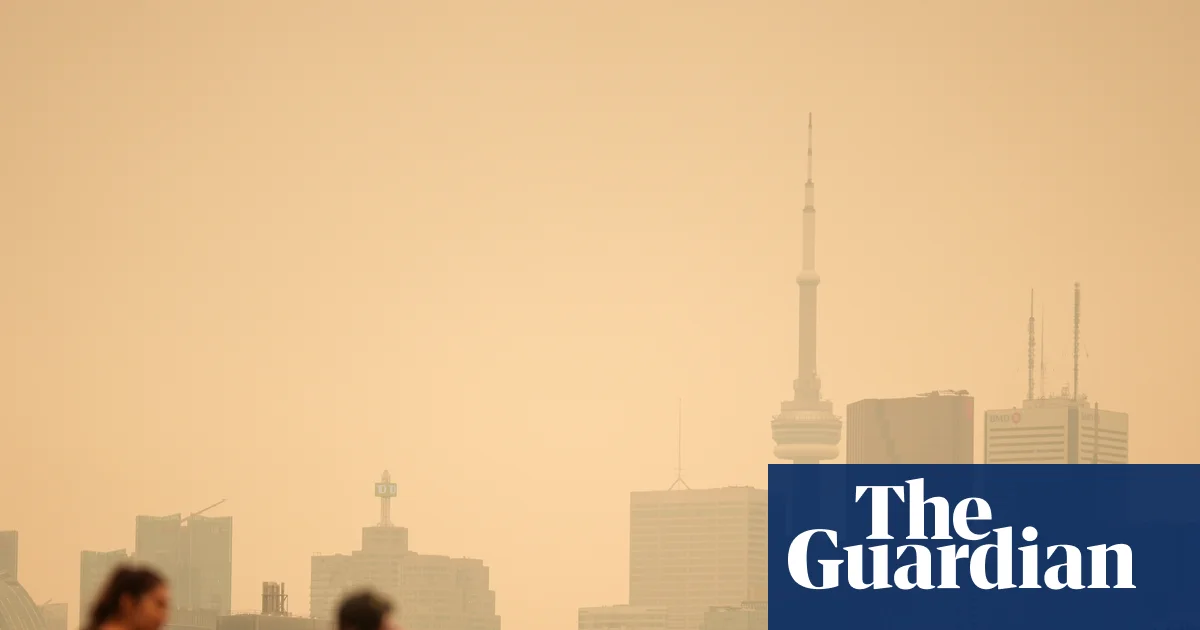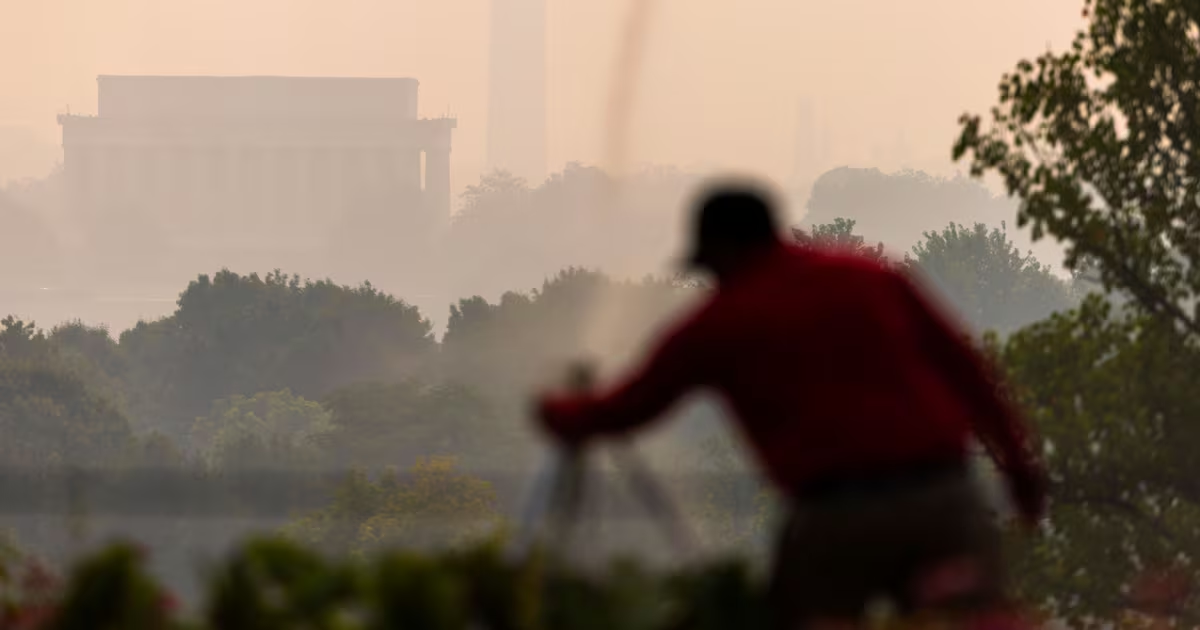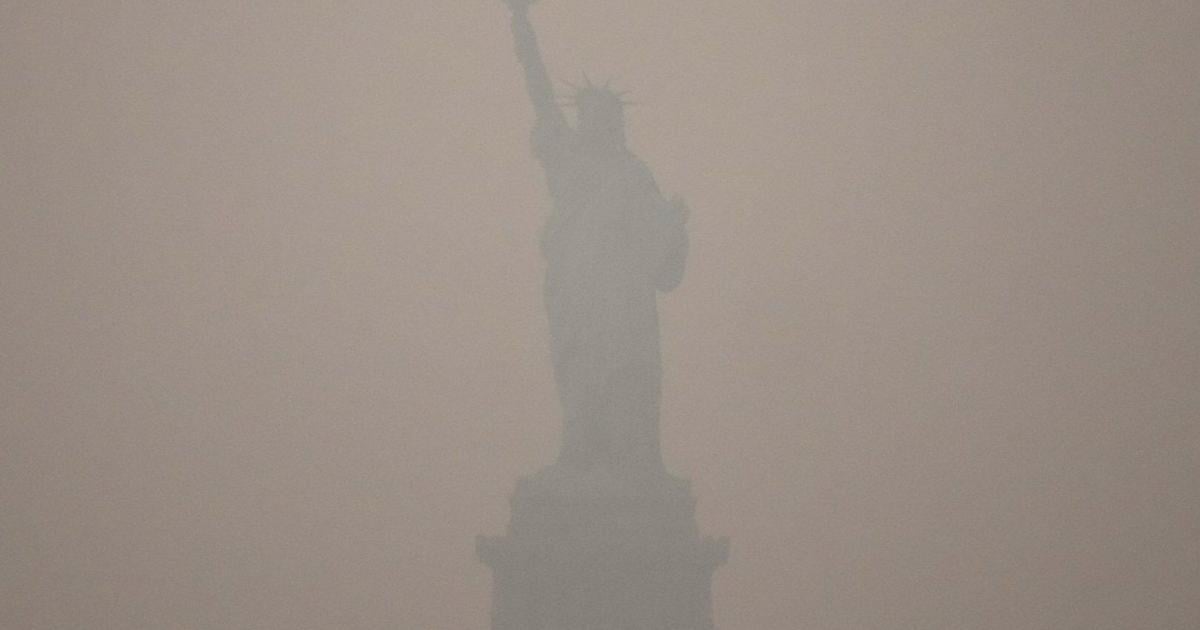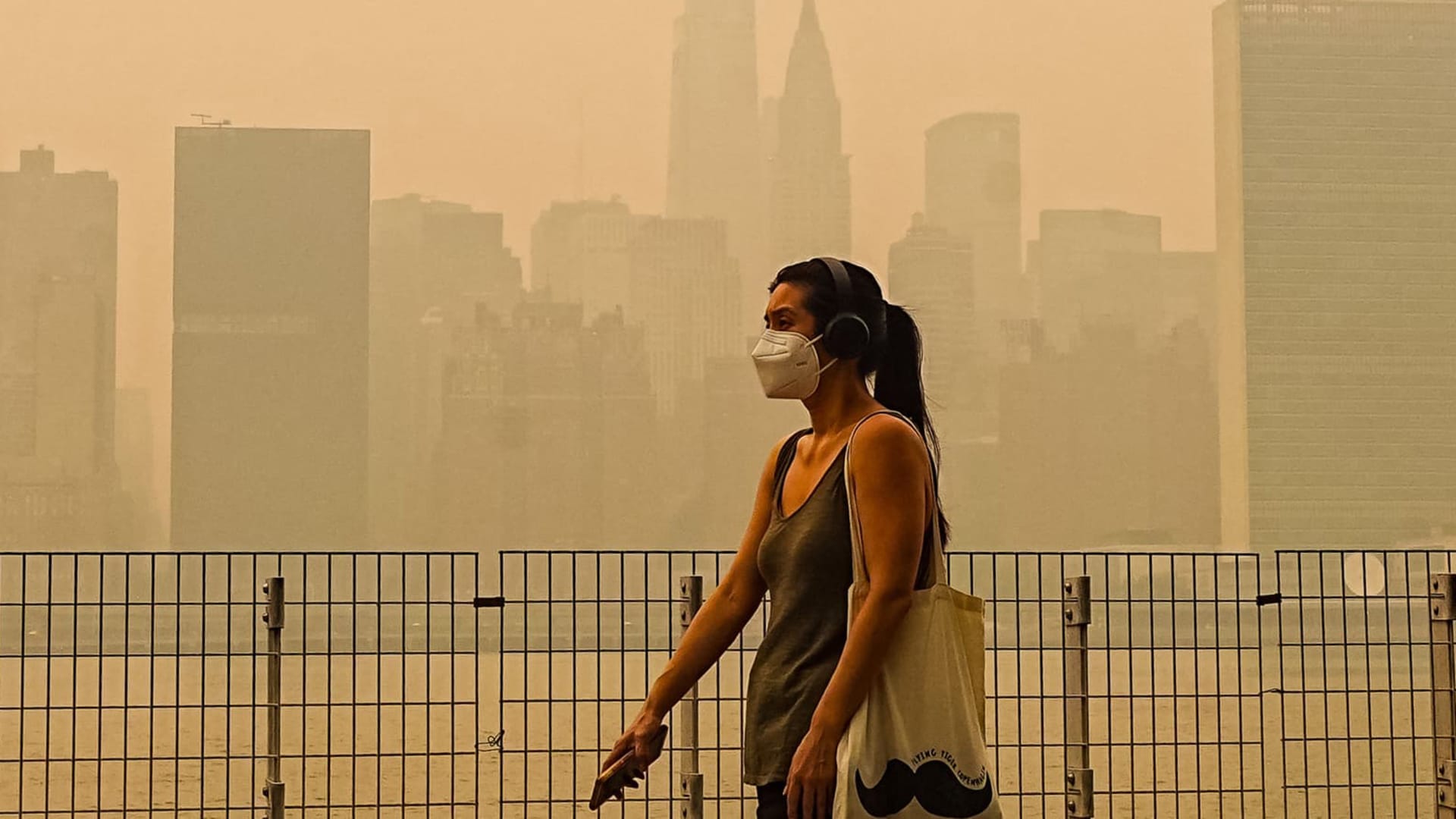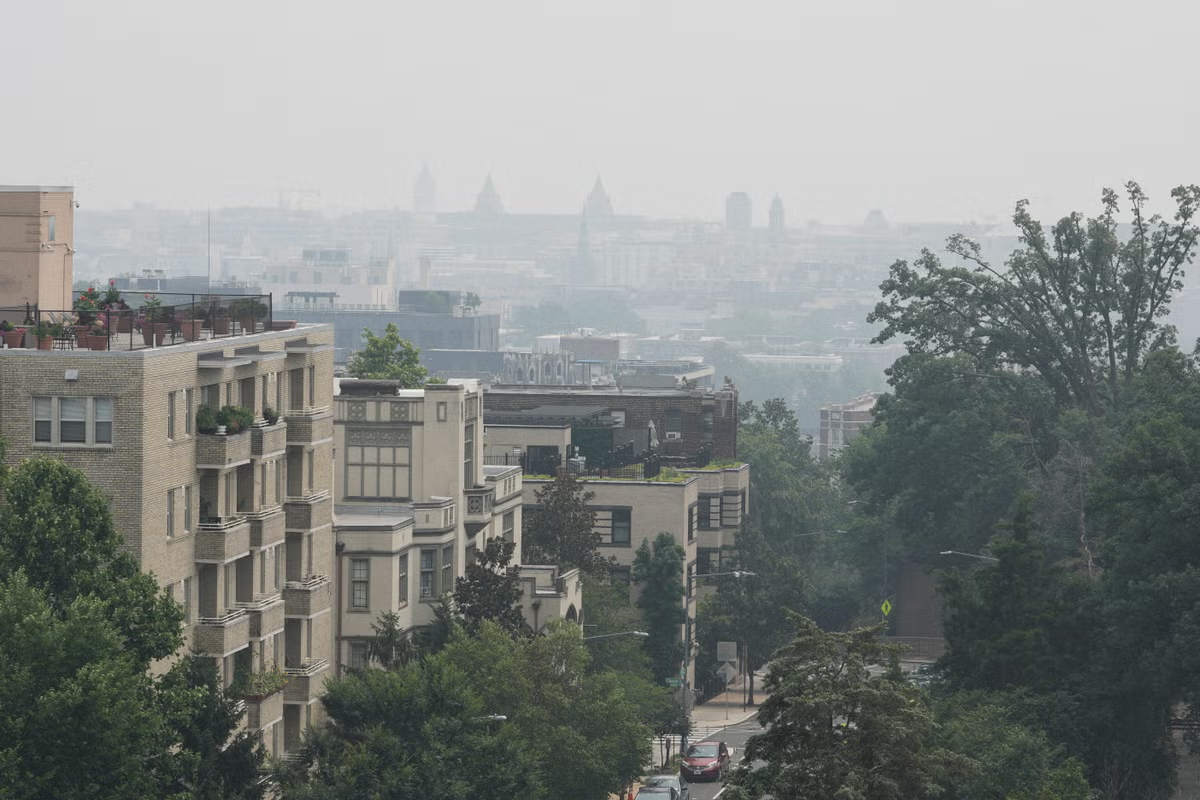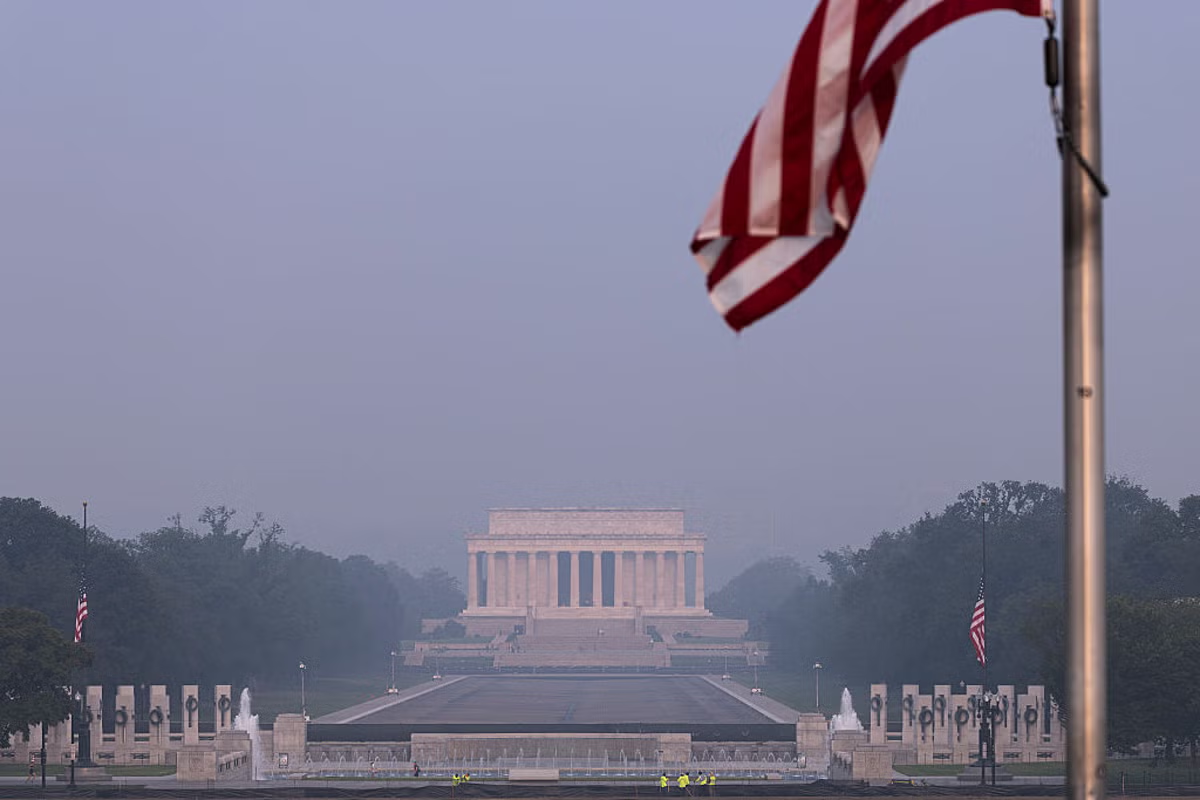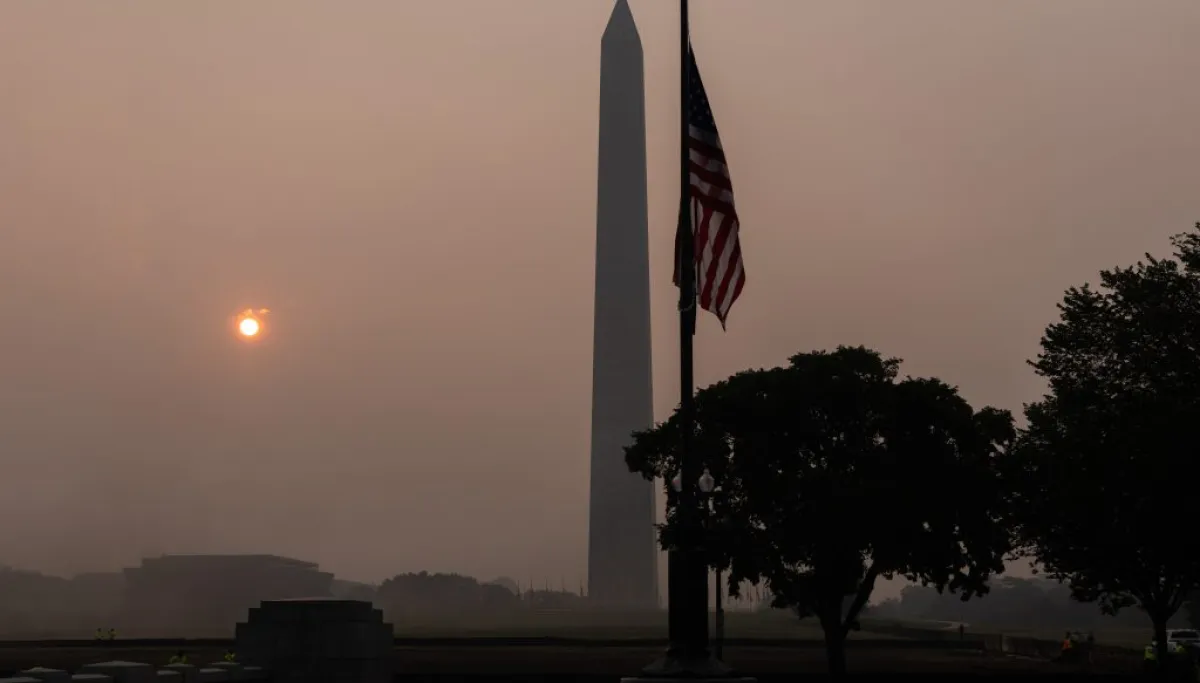
President Donald Trump and Republicans in Congress are blaming Canada for the wildfire smoke traveling south from Ontario and putting much of the East Coast under unhealthy air quality warnings, accusing the government of mismanaging its forests, making swaths of remote woodland more prone to wildfires.Smoke engulfed major cities, including Chicago, New York, and Washington, D.C., Friday morning, turning skies orange and hazy and causing the metropolitan areas to experience the worst air quality in the world. With millions facing dangerous levels of air pollution, Trump is pointing the blame at Canada’s government, claiming the northern neighbor has not done enough to manage its forests and prevent wildfires from burning millions of acres.
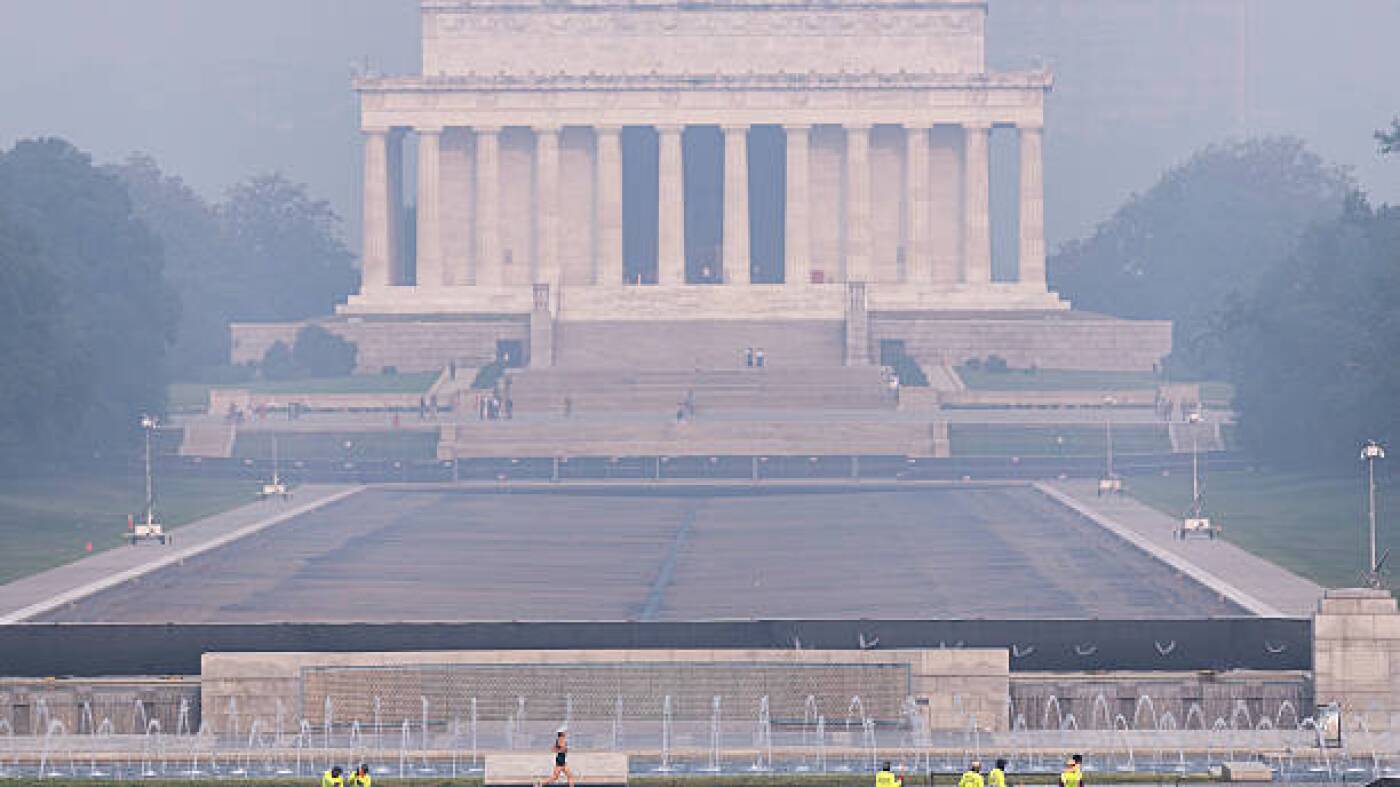
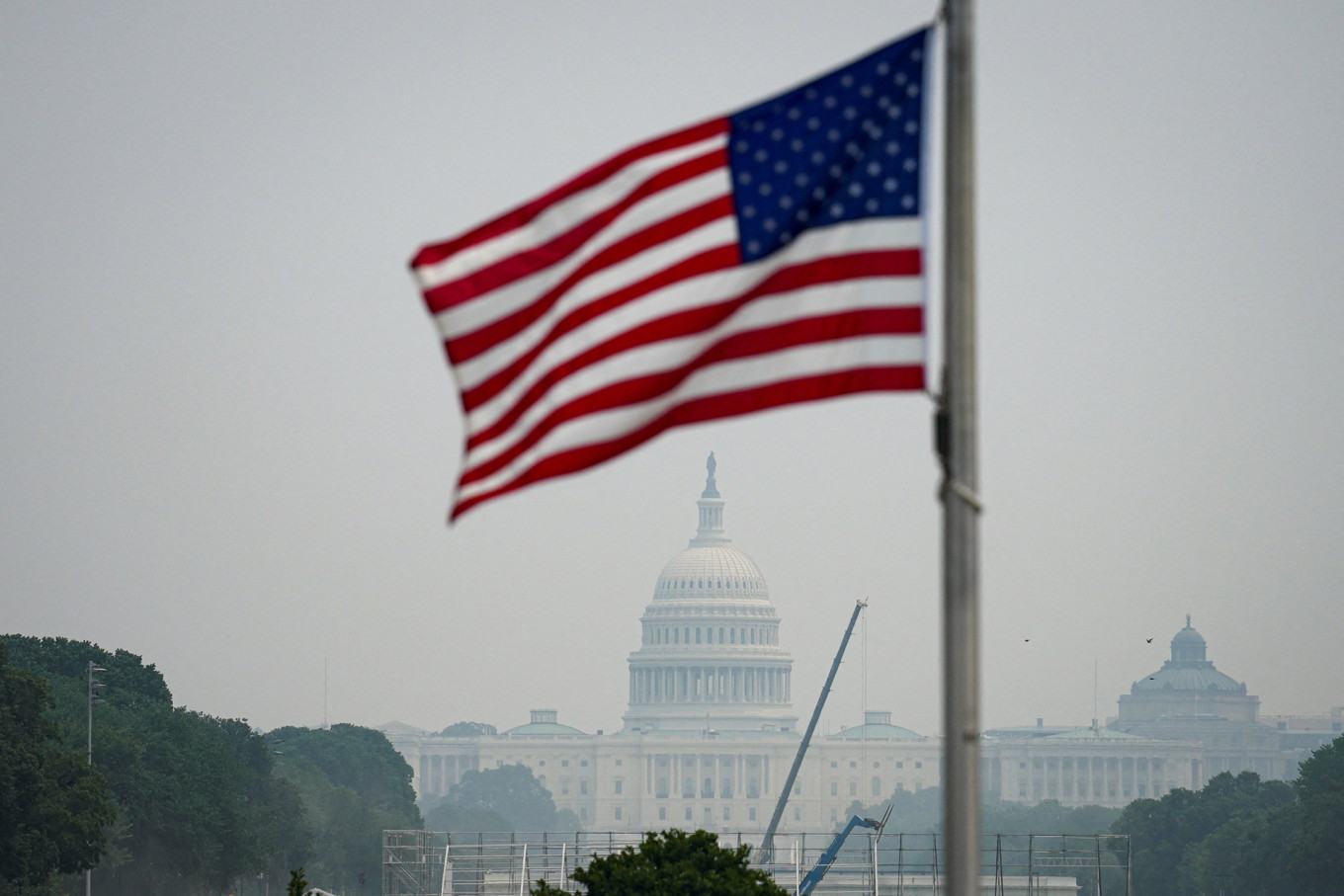
Smoke from wildfire in Canada has moved into the Washington D.C. area and across the East Coast, on Friday, July 17, 2026 (Graeme Jennings/Washington Examiner)
“We are holding Canada responsible for the fact that they are not properly maintaining their Forests, and Brush therein, and the United States is being unnecessarily invaded by filthy, polluted, and unhealthy air, the quality of which is dangerous, and totally unacceptable!” Trump wrote on Truth Social on Friday.Trump said he would ask Canadian Prime Minister Mark Carney what he is planning to do to rectify the problem caused by 3,500 fires, which have burned more than 6 million acres this summer, particularly in Ontario during recent weeks.“The cost is incalculable!” he wrote. “Canada has refused to engage in basic Forest Management and Debris Removal, knowing that such refusal will lead to exactly this result. This is Willful Negligence, and becoming a yearly occurrence, costing the United States Billions of Dollars, which cost of this pollution must of necessity be added to the TARIFFS Canada is currently paying.”The president’s remarks come as Republicans in Congress have called on Canada to take greater action or face repercussions.Sen. Bernie Moreno (R-OH) is introducing a bill to punish Canada economically for forest management inaction, imposing sanctions against the country over wildfire smoke. The bill, if approved, would require the president to determine within 30 days if Canadian wildfires harmed U.S. air quality and if the Canadian government failed to take action preventing, mitigating, or containing such events. If the president finds evidence of this, the bill would then require the executive branch to impose sanctions against several Canadian officials, including those working in land management, wildfire prevention, emergency management, and environmental protection. It would also revoke visas for individuals sanctioned under the legislation. Further north, four Republican lawmakers from Michigan have sent a letter to Carney asking the Canadian government to take stronger measures to mitigate wildfires through forest thinning, fire-fuel reduction, and prescribed burns. “Our constituents in Michigan are once again under air quality alerts. Our hospitals are once again treating children, dialysis patients, and older residents for the effects of smoke that did not originate anywhere near them,” Reps. John James, Jack Bergman, John Moolenaar, and Lisa McCalin wrote. “This is the third consecutive year we have had to write to Canadian officials about a crisis that Canada has the tools to prevent and has chosen not to.” If further action is not taken to reduce wildfire risk, the lawmakers said, the U.S. government could explore direct involvement with “cross-border fuel reduction and firefighting capacity.” “Sovereignty comes with responsibility, and the responsibility to prevent a foreseeable disaster from crossing into another country’s airspace has not been met,” they said. Environmental Protection Agency Administrator Lee Zeldin avoided echoing this sentiment of blame on Friday, saying the U.S. would remain engaged with its Canadian partners and encourage the government to do everything it can to extinguish the fires. Some environmentalists have pointed out that the heavy wildfire smoke is not only coming from north of the border, but also from U.S. states. More than a dozen fires are active in northern Minnesota, burning more than 55,000 acres, according to local reports. “Canada has a responsibility to address its wildfire challenges, yes, but so does the United States,” Benji Backer, founder and CEO of United by Nature, told the Washington Examiner. “We’ve seen some of our worst wildfire seasons ever over the last couple years, and this is a crisis on both sides of the border. … Blaming Canada is an easy political answer right now, but it’s not an honest one. I’m glad to hear leaders in Washington are prioritizing improved forest management. We need that same focus even after this smoke clears so we can find long-term solutions and prevent more wildfires in our own backyard.” Wildfire seasons in the U.S., Canada, and elsewhere have been starting earlier and lasting longer in recent years. In the U.S. so far this year, there have been more than 40,000 fires that have burned 3.7 million acres. In Canada, officials have recorded more than 3,000 fires that have burned 2.7 hectares of land, which is equivalent to more than 6 million acres. The National Oceanic and Atmospheric Administration has said that climate change has led to extended drought periods, increased heat, and lower snowpacks, which can generate a thirsty atmosphere that pulls moisture from trees, shrubs, grasses, and other vegetation, making forests more prone to flammability. Still, countries rely on forest management to prevent fires. This includes controlled fires to reduce the amount of flammable “fuel” on the forest floor, as well as traditional forest thinning. Some environmentalists have criticized this method of management, claiming that it favors logging industries, leads to forest degradation, and deforestation. Last year, the Natural Resources Defense Council and David Suzuki Foundation released a report that advocated the natural benefits of wildfires in forest management and pointed to research that shows industrial logging practices can exacerbate wildfire risk by leaving behind smaller trees, branches, and other fire-prone “fuel.” Instead of sweeping clear-cutting of forests, the groups advocated smaller managed burning to reduce the likelihood of high-severity wildfires. More than 911 million acres of Canada are forest. Much of this is located in remote and hard-to-access areas, making it nearly impossible to manage every single wildfire, experts say. There are several conservationists, though, who say Canada has the room to increase mitigation. “Every fire season, we watch fires burn hotter and more destructively than they have to, and every fire season we’re reminded that Canada has under-invested in active forest management for decades,” Danielle Franz, CEO of the American Conservation Coalition, told the Washington Examiner. WASHINGTON DC AIR QUALITY REACHES SEVERELY POLLUTED LEVELS FROM CANADIAN WILDFIRE SMOKE“Fire is a natural part of forest ecosystems and the reason we manage forests is to mitigate harm to huma life and communities,” Franz continued. “Canada does prescribed burns at a tiny fraction of the scale it should. Their forests are genuinely too vast to manicure end-to-end, but they’ve repeatedly under-invested in the manageable areas that actually matter.” While there is a “real, cyclical relationship” between wildfires and climate change, Franz said, too many discussions stop there and ignore how governments and agencies can take control through forest management.Maydeen Merino and Naomi Lim contributed to this report.